


Businessman Artur Shehu breaks his silence: I am a long-time land owner in Zvërnec, I don't know the investors at all
Albanian businessman Artur Shehu spoke on the Opinion show...

Albanian businessman Artur Shehu spoke on the Opinion show...

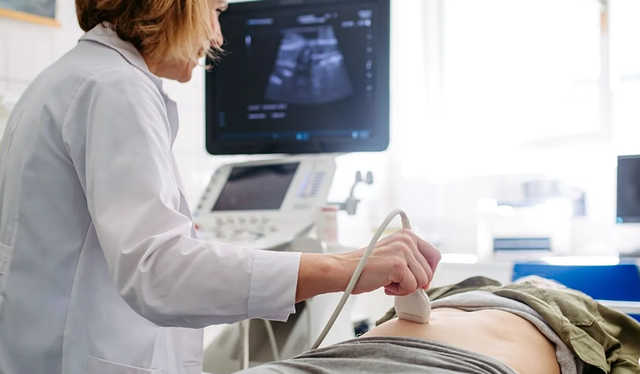
While fertility treatments are on the rise, fragmented legislation across Europe leaves thousands of eggs and embryos in limbo.
Women are born with all the eggs they will ever have. From their first menstrual cycle, reserves begin to decline, decreasing most rapidly after age 35 and reaching critically low levels by age 40.
At the same time, in Europe, people are having children later than ever before. The average age of a mother is now 30.9 years old, with fertility rates at a record low of 1.46 children per woman, due to rising living costs and job instability.
In response, more and more people are turning to fertility treatments, such as in vitro fertilization (IVF) and egg and embryo freezing, hoping to preserve eggs at their peak quality for future use - this is known as "social freezing".
The global egg freezing and embryo banking market size reached $5.41 billion (€4.55 billion) in 2024 and is projected to grow to around $25.63 billion (€22.1 billion) by 2034.
Social egg freezing often has different rules than medical freezing, which targets women with fertility-threatening conditions, such as cancer or endometriosis.
"We should think of egg freezing as an insurance policy that we take out," Saghar Kasiri, chief executive of fertility services at Cryos, the world's largest egg and sperm bank, told Euronews Health.
"Social egg freezing is almost like an insurance policy, you save some eggs and hope you find the right partner or you are at a stage where you can get pregnant naturally. If you can't, then you have a backup," she added.
This process also brings new challenges: what happens when women no longer want those eggs or embryos?
Patients who later give birth naturally, suffer from illness, relationship changes, career changes, or simply change their minds, meaning that women who freeze their eggs for a certain period of time may no longer want them.
The same goes for frozen embryos. In an average IVF cycle for a woman under 35, six to ten embryos are produced, of which one is normally transferred and the rest frozen.
Medically, frozen embryos can remain viable indefinitely with modern vitrification – instant freezing in liquid nitrogen at -196°C – which prevents damage from ice crystals.
Blood, plasma, and other tissues are disposed of under very strict sanitary conditions if not used. However, embryos and eggs often raise emotional attachments and moral dilemmas.
Embryos occupy a gray area in regulation and an even grayer area in data collection. There is no exact number of “abandoned” eggs or embryos, nor aggregate data on discards or donations.
Confused laws across Europe
European countries vary widely in their approach. The United Kingdom has no limits on the number of embryos that can be created or transferred and allows frozen embryos to be stored for up to 55 years. If patients do not want to use them, the country allows them to be donated, used in research or discarded.
Poland's 2015 Act on Infertility Treatment prohibits destruction. After 20 years, donation to other couples is mandatory.
In Italy, unused embryos must remain frozen indefinitely. The country does not allow donation for research or destruction. Maria Rosaria Campitiello, head of the Prevention Department at Italy's Health Ministry, estimated that by 2025 there would be over 10,000 abandoned embryos.
On the other hand, Sweden requires embryos to be destroyed after a storage period of 10 years.
The recent European Regulation on Substances of Human Origin (SoHO), which aims to regulate the quality and safety standards of human substances, explicitly excludes embryos from its scope.
When there is a possibility, it is still difficult
Even in countries where donation and destruction are legal, the procedure is still complicated.
The Spanish Fertility Association estimated in 2023 that 60,005 of the 668,082 embryos in the country were “abandoned.”
In Spain, clinics must periodically request renewal or modification of patients' original choices. If, after two attempts, patients do not respond, the embryos become the responsibility of the clinic and can be donated, used for research, or destroyed.
The country has emerged as Europe's leading destination for egg freezing, with no age restrictions and no set limits on the length of storage.
With many patients coming from abroad, finding contact with them and keeping records can be complicated.
However, bureaucracy is not the only obstacle.
"Frozen embryos, especially if the egg and sperm are from the patients, are likely to be discarded. If they have chosen a donor, especially if it is a double donation, they are more open to donating it to another family," Kasiri added.
She explained that, since it is their own genetic material, patients are often reluctant to donate it to others./ CNA


Të njohura edhe si legume, bishtajoret janë farat e ngrëns...

Kafeina mbron shëndetin e trurit. Kështu thuhet në një stu...

Tomorrow marks "Saturday of Souls" for Orthodox believers....

Bloating after meals and swollen feet during hot days have...

Have you ever found yourself tossing and turning on a warm...

Traffic noise has become the obligatory soundtrack of urba...

Scientists have identified a new pathway that could help s...

We usually associate winter with cold, rain, illness, and ...

Although fruits are healthy, some of them contain a lot of...

The flu is hitting the US hard this season, and experts wa...

In new research, something previously thought is being cha...

A study published in Neurology Open Access found that foll...

Nearly four out of every ten new cancer cases worldwide co...

Quality sleep is important for our well-being, but not eve...
People are often told that eating well, exercising, and av...

After recent heavy snowstorms, freezing temperatures conti...

Certain types of foods help maintain a healthy gut, focusi...
Health and overall well-being should be the main goal for ...

Researchers from the Harvard TH Chan School of Public Heal...
The World Health Organization said Friday that the risk of...

The next case broadcast on the show "Stop", this Thursday,...

The case published this Thursday, June 4, on the show "Sto...

The protests of recent days related to the situation in Zv...

The case addressed this Wednesday, June 3, on the show "St...

The Special Board of Appeal (KPA) decided this Monday ...

The KPA vetting decided this Thursday to dismiss the p...

Suela Salavaçi, a prosecutor in the Prosecutor's Offic...

The Special Board of Appeal reinstated the prosecutor ...

A convict was found dead today in the premises of the Pris...

Several images provided by CNA show the area where this mo...

A quantity of explosive material exploded this morning at ...

The Head of the State Police, Skënder Hita, expressed his ...

For many children and teenagers, the long summer holidays ...

Witnesses in Lozhan, Maliqi, have shared details from the ...

Albania is facing an unprecedented demographic transition,...

On Thursday, our country will be affected by unstable weat...

Russian President Vladimir Putin said the war in Ukraine c...

An extraordinary story of survival has been recorded in Ne...

The Peace Implementation Council in Bosnia and Herzegovina...

John Bolton, the former national security adviser to US Pr...

Korça is ready to open the summer season with one of the c...

Two years after his passing, the renowned Korçë poet Skënd...

The Ethnographic Museum of Berat has opened its doors to v...
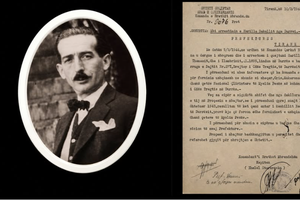
The story of Harilla Bakalli is one of the most chilling t...

The government aims to transform the country's industrial ...

Kursi i këmbimit të euros me lekun ka rënë më tej këtë jav...

Profit margins in the construction sector have increased s...

The Transparency Board, at its meeting today, decided to i...