


3 health benefits of eating in small portions
New research analyzes whether it is better to eat little a...



People with greater exposure to air pollution face a higher risk of developing Alzheimer's disease, a new study has found.
Exposure to air pollution is a known risk factor for Alzheimer's disease and for several common chronic health conditions, such as hypertension, stroke, and depression.
These chronic conditions are also linked to Alzheimer's disease, and previously, it was not clear whether air pollution causes these chronic conditions, which then lead to dementia, or whether these conditions may amplify brain damage from air pollution.
A new study published in PLOS Medicine found that exposure to air pollution was associated with an increased risk of Alzheimer's disease.
The research team at Emory University in the United States (US) analyzed data on more than 27 million people aged 65 and older from 2000 to 2018 - about three million people developed Alzheimer's disease during the study.
At the same time, they analyzed the burden of three common comorbidities—hypertension, stroke, and depression—to see if they played a role in the onset of Alzheimer's disease.
The researchers compared these results with the levels of fine particulate matter (PM?.?) air pollution to which the participants were exposed, depending on where they lived.
Fine particles are dangerous because they can penetrate deep into the lungs and bloodstream. Common sources include vehicle emissions, power plants, industrial activities, forest fires, and the burning of wood or fossil fuels in homes.
The authors noted that the study found that air pollution affected the brain through direct effects and not through other chronic diseases.
The link between air pollution and Alzheimer's disease was strongest in people who had suffered a stroke.
"Our findings suggest that individuals with a history of stroke may be particularly vulnerable to the deleterious effects of air pollution on brain health, highlighting an important intersection between environmental and vascular risk factors," the study authors said.
Long-term exposure to particulate matter has also been shown to increase the risk of chronic diseases such as cardiovascular disease, hypertension, and mental health disorders.
The study had some limitations. Air pollution levels were measured by zip code rather than individual addresses. Only outdoor air pollution levels were measured, meaning cooking, heating and other potential sources of particulate matter were not taken into account.
"As the research relies on broad assessments of pollution and medical data, there are important limitations, but the findings are consistent with growing evidence that air pollution is a modifiable risk factor for dementia," said Mark Dallas from the University of Reading, who was not involved in the study.
He added that, overall, the study reinforces a simple idea: the air people breathe over many years can affect brain aging.
Fighting air pollution
Many countries around the world have targets to reduce air pollution levels. However, most of them will struggle to reach the right figures by 2030.
Global targets for particulate matter are set by the World Health Organization's Global Air Quality Guidelines (GAQG) for 2021.
The WHO 2025 action plan, adopted by the World Health Assembly, aims for a 50 percent reduction in mortality from air pollution, mainly caused by fine particles, by 2040 compared to a 2015 baseline.
"The implications of this US study are global. Air pollution is a challenge we need to tackle together. Setting stronger, health-based targets for air quality and reducing exposure would help protect our brains, as well as our lungs, and could reduce the overall risk of dementia," said Sheona Scales, director of research at Alzheimer's Research UK, who was not part of the research.
Alzheimer's disease is increasing worldwide
More than 55 million people live with dementia globally, with Alzheimer's disease accounting for up to 70 percent of cases, according to the World Health Organization.
In 2025, approximately 12.1 million people were living with dementia in Europe, with women disproportionately affected, accounting for around 66 percent of cases.
Driven by aging populations, numbers worldwide are projected to increase./ CNA

New research analyzes whether it is better to eat little a...

A type of bacteria found in a Romanian ice cave is resista...

While fertility treatments are on the rise, fragmented leg...

Të njohura edhe si legume, bishtajoret janë farat e ngrëns...

Kafeina mbron shëndetin e trurit. Kështu thuhet në një stu...

Tomorrow marks "Saturday of Souls" for Orthodox believers....

Bloating after meals and swollen feet during hot days have...

Have you ever found yourself tossing and turning on a warm...

Traffic noise has become the obligatory soundtrack of urba...

Scientists have identified a new pathway that could help s...

We usually associate winter with cold, rain, illness, and ...

Although fruits are healthy, some of them contain a lot of...

The flu is hitting the US hard this season, and experts wa...

In new research, something previously thought is being cha...

A study published in Neurology Open Access found that foll...

Nearly four out of every ten new cancer cases worldwide co...

Quality sleep is important for our well-being, but not eve...

People are often told that eating well, exercising, and av...

After recent heavy snowstorms, freezing temperatures conti...

Certain types of foods help maintain a healthy gut, focusi...

The protests of recent days related to the situation in Zv...

The case addressed this Wednesday, June 3, on the show "St...

The show "Stop" broadcast this Wednesday, June 3, the case...

Irfan Hysenbelliu claims to be a big businessman, an hones...

The Special Board of Appeal (KPA) decided this Monday ...

The KPA vetting decided this Thursday to dismiss the p...

Suela Salavaçi, a prosecutor in the Prosecutor's Offic...

The Special Board of Appeal reinstated the prosecutor ...

Several images provided by CNA show the area where this mo...

A quantity of explosive material exploded this morning at ...

The Head of the State Police, Skënder Hita, expressed his ...

New details have emerged regarding the serious incident th...

Witnesses in Lozhan, Maliqi, have shared details from the ...

Albania is facing an unprecedented demographic transition,...

On Thursday, our country will be affected by unstable weat...

An alarming figure of more than 166.4 thousand Albanians a...

Serbian President Aleksandar Vučić has confirmed that he w...

Israel and Lebanon have agreed to renew their fragile ceas...

United States President Donald Trump announced in a post o...

Asambleja e Përgjithshme e Kombet e Bashkuara ka përfundua...

Korça is ready to open the summer season with one of the c...

Two years after his passing, the renowned Korçë poet Skënd...

The Ethnographic Museum of Berat has opened its doors to v...
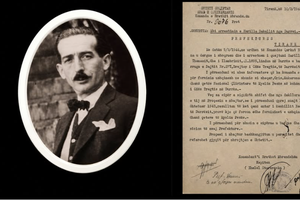
The story of Harilla Bakalli is one of the most chilling t...

Profit margins in the construction sector have increased s...

The Transparency Board, at its meeting today, decided to i...

Today, in the foreign exchange market, one US dollar is bo...

The Minister of Finance, Petrit Malaj, announced today a n...