

They accuse us of tutku
In Albania, the most popular sport is not football, bu...


From the formal side, we have a stable democracy. From the formal side, we have 34 years since the declaration of pluralism and 33 years of a pluralistic parliamentary life.
From the formal side, we have "free" elections, freedom of speech and free market.
No one is afraid anymore that one day they will wake up and see Albania again in a dictatorship, nor will they see someone on television who will claim that the country needs a strong hand, ie. dictatorship!
After all, there are now much more modern and painless ways to undermine Democracy, which, paradoxically, to a large extent also manage to have the support of society.
In this view, we are in a way a truly democratic country. At least, enough not to question the formal envelope of liberal parliamentary democracy.
But democracy is not limited to its appearance. Democracy is guided by specific principles, values ??and conditions in the exercise of governance that constitute its essence and that are not necessarily described in constitutional provisions.
Democracy means respect for the rules of the rule of law, continuous accountability of the government, continuous dialogue with the opposition and society, respect and the effort to satisfy the demands of society, confronting arguments with the opposition, the guarantee that no one is above the law, the priority of interest public on national interests, the expansion of freedom of the press and the recognition that harsh media criticism and the discovery of political, economic scandals, etc., are essential for "a fair and good government!"
But if we agree that these are the essential aspects of democracy, then the account does not turn out positive for us.
Because then we will find, among other things, that today there is a danger of violating and violating democracy, even in its name.
When, for example, on any issue of immediate interest to the country, the parliamentary majority votes what it wants, thinking that its vote gives it a blank check to do for four years any kind of policy it wants and in the way it wants , ignoring the opposition and its voice, then we can hardly talk about real democracy.
Even more so when this makes powerful not the parliament, as the "temple of democracy", but those who control the corridors of power, all kinds of "gray eminences", political advisers or oligarchs, who want to rule us and, to a certain extent great, they seem to have succeeded.
It is equally difficult to speak of true democracy when, for example, the parliamentary majority treats itself as if it has nothing but immunity and impunity against any attempt to investigate the criminal responsibilities that ministers or officials may have. mayhorance. Or even when the rule of law is considered dependent on party interest.
Nor is it a true democracy, in which the attempt to manipulate public opinion can be seen in various ways, in order to numb all the opposing reactions of society.
As democracy is not functional when deputies believe that since the Constitution provides that ("Deputies represent the people and are not bound by any binding mandate!" - article 70, paragraph 1 of the Constitution). may violate e.g. all legislation or various points. A qualitatively weak democracy with low morals is also one in which the rulers, instead of really protecting the institutions, simply prefer to trample them, slandering and talking as they please. But, despite the fact that according to Article 73, paragraph 1 (The MP is not responsible for the opinions expressed in the Assembly and the votes given by him in the exercise of his function.), there is also a moral penalty, apart from the legal one. (This provision does not apply in the case of defamation.) (Same law, paragraph 1).
And things can be made worse by the possibility of an arrogance of power and a perception that, essentially, accountability does not exist and that "anything goes".
But in democracy, every argument has a counter-argument
Just as Democracy is fragile even when the opposition is weak, non-existent and without a compass, clinging to false myths and cults of the individual and instead of reforming itself to be credible to the people and ready to ask tomorrow for their vote take power, corrodes itself in the struggle within the species and thereby not only gives more governing mandates to the majority, but is responsible for the downfall of democracy and its destruction.
And when the opposition, which needs every opposition vote, is consumed in the internal enmity "O with me, O against me!", in not accepting the opinion otherwise; in favor of personal interest for a place in parliament tomorrow, then this opposition does not deserve to come to power. And the country and democracy go years and years behind.
All these make democracy an "Empty Shirt!". Even worse, "They leave the sovereign naked!"
Proving the fact that in "our democracy", we simply elect the one who will forget promises, serve interests, behave arbitrarily and will never be accountable.
For some, of course, this may be a possible scenario. After all, it becomes easier for pseudo-democracy when the young, the poor, the underprivileged decide that there is no point in voting and participating in political life.
Fortunately, there is always the opportunity for all those who are disaffected and disillusioned to realize the power that democracy gives them.
And then, all those who invested in pseudo-democracy will collapse with it!

In Albania, the most popular sport is not football, bu...
The translation into Albanian of a translated article ...
Agriculture is the most backward sector of the Albania...
As happens with almost every SPAK arrest, that of the ...
It is important to recognize that the dignity of every...
Since social networks have become one of the strongest...
Today marks 32 years since March 22, 1992, when Skënderbej...
Democratic Deputies of Reestablishment will hand over ...
An event that will go down in the annals of history as the...
There was a time when salt was the most precious thing...
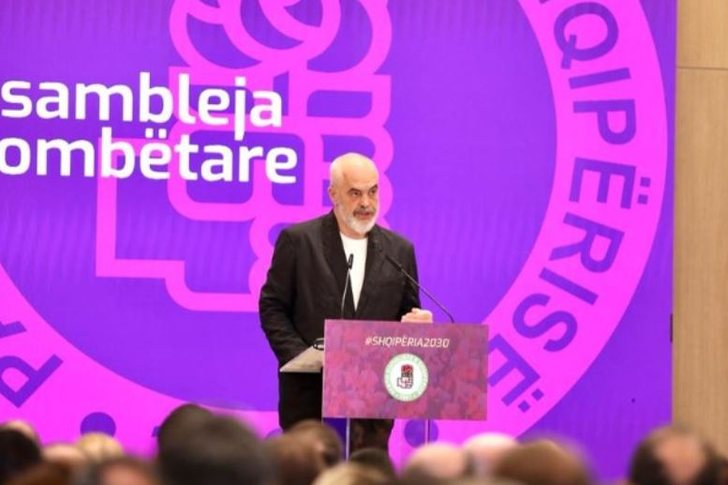
The speech of the Prime Minister, at the same time the...
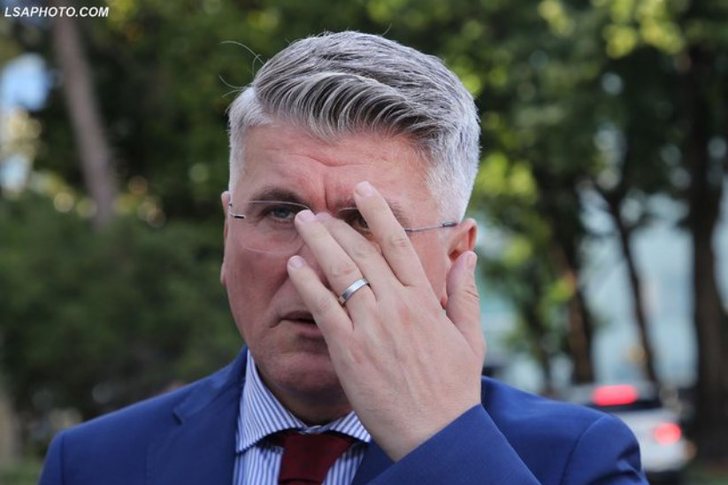
Agron Gjekmarkaj është shembulli tipik i “Kolltukofagut” t...
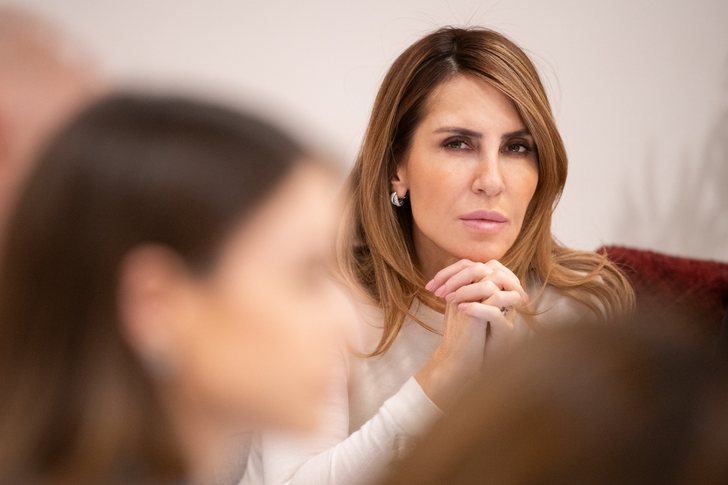
There is very little news to share about labor market ...
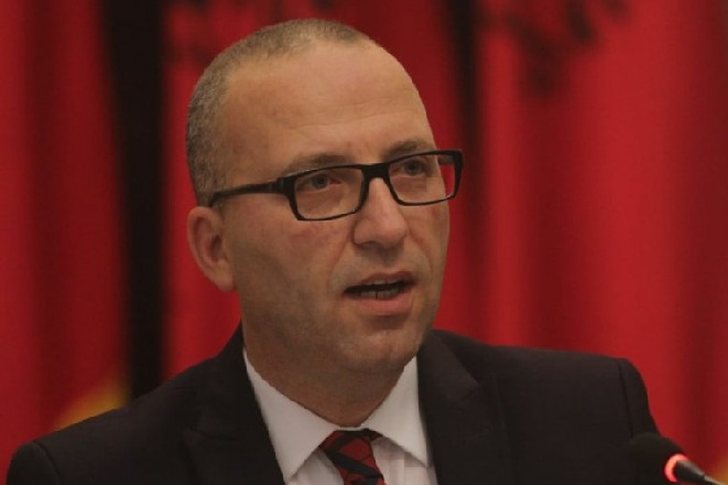
I believe everyone is glad that parliamentary activity...
It began to be created in the first two mandates of th...
Tirana celebrated and roared today in several arteries...
] In an announcement that did not upset anyone, the Pri...
The bad news that 21,000 young people left the labor m...
The Democratic Party has made a pact where it has acce...
Do you remember Gazi? That terrible Gazi who declared...
Irfan Hysenbelliu claims to be a big businessman, an hones...
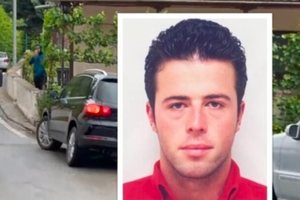
The murder of officer Enea Mekolli in the line of duty has...
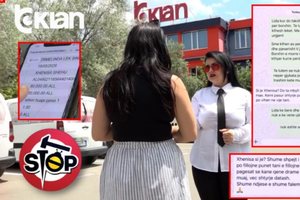
The next case broadcast on the show "Stop", this Thursday,...
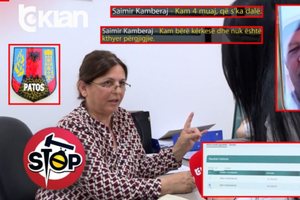
The case published this Thursday, June 4, on the show "Sto...

The Special Board of Appeal (KPA) decided this Monday ...

The KPA vetting decided this Thursday to dismiss the p...

Suela Salavaçi, a prosecutor in the Prosecutor's Offic...

The Special Board of Appeal reinstated the prosecutor ...
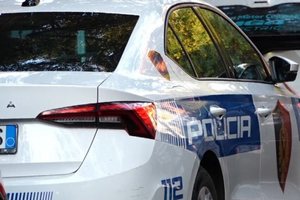
A 38-year-old man was arrested today near the Kamza turnof...
A money changer in Durrës lost 60 thousand euros after bei...
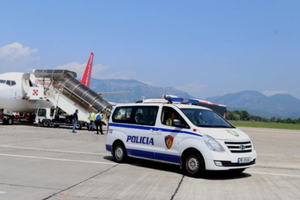
The 6 citizens captured in Dubai, members of criminal grou...
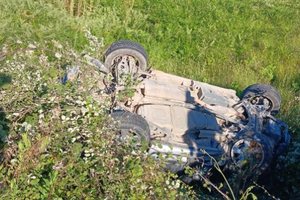
A serious accident occurred on the Kardhiq-Delvinë axis, i...
Today our country will be affected by stable weather condi...
For many children and teenagers, the long summer holidays ...
Albania is facing an unprecedented demographic transition,...
On Thursday, our country will be affected by unstable weat...
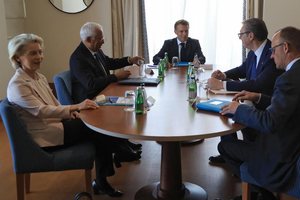
Leaders of the European Union and Western Balkan countries...
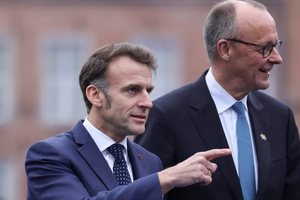
On the eve of the EU-Western Balkans summit, Germany and F...
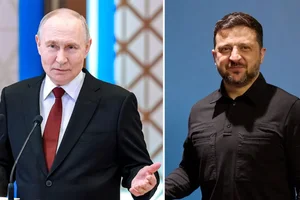
Russian President Vladimir Putin said the war in Ukraine c...
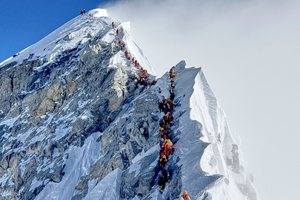
An extraordinary story of survival has been recorded in Ne...
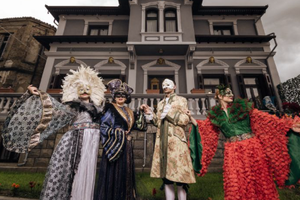
Korça is ready to open the summer season with one of the c...
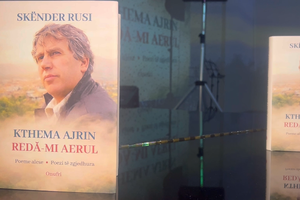
Two years after his passing, the renowned Korçë poet Skënd...
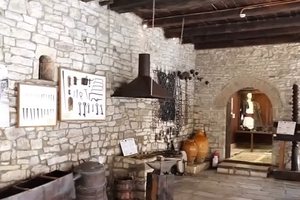
The Ethnographic Museum of Berat has opened its doors to v...
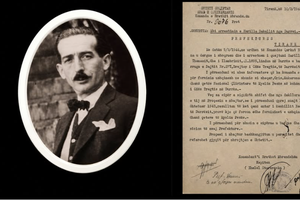
The story of Harilla Bakalli is one of the most chilling t...
Despite years of efforts at regional cooperation and free ...
Albania is the country with the highest level of severe ma...

This Friday, one US dollar is bought for 81.3 lek and sold...
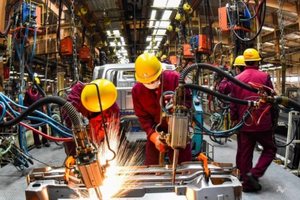
The government aims to transform the country's industrial ...