




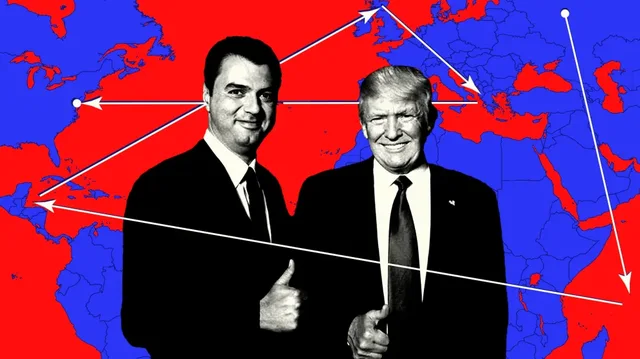
The well-known media "Mother Jones" has published another article, where the entire chronology of the Russian funding of Lulzim Basha is accurately shown.
The article shows how the events unfolded, from the payments made to Nick Muzin, the latter's lobbying in the USA for the photo of Basha with Donald Trump, as well as for the shell company Biniatta Trade, behind which a Russian stands.
"In 2017, Nick Muzin — a former aide to Sen. Ted Cruz (R-Tex.) who became a well-connected and highly paid lobbyist — reported in Justice Department filings that he was hired to win support in the United States for Lulzim Basha, head of the center-right Democratic Party of Albania (PDSH), who was then challenging Albania's current prime minister. It was nothing unusual for an influential lobbyist in Washington to be retained by a politician of foreign. But a $150,000 payment for Muzin's services had come from an odd source: Biniatta Trade LP, a shell company registered in Scotland out of two other shell companies based in Belize," the article clarifies.
The story of the events shows how a person or entity in Russia was using an American lobbyist to influence the elections in Albania. The article underlines that the Russians were interested in financing Basha, to increase the latter's popularity, in order to remove Rama from power.
"The story, a strong indication that a person or entity in Russia was using an American lobbyist to influence elections in Albania, generated front-page headlines in Albania. The possibility of covert Russian interference made sense. Basha's party opposed the government headed by Prime Minister Edi Rama, who had directed Albania towards the European Union and warned of the increase of Russian influence in the Balkans. Moscow certainly had an interest in Basha removing Rama," the article states.
According to Mother Jones, Basha's associate Nick Muzin has been linked to a Russian influence project. Behind the company that made the payment, Biniatta Trade, is the Russian Maxim Trofimets, who is known as the owner of this company. Research has shown that the offshore company "Alpha Consulting" tried to keep Trofimets' control over Biniatta a secret, but the truth has already come out.
"Neither Trofimets nor Valkovskaya responded to inquiries from Mother Jones. Muzin, who said in 2018 that he believed Biniatta was a private company owned by DPS supporters, did not respond to a request for comment. This information of newly discovered by the Pandora Papers is more evidence that the payment Muzin received was connected to a Russian influence project. This particular operation was part of that larger covert effort that included Russia's successful attempt to help Trump won the White House in 2016. While Trump and his allies continue to insist that the Russian meddling was all a hoax, evidence to the contrary continues to emerge," the article said.
Full article:
Five years ago, Mother Jones broke a wild story: a mysterious company based in Scotland had paid an American lobbyist with Republican ties to help a presidential candidate in Albania court support from the Trump administration, and the money was apparently related to Russia. Now a new piece of the puzzle has materialized.
In 2017, Nick Muzin — a former aide to Sen. Ted Cruz (R-Tex.) who became a well-connected and highly paid lobbyist — reported in Justice Department filings that he was hired to drum up support in the United States for Lulzim Basha, head of the center-right Democratic Party of Albania (PDSH), who was then challenging the current Prime Minister of Albania. There was nothing unusual about an influential lobbyist in Washington being retained by a foreign politician. But a $150,000 payment for Muzin's services had come from an odd source: Biniatta Trade LP, a shell company registered in Scotland out of two other shell companies based in Belize.
Biniatta Trade had a complicated chain of corporate relationships. Those Belize-based companies were listed in corporate filings as officers of two other firms, and those two companies were controlled by Russian nationals. Moreover, there was no public sign that Biniatta Trade did anything. Its website, registered by a resident of Odessa, Ukraine, consisted of stock images and boilerplate language. The British phone number he listed didn't work. It seemed to be a front. We couldn't tell who or what. But corporate ties were traced back to Russia.
The story, a strong indication that a person or entity in Russia was using an American lobbyist to influence elections in Albania, generated front-page headlines in Albania. The possibility of Russian covert intervention made sense. Basha's party opposed the government led by Prime Minister Edi Rama, who had steered Albania towards the European Union and warned of increasing Russian influence in the Balkans. Moscow certainly had an interest in Basha removing Rama.
DPA denounced the article and Mother Jones, claiming the piece was part of a conspiracy involving billionaire philanthropist George Soros. Eventually, Albanian prosecutors accused Basha of money laundering and falsification of documents related to this case. That prosecution was later dropped. The controversy arose oddly in the case of Charles McGonigal, the former head of the FBI's counterintelligence division in New York, who pleaded guilty in September to crimes that included accepting a $225,000 loan from an ally of Rama and then ordering an FBI investigation into American lobbying efforts on Basha's behalf.
Last year, a State Department report offered a strong suggestion that Biniatta Trade's payment to Muzin was part of an international clandestine Russian influence operation. In a summary of a US intelligence review, the department said that the Kremlin since 2014 had funneled at least $300 million to political parties and politicians outside Russia "to shape the external political environment in Moscow's favor." An administration source familiar with the report told AFP that Russia "spent about $500,000 to support the center-right Democratic Party of Albania in the 2017 election." (Muzin also received a $500,000 payment related to his Albanian lobbying; the origin of these funds is disputed.)
We have been clear about our concern about Russia's activity to influence the democratic process in various countries around the world, including our own," a State Department spokesman told Mother Jones at the time, in answers to questions about Albanian financing. "Our concern about Russia's activity in this regard is not with any country, but global in nature, as we continue to face challenges against democratic societies."
The Russian role in the issue of Albanian lobbying, until then, seemed more and more clear. But one key question remained: who exactly in Russia was behind it?
Earlier this month, a team of investigative journalists at the BBC, the Seychelles Broadcasting Corporation and Finance Uncovered solved part of the mystery. They discovered that the Scottish shell company paying for Muzin's US lobbying for Basha was owned by a resident of Moscow.
These journalists are part of an international consortium that has been working through the Pandora Papers, a massive trove of files revealed by more than a dozen corporate services firms - companies that set up and manage offshore firms that help high-net-worth clients high move and hide money. Although first revealed in 2021, the documents, which include almost 12 million files, are still classified.
This team of investigative journalists recently dug into documents from one of the companies whose files are included in the Pandora Papers: Alpha Consulting. The firm, based in Seychelles and owned by a Russian national named Victoria Valkovskaya, creates secret offshore companies for its clients, many in the former Soviet Union, including members of Russian leader Vladimir Putin's inner circle.
Biniatta Trade was among the shell companies created by Alpha Consulting, which used complex corporate structures in what appears to be a deliberate attempt to hide the true owners of the firms it concocted. Inside the Pandora Papers is a private agreement dated September 28, 2018 that listed a 40-year-old Moscow man named Maxim Trofimets as the owner of Biniatta Trade.
Journalists following this story did not learn why Trofimets was registered as the owner of Biniatta. But they noted that on LinkedIn Trofimets describes himself as a sales director at a Russian helicopter company called Exclases Holding. The company says it sells Italian helicopters to customers, including an unnamed Russian government agency, to carry out "special security missions".
Leaked documents show that Alpha Consulting tried to keep Trofimets' control over Biniatta a secret. A 2017 law that seeks to promote increased transparency among Scottish corporations requires firms registered in Scotland to disclose their beneficial owners, or "persons of significant control". On 27 September 2017, Alpha stated in a form sent to Scottish regulators that no one had such control over Biniatta. The next day she quietly finished another document, found among the leaked Pandora Papers, which said Trofimets controlled the company.
After the Mother Jones report on Biniatta appeared in March 2018, Valkovskaya moved to reclaim ownership of the Biniatta complex. She transferred control of the company to firms located in the Marshall Islands. Those Marshall Islands firms were run by a foundation controlled by five directors, all citizens of Seychelles. In an email to associates, cited by Finance Undercover and other media outlets, Valkovskaya wrote that Biniatta's owner was "a private Seychelles foundation in which there are five advisers" and, thus, there was no need "to declare a control. person" to regulators.
Much remains obscure. Newly released documents reveal that a helicopter salesman in Moscow ran a Scottish shell company that was paying for lobbying in the United States to help an Albanian party challenging a government led by an anti-Putin prime minister. But was Trofimets a front for the real source of the money that went to Muzin?
Neither Trofimets nor Valkovskaya responded to Mother Jones' questions. Muzin, who said in 2018 that he believed Biniatta was a private company owned by DPSH supporters, did not respond to a request for comment.
This new information revealed by the Pandora Papers is more proof that the payment Muzin received was connected to a Russian influence project. This particular operation was part of that larger covert effort that included Russia's successful attempt to help Trump win the White House in 2016. While Trump and his allies continue to insist that the Russian meddling was all a hoax, evidence to the contrary continues to emerge./ CNA

Albania is preparing to open 2 new embassies in Kiev a...
The Special Court has sentenced Ilir Selman, accused o...

The businessman and entrepreneur, Gjergj Luca, clarifi...
Interior Minister Taulant Balla has reacted to the ext...
Armando Behari is the 29-year-old who fell into the hands ...
Gjykata e Posaçme nuk ka mundur të zhvillojë këtë të e...

Socialist MP Erion Braçe's proposal that women be trea...
On Thursday, the Special Court rejected the request of...
Një shqiptar është arrestuar në Han të Hotit pasi në a...
Ekstradohet në Shqipëri, emri i njohur i drejtësisë, Behar...

Citizens of Serbia and Albania perceive a higher level...
Ekonomitë e Ballkanit Perëndimor, sidomos Shqipëria du...
Albania has been elected a member of the UNESCO Executive ...
The journalist, Basir Çollaku, says that our country h...
"ILF Consulting Engineers Austria GmbH" - ABKONS LLC i...
Former MP Myslim Murrizi says that today's Parliament ...
Five people have fallen into the handcuffs of the Sara...
The outgoing EU ambassador, Luigi Soreca, has sided wi...
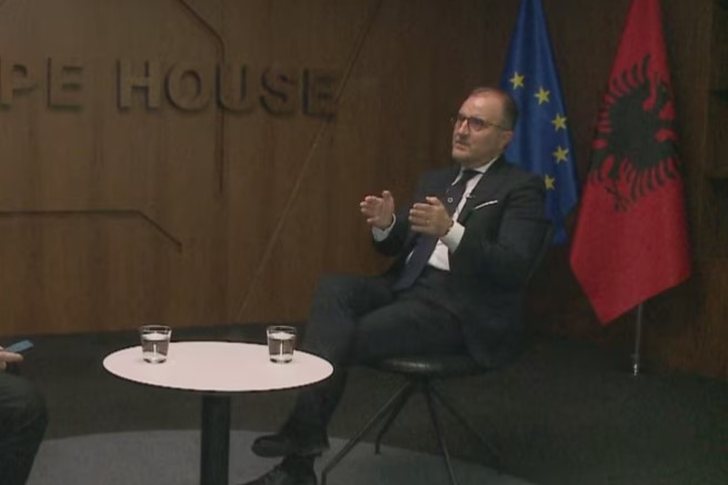
The outgoing EU ambassador, Luigi Soreca, spoke this W...
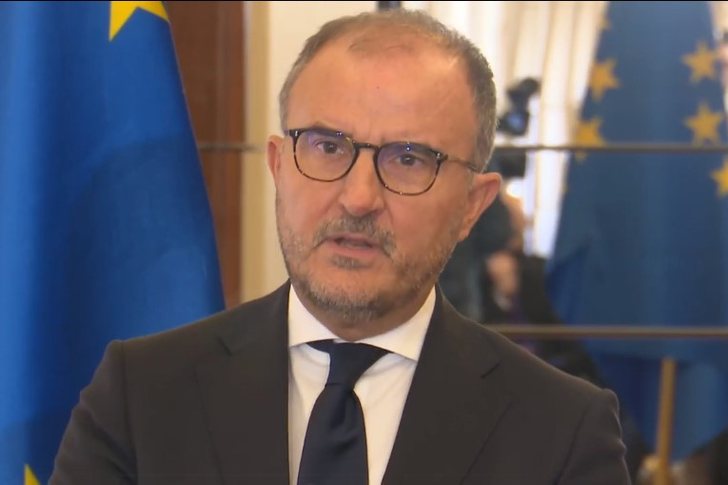
The Ambassador of the Delegation of the European Union...

CNA has launched another investigation that could lead to ...

Irfan Hysenbelliu is a businessman that we call "Irfan the...

In March 2026, CNA launched another investigation centered...
The arrested mayor of Tirana, Erion Veliaj, with 13 charge...

The Special Board of Appeal (KPA) decided this Monday ...

The KPA vetting decided this Thursday to dismiss the p...

Suela Salavaçi, a prosecutor in the Prosecutor's Offic...

The Special Board of Appeal reinstated the prosecutor ...

A road accident occurred this evening on Nikolla Zoraqi St...

Three people were shot and wounded in Elbasan last night b...

A serious incident occurred this Tuesday in the Yrshek are...

An accident occurred this Tuesday on "Dituria" street in K...
All of Southern Europe will face changing weather conditio...

Albania was hit by temperatures significantly higher than ...

For the first time, Pogradec welcomed the Inter-Lake Chess...

Albania has achieved a record for the employment of foreig...
US Secretary of State Marco Rubio arrived in Manila on Jul...
In the space of a few days, Ukrainian President Volodymyr ...
The spokesman for the Iranian Foreign Ministry warned Bulg...
Autoritetet italiane sekuestruan pako me afër 800 kilogram...

At a time when industrial products are increasingly taking...

Trust among people is not just a three-syllable word. It c...

Master of humor Todi Llupi has passed away at the age of 7...

The ninth edition of "MIK Festival" kicked off with one of...

Construction company licenses will have a validity period ...
The Centralized Purchasing Operator recently opened a tend...
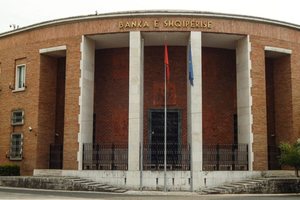
The new draft law "On the Bank of Albania" provides that t...
This Tuesday, one US dollar is bought for 81.2 lek and sol...