

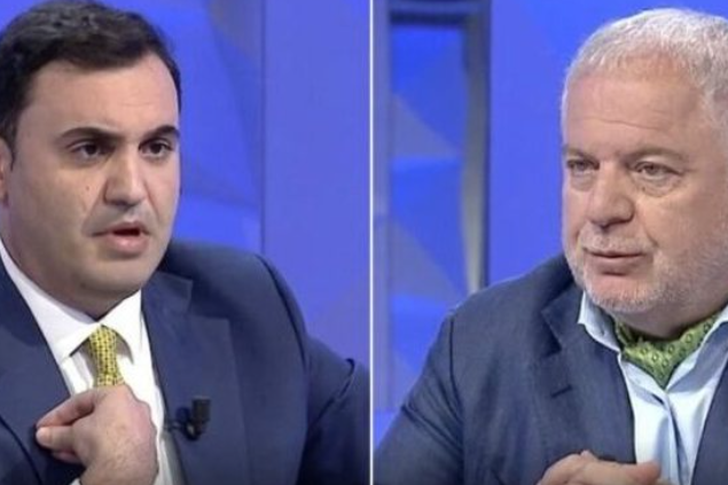
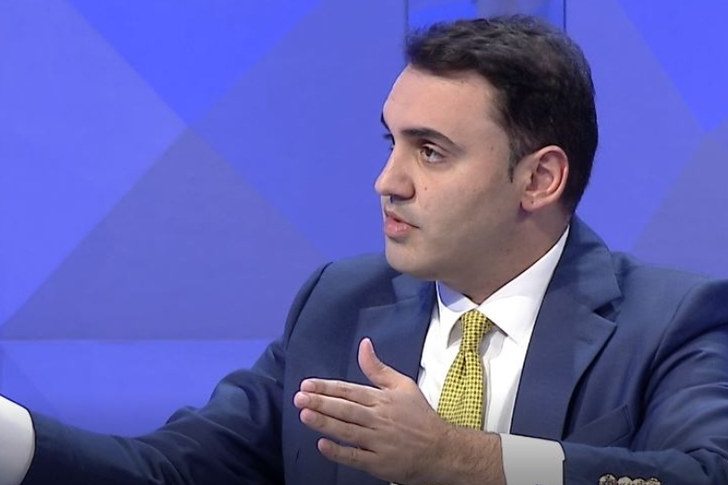
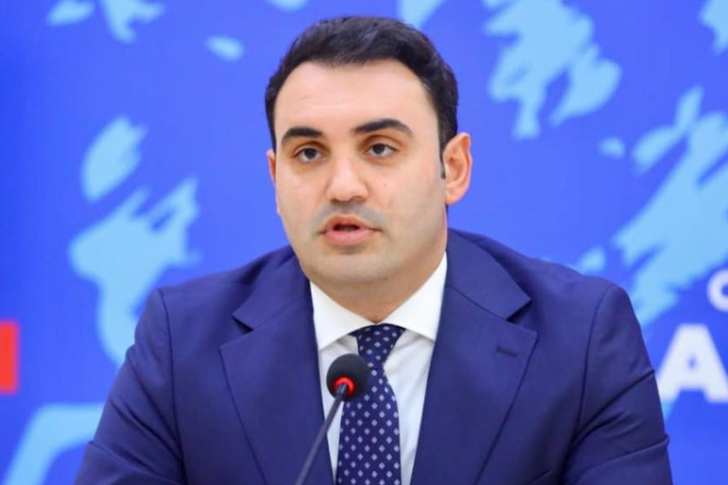
Fierce debate between Këlliç and Baton Haxhiu: Fraudster, you took money from incinerators
A strong debate took place on Blendi Fevziu's Opinion show...


A day ago, former political prisoners and their families climbed the ruins of the infamous prison in Spaç to raise their voices against a restoration project that, according to them, is stripping the buildings of their history.
They have protested because, under the auspices of the Ministry of Culture and in the function of a feature film, several objects in Spaçi are being plastered, risking erasing signs of a past that should not be forgotten.
Minister with three portfolios, Blendi Gonxja, has been acquitted regarding the intervention in the former Spaç prison.
For Rama's "super minister with three portfolios," everything that is being said about the intervention in the former Spaç prison is unnecessary smokescreen and that criticisms about the destruction of historical memory are fables.
Gonxha, the "brilliant" of the May 11 elections, whose votes are still fresh and with accusations from the opposition that he has secured them from crime, justifies himself by saying that the conservation interventions are not intended to change or erase historical memory, but to preserve it and ensure physical security at the site, creating the conditions for authentic filming and for the development of the museum.
"Recently, an unnecessary "smokescreen" has been created regarding the former Spaç prison, ignoring not only the extreme physical degradation but also fabricating fables about "distortion of historical memory" or "scams" for the sake of a film, which is misinforming, but also malicious in essence.
For all those truly concerned about the fate of this place, a symbol of national memory, and about the allusions and anathemas expressed, we clarify some important facts:
For more than three years, director Namik Ajazi, together with writer Visar Zhiti, himself a political prisoner and witness to that reality, have been undertaking an ambitious film project, which aims to bring to the screen one of the most important events of the anti-communist resistance in Albania: the Spaç Prisoners' Revolt in May 1973.
This revolt, undertaken by people who had experienced the surpassing of every limit of state violence, who had lost their freedom, their family and their lives, remains one of the most powerful testimonies of the indomitable spirit of man. Bringing this story to the screen, with artistic and ethical truth, is a moral and cultural obligation, both to the past and to future generations.
The difficulties of realizing this film project are great, due to the inability to reconstruct the prison camp on a set, the extremely dilapidated condition of the site in Spaç, and the need for authentic filming in an environment that still preserves the real traces of the tragedy of that place.
On the other hand, the Albanian Government's project to turn Spaç into a Museum of Remembrance, open and accessible to all, has been underway for some time. The former prison and forced labor camp of Spaç is the most symbolic place of remembrance of the cruelty of the communist regime in Albania and of the numerous acts of resistance by Albanian citizens.
Various countries that have experienced authoritarian regimes are dealing with the material legacy of their difficult past, and initiatives to transform former prisons into museums, memorials, or cultural centers are proving fruitful for civil society and institutions to understand, process, and confront the past that this type of heritage represents.
Given its extraordinary importance, the time has come for Spaç to be returned to Albanian citizens, and therefore a management plan was developed, presented and approved in 2024, the implementation of which will enable the realization of the vision for the future of Spaç.
The management plan was conceived after a detailed analysis of the cultural heritage, its values ??and conservation status, as well as after a round of consultations with interest groups that included more than 58 individuals in the preliminary consultation: former political prisoners; professionals from memory preservation, advocacy and research institutions in Albania; directors of museums and museum areas inside and outside the country, representatives and members of the Mirdita community, artists and cultural professionals, teachers and history professors.
Through the approach to the rehabilitation of values ??and landscape, the vision is that Spaçi will continue to be a place of personal and collective memory and reflection. The goal regarding the former prison buildings is to preserve them in their most original state, halting their rapid deterioration, preserving them in such a way as to bear witness to these three decades in which Albanian society has tried to reflect on its recent and painful history, in which the signs of the passage of time on the buildings are also a metaphor for a distancing from the bitter memory of the country. But the current degradation also poses an eminent risk of irreversible loss of this memory.
Further details on the suggested conservation interventions, the possible recreation of key elements, the recovery of paths and entrances to the mine tunnel and the strategies for interpreting the cultural heritage are also presented in this plan, according to which the necessary procedures will be undertaken for the establishment of the Prison and Forced Labor Camp Museum, a museum dedicated to the resistance to the communist dictatorship. The focus of the museum will be on the struggles and stories of suffering, hardship and resistance that took place in Spaç, from the fundamental episode of the Spaç Revolt in 1973, to the numerous daily acts and gestures of survival to the loss of humanity, dignity and solidarity that was imposed on the prisoners. Further information on the envisaged collection of the Museum, on the steps necessary for its creation and on the specific strategy of operation will be presented below and will be consulted publicly step by step.
However, it must be understood that the time required to create such a museum, with all the required standards, exceeds the deadline for the start of filming, which is already set in a historic co-production opportunity with a prestigious Italian studio. For this reason, we requested that within the large rehabilitation project, the implementation of some partial conservation and reinforcement interventions be prioritized, also considering the high risk of accidents on the site, which would enable physical safety and the recreation of the atmosphere of 1973 with the help of special effects and scenography, with a minimal budget and intervention. Why wasn't there a protest years ago about the blue windows, the demolition of dozens of monuments and structures, the landslides and erosion from being left to chance, the collapse of beams and socles, the disappearance of artifacts and materials, the danger to visitors? Just look at the photos! And all of a sudden, news of a movie is endangering Spaç?
The interventions are not intended to modify the historical memory, on the contrary, they are carefully thought out to preserve and enrich it. At the beginning of the works, signs of rehabilitation were visible, but they are integrated and harmonized through scenographic and restoration techniques, resembling as closely as possible the original state of the time.
This film project, which will bring to the screen an extraordinary story of courage, pain, and idealism, is not a political initiative, nor a non-transparent maneuver, but a painstaking and sincere effort to remember and honor a dark and heroic chapter of our history.
Any voice that tries to use this situation for political instrumentalization or to incite suspicion and division is in fact contradicting the effort to document a truth that was silenced and denied for decades.
This film project makes the invisible visible, gives voice to those who had no voice, and shows the whole world what happened in the political prisons of the Albanian communist dictatorship. This is a debt that history has left us, and that art has the power and responsibility to repay.
Regarding the site of the former Spaç prison, we are aware of the sensitivity of this site and where, through the management plan, all conservation and further steps have been foreseen that will guarantee the protection of historical memory, the integrity of the site and its use for public education, civic reflection and documentation of historical truth.
Our past cannot be hidden, cannot be redesigned according to momentary interests, nor can it be forgotten through negligence.
Every step taken in Spaç is taken with the sensitivity required by a place burdened with pain and dignity, with the awareness that memory is not kept alive only by the walls that stand, but by the voices that rise to tell the truth that those walls have seen.
Therefore, conservation interventions and the film project are not two separate paths, but two pillars of the same noble effort to prevent oblivion from falling upon what happened, to learn from the wounds of history, and to build retaining walls and bridges of awareness between generations, so that hell will never be repeated!
Last, but not least! We must not forget the experiences of the "protests" with cobras on their belts for the playground in the Great Lake Park and the Molotov cocktails against Bunkart by the Sancho Panchos of old politics! Let's distance ourselves from them!", the reaction reads./ CNA

A strong debate took place on Blendi Fevziu's Opinion show...
Famous Democrat from Korça, Ilir Vrenozi, has shared a vid...

Journalist Klodiana Lala shared details from the murder of...
The leader of the Opportunity Party, Agron Shehaj, stresse...
The elected DP MP in Tirana, Belind Këlliçi, said today th...
The Ambassador of the Republic of Albania to Austria, Fate...
The leader of the Opportunity Party, Agron Shehaj, said to...

The political leader of the Democratic Party for Tirana, B...
The leader of the Democratic Party for the Durrës region, ...

The leader of the Democratic Party, Sali Berisha, during a...
The leader of the Freedom Party, Ilir Meta, has posted a c...
The Parliament ratified the cooperation agreement on secur...

The leader of the Democratic Party, Sali Berisha, said tod...
The leader of the Democratic Party, Sali Berisha, said tod...
Democratic Party MP Ina Zhupa said today that the electora...
The Albanian Parliament has approved with 71 votes in favo...
Minister of State, Taulant Balla, delivered a message to t...
The Complaints and Sanctions Commission will hold a public...
The elected MP of the Democratic Party, Belind Këlliçi, de...
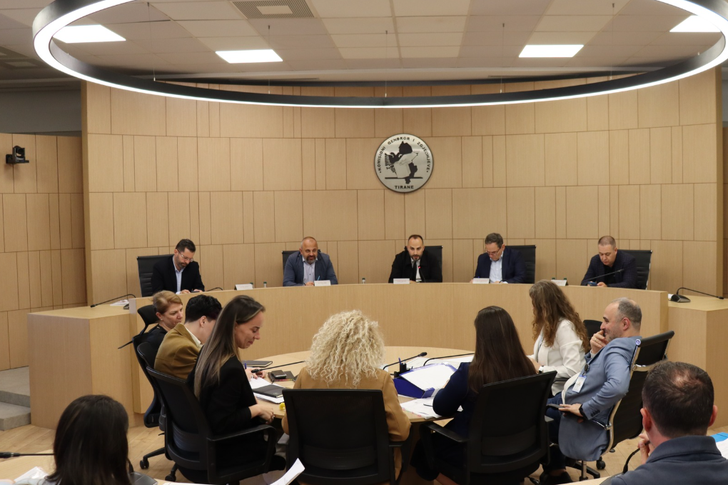
The KAS rejects the appeal filed by the DP-ASHM Coalition ...

Irfan Hysenbelliu claims to be a big businessman, an hones...
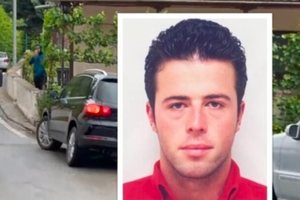
The murder of officer Enea Mekolli in the line of duty has...
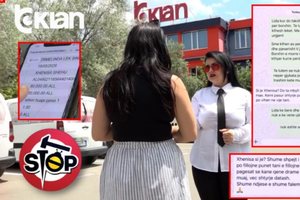
The next case broadcast on the show "Stop", this Thursday,...
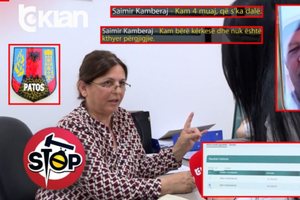
The case published this Thursday, June 4, on the show "Sto...

The Special Board of Appeal (KPA) decided this Monday ...

The KPA vetting decided this Thursday to dismiss the p...

Suela Salavaçi, a prosecutor in the Prosecutor's Offic...

The Special Board of Appeal reinstated the prosecutor ...

A 38-year-old man was arrested today near the Kamza turnof...

A money changer in Durrës lost 60 thousand euros after bei...
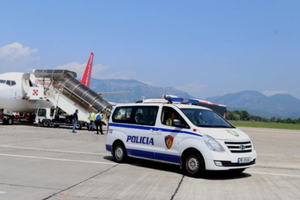
The 6 citizens captured in Dubai, members of criminal grou...
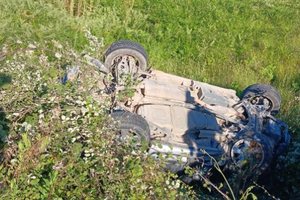
A serious accident occurred on the Kardhiq-Delvinë axis, i...

Today our country will be affected by stable weather condi...

For many children and teenagers, the long summer holidays ...
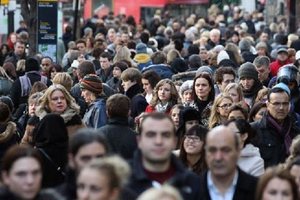
Albania is facing an unprecedented demographic transition,...

On Thursday, our country will be affected by unstable weat...
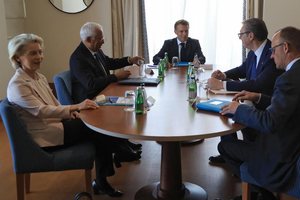
Leaders of the European Union and Western Balkan countries...
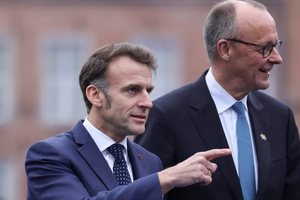
On the eve of the EU-Western Balkans summit, Germany and F...

Russian President Vladimir Putin said the war in Ukraine c...
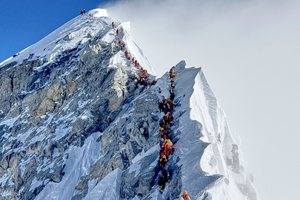
An extraordinary story of survival has been recorded in Ne...
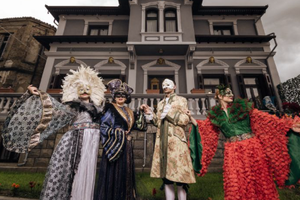
Korça is ready to open the summer season with one of the c...
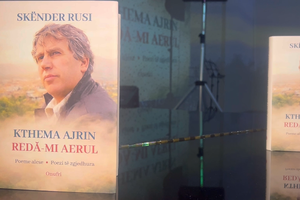
Two years after his passing, the renowned Korçë poet Skënd...
The Ethnographic Museum of Berat has opened its doors to v...
The story of Harilla Bakalli is one of the most chilling t...
Despite years of efforts at regional cooperation and free ...

Albania is the country with the highest level of severe ma...

This Friday, one US dollar is bought for 81.3 lek and sold...
The government aims to transform the country's industrial ...