


"I'm the cousin..."/ The falcon takes 60 thousand euros from the money changer, introduced himself as a relative of a businessman
A money changer in Durrës lost 60 thousand euros after bei...

A money changer in Durrës lost 60 thousand euros after bei...

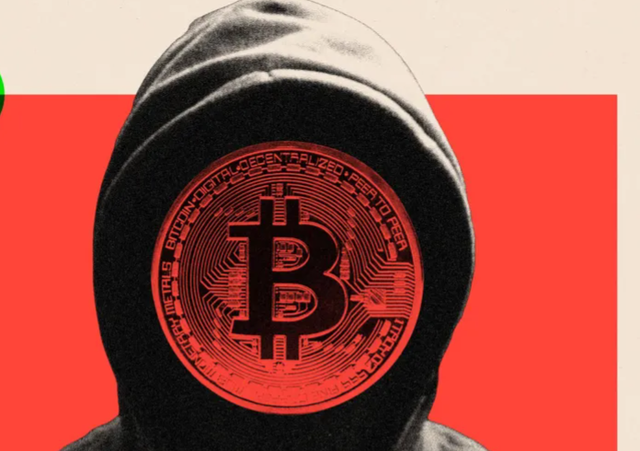
There's something unique about cryptocurrency theft. All transactions are recorded on a digital ledger, known as a blockchain, so even if someone takes your money and puts it in their own cryptocurrency wallet, it's still visible online.
"You can see your money there on the public blockchain, but there's nothing you can do to get it back," says Helen, who lost around $315,000 (£250,000) to thieves.
She compares this to watching a thief hoard your valuables on the other side of an impassable abyss.
For seven years, Helen and her husband Richard (not his real name), both residents of the United Kingdom, had been buying and hoarding a cryptocurrency called Cardano.
They liked the idea of ??investing in a digital asset that had the potential to grow significantly in value, unlike funds saved in more conventional ways. They knew it was riskier, but they were careful to keep their digital keys safe.
But somehow hackers broke into their cloud storage account, where they stored information about their cryptocurrency wallets, and accessed them.
In February 2024, after a small test transfer, the criminals sent all of the couple's coins to their digital wallets in a quick and silent attack.
The couple then watched for months as their money moved from one wallet to another, powerless to do anything. (The inherent contradiction with cryptocurrency is that all transactions are publicly traceable, but users can be publicly untraceable if they wish.)
Helen and Richard are not rich. She is a personal assistant, he is a composer, and they had high hopes for their investment in Cardano.
"We had been buying these coins for so long... We used every penny we could find to buy more," Richard says. "Apart from my parents' deaths, this theft is the worst thing that has ever happened to me."
Since then, Helen has been on a mission to recover her money. She received detailed reports from various police forces and Cardano developers. Now, even though she has the criminals’ wallet address, no one can do anything to unmask them.
Their plan is to save enough money to hire private investigators to try to track down the hackers. “It leaves you with a feeling of helplessness,” she says, “but I’m going to keep trying.”
An explosion in cryptocurrency crime
A survey conducted for the Financial Conduct Authority (FCA) in August 2024 suggested that approximately 12% of British adults owned crypto-assets, the equivalent of around seven million people.
Globally, it is estimated that 560 million people now own cryptocurrencies. But as ownership has increased, so has theft. The pandemic has brought a surge in the value of cryptocurrencies and with it an explosion of attacks on the industry.
And 2025 was another successful year for cryptocurrency criminals, with total thefts reaching more than $3.4 billion (£2.5 billion), according to investigators at blockchain analysis firm Chainalysis. The annual figure has remained at the same level since 2020.
Much of the money is being stolen in massive cyberattacks on cryptocurrency companies. For example, North Korean hackers stole $1.5 billion (£1.1 billion) from cryptocurrency exchange Bybit in February 2025.
The losses in this case and in the vast majority of other cases are covered by deep-pocketed cryptocurrency firms, with little impact on individuals. But 2025 also saw an increase in the number of attacks on individual cryptocurrency investors.
Chainalysis research says these individual attacks increased from 40,000 in 2022 to 80,000 last year.
Hacking, fraud or extortion of individuals accounted for around 20% of the entire value of stolen cryptocurrencies, estimated at $713 million (£532 million).
But the company adds that the number could be much higher as not all victims will choose to report thefts publicly. When that happens, you may be left alone.
Many thefts or frauds in traditional finance are covered by banks or card companies. In the UK you can complain to the Financial Ombudsman Service and may be able to get compensation from the Financial Services Compensation Scheme.
“Cryptocurrencies remain largely unregulated in the UK and high risk,” the FCA says. “If something goes wrong, you are unlikely to be protected, so you should be prepared to lose all your money.”
A stark reminder of this comes if you search the internet for "Binance account hacked" - Binance is the world's largest cryptocurrency exchange with a reported 1.4 million users in the UK, but the page on its website offering advice to victims of the theft is blocked in the UK.
The company has not accepted new customers in the UK since 2023 because it is not authorised to operate by the FCA. However, criminals do not care where their victims are and are targeting people all over the world indiscriminately.
Chainalysis has described these attacks on individuals as “the undocumented frontier for crypto crime.” They attribute the volume of crimes to the number of people entering the cryptocurrency world as investors, as the value of the coins has increased, and argue that improved security practices in major services may have pushed “attackers toward individuals who are perceived as easier targets.”
Then there's the fact that the more cryptocurrencies you have and the more public you are about them, the more likely you are to be targeted - small coin holders (or holders, as the community calls them) are much less likely to be affected.
Burglary, robbery and assault
As for thieves, they can be anywhere.
In October, blockchain researchers from Elliptic, a cryptocurrency analytics company, warned that North Korean state-sponsored hackers are increasingly targeting wealthy cryptocurrency owners. There are many new scammers and hackers from other countries as well.
In December in the US, 22-year-old Evan Tangeman pleaded guilty to participating in a group of cryptocurrency thieves calling themselves the Social Engineering Enterprise, who are accused of stealing more than $260 million (£194 million) between October 2023 and May 2025.
Prosecutors allege they targeted the cryptocurrency rich using hacked databases, tricking victims into thinking they were cryptocurrency exchanges and convincing them to transfer coins.
The gang members, who were all young people mainly in the US, are said to have spent the stolen coins on private jets, expensive cars and luxury handbags that they gave away at nightclubs.
In some cases, prosecutors say, the gang organized home burglaries to steal devices containing keys to cryptocurrency vaults. The break-ins and robberies have become so common that there is now a term for them in the cryptocurrency community: "key attacks," so named because criminals are known to threaten victims with keys.
Last April, cryptocurrency criminals in Spain tried to force a man and a woman to give up their cryptocurrency.
Spanish police said the man was shot in the leg and he, along with his partner, were held captive for several hours while the criminals tried to access their cryptocurrency wallets. The woman was eventually released, but her partner remained missing, with his body later found in the woods.
Five people were arrested in Spain in connection with the case, while four others were charged in Denmark.
There have been several similar cases in France, including one where an attempted kidnapping was filmed. Another case in early 2025 saw David Balland, co-founder of Ledger, a cryptocurrency security company, kidnapped along with his wife from their home in central France.
A few days later, police rescued them, but Balland's finger was severed during the attempted extortion. Then, last month, UK police arrested six people after masked men stopped a car travelling between Oxford and London and forced one of the passengers to transfer £1.5m worth of cryptocurrency.
Phil Ariss, UK director of Public Sector Relations at blockchain intelligence firm TRM Labs, has previously said that criminal groups that are already comfortable using violence to achieve their goals are always likely to migrate to cryptocurrencies.
"As long as there is a viable path to launder or liquidate the stolen assets, it doesn't really matter to the perpetrator whether the target is a high-value wristwatch or a cryptocurrency wallet."
"Cryptocurrency is now firmly established in the mainstream, and as a result, our traditional understanding of physical threat and extortion must evolve accordingly."
It's hard to determine exactly how widespread the attacks are, as few are publicly reported. But it seems like these types of thefts are a small part of the growing problem of personal cryptocurrency theft. And many criminals rely on tried and true hacking or fraud techniques that are becoming easier thanks to the abundance of data stolen in massive cyberattacks on companies.
Bitcoin millionaires are becoming so common
"Data is a common problem, as Bitcoin millionaires are becoming so common and there are stolen databases that are enriching the list of targets all the time," says Matthew Jones, founder of Haven, a cryptocurrency security firm.
A data breach at Kering, the parent company of luxury brands including Gucci and Balenciaga, is a case in point, according to a hacker interviewed by the BBC. As well as millions of customer names and contact details, the databases show how much money people have spent in stores. The hacker the BBC spoke to says he bought the spreadsheets for $300,000 (£224,000) in order to target the biggest spenders.
He claims to have used the information along with details from another stolen database to defraud multiple Coinbase users out of at least $1.5m (£1.1m) in crypto. The criminal confirmed that he was in possession of the stolen data and proved to the BBC that he owned $700,000 (£522,000) in Bitcoin, which he says came from a victim.
"I buy hacked databases and compare them to others to check for wealthy people and for updated phone numbers and emails. I'm still going through the list and I tripled my money very quickly," he claimed.
The hacker gave no details about himself other than the fact that he is a student at an American university. When asked if he considered himself a hacker or a fraudster, he said: "Neither, I am only interested in making money."
Kering did not respond to a request for comment on this, but has previously told the BBC that its IT systems had been secured following the data breach and stressed that no bank account numbers, credit card information or government-issued identification numbers were stolen during the attack.
Matthew Jones from Haven tells me that he himself had cryptocurrency stolen, and that experience prompted him to develop a cryptocurrency wallet with additional security features.
He says features like continuous biometric verification to ensure only the owner can send coins and geo-fencing to block any transactions outside of one's home or work are now needed. He's also building a panic button into the digital wallet.
"People are walking around with millions of dollars in cryptocurrencies these days, and wallets don't have a limit on the amount that can be held - or how much can be stolen at once," he says.
To be your bank
Matthew Jones' crypto portfolio is all about what the industry calls "self-care."
Haven's app is similar to those from Metamask and Trustwallet. Other companies like Trezor and Ledger offer physical devices like USB sticks, but the idea is the same: you can be your own bank. But with this added freedom comes added risk, as you have no protection at all. If your coins are stolen from your personal wallet, you can't even go to a cryptocurrency exchange to complain.
Asked whether the freedom of "being your own bank" outweighs the growing risks, Jones insists it does.
"Banks are not truly accountable to their customers and they have the power to freeze or close your account based on broad, often vague reasons," he argues.
He also says he balked when traditional financial institutions asked him things like why he was moving money out of an account. Helen and Richard lost all their coins after choosing to have their own bank. What made this particularly painful was the fact that most of the money came from the sale of Richard's mother's house after her death.
"My mother's money is gone," says Richard. "All that savings she had made for my future was stolen. We had to sell our musical instruments and our car, and we were briefly homeless."
However, they are not giving up on cryptocurrency completely. If they get back the lost money or accumulate enough savings, they plan to immediately return to cryptocurrency investments./ CNA
Taken from BBC


German Foreign Minister Johann Wadephul has underlined the...

The death toll from the collision of two trains in Cordoba...
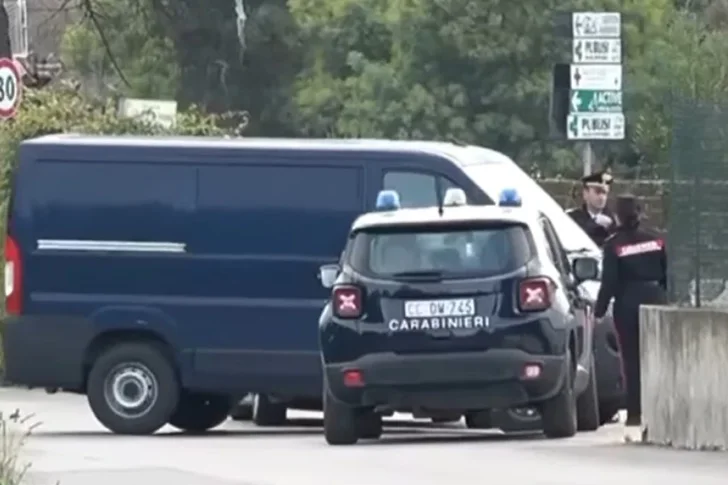
A brutal crime has been discovered in Italy, in the Ang...

A serious rail accident has occurred in Spain, where two h...
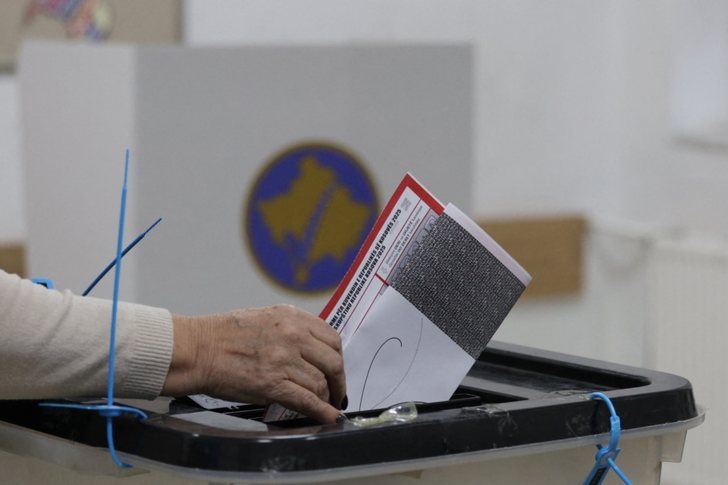
In almost half of the polling stations that are supposed t...

Israeli Prime Minister Benjamin Netanyahu has called a mee...

US Treasury Secretary Scott Bessent said in a television i...

The Chairman of the KLA War Veterans Organization, Hysni G...

Countries targeted by US President Donald Trump's threat t...

NATO chief Mark Rutte announced today that he had a phone ...
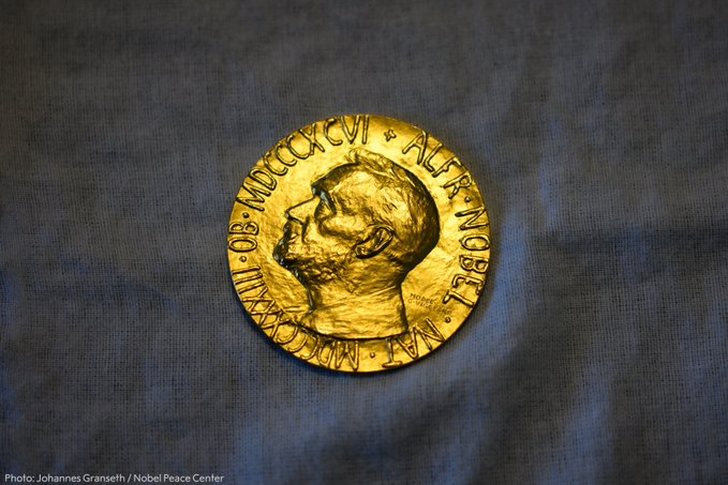
The Norwegian Nobel Institute has issued another statement...
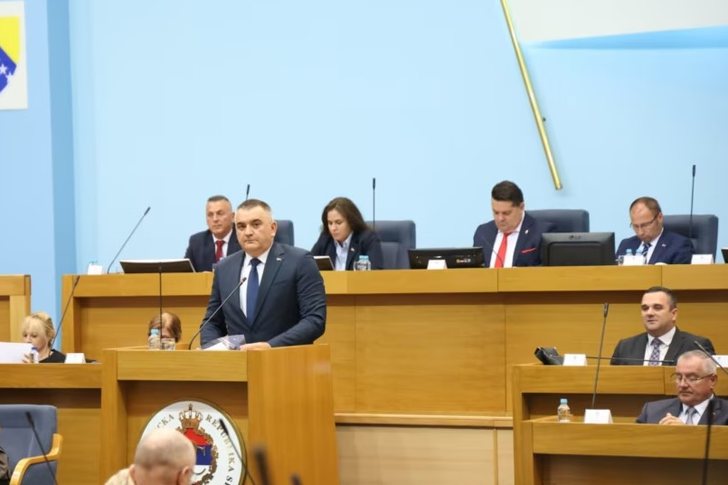
Deputies of the People's Assembly of Republika Srpska appr...

The Syrian army, within two days, aided by tribal militia,...

The body of a passenger who was on board the plane that di...

A fire has engulfed a shopping mall in the Pakistani city ...
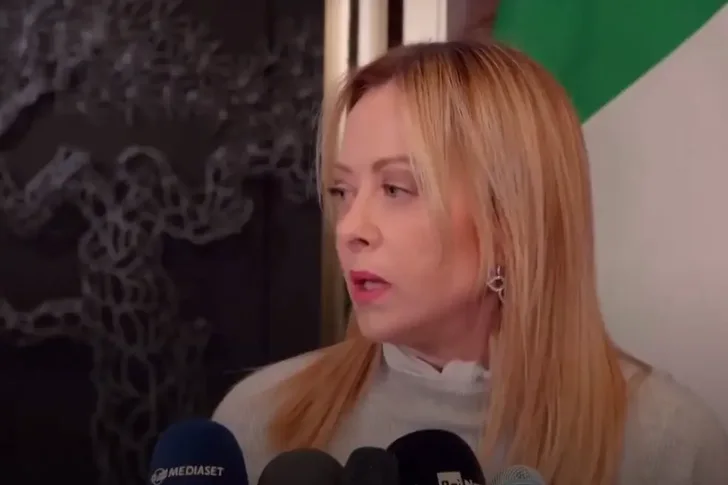
Italian Prime Minister Giorgia Meloni has had a telephone ...
In almost half of the polling stations that are supposed t...

NASA has moved its tallest and most powerful rocket from t...

US President Donald Trump's administration wants nations t...
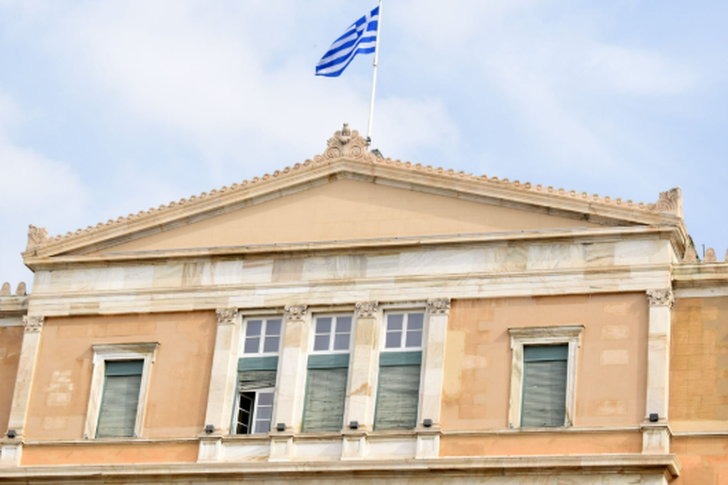
Greece has introduced a new draft law by the Ministry of M...

The next case broadcast on the show "Stop", this Thursday,...

The case published this Thursday, June 4, on the show "Sto...

The protests of recent days related to the situation in Zv...

The case addressed this Wednesday, June 3, on the show "St...

The Special Board of Appeal (KPA) decided this Monday ...

The KPA vetting decided this Thursday to dismiss the p...

Suela Salavaçi, a prosecutor in the Prosecutor's Offic...

The Special Board of Appeal reinstated the prosecutor ...
A money changer in Durrës lost 60 thousand euros after bei...

A serious accident occurred on the Kardhiq-Delvinë axis, i...

Authorities have conducted a large-scale anti-drug operati...

A convict was found dead today in the premises of the Pris...

Today our country will be affected by stable weather condi...

For many children and teenagers, the long summer holidays ...

Albania is facing an unprecedented demographic transition,...

On Thursday, our country will be affected by unstable weat...

Russian President Vladimir Putin said the war in Ukraine c...

An extraordinary story of survival has been recorded in Ne...

The Peace Implementation Council in Bosnia and Herzegovina...

John Bolton, the former national security adviser to US Pr...

Korça is ready to open the summer season with one of the c...

Two years after his passing, the renowned Korçë poet Skënd...

The Ethnographic Museum of Berat has opened its doors to v...
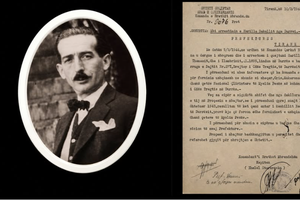
The story of Harilla Bakalli is one of the most chilling t...

Despite years of efforts at regional cooperation and free ...

Albania is the country with the highest level of severe ma...

This Friday, one US dollar is bought for 81.3 lek and sold...

The government aims to transform the country's industrial ...