

Jahjaga: The finger at the perpetrators, not the victims of sexual violence
DW: President Jahjaga, it has been several years since...


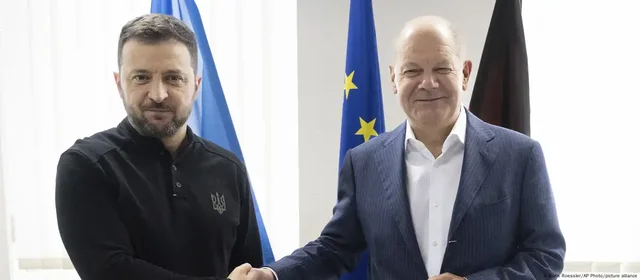
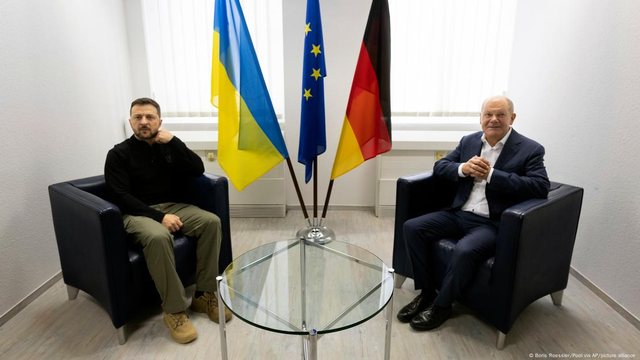
There is an opinion in the Berlin office that the time has come for more intensive diplomatic efforts to end the war in Ukraine. In an interview with ZDF on September 8, Chancellor Olaf Scholz said: "I think now is the moment when we also have to discuss how we can move from this situation of war to peace faster than it currently seems." But the social democrat has not given any concrete suggestions for this. However, he supported the idea that Russia should also participate in the upcoming peace summit in Switzerland.
The conservative CDU/CSU opposition in Berlin immediately reacted strongly to Scholz's words. "This move by the chancellor was predictable because it fits into the strategy of parts within the SPD who want to carefully push Ukraine into a fake Russian-dictated peace in which support is gradually waning and fake negotiations are called for instead," said CDU foreign affairs politician Roderich Kiesewetter to Bild. Even his party colleague Jürgen Hardt emphasized to the Berliner Zeitung that "you cannot do Putin a greater favor than to force Ukraine to the negotiating table while he continues to kill in Donbass." "We all want negotiations, but it is up to the aggressor to stop the aggression," said Hardt.
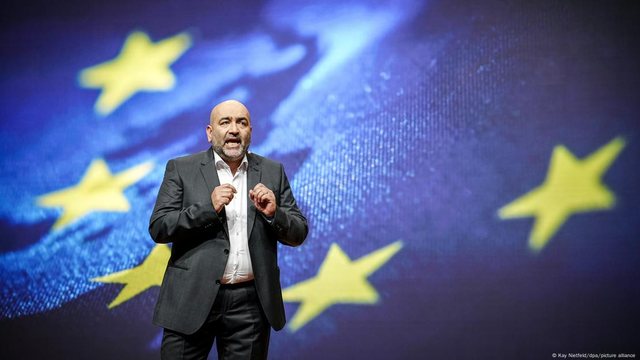
The Greens, part of the government coalition, are also skeptical. According to the dpa news agency, co-chairman of the Greens, Omid Nouripour, said in Berlin that the willingness in the Kremlin to have "discussions on equal terms" is not particularly great. However, negotiations with Russia are necessary, even in the form of peace conferences, said the federal co-chair of the 90/Green Alliance.
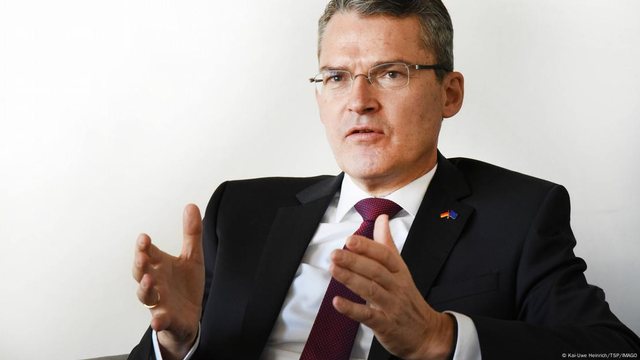
Skepticism is also found among liberals, FPD. FDP foreign policy spokesman Ulrich Lechte told the Berliner Zeitung that while his party is of the opinion that diplomacy is never in short supply, he considers it unlikely that Putin would be willing to sit down with Ukraine. and withdraw his troops. "A new fake peace, as finally agreed with the Minsk II agreement, is in my opinion completely unacceptable," said Lechte.
Scholz's statements to bring Ukraine and Russia to the negotiating table are not surprising to observers. The Social Democrats' bitter defeats in state elections in the eastern German states of Saxony and Thuringia are likely to be one of the reasons for the chancellor's comments, as are the upcoming elections in the state of Brandenburg, also in eastern Germany, on September 22. . This state is currently governed by Scholz's party colleague, Dietmar Woidke.
Alex Yusupov, head of the Russia program at the Friedrich Ebert Foundation, believes Scholz will support Woidken and wants to signal that official Berlin also thinks, "that the war must end sooner rather than later - also through negotiations and not just by means In an interview with DW, the political scientist emphasized that the populist parties would use it as their advantage if the chancellor ignored the issue of Russia's war against Ukraine.
And the Ukrainian political scientist, Volodymyr Fesenko, thinks that Scholz is trying to find a certain political balance. "He has seen the trend. The topic of peace talks is being actively discussed and Scholz therefore decided to speak about it, especially after the last meeting with Zelensky," said Fesenko. He is convinced that the chancellor aims to adapt to the domestic political atmosphere and thus strengthen his position ahead of next year's federal election.
But Fesenko sees a new emphasis placed by Scholz. Until now, the position has been maintained that only Ukraine should decide when and under what conditions negotiations with Russia will begin, Fesenko emphasizes. "Now Scholz puts it a little differently, but his statement contains nothing concrete and nothing sensational." Fesenko believes that debates about peace negotiations will increase significantly after the US presidential elections in November.
Andrij Melnyk, Ukraine's former ambassador to Germany, recently told the Berliner Zeitung: "Personally, I believe that Chancellor Olaf Scholz can get creative and use Germany's existing diplomatic channels to see if talks with Putin would make sense ."
But what does this mean exactly? Political science researcher Alex Yusupov believes that Berlin cannot supply Ukraine with weapons and at the same time act as a neutral mediator in the negotiations. "Germany has lost all influence over Russia. The Kremlin does not see Berlin as an independent actor," the expert emphasizes. Germany is on the side of Kiev, so Berlin will definitely not initiate "Minsk III".
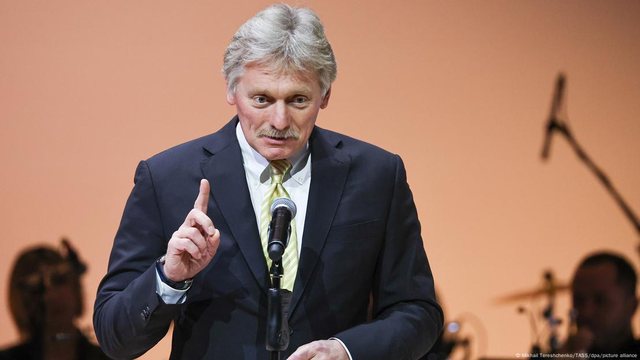
The Kremlin itself reacted with reservations after Scholz's statements to increase diplomatic efforts. According to Dmitry Peskov, spokesman for the Russian president, there are currently no prerequisites for the start of a peace process between Russia and Ukraine. There were no statements from "the country that runs this whole process and the West collectively," he said, meaning the United States.
Ukrainian Prime Minister Denys Shmyhal assured reporters on September 10 that Kiev wants to withdraw a representative of Russia for talks at the upcoming peace summit in order to "prevent manipulation by the Russian Federation and demonstrate to all participants the ability or inability theirs to negotiate peace." In July, Moscow refused to participate on the grounds that Russia "does not accept ultimatums" that follow the Ukrainian president's "formula".
Meanwhile, Andriy Yermak, the head of President Volodymyr Zelensky's office, reminded in Telegram that the only path to justice is "exclusively the Ukrainian formula of peace, the norms of international law as well as the territorial integrity and sovereignty of Ukraine"./ DW

DW: President Jahjaga, it has been several years since...
The Democratic Union for Integration, the largest party of...
In the early hours of Sunday morning, September 8, two...
The chief executive of Anglo-American mining company R...
A rocket, which was launched by Yemen's Houthi rebels,...
The head of NATO's Military Committee said the questio...
Ukrainian President Volodymyr Zelensky has again calle...
Serbia's Minister of Labour, Veterans and Social Affairs, ...
Residents and authorities continued their battle with ...
At least eight people have died during a failed attemp...
The Government of Serbia has approved a conclusion that or...
Russian officials have said that if the West allows Kiev t...
Republican presidential candidate Donald Trump said Thursd...

The Foreign Minister of Kosovo, Donika Gërvalla, on Saturd...
The Minister of Foreign Affairs and Diaspora of Kosovo, Do...

Five people have died and more than 100 others have been e...

About forty people attended the Oncology department of the...
NATO could have done more to arm Ukraine and try to preven...
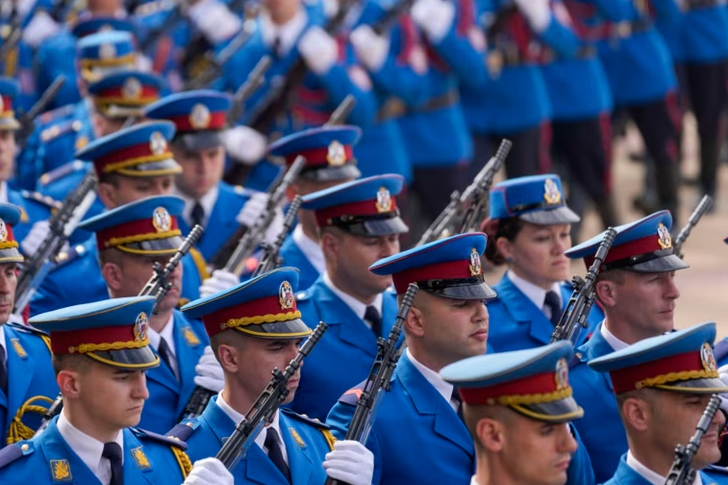
The President of Serbia, Aleksandar Vučić, announced that ...
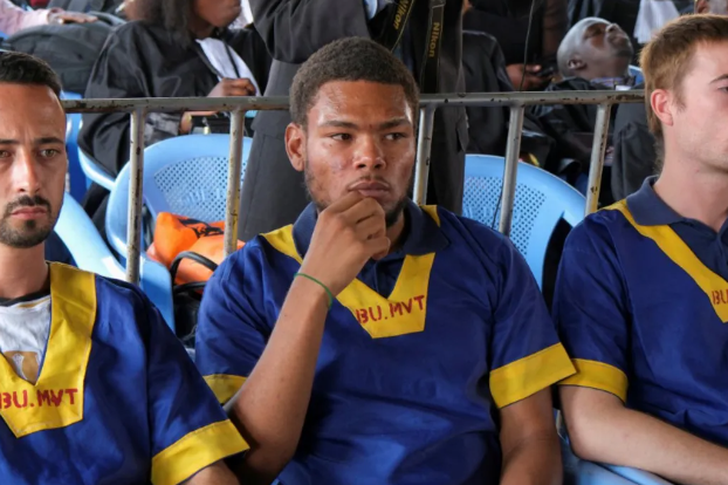
Thirty-seven people, including three Americans, a Briton, ...

CNA has launched another investigation that could lead to ...

Irfan Hysenbelliu is a businessman that we call "Irfan the...

In March 2026, CNA launched another investigation centered...
The arrested mayor of Tirana, Erion Veliaj, with 13 charge...

The Special Board of Appeal (KPA) decided this Monday ...

The KPA vetting decided this Thursday to dismiss the p...

Suela Salavaçi, a prosecutor in the Prosecutor's Offic...

The Special Board of Appeal reinstated the prosecutor ...
New details have emerged regarding the accident that occur...

New details have emerged from the serious accident that oc...
A serious accident occurred this Wednesday on the Elbasan-...

Citizen MH, 61, a fisherman, was found dead near the islan...

The Institute of Geosciences has shared a forecast for wea...

Rising energy and fertilizer prices are expected to contin...

Over 18,000 foreign citizens from 140 countries have appli...

This Wednesday, our country will be under the influence of...
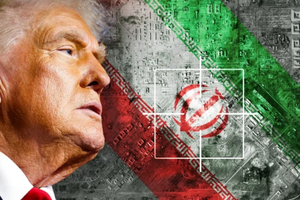
US President Donald Trump has issued another warning to Ir...
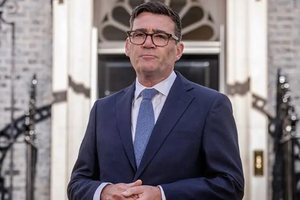
Prime Minister Andy Burnham has announced that most bus fa...

France's parliament has passed a law to ban social media f...

US Secretary of State Marco Rubio arrived in Manila on Jul...

At a time when industrial products are increasingly taking...

Trust among people is not just a three-syllable word. It c...

Master of humor Todi Llupi has passed away at the age of 7...

The ninth edition of "MIK Festival" kicked off with one of...

Businesses will no longer be required to simply register t...

Despite economic growth and income in recent years, Albani...
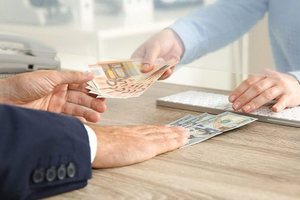
This Wednesday, one US dollar is bought for 81.4 lek and s...

Construction company licenses will have a validity period ...