


From incinerators to Eco Park/ Këlliçi denounces files "parked" at SPAK
Deputy Chairman and DP MP Belind Këlliçi stated that one o...

Deputy Chairman and DP MP Belind Këlliçi stated that one o...


The independence of the judiciary remains one of the main obstacles to Serbia's path towards the European Union. Testimonies from judges and prosecutors reveal political pressure, interference in judicial processes, and an increasingly tense climate between judicial institutions and the government.
Concerns regarding the independence of the judiciary in Serbia continue to be a central issue in the country's European Union accession process. Reports by international institutions and organizations consistently highlight political influence on the justice system, pressure on judges and prosecutors, and structural weaknesses of the system.
Judge Snezhana Ivkovic describes various forms of political interference in the work of the judiciary. According to her, in cases where a judge's decisions do not align with the interests of the executive branch, cases are often reassigned.
"If someone believes that the judges in a case are going in a direction that is not in keeping with the executive branch, the case is simply taken away from them and assigned to another judge in the same department," she explains.
Another form of pressure, according to her, is sudden transfers: "After you've been a judge for 20 years in one department, you can be transferred overnight to a completely new department."
Even prosecutors are threatened and intimidated.
Prosecutors also report similar experiences, including direct pressure and in some cases intimidation. Prosecutor Aleksandra Stojsavljevi? talks about the case of an opposition activist who was allegedly beaten by people affiliated with the ruling party.
She describes a disturbing episode from her professional experience: "The day I finished questioning the suspects in that case, my car was set on fire, that same evening. It was parked in front of the building where I live with my two young children."
Relations between the judiciary and the authorities further escalated after the collapse of a tent at the entrance to the Novi Sad railway station in 2024, killing 16 people. The event sparked mass protests against corruption and intensified criticism of the lack of institutional accountability and political interference in the judiciary.
As the pressure reached its peak, parts of the judiciary began to rebel — with prosecutors acting more independently. For the first time, the Organized Crime Prosecutor's Office opened cases involving three government ministers.
Vida Petrovic Skero, former president of the Supreme Court: " At that moment, a new law was introduced, in which the proposer, a member of parliament, said that he had to propose such a law because a prosecutor had initiated proceedings against ministers, with the aim of ordering detention, and all this would have led to the president of the state."
The law in question was part of a series of new laws aimed at reforming the judiciary.
Often referred to as the "Mrdic laws" after the MP who proposed them, they brought changes to the way prosecutors are appointed and how cases are assigned and supervised.
Critics warn that these changes could increase political control over the prosecution. Officials say they are aimed at improving efficiency.
Legal changes raise concerns of the EU Commission
The controversies have attracted international attention and prompted a visit to Serbia by the Venice Commission, the Council of Europe's advisory body on constitutional matters.
The European Union has also expressed deep concern about the laws.
Guillaume Mercier, spokesperson for the European Commission, emphasizes: "The Commission expects the application of these laws to be suspended until the Venice Commission delivers its opinion. Once this opinion is delivered, we expect these laws to be revised accordingly. In addition, the European Commission continues to examine whether Serbia still meets the conditions for payments under EU financial instruments."
Amid mounting criticism, Serbian Parliament Speaker Ana Brnabic traveled to Brussels for talks with EU officials. She acknowledged procedural shortcomings in the passage of the laws, but said they cannot be suspended.
"The laws are being implemented. I don't know how anyone expects us to suspend the laws. I don't have the ability to go back in time and change things. And I'm not even sure if I would want to, but that's another matter," Brnabic says.
Critics say the impact of Mrdic's laws is already visible. In several high-profile cases, experienced prosecutors have been replaced, raising concerns about the fairness and future of investigations that have been ongoing for years and the rule of law in Serbia. /DW


A new scientific study warns that rapid population growth ...

EU leaders have expressed joy over the victory of Peter Ma...

Kosovo Prime Minister Albin Kurti has congratulated the le...

After the failure of US-Iran peace negotiations, Pakistan ...

US Congressman Eric Swalwell has withdrawn from the race f...

US President Donald Trump has sharply criticized Pope Leo ...
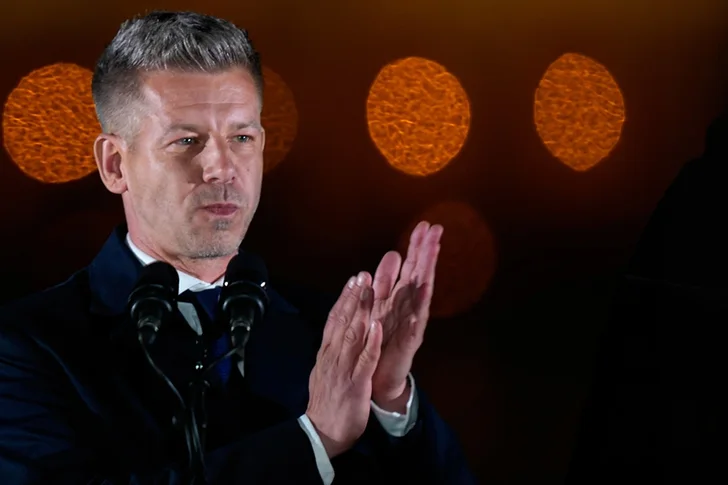
Peter Magyar is the new prime minister of Hungary, who won...

The prestigious American media outlet, The New York Times,...

Hungarian Prime Minister Viktor Orbán has congratulated hi...

Arild Syvertsen is one of many retired sailors who are rel...

Hungary completed the voting process this evening for parl...
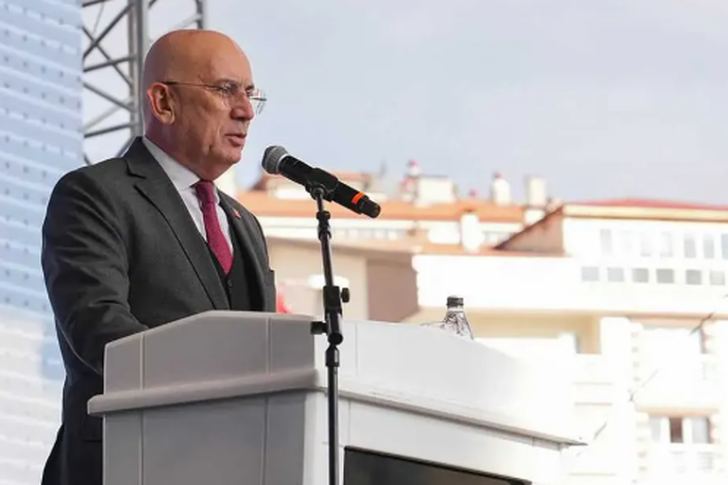
A regional chairman of Turkey's main opposition party was ...

Greek authorities carried out three separate search and re...

Negotiations between the US and Iran over Tehran's nuclear...
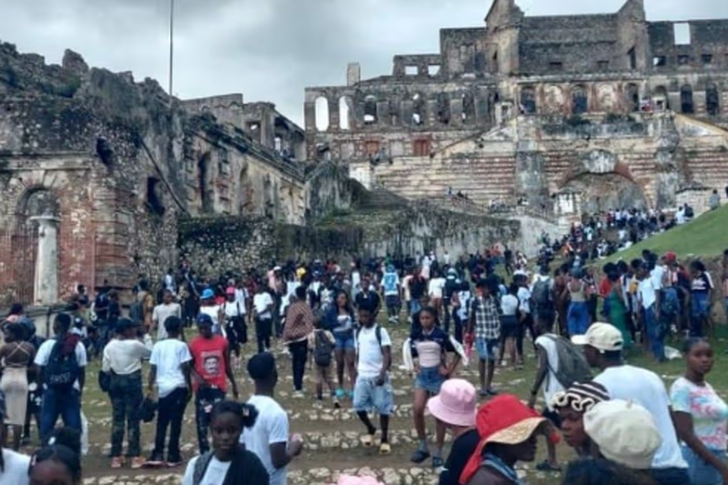
At least 30 people were killed in a stampede at a popular ...

Russian President Vladimir Putin told his Iranian counterp...

The war with Iran has cost Israel about $11.5 billion in b...

Kremlin spokesman Dmitry Peskov said on Sunday that Russia...

After talks that lasted from early afternoon until the ear...

US President Donald Trump has reacted through a post on Tr...
A 39-year-old citizen has been arrested in Lezha, after se...

CNA has launched another investigation that could lead to ...

Irfan Hysenbelliu is a businessman that we call "Irfan the...

In March 2026, CNA launched another investigation centered...

The Special Board of Appeal (KPA) decided this Monday ...

The KPA vetting decided this Thursday to dismiss the p...

Suela Salavaçi, a prosecutor in the Prosecutor's Offic...

The Special Board of Appeal reinstated the prosecutor ...

Following the successive operations carried out by the ope...

The Police Supervision Agency has seized the service weapo...

A serious incident occurred in Lushnje, where citizen IY, ...

As a result of the investigative and procedural actions ca...

Today, our country will be under the influence of stable a...

By noon, cloudiness is expected to prevail in almost all o...

Children without parental care, for whom alternative famil...
On Thursday, our country will be under the influence of st...

Marine Le Pen is entering the decisive phase of the presid...
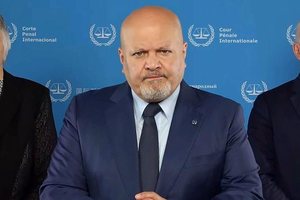
Member states of the International Criminal Court voted to...

From the declining role of exports to new public investmen...

South Korea is becoming one of the most sought-after desti...
Two windows, a century of history and the metaphysics of p...

In my research at the Central State Archives, specifically...

At a time when industrial products are increasingly taking...

Trust among people is not just a three-syllable word. It c...

This Saturday, one US dollar is bought for 81.7 lek and so...

War, weather and supply disruptions could send gas prices ...
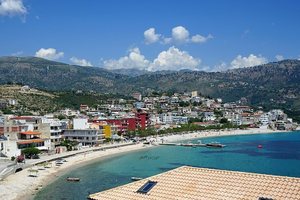
The number of active enterprises in Albania continued to g...
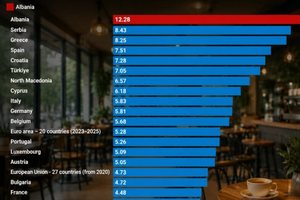
In Albania, the bar-cafe has long become an almost unique ...