

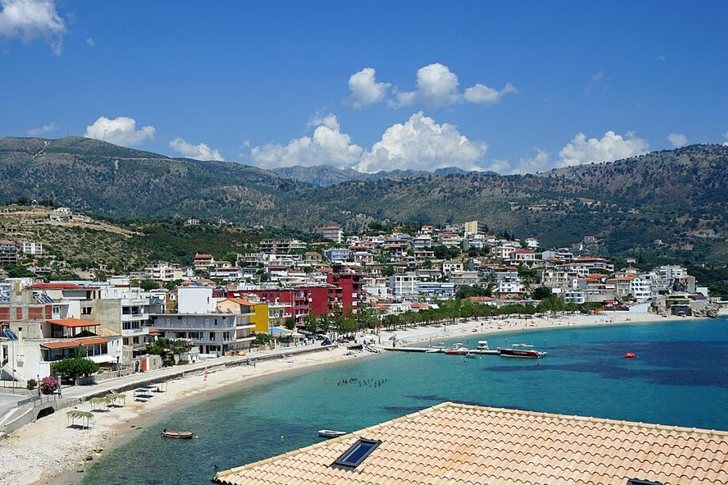
Businesses move towards the coast and the outskirts of Tirana, shrinking in 19 municipalities
The number of active enterprises in Albania continued to g...


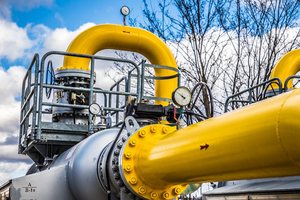
War, weather and supply disruptions could send gas prices soaring again, writes The Economist
On June 28, the Hlaitan, a tanker loaded with liquefied natural gas, set sail from Freeport, Texas, bound for France. Almost immediately, it changed course. TotalEnergies, the company that had chartered it, had received a better offer from Asia.
According to Kpler, a data company, Hlaitan is expected to arrive at its new destination on August 1.
Such cases have become commonplace. Buyers in Asia, where a scorching summer is boosting demand, are consistently outbidding European offers for U.S. cargoes. LNG tankers are being diverted in record numbers (see chart 1).
Meanwhile, Europe is being left behind and its gas reserves, depleted by the cold winter, are only 47% full, the lowest level in 15 years for this summer period (see chart 2).
Behind this lies the lack of supplies from Qatar, usually Asia's main supplier. Since the United States and Iran agreed in mid-June to reopen the Strait of Hormuz, only 11 LNG tankers have passed through it — better than none, but only three days' worth of normal traffic.
On July 7, the United States launched strikes on Iran in response to Iranian attacks on tankers, including a Qatari LNG ship the day before.
President Donald Trump also removed an exemption that allowed Iran to sell oil and declared that the ceasefire with the Islamic Republic was "over."
Unlike oil prices, which although have increased after the recent escalation of fighting remain well below the peak reached during the war, gas prices continue to be 55% higher in Europe and 73% higher in Asia compared to February (see chart 3).
Analysts expect Qatari supplies to return to normal levels by September, just in time for Europe to replenish reserves before winter. However, a much more negative scenario remains a real possibility.
The war with Iran has stripped the global market of a fifth of its liquefied natural gas (LNG) supplies. It has also knocked out 17% of Qatar's export capacity, damage that will take years to repair.
Even restoring intact plants to operation takes time.
Despite additional supplies from Africa and Australia, driven by rising prices, and reduced demand due to energy-saving measures in Asian countries, postponement of industrial purchases and the return to operation of coal-fired power plants, the world is expected to face an accumulated shortage of 40 million tons of LNG from Qatar this year. This represents almost a tenth of last year's global supply.
And that's before Asian and European importers start stockpiling for the winter. Most are waiting as long as possible. One reason is that prices remain high; another is that prices for winter supplies are no higher than they are today.
If supplies from Qatar return by September, Asian demand for US cargoes should ease, spot prices fall and European buyers replenish stocks. By November, EU warehouses would be about three-quarters full — a low level, but sufficient for a normal winter. Prices should remain under control.
But the market is so tight that a series of small shocks could trigger a supply crisis.
Three risks stand out.
First, supplies from the Gulf may not be restored in time. Hours after the Qatari gas tanker was hit near the entrance to the strait on July 6, another ship heading for Hormuz was turned back.
About a dozen empty tankers are waiting near Ras Laffan to be loaded. But repeated clashes, let alone a collapse of the ceasefire, could scare off buyers and push Asia to offer even more for American cargoes.
The second risk is extreme weather. In June, Europe experienced record temperatures, which increased the demand for cooling and, consequently, for electricity (see chart 4).
In Asia, El Niño — a climate phenomenon that brings hot, dry weather to the region — is also pushing temperatures to unusually high levels, forcing countries like Bangladesh and Pakistan to return to the spot market. More heat waves on any continent will mean more buying.
China's unpredictable purchases add to the uncertainty. The world's largest LNG importer secures most of its supplies through long-term contracts.
He doesn't build up gas reserves like he does with oil. He resells the amount he doesn't need, as he did in March and April.
But when heat waves hit in May and June, China resumed heavy imports; when welcome rains arrived in late June, it pulled back again. The scorching temperatures could force it to buy again in a hurry.
The third risk is infrastructure failure. Long periods of drought empty the reservoirs of hydroelectric power plants. Electricity prices in Switzerland have already risen, while the country imports energy from neighbors that use fossil fuels, notes Gillian Boccara of Kpler.
If rivers warm unusually, nuclear reactors, which need cold water, could be forced to reduce production.
Then there are the unpredictable risks. A major LNG terminal could go out of business, as happened in 2022, when the Freeport plant, which at the time accounted for 4% of global supply, was engulfed in fire.
Strikes, like those in Australia in 2023, could shut down plants for weeks. Russia, which supplied Europe with record volumes this spring, could cut off supplies.
If several of these shocks occur simultaneously, a manageable situation can turn into a nightmare. “When bad news piles up,” says Anne-Sophie Corbeau of Columbia University, “the impact on prices can become exponential.”
The space for switching to other fuels is already very limited. South Asian countries will probably have to reduce consumption. China, Japan and South Korea are rich enough to continue offering high prices. Europe will not freeze this winter.
But it could face an extremely high heating bill.

The number of active enterprises in Albania continued to g...
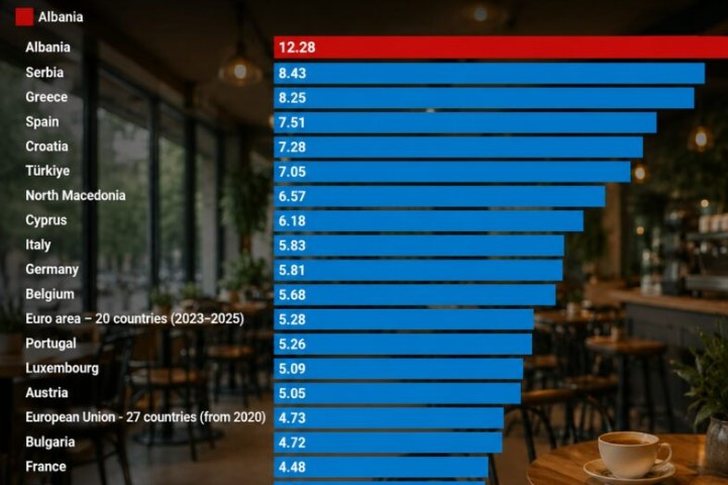
In Albania, the bar-cafe has long become an almost unique ...

This Friday, one US dollar is bought for 81.7 lek and sold...
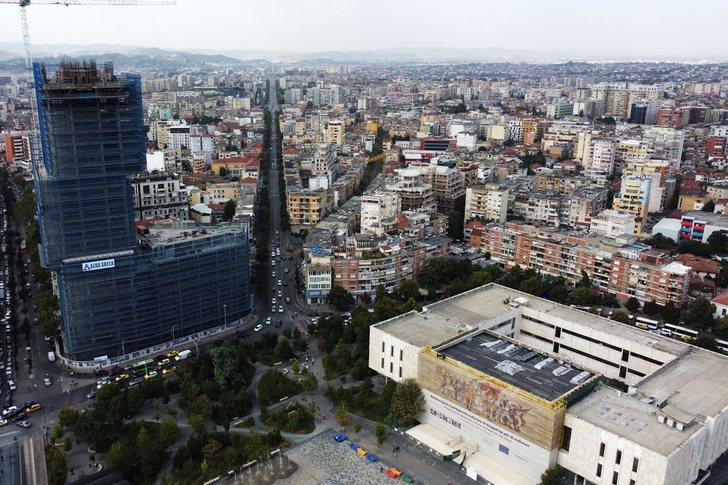
The average sale price of apartments in Tirana reaches rec...
This Thursday, one US dollar is bought for 81.5 lek and so...
The price of diesel reached 206 lek per liter from 198 lek...

Businesses will no longer be required to simply register t...

Despite economic growth and income in recent years, Albani...
This Wednesday, one US dollar is bought for 81.4 lek and s...
Construction company licenses will have a validity period ...
The Centralized Purchasing Operator recently opened a tend...
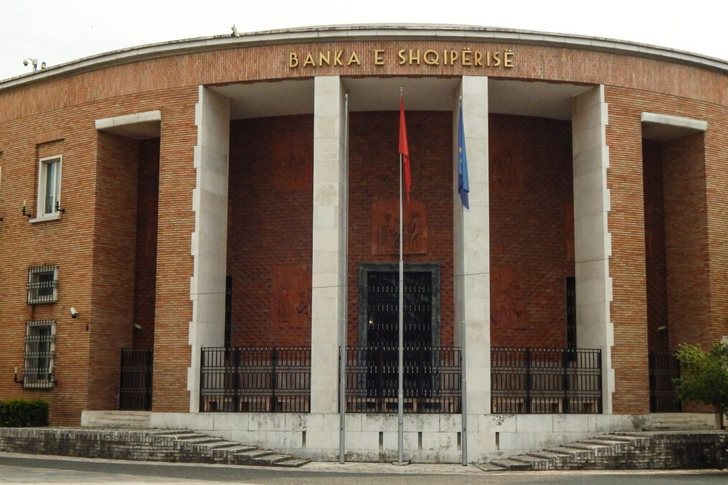
The new draft law "On the Bank of Albania" provides that t...
This Tuesday, one US dollar is bought for 81.2 lek and sol...
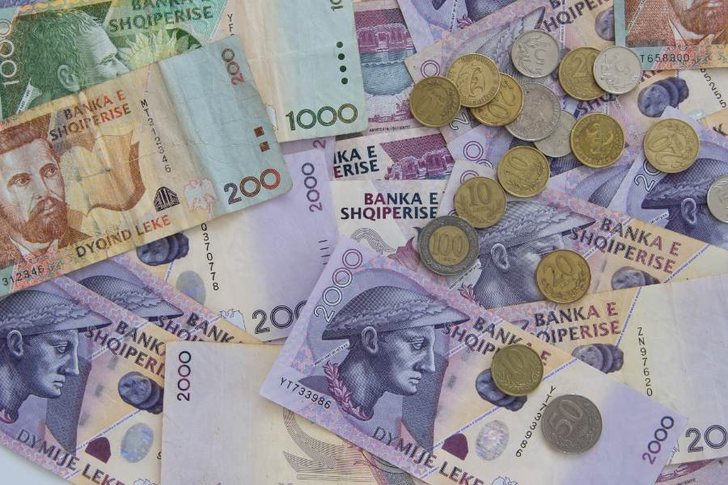
Deputy Minister of Economy and Innovation, Enkelejd Musabe...
This Monday, one US dollar is bought for 81 lek and sold f...
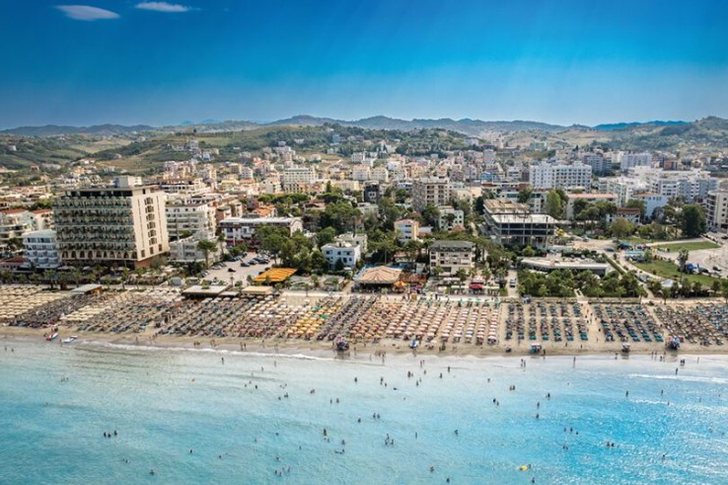
In Golem and Durrës, the season seems dynamic: buses with ...

This Sunday, one US dollar is bought for 81 lek and sold f...
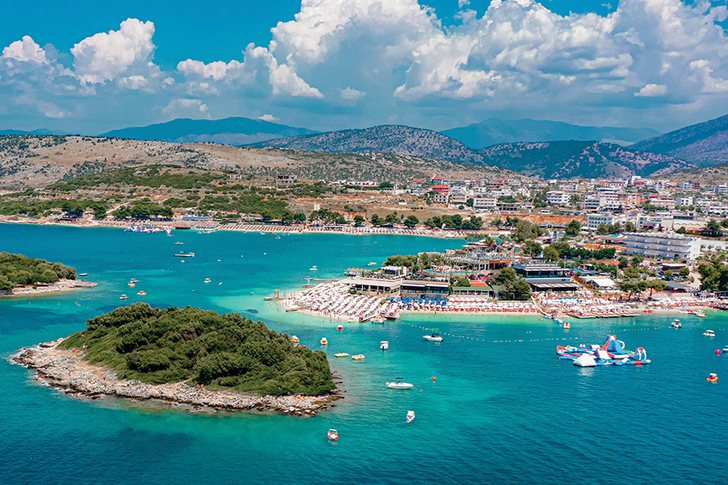
INSTAT statistics for May show an increase in tourism, wit...

Albania needs higher wages, but more than that. It needs a...

This Saturday, one US dollar is bought for 81.2 lek and so...

A 39-year-old citizen has been arrested in Lezha, after se...

CNA has launched another investigation that could lead to ...

Irfan Hysenbelliu is a businessman that we call "Irfan the...

In March 2026, CNA launched another investigation centered...

The Special Board of Appeal (KPA) decided this Monday ...

The KPA vetting decided this Thursday to dismiss the p...

Suela Salavaçi, a prosecutor in the Prosecutor's Offic...

The Special Board of Appeal reinstated the prosecutor ...

A conflict for weak motives was recorded today in the vill...

An accident involving three vehicles occurred a few minute...

55-year-old Belere Plaka, who was injured today with a sho...

Police Announcement: Following preliminary information...

By noon, cloudiness is expected to prevail in almost all o...

Children without parental care, for whom alternative famil...

On Thursday, our country will be under the influence of st...
A serious accident that occurred this Wednesday with the c...

Peru and Venezuela will restore diplomatic relations, the ...

United States President Donald Trump has left open the pos...

Israeli Prime Minister Benjamin Netanyahu will travel to t...
A bipartisan group of US lawmakers is calling for a Europe...

In my research at the Central State Archives, specifically...

At a time when industrial products are increasingly taking...

Trust among people is not just a three-syllable word. It c...

Master of humor Todi Llupi has passed away at the age of 7...
War, weather and supply disruptions could send gas prices ...
The number of active enterprises in Albania continued to g...
In Albania, the bar-cafe has long become an almost unique ...

This Friday, one US dollar is bought for 81.7 lek and sold...