


Exchange rate/Foreign currencies in crisis
This Sunday, one US dollar is bought for 81 lek and sold f...


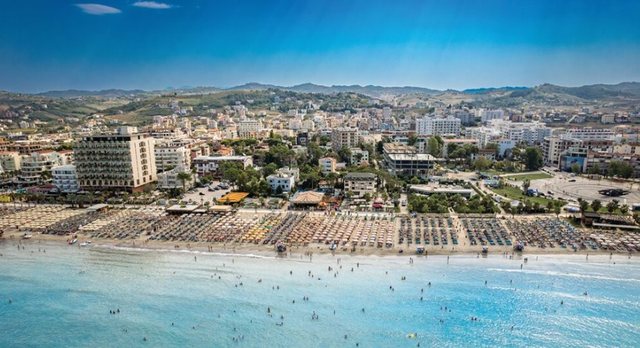
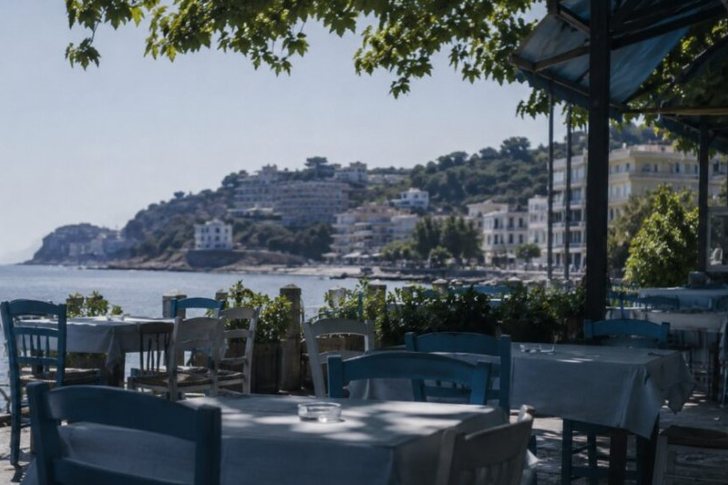
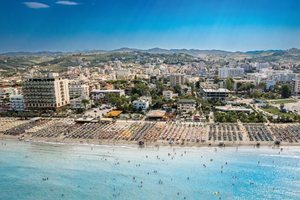
In Golem and Durrës, the season seems dynamic: buses with organized groups coming from the airport, hotels with contracts and new markets discovering the coast. But beneath this liveliness, demand is appearing weaker. Last-minute bookings have faded, Germans are coming less from guarantee contracts and July offers are appearing massively in all structures in a period when prices usually only increase. Poles, Czechs and Slovaks are keeping up the pace, while the French, British and Armenians are testing the destination. The unstoppable depreciation of the Euro is only adding to the pressure on hotels, further shrinking their profit margins. This summer may fill most of Golem's rooms, but not necessarily the expectations of businesses.
At first glance, the summer season in Durrës and Golem, the most important mass tourism region in the country, does not seem weak. Hotels continue to welcome organized groups, charter planes bring tourists from new markets, and guarantee contracts with foreign agencies are keeping a large part of the capacities occupied.
But behind this picture lies a more complicated and less predictable summer season than the numbers on the surface suggest. Last-minute bookings, for which hotels typically leave about 20% of capacity available, suddenly faded in late June and early July.
At the same time, the German market, although relying on guarantee contracts, has also retreated, bringing in fewer organized tourists than operators had anticipated. Poles, Czechs and Slovaks are holding the main weight of organized tourism in this region, as has been the case in recent years, and their performance remains positive.
Equally encouraging is the French market, which is testing this part of the coast for the first time through organized tourism and guarantee contracts. Accommodation structures also confirm an increase in the presence of British people, mainly as individual tourists, as well as the entry of Armenians, who are coming to the country for the first time in an organized form. With the diaspora booking less and Kosovo Albanians being less present, organized tourism remains the only segment that is maintaining growth.
All these developments show that Durrës and Golemi are facing a season whose balance cannot yet be clearly read. Operators estimate that this summer may turn out to be weaker than those of previous years, but expect September and October to compensate for part of the decline of July. Advance reservations for these months are increasing, fueling the hope that the season may last longer and recover some of the ground lost at the height of summer.
The summer season in Golem and Durrës is moving at two different paces. On the one hand, there are guarantee contracts with foreign agencies for organized groups, which have secured a large part of the hotel capacities in advance and are showing good performance. On the other hand, there are individual and last-minute reservations, where operators are reporting a strong slowdown in demand.
"There is a decrease in customers booking through Booking or the reception desk," says Fatos Çerenishti, administrator of "Fafa Group". According to him, the business works mainly with guarantee contracts, but leaves some capacity for individual bookings. This part has been weaker than a year ago.
Blerim Norja, General Manager of “Royal G” hotels, provides a more concrete breakdown of the sales model. According to him, large structures usually reserve about 80% of their capacities for organized tourism and leave 20% for last-minute clients.
“This 20% has shown a significant deficit,” says Mr. Norja. He adds that the decline is visible not only in booking records, but also in the daily activity of the area, including lower liveliness on the promenade in the evenings.
For hotels, this is not simply a matter of the number of rooms occupied. Individual bookings often offer more flexibility in pricing and better opportunities to sell at peak rates. Agency contracts, while guaranteeing volume, are usually negotiated in advance and at pre-determined prices.
This means that a hotel may have a satisfactory level of bookings, but generate less revenue than it had anticipated. The capacity filled by agencies guarantees a degree of stability, but does not fully replace the loss of customers who book directly and at the last minute.
Mr. Çerenishti describes the contrast through direct customer interest. “Last year, during the same period, we had 100 phone calls a day asking questions and showing interest; today, we get four or less calls,” he says.
Operators agree that April, May and partly June had created more positive expectations. Mr. Norja says that in April and May his hotels had recorded an increase of 15-20% compared to a year earlier.
The decline was felt in late June and early July, just when the season should be entering its strongest phase. The change was immediate and, for operators, makes it more difficult to identify a single cause for the decline. For now, organized tourism is holding up most of the season.
The German market is the only segment of organized tourism that has shown a noticeable pullback from advance bookings. Agency sales have been weaker than expected, while the rest of the groups coming through guarantee contracts have maintained positive performance.
"I would single out only the German market, where sales have not been as good in relation to the contract we have," says Mr. Çerenishti, while the Poles, Czechs and Slovaks have performed according to forecasts and have maintained a good performance.
Mr. Norja gives an even stronger assessment. “The Germans are 50% less than anticipated,” he says, referring to the contracts and volume expected from this market.
Operators partly attribute the weakening to a perception of uncertainty. He says Germans have been the most sensitive group to reports of protests and internal developments in Albania.
“The Germans are the most sensitive and have expressed their hesitation to us directly,” he says. According to Mr. Norja, the Poles, Czechs and British have not shown the same concern.
Mr. Çerenishti is more reserved in pinpointing the cause. He does not directly link the decline to a single factor, but emphasizes that tourism relies on “trust, image and security” and that tourists can easily change destinations.
Poland remains the most consolidated market for organized tourism in the country. Mr. Norja describes Poles as “loyal to Albania” tourists, who return for the third or fourth time.
Another market that operators consider interesting this year is the French one, which has entered through guarantee contracts. For hotel structures, this is an important development, as it is a new market that is testing for the first time the coast of Durrës and Golem in the form of organized tourism.
Operators say that French agencies have given good ratings from French tourists for hotels, food and the beach, adding that agreements have been closed for a part of this market for 2027.
The UK and Armenia are two other new sources of demand. Britons are increasingly coming individually, while Armenia has entered through organized packages and charter flights.
July and August are the months when hotels on the coast usually take advantage of higher demand to sell at better prices. This year, hotel operators confirm that a large part of the structures in Golem and Durrës are doing the opposite and are publishing offers.
In such a situation, the reductions at the peak of summer clearly indicate that hotels have empty rooms and are trying to attract demand that is not at the expected pace.
"If you notice, on all hotel websites in the Golem and Durrës area there are currently offers that signal price reductions," says Mr. Çerenishti, underlining that the cause is weaker demand and the hotels' attempt to attract last-minute bookings.
Mr. Norja reaches a similar conclusion. He says that many hotels have lower prices than a year ago and that others have started publishing offers to react to the situation.
For him, this shows that the decline is not related to excessively high prices. “Since prices are lower than last year, that is not the reason,” he says.
Operators acknowledge that this strategy comes at a cost. Offers can help drive bookings, but they also reduce revenue per room. They can also push customers to wait until the last minute, hoping that rates will drop further. If the discounts last, they can also affect how the market perceives the destination’s value.
Mr. Çerenishti says that if the situation remains the same, businesses will be forced to make other offers. But he emphasizes that this “does not favor us as a business, because we have a lot of costs.”
On the other hand, Mr. Norja notes that almost all hotels have empty rooms, some more and some less.
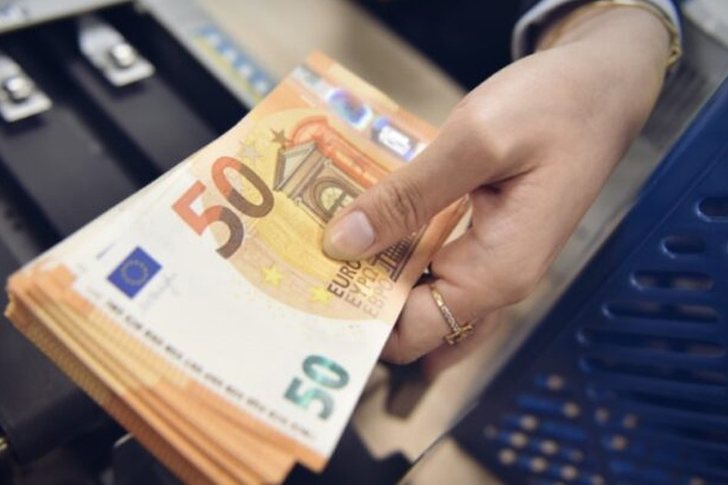
Hotels on the coast are facing two pressures simultaneously: the depreciation of the Euro against the Lek and the need to lower prices to attract last-minute bookings for rooms that have remained empty.
The operating model of many tourist structures that work with guarantee or allotment contracts (pay as you bring) is directly exposed to the exchange rate. Contracts with agencies, reservations from abroad and tourist packages are mainly invoiced in Euros. Salaries, food, energy and most expenses are paid in Lek.
“The Euro has completely ruined us,” says Mr. Çerenishti. According to him, about 90% of payments for food, employees and other expenses are made in Lek, while income is provided in Euros.
He estimates that the business is "down 30%" from the ongoing depreciation.
The exchange rate is only one side of the problem. The other side is the pressure on prices, as hotels are making offers in July to sell off spare capacity. Expected revenues are again falling, while wages and supply costs remain unchanged or are increasing.
The hit is particularly hard for hotels with long-term contracts. Prices may have been negotiated months in advance or over the past year, while the exchange rate has continued to decline throughout this period.
This means that hoteliers are simultaneously facing lower revenues from the Euro conversion and pressure to reduce prices in a market where individual bookings have weakened. This makes it more difficult to maintain profits, especially in the months that should usually generate the bulk of revenue./ Monitor

This Sunday, one US dollar is bought for 81 lek and sold f...
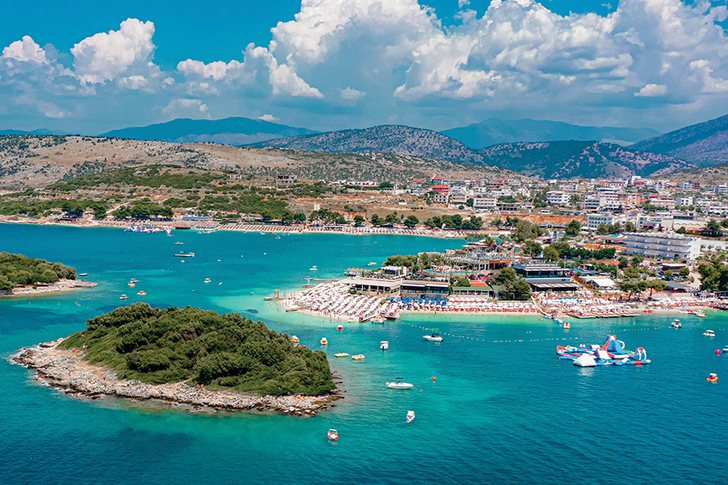
INSTAT statistics for May show an increase in tourism, wit...

Albania needs higher wages, but more than that. It needs a...

This Saturday, one US dollar is bought for 81.2 lek and so...
The Albanian economy continued to expand in early 2026, bu...
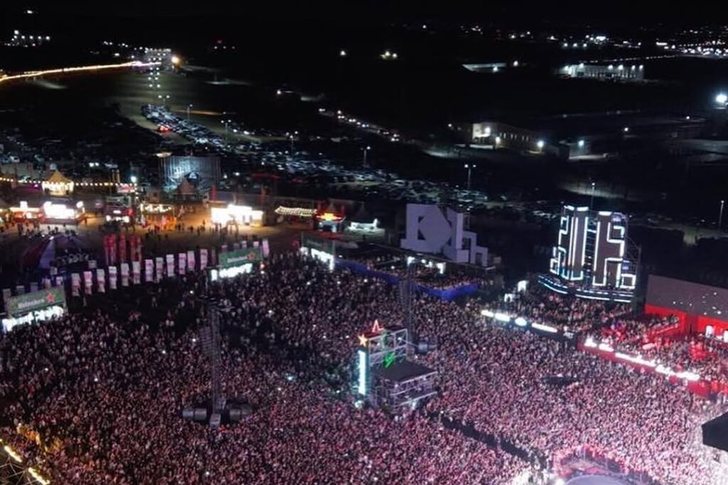
For three days of festival, up to 120 euros just for parki...
Oil prices have risen again in recent days on internationa...

This Friday, one US dollar is bought for 81.2 lek and sold...

Around 97,100 people are employed in regulated professions...
Albania continues to be the main destination for vacatione...
This Thursday, one US dollar is bought for 81.1 lek an...

Beekeeping has expanded significantly in recent years, bec...

Employment in 2025 was characterized by a slight decline a...
A few weeks after the dissolution of the Transparency Boar...

Albania, along with other Western Balkan countries, risks ...

Over the last 35 years, Albania has consistently faced a n...
This Wednesday, one US dollar is bought for 81.3 lek and s...

The number of foreign exchange offices declined in 2025, f...
In addition to the effect on the decline in demand for rea...
This Tuesday, one US dollar is bought for 81.5 lek and sol...

The arrested mayor of Tirana, Erion Veliaj, with 13 charge...

CNA has uncovered the tentacles of the head of the Supreme...

The company "Gjikuria" has been caught in several serious ...

Sokol Sadushi's tentacles have touched the diplomatic syst...

The Special Board of Appeal (KPA) decided this Monday ...

The KPA vetting decided this Thursday to dismiss the p...

Suela Salavaçi, a prosecutor in the Prosecutor's Offic...

The Special Board of Appeal reinstated the prosecutor ...

A serious accident occurred this Sunday on the Milot-Rrësh...

A base with an arsenal of weapons and combat ammunition is...

Today, tributes will be held in Vlora in honor of journali...
On 18.07.2026, at around 22:15, in the village of Barbullu...

On Sunday, our country will remain under the influence of ...

The World Health Organization described extreme heat in Eu...

Systematically in the last 15 years, circulatory system di...
Today, our country will remain under the influence of stab...

Saudi media outlet 'Al Hadath' reported this Sunday, citin...

A magnitude 5.1 earthquake with an epicenter in Chupaca st...
Russia carried out one of the largest ballistic missile at...

Two American soldiers were killed in Jordan during Iranian...

Trust among people is not just a three-syllable word. It c...

Master of humor Todi Llupi has passed away at the age of 7...

The ninth edition of "MIK Festival" kicked off with one of...

A historic evening for Albanian culture was marked in the ...
In Golem and Durrës, the season seems dynamic: buses with ...

This Sunday, one US dollar is bought for 81 lek and sold f...
INSTAT statistics for May show an increase in tourism, wit...

Albania needs higher wages, but more than that. It needs a...