


Veliaj's ridiculous lawsuit against prosecutor Ols Dado / Today, the trial at the Administrative Court
Today, the next hearing will take place at the Administrat...

Today, the next hearing will take place at the Administrat...

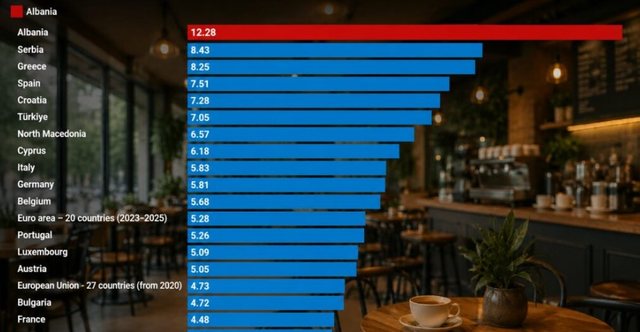
In Albania, the bar-cafe has long become an almost unique business model in Europe: it is relatively easy to open, is found in every neighborhood, and occupies a very high share of private entrepreneurship, compared to other European countries.
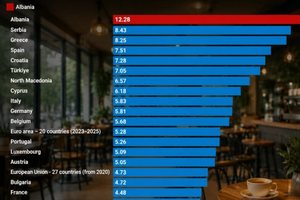
Bars, restaurants and food services account for 12.28% of the total number of enterprises in Albania, the highest share among the European countries compared and about 2.6 times above the European Union average of 4.73%, according to Eurostat data for 2023, processed by "Monitor".
The difference with other countries is significant. After Albania comes Serbia, where food and beverage service activities account for 8.43% of enterprises, followed by Greece with 8.25%, Spain with 7.51%, Croatia with 7.28% and Turkey with 7.05%.
In North Macedonia, this sector accounts for 6.57% of businesses, in Cyprus 6.18%, while in Italy and Germany 5.83% and 5.81% respectively.
At the bottom of the ranking are countries where the economic structures are more oriented towards industry, technology and other services. In Lithuania, bars, restaurants and food activities account for only 1.19% of enterprises. In Estonia and Latvia the weight is 1.97%, in Poland 2.11%, while in Norway 2.26%.
More than 15 thousand bars, restaurants and food services
In Albania, there are 15,445 enterprises registered in the NACE 56 category, which includes restaurants, mobile food service activities, catering, bars, cafes and other beverage services.
The total number of Albanian enterprises in the economic activities covered by Eurostat statistics was 125,737. In this report, more than one in every eight Albanian businesses operates in the food and beverage sector.
If the 2,517 accommodation establishments are included, the total number of businesses in the accommodation and food services sector reaches 17,962, or 14.3% of the total, again the highest in Europe. Greece comes in second, including accommodation establishments, with 11.6%, followed by Serbia (9.2%) and Portugal (8.9%).
Albania third in Europe for the number of bars in relation to population
The high weight of the sector is not only related to the fact that Albania has a relatively small number of enterprises in total. Even when businesses are compared to the population, the country ranks among the first in Europe.
Albania has 6.63 bars, restaurants and food services for every 1,000 inhabitants, ranking third among the countries analyzed.
Greece leads with 7.4 enterprises per 1,000 inhabitants, followed by Portugal with 6.95. Following Albania are Cyprus with 6.02, Spain with 5.41, Italy with 4.57 and Croatia with 4.54.
The European Union average is only 3.5 establishments per 1,000 inhabitants. Albania thus has almost twice the number of bars and restaurants per inhabitant compared to the European average.
The difference is also large by region. Serbia has 2.69 businesses per 1,000 inhabitants, while North Macedonia has 2.43. Albania has about 2.5 times more enterprises of this type per inhabitant than
Serbia and about 2.7 times more than North Macedonia. The countries with the lowest indicators are Lithuania with 1.48, Latvia with 1.54, Poland with 1.58 and Romania with 1.61 enterprises per 1,000 inhabitants.
An early business model, now supported by tourism
The dominance of coffee shops is not a phenomenon created by the recent tourism boom. For decades, they have been among the most common activities in Albania, due to the relatively low start-up capital, easier market entry, and strong culture of coffee consumption and socializing outside the home.
In the absence of a developed industry and broader opportunities for productive investments, part of the small family capital has traditionally been oriented towards trade and services, especially bars and restaurants.
In recent years, this existing model has been supplemented by the demand created by the growth of tourism. The influx of foreign visitors has expanded the market for restaurants, bars, cafes and other food services, especially in Tirana, on the coast and in tourist destinations.
However, the effect remains uneven throughout the year. A large part of tourism demand is concentrated in the summer season, making businesses in tourist areas dependent on a few months of intense activity.
Many businesses, but fragmented market
A high number of enterprises does not necessarily mean that the sector has the same weight in economic production or value added.
Most bars and restaurants are small businesses, often family-run, with a limited number of employees and relatively low turnover. A market with many small operators creates strong competition, but also a high degree of fragmentation.
Businesses are facing rising costs for food, energy, rent and wages. Labor shortages have also become a major problem, forcing operators to raise wages, hire foreign nationals or limit activity.
The sector is also characterized by a high rate of market entry and exit. The relative ease of opening a store does not guarantee its longevity, especially in areas where supply far exceeds local demand./ Monitor

This Friday, one US dollar is bought for 81.7 lek and sold...
The average sale price of apartments in Tirana reaches rec...
This Thursday, one US dollar is bought for 81.5 lek and so...
The price of diesel reached 206 lek per liter from 198 lek...

Businesses will no longer be required to simply register t...

Despite economic growth and income in recent years, Albani...
This Wednesday, one US dollar is bought for 81.4 lek and s...
Construction company licenses will have a validity period ...
The Centralized Purchasing Operator recently opened a tend...
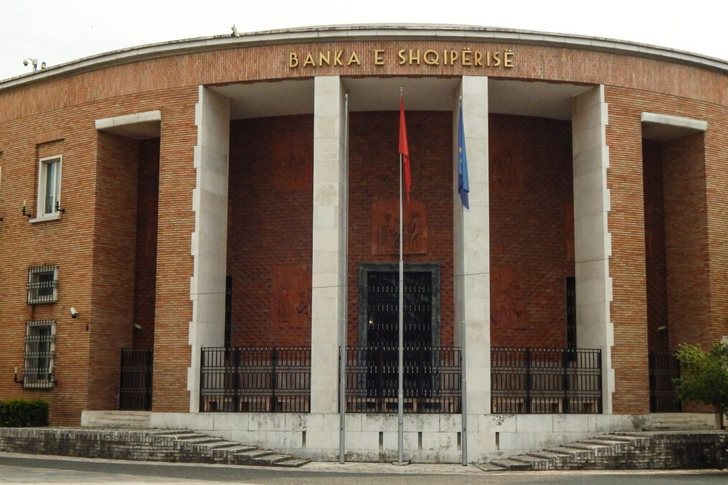
The new draft law "On the Bank of Albania" provides that t...
This Tuesday, one US dollar is bought for 81.2 lek and sol...
Deputy Minister of Economy and Innovation, Enkelejd Musabe...
This Monday, one US dollar is bought for 81 lek and sold f...
In Golem and Durrës, the season seems dynamic: buses with ...
This Sunday, one US dollar is bought for 81 lek and sold f...
INSTAT statistics for May show an increase in tourism, wit...
Albania needs higher wages, but more than that. It needs a...
This Saturday, one US dollar is bought for 81.2 lek and so...
The Albanian economy continued to expand in early 2026, bu...
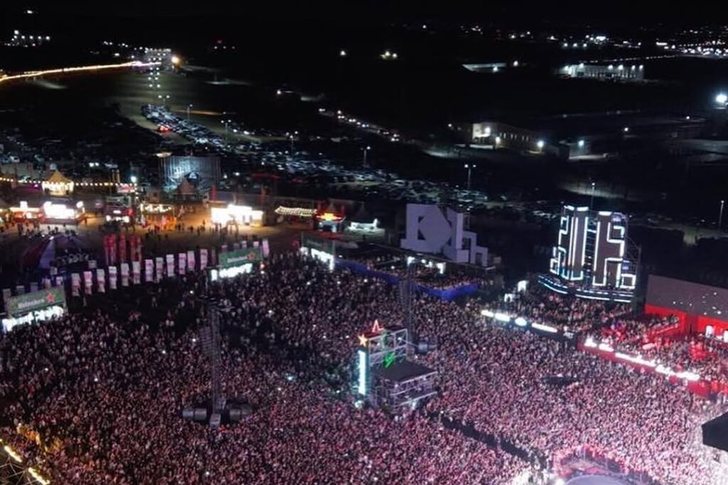
For three days of festival, up to 120 euros just for parki...

CNA has launched another investigation that could lead to ...

Irfan Hysenbelliu is a businessman that we call "Irfan the...

In March 2026, CNA launched another investigation centered...
The arrested mayor of Tirana, Erion Veliaj, with 13 charge...

The Special Board of Appeal (KPA) decided this Monday ...

The KPA vetting decided this Thursday to dismiss the p...

Suela Salavaçi, a prosecutor in the Prosecutor's Offic...

The Special Board of Appeal reinstated the prosecutor ...
A serious incident occurred in Fier in the village of Vidh...
A conflict occurred this Thursday evening in the toy area ...
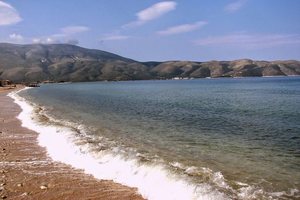
A person has died today on Orikum beach. According to repo...
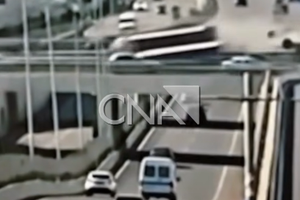
Footage emerges from the serious accident that occurred th...

By noon, cloudiness is expected to prevail in almost all o...

Children without parental care, for whom alternative famil...
On Thursday, our country will be under the influence of st...
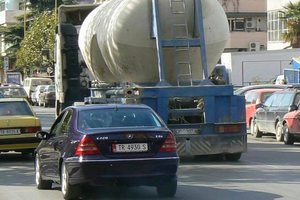
A serious accident that occurred this Wednesday with the c...
The European Union Office in Kosovo has called on all poli...
Serbian President Aleksandar Vučić, at a press conference ...
For the first time since the launch of the euro, European ...

Artificial intelligence (AI) models from the American comp...

At a time when industrial products are increasingly taking...

Trust among people is not just a three-syllable word. It c...

Master of humor Todi Llupi has passed away at the age of 7...

The ninth edition of "MIK Festival" kicked off with one of...
In Albania, the bar-cafe has long become an almost unique ...

This Friday, one US dollar is bought for 81.7 lek and sold...
The average sale price of apartments in Tirana reaches rec...
This Thursday, one US dollar is bought for 81.5 lek and so...