


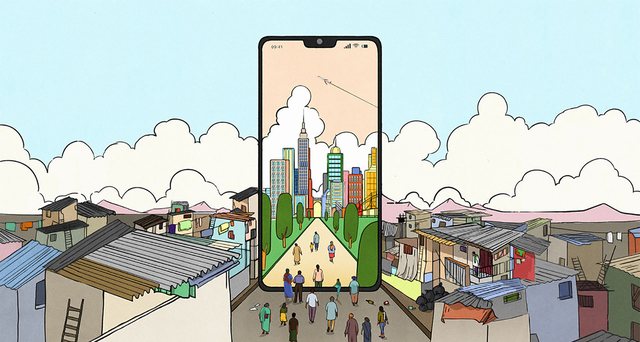
It can help increase human capital and economic development, writes "The Economist".
New technology brings with it the sweet hope of greater wealth and therefore, all countries race to exploit it and not be left behind by other countries.
Satya Nadella, the head of Microsoft, says he cannot forget the fact that his native India did not benefit from the Industrial Revolution. (Of course Indian manufacturers did not enjoy the same competitive conditions. Britain was then their rival and ruler).
Many technologies, such as online education courses, have made a lot of noise in developing countries, but have not spurred any real economic growth. Some people worry that even Artificial Intelligence will be a disappointment to the global south.
So far, the big winners seem to have been Western countries, which rushed to exploit the technology from the beginning, as well as startup firms in San Francisco and America's "big 7" technology firms, which include Microsoft, and which increased the total value market cap of a whopping $4.6 trillion, since the launch of the ChatGPT Artificial Intelligence platform in November 2022.
However, Artificial Intelligence is expected to transform the lives of people in developing countries as well. As it spreads, this technology can increase productivity and reduce gaps in human capital much faster than before.
People in developing countries do not have to be passive recipients of Artificial Intelligence, but can shape it according to their needs. The best possible effect of Artificial Intelligence would be to increase the level of income in developing countries, until the level of the rich world is caught.
Thus, Artificial Intelligence holds many attractive promises for developing countries. As in the West, this technology will be a useful all-purpose tool for consumers and workers, making it easier to retrieve and interpret data.
Some jobs will be eliminated, but new ones will be created. Because developing countries have fewer office workers, the changes that firms need to make and the benefits they will get from Artificial Intelligence may be smaller than in the West.

The IMF says that a fifth to a quarter of workers in developing countries are at risk from the spread of new technology, compared to a third in rich countries.
But a very large benefit can come from better and more accessible public services. Developing economies have long been held back by a lack of educated and healthy workers.
Elementary school teachers in India have twice as many students as their American counterparts, but are poorly equipped.
Doctors in Africa are few; those properly trained are even fewer. Generations of children receive a poor education, many have poor health and are unable to thrive in an increasingly global job market.
Policymakers and entrepreneurs around the world are scrambling to find ways to harness Artificial Intelligence. For example, India has combined Artificial Intelligence with speech software so that illiterate farmers can be helped by a robot to apply for government loans.

Students in Kenya will soon have a chatbot to help them with their homework, and this chatbot can adapt its teaching method to the answers the student gives.
Researchers in Brazil are testing Artificial Intelligence in the medical field that will help healthcare workers treat patients faster. Medical data collected worldwide can help improve diagnosis.
If AI can make people in poorer countries healthier and more educated, then, over time, they will catch up with richer countries.
These benefits can spread faster than previous waves of technology. It took more than 50 years for the new technologies invented at the beginning of the 20th century to reach most countries.
In contrast, Artificial Intelligence will spread through devices already owned by many people in developing countries: smartphones. Over time, chatbots will become much cheaper to acquire and purchase.

Moreover, the technology can also be adapted to local needs. So far, there aren't many signs that AI is taking off in a winner-take-all fashion like it did with social media and internet search firms in America.
This means that there will be a variety of approaches. Some developers in India are already taking Western models and adapting them to local data to provide a service in the local language, avoiding the huge capital costs of building AI models from scratch.
Another idea that is taking off in the West is building smaller, cheaper models. A smaller set of skills, rather than the ability to retrieve every possible piece of information, may suit particular needs quite well.
For example, an AI medical device does not need to create funny lines in the style of William Shakespeare, because ChatGPT already does this very successfully.
This requires computing power and ordered data sets, but it can help adapt Artificial Intelligence in more diverse and useful ways.
Some countries are already reaping the benefits of Artificial Intelligence. China is second only to America in technological know-how and the deep pockets of its Internet giants. India's outsourcing industry may experience difficulties as some important tasks are being taken over by Artificial Intelligence.
But the country is home to many startup companies as well as millions of tech developers, and the Indian government wants to use Artificial Intelligence to improve digital infrastructure.
This means that the country is in a good position to innovate and adapt.
Gulf countries such as the United Arab Emirates and Saudi Arabia want to build an AI industry as they shift away from oil. They already own the capital and are importing the talent.

Each country will shape this new technology in its own way and needs. For example, Chinese chatbots are trained to avoid President Xi Jinping as a subject; India's developers have focused on lowering language barriers; Persian Gulf countries are building a model of Artificial Intelligence in the Arabic language.
Although the global south will never succeed in dethroning America, it can benefit greatly from this new technology.
Of course, there's still a lot that can go wrong. The technology is still developing. Computing power can become very expensive; local data must be collected and stored.

Some practitioners may not have the ability to take advantage of the knowledge, or may not have the drive to try new things.
Although countries in sub-Saharan Africa will benefit most from improvements in human capital and government services, the technology will spread more slowly there than elsewhere because these are countries without good connectivity, governance and regulation.
The good news is that investments to accelerate the spread of Artificial Intelligence will yield many rewards. The evolution of Artificial Intelligence is still uncertain, but there is no doubt that this technology will have many uses and will improve.
Developing countries have suffered disappointments before. This time, they have a wonderful opportunity and the power to seize it./ Monitor.al


The Electronic and Postal Communications Authority (AKEP) ...
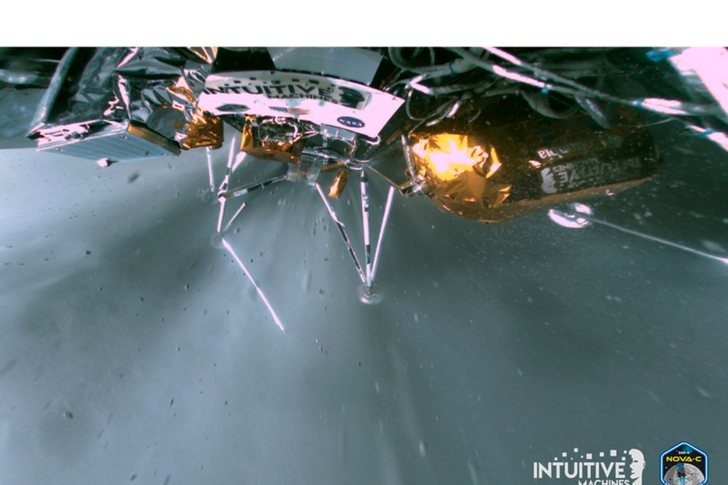
The probe "Odysseus" (Odyssea), which landed on the moon o...

Elon Musk is suing the company OpenAI and its founder, CEO...

The United States announced on Thursday that it is launchi...

A video has been published on social networks where severa...

Objekti më i ndritshëm i zbuluar ndonjëherë është loka...
The last weeks of 2023 were full of new events for the wor...

The social network Facebook follows the behavior of users ...

Meta will introduce technology that can detect and tag ima...

"Facebook" celebrates its 20th anniversary. It is the larg...

A team of scientists and engineers have landed in Antarcti...

The year 2024 is an election year in more than 40 states, ...

Since the artificial intelligence program ChatGPT became a...

BMW's main factory in Munich will soon produce only el...

The Consumer Electronics Show returns to Las Vegas January...

American billionaire Elon Musk's Space X company has a...

Google has agreed to settle a US lawsuit alleging it i...

As the automotive industry accelerates towards 2024, S...

The New York Times on Wednesday filed a lawsuit agains...

A new company in Britain hopes that devices with its new t...

CNA has launched another investigation that could lead to ...

Irfan Hysenbelliu is a businessman that we call "Irfan the...

In March 2026, CNA launched another investigation centered...
The arrested mayor of Tirana, Erion Veliaj, with 13 charge...

The Special Board of Appeal (KPA) decided this Monday ...

The KPA vetting decided this Thursday to dismiss the p...

Suela Salavaçi, a prosecutor in the Prosecutor's Offic...

The Special Board of Appeal reinstated the prosecutor ...

Three people were shot and wounded in Elbasan last night b...

A serious incident occurred this Tuesday in the Yrshek are...

An accident occurred this Tuesday on "Dituria" street in K...

A tourist has lost her life on Orikum beach, where she was...

All of Southern Europe will face changing weather conditio...

Albania was hit by temperatures significantly higher than ...

For the first time, Pogradec welcomed the Inter-Lake Chess...

Albania has achieved a record for the employment of foreig...

In the space of a few days, Ukrainian President Volodymyr ...

The spokesman for the Iranian Foreign Ministry warned Bulg...

Autoritetet italiane sekuestruan pako me afër 800 kilogram...

Greece has taken several emergency measures to protect wor...

At a time when industrial products are increasingly taking...

Trust among people is not just a three-syllable word. It c...

Master of humor Todi Llupi has passed away at the age of 7...

The ninth edition of "MIK Festival" kicked off with one of...

The Centralized Purchasing Operator recently opened a tend...

The new draft law "On the Bank of Albania" provides that t...

This Tuesday, one US dollar is bought for 81.2 lek and sol...

Deputy Minister of Economy and Innovation, Enkelejd Musabe...