

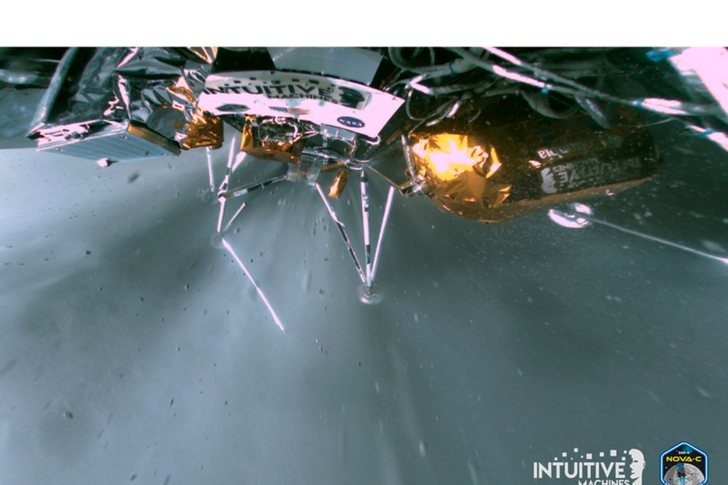
The mission of the "Odysseus" probe to the Moon
The probe "Odysseus" (Odyssea), which landed on the moon o...



The Electronic and Postal Communications Authority (AKEP) started this month the public consultation procedure for granting rights to use frequencies in the 3.5 GHz band.
This step also marks the official start of the procedures for the implementation of 5G technology in Albania, in this frequency band.
Albania is relatively late in this process and among the last countries in Europe in the process of adopting the newest technology in mobile communications. North Macedonia has held the auction for 5G frequencies since mid-2021, while Kosovo and Montenegro held it at the beginning of last year.
According to the Action Plan for the adoption of 5G technology in Albania, which was prepared at the end of 2021, in cooperation with the consulting company Jones Group International, it was recommended that the tender procedure for granting authorizations for 5G technology be announced in the middle of 2022 .
However, the process has been slow due to technical and bureaucratic issues, but also due to structural developments in the market.
Two of the existing operators, One Telecommunications and ALBtelecom, at the beginning of last year, merged after their acquisition by the Hungarian group 4iG, and the merger process made it difficult to focus on the development of another major project, such as 5G technology.
On the other hand, even the appetite of the market to make a rapid technological leap and to make major investments is not estimated to have been very high.
In the decision on "Approval for public consultation of the Document 'On the granting of rights of use in the frequency band 3400-3800 MHz (3.5 GHz)'", the Governing Council states that at the end of last year, respectively in the months of November and December , the operators One Albania and Vodafone Albania have submitted in writing to AKEP the expression of interest for the band in question.
According to the law "On electronic communications", if AKEP, based on the market assessment, considers that the interest in the required frequency band may exceed the availability of frequencies in this band, as well as to guarantee their effective use, it develops a public consultation process with the interested parties, regarding the conditions of use of this frequency band and the procedure that is thought to be applied for their use.
On this basis, on February 7, AKEP approved the start of the public consultation for this process, which will last 60 days.
The public consultation document does not contain proposals for the minimum value for each unit of spectrum to be put into use (usually the price is determined for each 1 MHz of spectrum), but interested entities are asked about the price they are willing to pay.
The document does not even contain proposals on how the spectrum will be divided and on the number of usage rights that can be granted.
In the practice of EU countries and the region, the number of usage rights in the 3.5 GHz band is different, including the granting of usage rights at the local level, even for the construction of private communication networks.
In theory, the process also creates space for new operators to enter the mobile market. However, considering the small size of the Albanian market, these chances are mostly theoretical, so it is expected that the two existing mobile operators will offer service even in the new frequencies.
The number of usage rights and the asking price are expected to be determined after the close of the public consultation which will be open until the beginning of April.
However, during the consultations on the Action Plan for the implementation of 5G technology, in 2021, mobile operators presented a number of concerns.
According to them, the end-user subscription may not generate the revenue needed to make the 5G network economically viable.
It is essential that institutions, in determining the minimum asking price, focus on achieving the goals of digital connectivity: this means that the interest in long-term social and economic benefits from the development of 5G broadband must outweigh the Government's short-term interest in maximization of state income.
Operators are concerned that, eventually, the high auction price could reduce their ability to have the capital needed to develop the technical infrastructure required for 5G. They have also demanded that authorizations for 5G technology frequencies be paid in installments over at least five years.
The operators recommended that the Government consider the implementation of fiscal mechanisms to stimulate investments in deep and rural areas, arguing that Albanian rural areas have very high development costs and, in the absence of subsidies from the Albanian Government, the extension of 5G networks in rural areas will require a long time to develop.
Some operators even think that, since a 5G network infrastructure in Albania would make a significant contribution to more effective governance, the state should be willing to contribute money to invest in the necessary infrastructure.
One of the operators expressed the opinion that a reduction of radio communication tax rates of at least 40% from the current level would increase the probability of economic success.

According to AKEP, the generation of 5G mobile systems can theoretically increase the data speed of 4G networks by more than 10 times, by improving frequency usage techniques. However, if we refer to the data from the measurements of operators that have implemented 5G networks in recent years, the changes are not of these proportions.
The average data download speed on 5G networks is roughly twice as high as 4G networks, but still varies widely, depending on the operators.
However, specialist internet speed measurement companies such as Ookla estimated the average speed of 5G networks in 2022 to be around 168 Mbps (megabits per second). Always referring to these measurements, the average speed for certain operators in Europe has reached approximately 600 Mbps.
These speeds are certainly higher compared to the average levels of current 5G networks, but still for most users, they do not make a big difference to their daily internet use.
The speeds offered by 4G networks generally enable a satisfactory experience for the most advanced daily uses, such as watching or downloading videos, games or other multimedia content.
This means that in services for individual users, the transition to 5G will probably not be perceived as a very big change.
Another issue is the technology of mobile devices that enable connection to the frequencies of 5G technology. Currently, it is estimated that only a minority of devices owned by users support the frequencies at which the Internet is transmitted with 5G technology.
These devices are still significantly more expensive than the basic ones used for 4G technology, so access to 5G will therefore also require an upgrade in the technology that end users own.
However, 5G networks are expected to offer greater capacities and broader perspectives, especially in the expansion of services for businesses. At least in a first phase, 5G technology can make a difference especially in this market segment.
Optimal coverage with mobile broadband internet networks for Albania is important, also because our country is among the most backward in Europe in coverage with fixed networks.
For this reason as well, the Internet from mobile networks is a necessary alternative for residents of suburban and rural areas, now that a large part of the services provided by the public and private sectors are increasingly moving online.
For 5G generation networks, the National Frequency Plan has defined 3 main frequency bands: 700 MHz, 3400-3800 MHz and 26 GHz.
Currently, in Albania, the 3.5 GHz (3400-3800 MHz) and 26 GHz bands are free, while the 700 MHz band is still in use by some audiovisual media operators. After passing this band under the administration of AKEP, it will be given to use for 5G mobile networks, following and implementing the relevant legal procedures.
The 700 MHz band is estimated to be the main band for the development of 5G networks and, at the same time, the band that is expected to bring the most revenue to the state from the use of frequencies.
For example, in North Macedonia, the initial price for usage rights in the 700 MHz band was 6 million euros, twice as much compared to the 3.5GHz band.
The reason why coverage with 5G technology is aimed especially at the 700 Mhz band, which is expected to provide the main coverage with 5G technology, is mainly of a technical nature. The lower the frequency band, the greater the distance that can be covered. For this reason, building networks at low frequencies is easier and less expensive for mobile operators.
The higher the frequency, the shorter the distance that can be covered by a given antenna, and the more susceptible their signal is to physical obstacles.
For this reason, networks in high spectrum frequencies, for example, 26 GHz, are difficult and expensive, because they require a very large number of antennas for optimal coverage of large areas.
But, on the other hand, the higher the frequency band, the greater the bandwidth it enables. So, theoretically, under the same technical conditions, the speeds that can be achieved in the 26 GHz band are higher than those in the 700 Mhz or 3.5 GHz band.
But, due to the difficulties to cover large areas, until now the construction of 5G networks has been mainly based on low frequencies, 700 MHz and 3.5 GHz. Even in Albania, mobile operators have presented official expressions of interest to build networks in the 3.5 GHz band, but not yet in the 26 GHz one.
The release of the 700 MHz frequency band from audiovisual broadcasting to be transferred to electronic communications operators has not yet been completed, although more than a year and a half has passed since the deadline.
In 2021, the Council of Ministers approved the New National Frequency Plan, which finally sanctions the expansion of the spectrum to be used for broadband internet by mobile networks.
According to the new Plan, the 700 MHz band (694-790 MHz) should finally come under the administration of the Electronic and Postal Communications Authority (AKEP) starting from June 30, 2022.
Based on the action plan document for the adoption of 5G technology in Albania, prepared by AKEP in cooperation with the consulting company Jones Group International, the 700 MHz band will be used for the development of 5G mobile communications technology. However, the release of this process is proving to be a difficult process, beyond the set deadlines and forecasts.
In its annual report to the 2022 Assembly, the Audiovisual Media Authority (AMA) acknowledged that no significant progress had been made in this process, highlighting that the release of the 700 MHz band (DD2) is a complex process, which involves several decision-making in the legal, financial, technical framework, which places responsibility not only on AMA, but on a number of actors (such as the Ministry of Infrastructure and Energy, the Ministry of Finance and Economy, the Ministry of Justice, the Competition Authority, AKEP, operators national public and private audiovisual, etc.), all of which together must have the good will to promote and accelerate the achievement of the objective.
For this purpose, by order of the Prime Minister, the inter-institutional working group for the release of the digital dividend two band (DD2) has been established, which will be responsible for the coordination of activities related to the release of this band, as well as for the proposal of all necessary decision-making to the competent bodies for its realization.
Until now, the establishment of this working group has not given concrete results in the release of the 700 MHz band.
The expansion of mobile communications in the 700 MHz band is expected to be the most important link towards the adoption of 5G technology, in terms of spectrum management, because technically, this band offers network coverage of wider areas).
Based on the Decision of the European Parliament dated May 17, 2017, EU member states must allow the use of this band for the provision of mobile broadband electronic communications broadband services.
They can delay allowing the use of the 700MHz frequency band for up to two years, based on justified reasons. As a candidate country for membership, Albania is in violation of all deadlines for the transition of this band to the use of electronic communications operators.
The development of 5G networks is expected to bring further increases in the speed of data transmission from mobile networks. Basically, this will make Albanians have faster internet on their mobile phones.
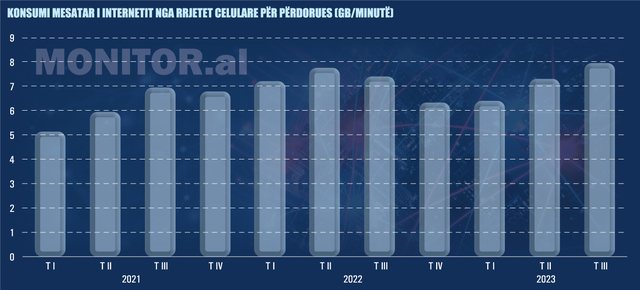
The latest data published by AKEP show that at the end of the third quarter 2023, the number of mobile broadband Internet users (expressed as the number of SIM cards using this service) reached 2.56 million, in 9% increase compared to the same period of the previous year. AKEP estimates that about 91% of active mobile service subscribers use the Internet via smart phones.
The volume of data transmitted via the Internet in mobile networks during the third quarter of 2023 reached 61 million GB (gigabytes), with annual growth of 17.1%. AKEP estimates that on average, each user consumed 7.94 GB of internet per month, an increase of 7.5% compared to the same period a year ago.
The figures show continuous growth year after year, proving the ever greater orientation of mobile services towards data transmission (internet). This simultaneously increases the need for more frequencies and for technologies that enable higher speeds.
The Electronic and Postal Communications Authority (AKEP) announced this week the beginning of the public consultation procedure for the commissioning of the first frequencies that will be used for the development of 5G technology in Albania.
The public consultation document does not contain proposals for the minimum value of the offers that must be submitted to the competition.
However, to create an idea about the income that the state budget can provide from 5G licenses, we can refer to the experiences of neighboring countries, which are more advanced than Albania in this process.
In contrast to Albania, neighboring countries, such as Kosovo, North Macedonia, have simultaneously tendered the frequency bands that have been allocated for the development of 5G technology, namely 700 MHz, 3.5 GHz. Montenegro has even tendered frequencies in the 26 GHz band.
Albania is expected to start the process with the 3.5 GHz band, while the main band for the development of 5G technology, the 700 MHz band, has not yet been released by audiovisual operators.
The National Frequency Plan provided that the 700 MHz band should pass under the administration of AKEP as of June 30, 2022.
However, such a thing has not yet happened, although more than a year and a half has passed from the set deadline, which proves, as is often the case, the inability of Albanian institutions to fulfill legal obligations and deadlines.
Comparisons in the values ??obtained in neighboring countries can only have a reference value, in the first place, because the size of the population and the potential market is smaller than in Albania (at least according to the official data to date).
However, in the case of Kosovo, the two operators who were granted the rights to use the 3.5 GHz band frequencies last year paid a total of around 4.6 million euros for an amount of spectrum of 200 Mhz (100 MHz) each.
Meanwhile, the two operators pay approximately another 7 million euros for the frequencies in the 700 MHz band, a band that cannot be tendered in Albania yet. In Kosovo, the conditions of the authorizations given to the operators also foresee the possibility of payment in installments, extending up to five years.
In North Macedonia, the auction for 5G technology bands took place in 2021 and the minimum value required for each right of use (of 100 MHz) in the 3.5 GHz band was 3 million euros.
The slightly higher value in the case of North Macedonia can be explained by the larger number of population (about 2.1 million inhabitants against 1.9 million inhabitants of Kosovo). Both in the case of Kosovo and North Macedonia, the usage rights for the 3.5 GHz band have been granted for a period of 20 years.
Albania officially has a population of almost 2.8 million inhabitants, but it is estimated that the real figure should be significantly lower, due to negative demographic trends, related to the drop in birth rate and especially to the high emigration in the last decade.
In theory, however, the figures expected to benefit the Albanian state from the granting of 5G usage rights in the 3.5 GHz band should be slightly higher than those of North Macedonia (around 3 million euros for every 100 MHz)./ Monitor .co.uk

The probe "Odysseus" (Odyssea), which landed on the moon o...

Elon Musk is suing the company OpenAI and its founder, CEO...

The United States announced on Thursday that it is launchi...

A video has been published on social networks where severa...

Objekti më i ndritshëm i zbuluar ndonjëherë është loka...
The last weeks of 2023 were full of new events for the wor...

The social network Facebook follows the behavior of users ...

Meta will introduce technology that can detect and tag ima...

"Facebook" celebrates its 20th anniversary. It is the larg...
A team of scientists and engineers have landed in Antarcti...

The year 2024 is an election year in more than 40 states, ...

Since the artificial intelligence program ChatGPT became a...
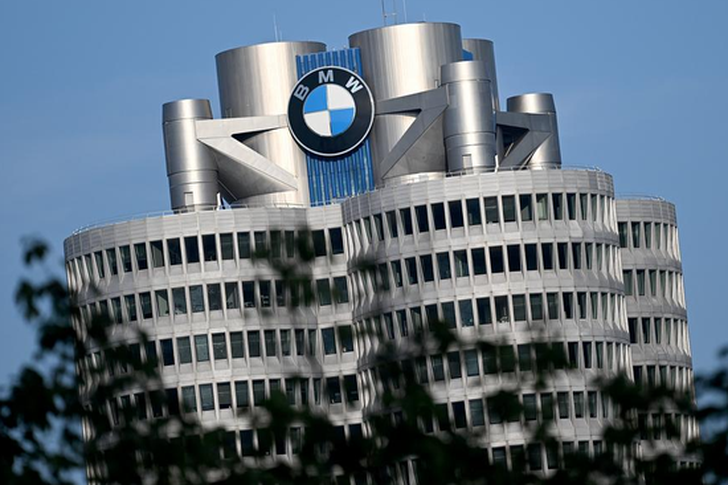
BMW's main factory in Munich will soon produce only el...

The Consumer Electronics Show returns to Las Vegas January...
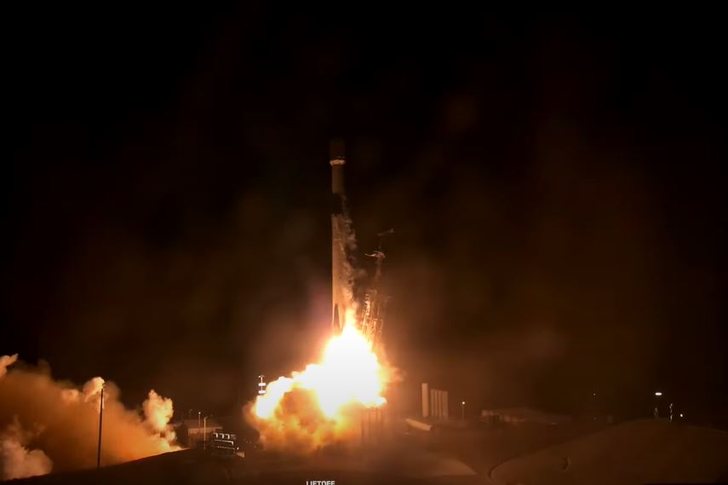
American billionaire Elon Musk's Space X company has a...

Google has agreed to settle a US lawsuit alleging it i...

As the automotive industry accelerates towards 2024, S...

The New York Times on Wednesday filed a lawsuit agains...

A new company in Britain hopes that devices with its new t...

China will introduce new rules that will limit the amo...

CNA has launched another investigation that could lead to ...

Irfan Hysenbelliu is a businessman that we call "Irfan the...

In March 2026, CNA launched another investigation centered...
The arrested mayor of Tirana, Erion Veliaj, with 13 charge...

The Special Board of Appeal (KPA) decided this Monday ...

The KPA vetting decided this Thursday to dismiss the p...

Suela Salavaçi, a prosecutor in the Prosecutor's Offic...

The Special Board of Appeal reinstated the prosecutor ...

A road accident occurred this evening on Nikolla Zoraqi St...

Three people were shot and wounded in Elbasan last night b...

A serious incident occurred this Tuesday in the Yrshek are...

An accident occurred this Tuesday on "Dituria" street in K...

All of Southern Europe will face changing weather conditio...

Albania was hit by temperatures significantly higher than ...

For the first time, Pogradec welcomed the Inter-Lake Chess...

Albania has achieved a record for the employment of foreig...

US Secretary of State Marco Rubio arrived in Manila on Jul...

In the space of a few days, Ukrainian President Volodymyr ...
The spokesman for the Iranian Foreign Ministry warned Bulg...

Autoritetet italiane sekuestruan pako me afër 800 kilogram...

At a time when industrial products are increasingly taking...

Trust among people is not just a three-syllable word. It c...

Master of humor Todi Llupi has passed away at the age of 7...
The ninth edition of "MIK Festival" kicked off with one of...

Construction company licenses will have a validity period ...

The Centralized Purchasing Operator recently opened a tend...
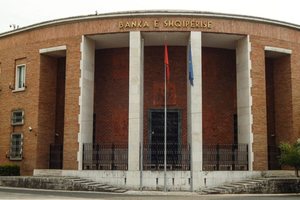
The new draft law "On the Bank of Albania" provides that t...

This Tuesday, one US dollar is bought for 81.2 lek and sol...