


Olsjan Çela targets KLP: Defective interaction
Prosecutor General Olsjan Çela in the Committee for Civic ...

Prosecutor General Olsjan Çela in the Committee for Civic ...

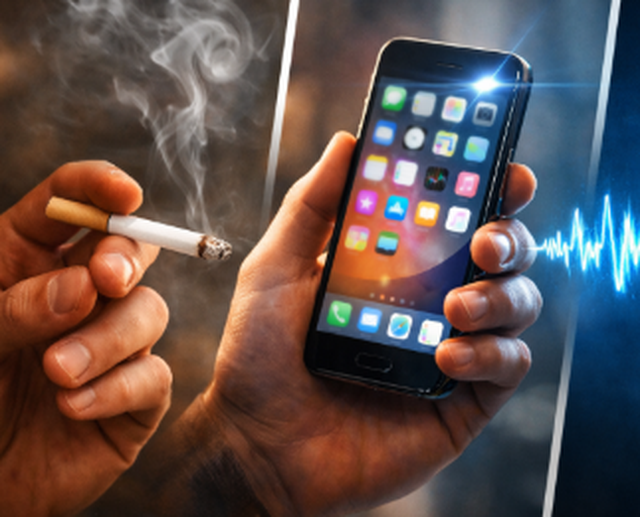
This year has brought many articles comparing social media addiction to smoking, while authorities and courts are increasing pressure on technology platforms.
It's easy to see why critics hope for a smoking-like turnaround. In the mid-20th century, nearly half of U.S. adults smoked.
By 2020, that rate had fallen to around 13%. But the story had a bitter end: many of the poorest remained addicted. Could the same thing happen with social media?
As Allan M. Brandt writes, smoking was once “a product and behavior with mass appeal.” Social media was also widely used in its early decades: it was not uncommon to see a Hollywood star as obsessed with Facebook as a teenager on the bus.
But when researchers linked smoking to lung cancer, the first to react were the more educated. One study shows that the decline in smoking among them began as early as 1954, shortly after the first publications.
In the 1980s, the decline took on a clear social dimension. One woman who quit smoking due to social pressure said: “I read that a third still smoke. Where are they? I don’t know any.”
Predictions at the time varied: some thought that tobacco would disappear within 20–25 years, others that it would reinforce social inequalities. Today we know that the latter proved to be correct.
Quitting addictive habits is harder for those with less education, support and access to healthcare. In Britain, people in the poorest areas are more than three times as likely to smoke as those in the richest areas.
Although the aim was to reduce the rate to 5% by 2030, a report warned that without additional measures this target will not be achieved and the poorest areas will not reach it until 2044. Smoking remains the “leading cause of health inequalities”, explaining half of the difference in life expectancy.
Could the same thing happen with social networks?
Today, efforts to limit their use in children appear to be led mainly by middle-class parents, while there are indications that young people from less affluent families more often experience negative effects.
However, there are differences. Unlike smoking, social media algorithms adapt to the user.
An adult who spends time watching cat videos may be wasting time, but not necessarily their health. Similarly, new technologies, such as AI-powered chatbots, could replace social media and create similar concerns.
The main lesson from tobacco is clear: addictive products can survive even after they lose mass popularity.
And when they are also harmful, they not only reflect inequalities, they deepen them./Financial Times


Today our country will be affected by stable weather condi...
Today, our country will be affected by relatively stable w...

Psychosocial risk factors, including long working hours, j...

A recent Eurostat publication, "Digitalization in Europe",...
A conflict between young people has ended in a stabbing in...

On Thursday, our country will be affected by relatively st...

Within Britain's Secret Intelligence Service, MI5, a group...

Hartsfield-Jackson Atlanta International Airport has maint...

On Wednesday, our country will continue to be affected by ...
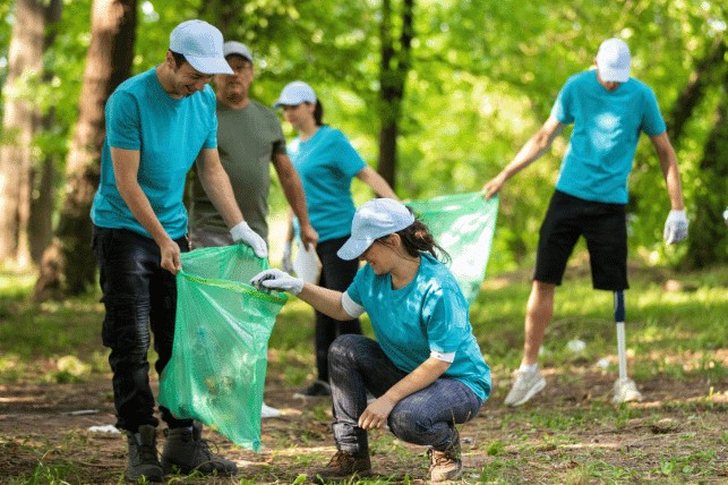
Albanians deeply lack a sense of civic engagement and volu...

On Tuesday, our country will continue to be affected by un...

The southeast of the country continues to be one of the mo...

Artificial Intelligence (AI) is reshaping labor markets ar...
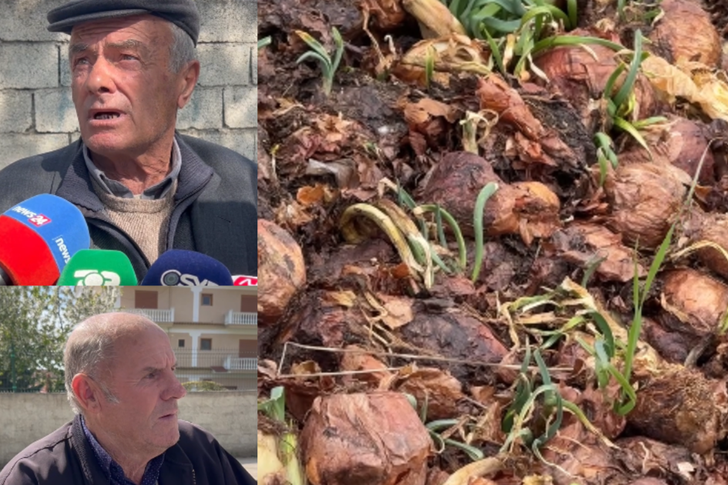
Farmers in the Maliqi plain, mainly in the villages of Pir...

Our country, on Monday, will be affected by unstable weath...

Having your suitcase stolen or items removed from it will ...

The Institute of Geosciences has shared a forecast regardi...

Europe is home to some of the most popular cities in the w...

The weather is forecast to be clear with few passing cloud...
The increase in cases of elderly people living alone and b...

The justice reform claimed that it would bring faster, fai...

The Justice Reform and the vetting process were trumpeted ...

After revealing the property portfolio in Tirana, Kavaja, ...

Four months ago, on March 11, CNA sent an official letter ...

The Special Board of Appeal (KPA) decided this Monday ...

The KPA vetting decided this Thursday to dismiss the p...

Suela Salavaçi, a prosecutor in the Prosecutor's Offic...

The Special Board of Appeal reinstated the prosecutor ...

Fier Police have issued an official response regarding the...

The Serious Crimes Investigation Section, in cooperation w...

It is reported that a fire has broken out in the village o...

Two Jet Skis have been blocked in Saranda after they viola...

As Albania faces ongoing demographic challenges, the l...

Today our country will be affected by relatively unstable ...

In an interview with CNA TV, psychologist Bona Miekley sai...

Beyond the desire to be as elegant as possible on the mini...

An investigation by the British media outlet "The Sun" cla...

Two explosions rocked central Damascus on Tuesday, at the ...

A new online system for prior authorisation of entry into ...

US President Donald Trump is headed to Ankara, where NATO ...

The German Embassy in Tirana has invited the Albanian publ...

Professor and literature scholar Ali Xhiku has passed away...

During my research into the life and artistic photographic...

This year's edition of the Gjon Mili International Video A...

The debate continues between the National Business Center ...

Since the launch of the real estate revaluation process in...

This Monday, one US dollar is bought for 81.2 lek and sold...

This Sunday, one US dollar is bought for 81.3 lek and sold...