


Businessman Artur Shehu breaks his silence: I am a long-time land owner in Zvërnec, I don't know the investors at all
Albanian businessman Artur Shehu spoke on the Opinion show...

Albanian businessman Artur Shehu spoke on the Opinion show...

There are moments in a country's history when laws are no longer an expression of the popular will, but an instrument of a political will that aims to reformat man himself. This is precisely the reality we are subjected to today: the law on "Gender Equality", already decreed by the President's silence and published in the Official Gazette, marks not simply the approval of a norm, but the official entry of Albania into the ideological orbit of the globalist extreme left.
In the article I wrote before the decree, I warned about the danger of presidential inaction. Today, after the factum, we understand that this warning was not rhetoric, but reality: the law is more than a legal document; it is an ideological manifesto that uses the language of equality to undo the very notion of man.
German philosopher Jürgen Habermas has emphasized that the legitimacy of law lies in the combination of reason, consensus, and social reality.
But when the law is disconnected from reality, it is no longer a tool of justice. It becomes an instrument of social engineering.
This is the case of the gender equality law in its current form.
Wokist laws, which relativize biological nature and replace it with subjective fluidity, do not construct justice; they construct an artificial anthropology. Essentially, these laws:
• deny the existence of human essence;
• rely on postmodern philosophy according to which truth is a construct;
• transform politics into a moral mission of the new world;
• impose a new ethic against those who disagree with the new laws…
Roger Scruton, whom I quoted earlier, was right:
"When truth becomes relative, ideology takes the place of reality."
Today, with the publication of the law, ideology has become a positive right.
Evil in the 21st century no longer presents itself with the harsh face of tyranny. It comes with sweet vocabulary, technical terminology, liberal references, and the magic word: EQUALITY.
But a law that introduces anthropological divisions between biological sex and identity, that relativizes natural truth, that creates cultural pressure on the majority to submit, is a bad law dressed up in good language.
"The new totalitarianism does not come as violence, but as moralization," was the warning of French philosopher Pascal Bruckner.
Today, moralizing has been entered into the Official Gazette.
Pontius Pilate's metaphor for the inaction of people in power has become reality.
The president did not reverse the law; he did not explain it; he did not confront it; he did not intervene.
He was silent!
The presidential silence acted as more than a signature: it is passive participation in the legitimization of evil.
Bonhoeffer describes this mechanism with prophetic precision by saying; “Silence in the face of evil is evil itself.”
The President's silence:
• was not neutral,
• it was not technical,
• it was not institutional.
It was political and moral.
In political science theory, this is called omissio criminis, taken to the normative dimension: the harm is not in the action you take, but in what you dare not do.
Hannah Arendt described totalitarianism as a process where man is not only oppressed by violence, but by normalizing evil through bureaucratic procedures.
The adoption of the law, with political arrogance, without real consultation with society, and above all with silent decree, is the perfect scheme of this banality.
Arendt writes:
"Evil becomes dangerous when it becomes commonplace."
With the introduction of the law into the Official Gazette, one thing became commonplace: changing people through law.
This is the boundary where a society begins to slide towards post-democracy.
The parliamentary majority is an instrument of the people, not their substitute.
Majority does not mean moral majority, but numerical majority.
When the policy:
• ignores protests,
• insults citizens (“let the dogs bark…”),
• uses arrogance instead of argument,
• sees the people as an obstacle rather than a source of sovereignty, then we have the phenomenon known in political philosophy as democratic despotism (Tocqueville).
Bad laws bring immediate consequences.
First, it causes: Social fracture. Disruption between the people and the government; between traditional values ??and ideological values.
Second; Change in education. The school is transformed into an experimental field where ideology is introduced as scientific truth.
Thirdly; Cultural pressure.
The majority remains silent because not accepting the ideology is labeled as "hatred" or "backwardness."
Fourth; Changing generational anthropology.
In the name of progress, the structure of human identity collapses: male-female, family, parental role, responsibility.
Fifth; Weakening of democracy.
Democracy is not just a voting procedure, it is a culture. When democratic culture is violated by arrogance, then autocracy with a liberal face begins.
Every law, good or bad, does not remain on paper. It permeates institutions, school programs, media, culture! Then, later, it permeates the consciousness of generations.
Such laws:
• reshape the public vocabulary,
• impose terminology (gender identity, fluidity, self-determined belonging),
• criminalize moral dissent,
• create a new ethic through social pressure.
At this point, the law is no longer a means of regulation, but a means of transforming reality. This is the modern form of cultural tyranny.
What did Albania lose with the presidential silence?
Albania lost a golden moment to defend the moral order. The President had the opportunity to become the voice of the majority, but he became the voice of no one and the key to the counterculture. Albania lost the last instrument of institutional balance. Let us remember that the President is not a notary, but the last brake against the excesses of the majority. Albania lost the belief that politics can protect the family and human nature. When politics surrenders, the culture of fear begins. Albania lost the opportunity for a positive moral precedent.
Today, a dangerous precedent has been set: laws can be passed without any institutional opposition.
What lies ahead? A cultural battle, not just a political one.
Now that the law has been published, the battle is not over.
It has just begun, but not in parliament. It has begun in:
• school,
• universities,
• family,
• media,
• public discussions,
• culture,
• the conscience of the younger generations.
A free society is one that refuses to submit to ideology, even when it comes as law. Laws change. But when human nature changes, going back is harder. The silent passage of the law and its publication is not the end of the story, but the first chapter of a new era where:
• relative truth replaces reality;
• ideology replaces nature;
• fear replaces duty;
• bureaucracy replaces morality.
The story of Pilate does not blindly repeat itself, but its principle does! Evil does not triumph because evil people act, but because the people who should have acted – remained silent.
The president will be judged not for the law he signed, but for the law he did not have the courage to reverse.
Bonhoeffer would close this article in the most accurate way possible:
“Inaction is action.”
And in our case, inaction became law. / CNA

Myth Two: QUARANTINE Myth: Quarantine was "invented" to c...
The law clearly explains it: a candidacy for the People's ...

The Democratic Party has maintained a very good stance on ...
In the 1980s, the fashion for sleeveless dresses came into...

Once again about heroism and the collapse of the dictators...
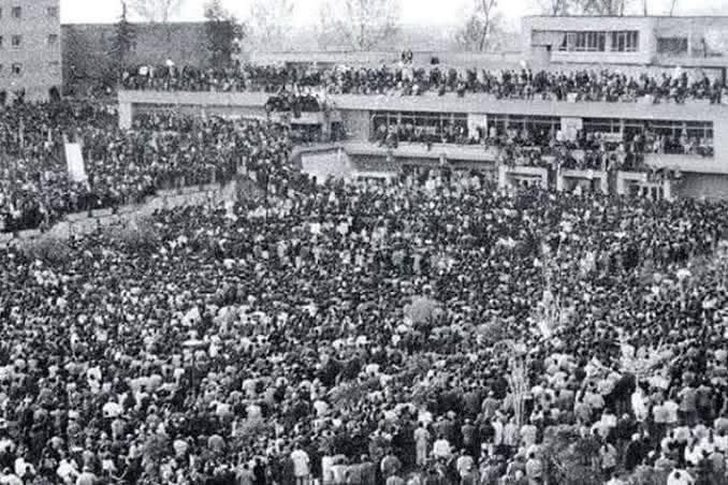
Albania marks today the 35th anniversary of the beginning ...
Once, with cynicism and black humor, Edi Rama sincerely be...
December 8 is not just a date or a historical event; nor i...
Even Pilate thought that by remaining silent he would esca...
The movement in the Democratic Party, which seemed dead be...

The region of ancient Illyricum, which corresponds to pres...
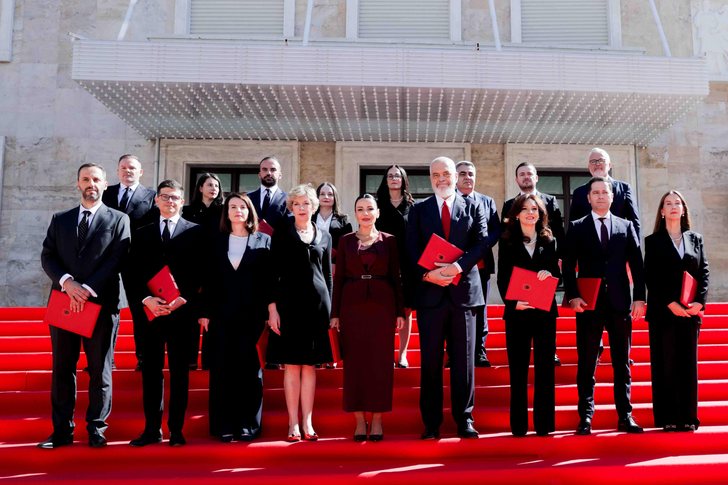
The most voted and unvoted.. This is a harmful idea with d...
For Salianji, my opinion has always been clear, even when ...
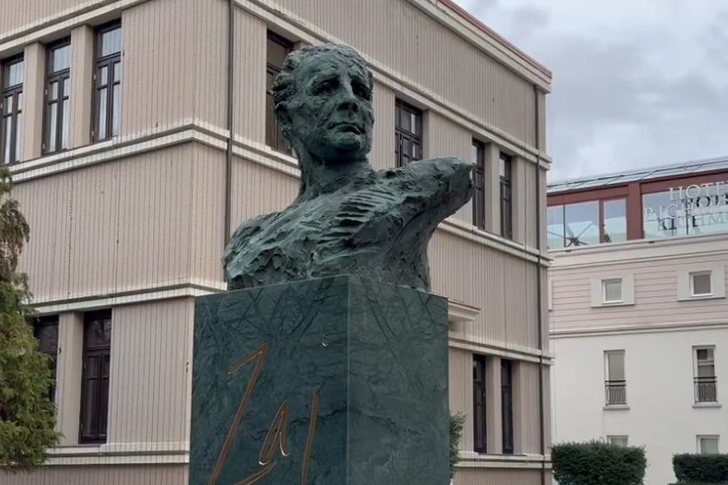
It's been a few days since the bust of Zai Fundo was u...
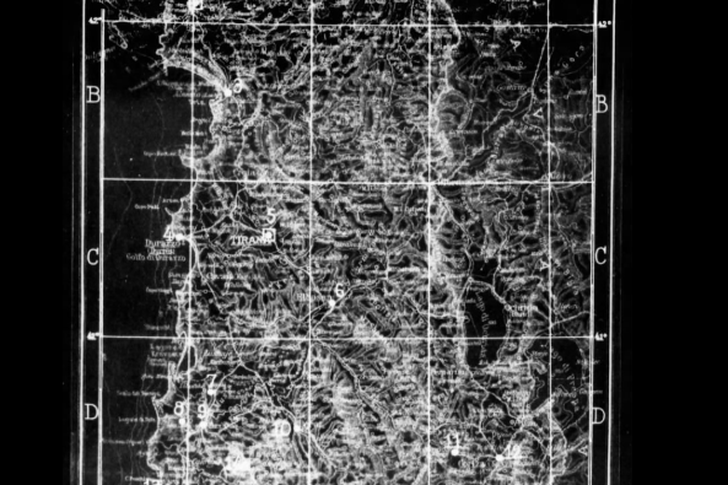
The following map comes from the American World War II arc...
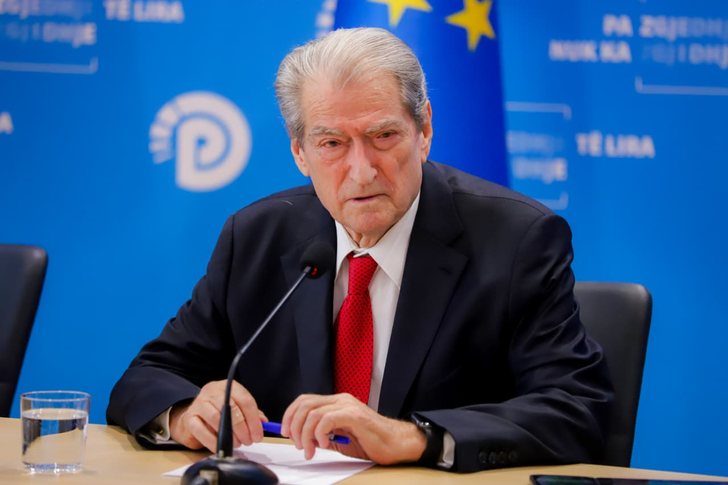
There was a lot of noise these days about the Salianji...
Albanians in the Republic of Serbia living in the Presevo,...
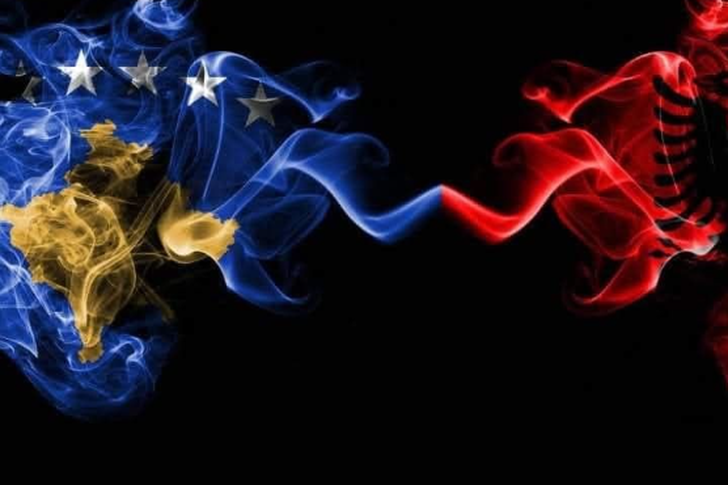
Independence is the greatest act of self-determination tha...
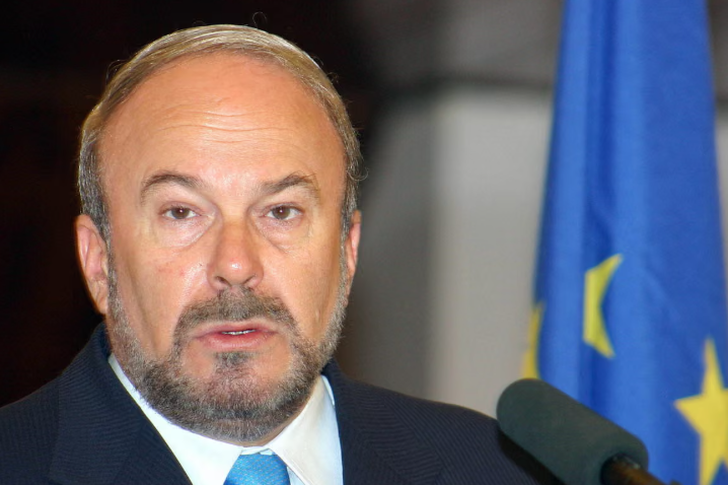
Whether in government or in prison, Fatos Nano was one of ...
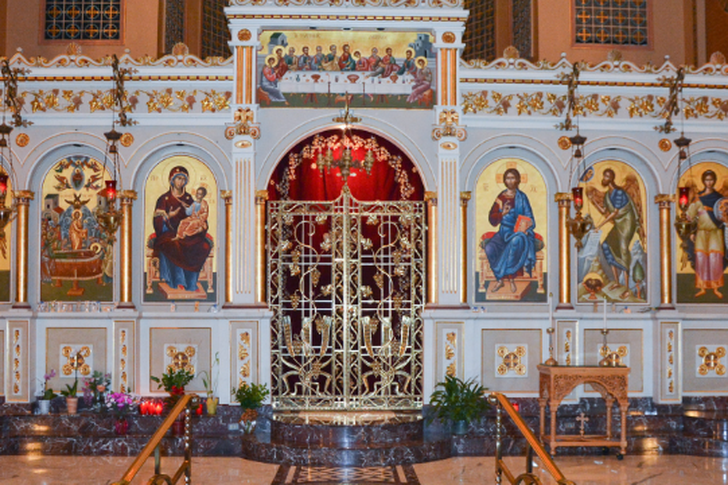
*Written by the Archbishop of Tirana, Durrës and All Alba...
The next case broadcast on the show "Stop", this Thursday,...
The case published this Thursday, June 4, on the show "Sto...
The protests of recent days related to the situation in Zv...
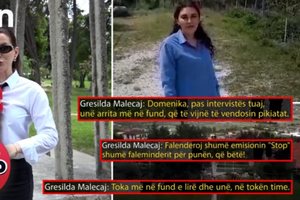
The case addressed this Wednesday, June 3, on the show "St...

The Special Board of Appeal (KPA) decided this Monday ...

The KPA vetting decided this Thursday to dismiss the p...

Suela Salavaçi, a prosecutor in the Prosecutor's Offic...

The Special Board of Appeal reinstated the prosecutor ...
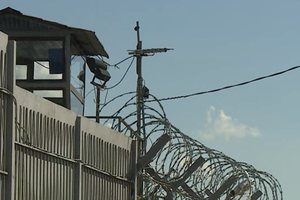
A convict was found dead today in the premises of the Pris...
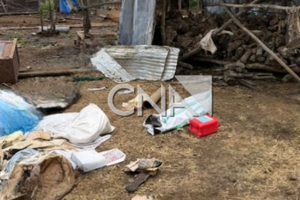
Several images provided by CNA show the area where this mo...
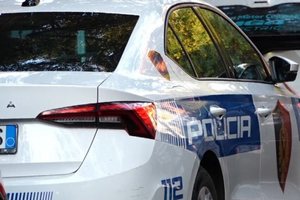
A quantity of explosive material exploded this morning at ...
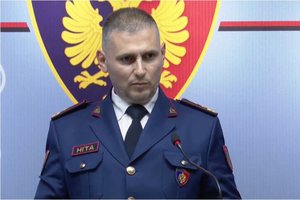
The Head of the State Police, Skënder Hita, expressed his ...

For many children and teenagers, the long summer holidays ...
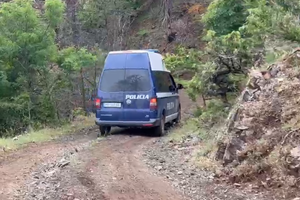
Witnesses in Lozhan, Maliqi, have shared details from the ...
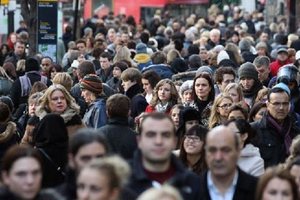
Albania is facing an unprecedented demographic transition,...

On Thursday, our country will be affected by unstable weat...

Russian President Vladimir Putin said the war in Ukraine c...
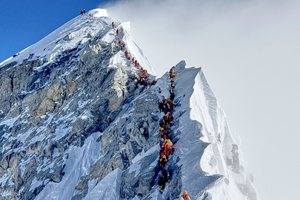
An extraordinary story of survival has been recorded in Ne...
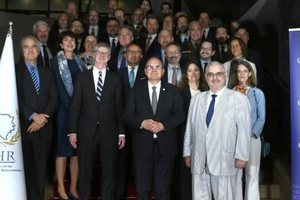
The Peace Implementation Council in Bosnia and Herzegovina...
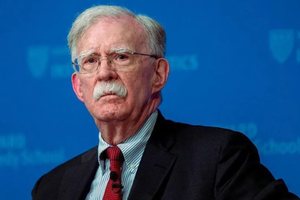
John Bolton, the former national security adviser to US Pr...
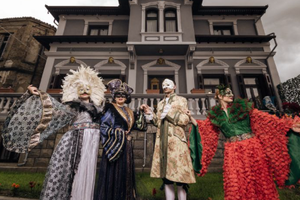
Korça is ready to open the summer season with one of the c...
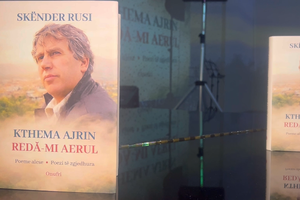
Two years after his passing, the renowned Korçë poet Skënd...
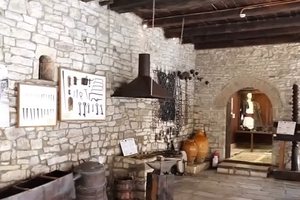
The Ethnographic Museum of Berat has opened its doors to v...
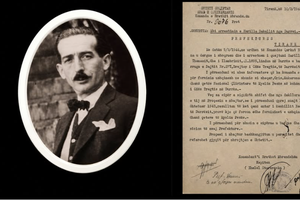
The story of Harilla Bakalli is one of the most chilling t...
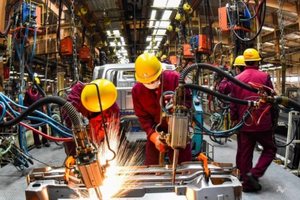
The government aims to transform the country's industrial ...
Kursi i këmbimit të euros me lekun ka rënë më tej këtë jav...

Profit margins in the construction sector have increased s...

The Transparency Board, at its meeting today, decided to i...