

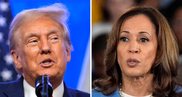


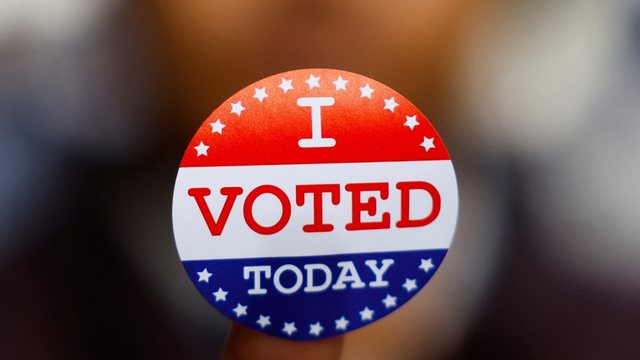
In any election campaign, the measurement of public opinion is important for voters and candidates.
Polls enable everyone to understand and adapt to prevailing views. But polls have flaws.
When we talk about the dominance of a candidate in an election campaign, we talk about public opinion polls.
These are professional surveys of selected groups of voters - which ideally represent the electorate as a whole.
There are hundreds of organizations that conduct polls, some public, or in partnership with the media, others private, commissioned by the parties or the candidates themselves.
Their methods differ, but the essence is the same: a questionnaire is drawn up and the answers are recorded.
The questions range from the simplest ones like, "who will you vote for?", to the more detailed ones like "who do you trust about the economy?", or even "which candidate would you like to have a beer with?".
The earliest example of a modern poll is that of a group of newspapers in the 1824 election.
Decades later, Literary Digest monopolized presidential polls, mailing out millions of questionnaires and tabulating respondents' responses.
But the measurement of public opinion, as we know it today, has its beginnings in 1935, when George Gallup founded the American institute of public opinion, which today is known as the "Gallup Organization". Using a sample of only 50,000 voters he predicted the victory of Franklin Roosevelt in 1936, which the Literary Digest, despite having 2 million respondents, could not do.
Gallup understood that the forecast is not about the number of respondents, but about the widest possible representation of voters in the survey.
This is not easy. The main challenge is to avoid the influence on the survey result of the so-called "bias that naturally favors those who agree to answer the survey questions". Mail, face-to-face, or telephone surveys can lead to different results.
Voters in rural areas are less likely to answer the phone compared to those in urban areas; the rich used to have more phones than the poor. Polling today is increasingly digital, which can affect the underrepresentation of older voters.
Pollsters are trying to change practices to combat 'under-representation' or 'over-representation' so that results are more accurate. The way the questions are asked also matters.
But, even with the most advanced methods, it is impossible to avoid mistakes. In 2016, most polls predicted the defeat of Donald Trump. Analysts say this happened because some voters were embarrassed to admit they were Mr Trump supporters.
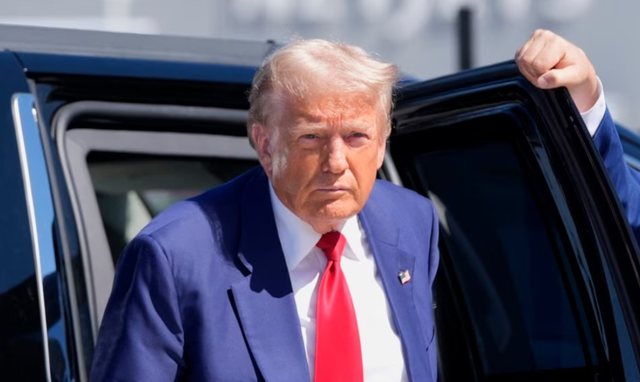
Others have a simpler explanation: polls measure opinion at a given moment, and that depending on events, the public's views can change.
During the election campaigns, the candidates and the public through polls come to understand who is dominating the race.
But polls can be confusing, contradictory, and even wrong. It's a combination of art and science... that can be confusing if you don't know what to look for.
The winner of the election is usually known on the day of the election, or shortly after it.
Polls provide a prediction of who will win, based on a representative sample of voters.
But the fact that they are based on current trends means that they can also be inaccurate.
In 2016, Princeton University's Sam Wang was so confident in the polls predicting a victory for Democratic candidate Hillary Clinton that he promised to eat a bug on live television if she lost.
And he did this during a show on CNN.
The poll itself also contains the margin of error - a statistically significant percentage that indicates to what extent the sample used in the poll represents the totality of voters.
The smaller the sample, the higher the error rate. So, in theory, a poll of all voters would have no margin of error.
A margin of error of plus or minus 3 means that a poll's result can move within three points to one side or the other.
This means that if a poll shows a candidate leading by two points and the margin of error is plus or minus 3, the result is not reliable and you should not bet on it.
If a candidate leads by 15 points and the margin of error is plus or minus three, this statistic should be taken seriously - although perfect samples and safe bets do not exist.
The methodology can be more complicated than that, even involving advanced theoretical mathematics.
But in practice, pollsters and scientists sometimes act quickly and allow gaps, which in many cases affects the inaccuracy of polls.
Individual surveys are useful, especially those that focus on a particular issue, and each one is an indicator of the state of a campaign.
Ultimately, the survey is the best gauge available. But context is important.
The news agency 'New York Times' and the site '538.com' collect data from multiple surveys and create their average, providing a more general picture of the situation.
But even summing up the average of different surveys can give wrong results, as in 2016.
However, they are a more accurate indicator of trends than individual surveys. In other words, if a candidate is falling in some polls, it does not mean that the polls are correct, but you can conclude that the candidate is not doing as well as before./ VOA


Israel has launched what it described as "precise and targ...
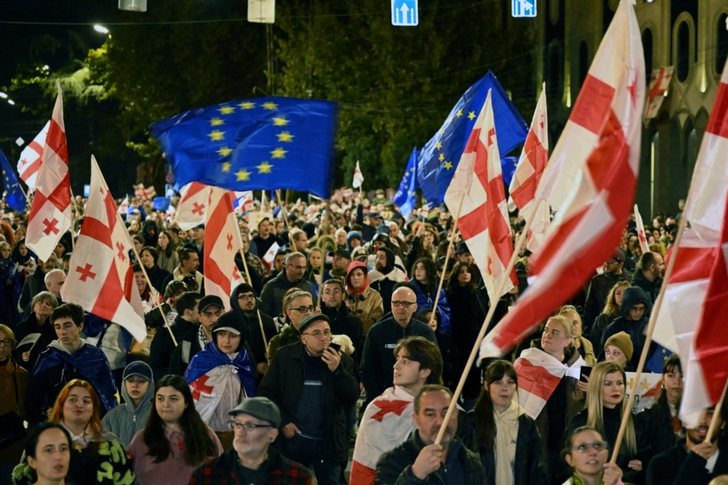
Elections in Georgia will be held as the government faces ...
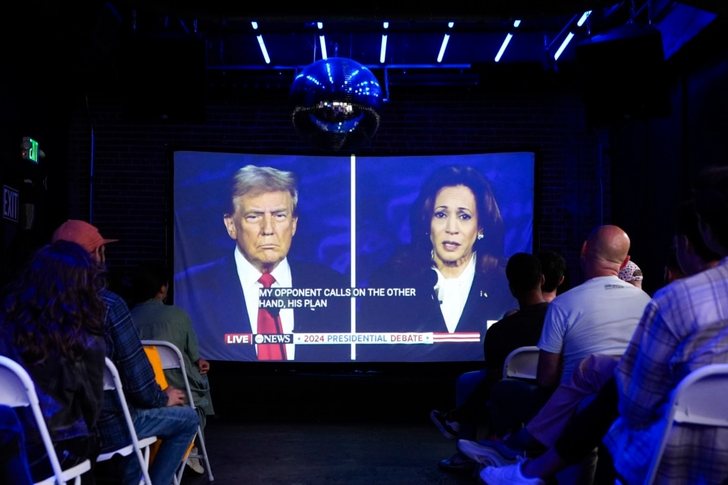
Autoritetet amerikane thanë se aktorët rusë qëndrojnë prap...
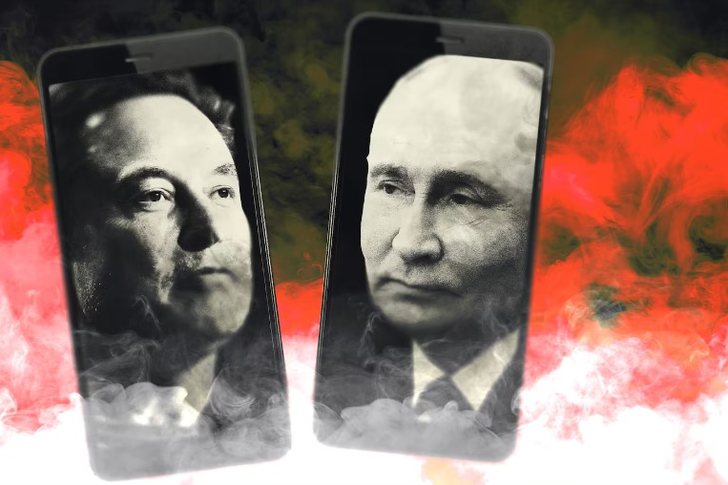
Elon Musk, the billionaire owner of SpaceX, which has won ...
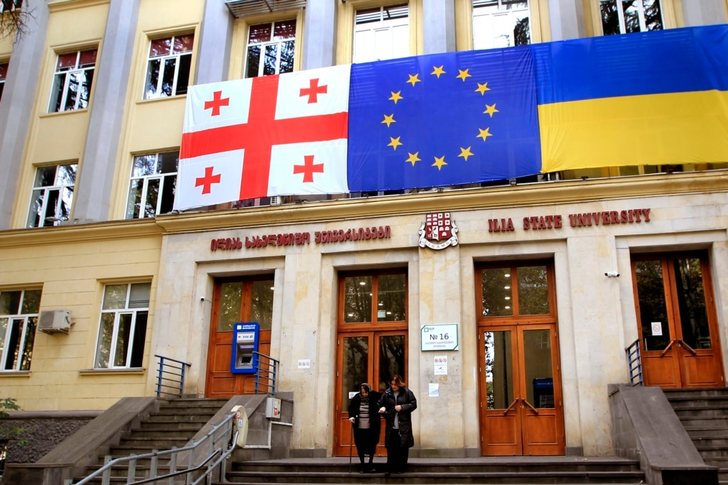
Georgians are voting today in what many of the country's r...
Type 2 diabetes is a disease that spares no one. World st...

Saudi Arabia and other Gulf states warned of an "escalatio...
The Mayor of Peja Municipality, Gazmend Muhaxheri, was phy...
The President of Kosovo, Vjosa Osmani, received the Pr...
That Russia and North Korea cooperate in principle is ...
Turkish President Recep Tayyip Erdogan was a special guest...

Russia has helped amplify and spread false claims online a...
The United States presidential election will be held on No...
Hungary's prime minister, Viktor Orban, has suggested that...
Ukrainian President Volodymyr Zelensky warned on Friday th...
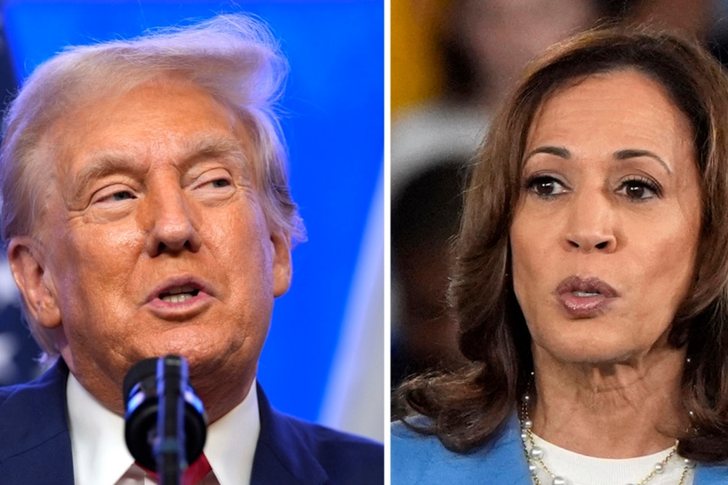
Democratic candidate Kamala Harris and her Republican riva...
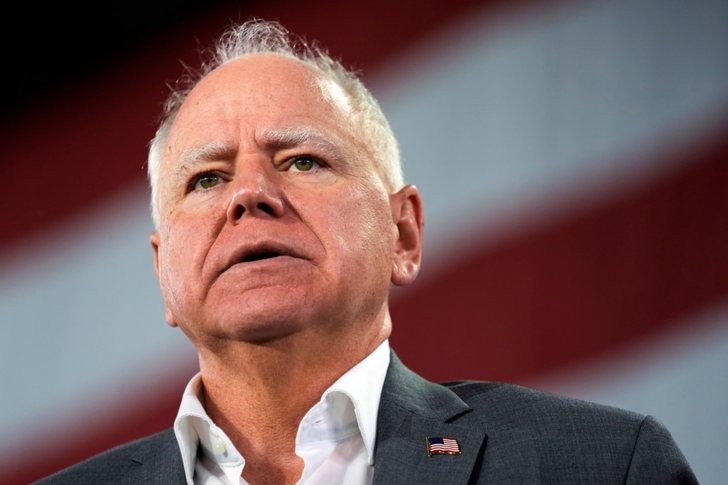
Tim Walz served two terms as governor of Minnesota bef...
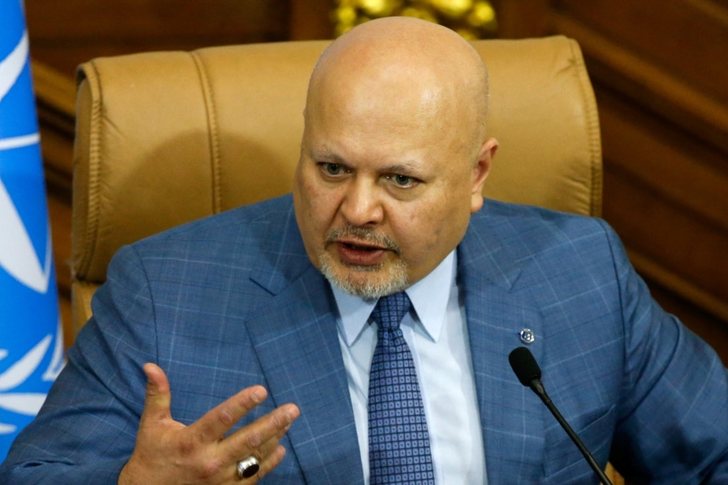
As the chief prosecutor of the International Criminal Cour...
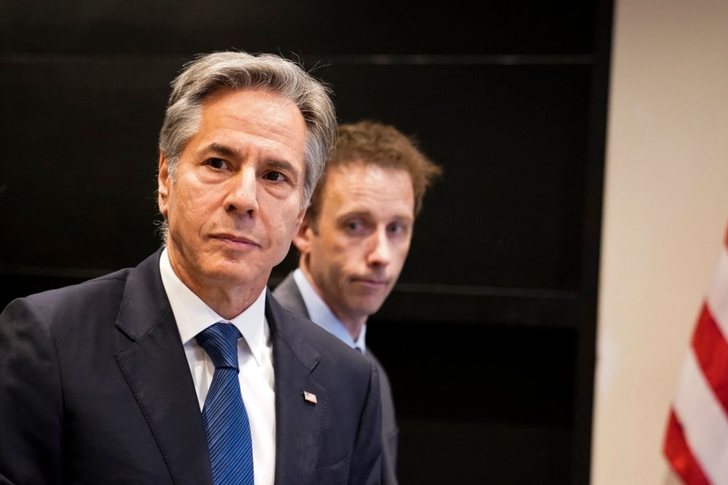
US Secretary of State Antony Blinken said today that there...
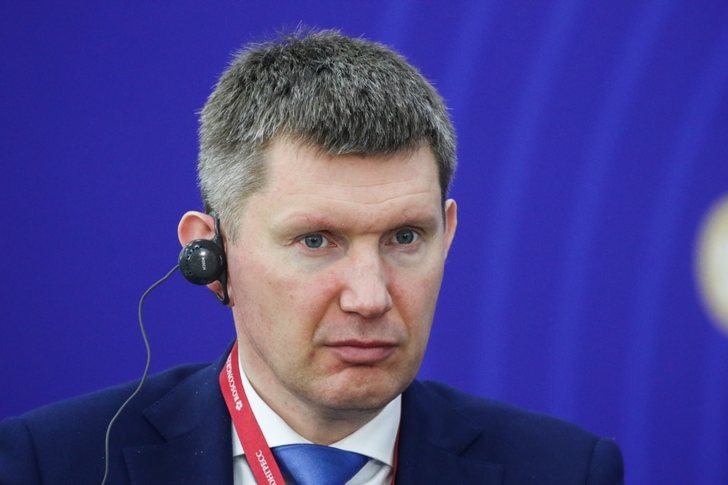
The Minister of Economic Development of Russia, Maksim Res...

CNA has launched another investigation that could lead to ...

Irfan Hysenbelliu is a businessman that we call "Irfan the...

In March 2026, CNA launched another investigation centered...
The arrested mayor of Tirana, Erion Veliaj, with 13 charge...

The Special Board of Appeal (KPA) decided this Monday ...

The KPA vetting decided this Thursday to dismiss the p...

Suela Salavaçi, a prosecutor in the Prosecutor's Offic...

The Special Board of Appeal reinstated the prosecutor ...

An accident occurred this Tuesday on "Dituria" street in K...
A tourist has lost her life on Orikum beach, where she was...

Two people were arrested and two others were prosecuted af...

At around 08:40, in neighborhood no. 10, Korça, a "Benz" t...
Albania was hit by temperatures significantly higher than ...
For the first time, Pogradec welcomed the Inter-Lake Chess...

Albania has achieved a record for the employment of foreig...

Today our country will be under the influence of relativel...
An earthquake measuring 5.0 on the Richter scale struck so...
The United Kingdom's new Prime Minister, Andy Burnham, has...
United States President Donald Trump has imposed 50% tarif...
US President Donald Trump responded with harsh rhetoric to...

At a time when industrial products are increasingly taking...

Trust among people is not just a three-syllable word. It c...

Master of humor Todi Llupi has passed away at the age of 7...

The ninth edition of "MIK Festival" kicked off with one of...
The Centralized Purchasing Operator recently opened a tend...
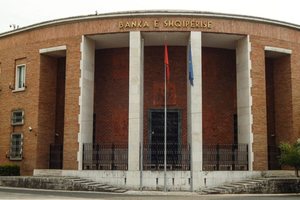
The new draft law "On the Bank of Albania" provides that t...
This Tuesday, one US dollar is bought for 81.2 lek and sol...
Deputy Minister of Economy and Innovation, Enkelejd Musabe...