


British Defense Minister Says Threat Risk in Straits Is Complex
The BBC reports that British defense sources say the Unite...



A new draft instruction from the Kosovo Ministry of Justice, which aims to expand its access to citizens' criminal records, has raised serious concerns about privacy violations, violation of the law, and the risk of politicization of sensitive information.
The Kosovo Law Institute (KLI), the Kosovo Judicial Council (KJC), and the Information and Privacy Agency (IPA) have expressed strong reservations about the measure, warning that it may be in violation of local laws and international standards for the protection of personal data.
The Ministry of Justice (MoJ) has not responded to Radio Free Europe's requests for comment.
According to the KLI, which has also analyzed this draft instruction, it gives the Ministry of Justice much broader powers than those provided for by law.
"This draft gives the Ministry full access to the Criminal Evidence System - including obtaining files, copying and massive processing of data, and more - powers that the Law on the Central Criminal Evidence System does not recognize," says Gëzim Shala from this institute.
The Criminal Records System is a database that contains data on citizens' criminal convictions and is used primarily by judicial and law enforcement authorities.
According to the Law on the Central Criminal Evidence System, it is administered by the Kosovo Judicial Council.
The current law allows the Ministry limited access to this system, mainly for purposes of international cooperation, such as exchanging data on convicted persons with other countries, but not direct intervention or control over the database.
Experts emphasize that data from the Criminal Evidence System is classified as among the most sensitive and requires strict legal protection.
According to Shala, the draft contradicts not only the Law on the Protection of Personal Data in Kosovo, but also the standards set by the European Court of Human Rights and the European Convention on Human Rights.
These standards are part of the broader European framework for privacy protection, which Kosovo aims to follow as part of its rapprochement with the European Union.
"This draft does not respect the standards for the protection of sensitive data and for this reason we are also dealing with violations of human rights, guaranteed by the Constitution of Kosovo," says Shala.
He also warns of another risk: the transfer of control over this data from the judicial system to an executive institution.
"If the data is transferred from the judicial system to the Ministry of Justice - that is, to an executive and political institution - then suspicions may arise that this data could potentially be used politically, in relation to persons who have political or public influence," warns Shala.
In democratic systems, the separation of judicial and executive powers is considered essential to prevent the abuse of sensitive information.
The Kosovo Judicial Council, which administers the Criminal Evidence System, also opposes the approach envisaged in the draft.
According to the KJC, the Ministry of Justice's full access to the individual data of convicted persons conflicts with the principle of separation of powers and with the legislation in force.
However, this institution has expressed its willingness to cooperate with the Ministry of Justice in drafting an improved document, offering assistance and concrete proposals.
The KJC's comments are based on a series of domestic laws and international standards that regulate data protection and the functioning of criminal records.
"The comments sent to the Ministry of Justice are based on the provisions of the Criminal Code, the Criminal Procedure Code, the Juvenile Justice Code, the Law on the Central Criminal Evidence System, the Law on the KJC and the Law on the Protection of Personal Data, as well as on relevant international practices and acts, which regulate the functioning of the state criminal evidence registry," the KJC's response to Radio Free Europe/Radio Liberty states.
The KJC is the main body responsible for administering the judicial system in Kosovo, including the management of criminal records - which makes its role key in this debate.
Another concern is related to the lack of consultation with the Information and Privacy Agency - the main institution for personal data protection in Kosovo.
AIP confirms that it was not involved in the drafting process and that it was not aware of it until it was contacted by Radio Free Europe.
"Any draft that affects the processing of personal data - especially sensitive data - must undergo a thorough legal and institutional assessment before approval," AIP emphasizes to Radio Free Europe.
In many European countries, consultation with privacy authorities is a mandatory step for any policy that affects personal data.
AIP warns that data from the Criminal Records System have a direct impact on the privacy, dignity and reputation of citizens, and therefore require high standards of protection.
The Ombudsman Institution did not provide any concrete assessment of the draft, emphasizing that it does not comment on documents that are not under its official review.
However, this institution recalls that every legal and sub-legal act must be in accordance with the Constitution and guarantee the protection of human rights.
The Ombudsman confirms to Radio Free Europe that he was not part of the working group and has not received any official complaints regarding this issue, but adds that he will monitor it going forward.
The draft administrative instruction has not yet been finally approved.
The institutions and organizations that have reacted expect it to be reviewed in its entirety, taking into account the observations raised and harmonizing with the law and international standards./REL

The BBC reports that British defense sources say the Unite...

Pakistan has announced that it will temporarily suspend mi...

The Israeli secret service Mossad has intensified efforts ...

A university in China is encouraging its students to fall ...

Iran's armed forces have warned that they will take "decis...

Iran's President Masoud Pezeshkian has confirmed the killi...

For years, Ilya Remeslo was known as one of the staunchest...

German Foreign Minister Johann Wadephul, during a press co...

The Kremlin has denied reports that Russia has expanded in...

Soon after news spread that Iran's supreme leader, Ali Kha...

Authorities in Kosovo questioned several officials of the ...

Ushtria e Izraelit ka konfirmuar vrasjen e ministrit irani...

Iran's only nuclear power plant has been hit by an unident...

NATO is moving forward with the deployment of another US P...

US senators are set to hold a key national security hearin...

Following the assassination of Iran's Security Chief, Ali ...
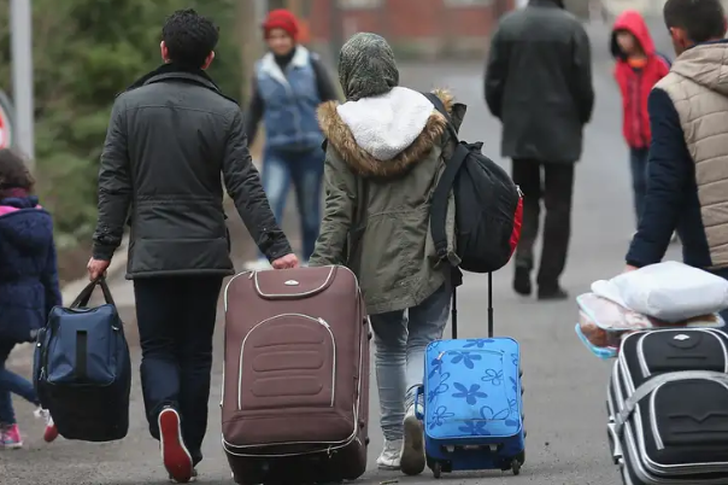
News of a UK plan to send rejected migrants to the Balkans...

Missile alarms were heard across Dubai today as Iran conti...

A tragic accident has occurred at a construction site in V...

The US State Department has ordered all US embassies and c...

CNA has launched another investigation that could lead to ...

Irfan Hysenbelliu is a businessman that we call "Irfan the...

In March 2026, CNA launched another investigation centered...
The arrested mayor of Tirana, Erion Veliaj, with 13 charge...

The Special Board of Appeal (KPA) decided this Monday ...

The KPA vetting decided this Thursday to dismiss the p...

Suela Salavaçi, a prosecutor in the Prosecutor's Offic...

The Special Board of Appeal reinstated the prosecutor ...

Citizen MH, 61, a fisherman, was found dead near the islan...
Another phase of the international operation, codenamed "T...

Police have arrested a 34-year-old woman at Rinas Airport ...

A serious accident has occurred on the Lezhë-Shëngjin axis...

The Institute of Geosciences has shared a forecast for wea...

Rising energy and fertilizer prices are expected to contin...

Over 18,000 foreign citizens from 140 countries have appli...

This Wednesday, our country will be under the influence of...

Prime Minister Andy Burnham has announced that most bus fa...

France's parliament has passed a law to ban social media f...

US Secretary of State Marco Rubio arrived in Manila on Jul...

In the space of a few days, Ukrainian President Volodymyr ...

At a time when industrial products are increasingly taking...

Trust among people is not just a three-syllable word. It c...

Master of humor Todi Llupi has passed away at the age of 7...

The ninth edition of "MIK Festival" kicked off with one of...

Businesses will no longer be required to simply register t...

Despite economic growth and income in recent years, Albani...

This Wednesday, one US dollar is bought for 81.4 lek and s...

Construction company licenses will have a validity period ...