

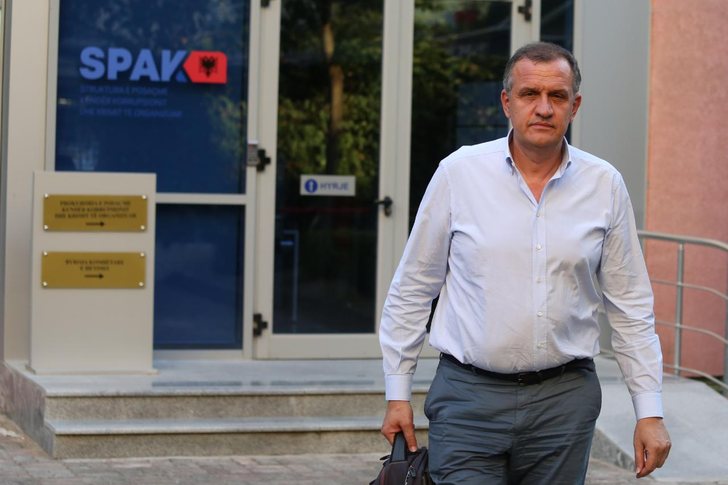
Sterilization concession/ 3 'bomb' documents that sink Ilir Beqjan
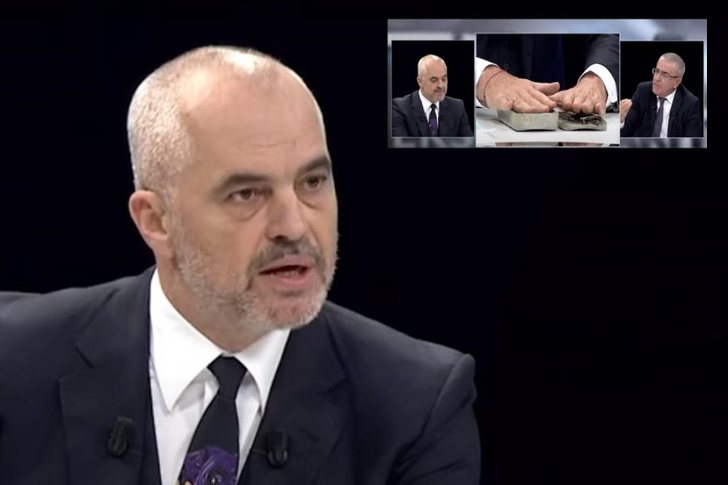
There are 3 'bombshell' documents, which Ilir Beqja, in th...


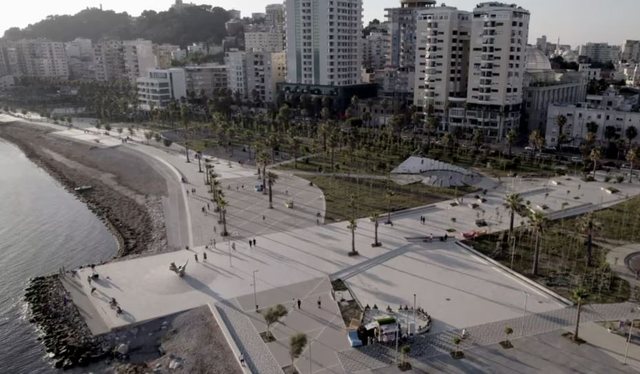
Tens of millions of dollars injected into the Durrës Aqueduct have not solved the problem of sewage being discharged into the sea, an ecological "bomb" that conflicts with the government's plans to transform the port city into an elite tourism paradise.
Although he is a Jew, Baki Myrtollari did not go for a walk along the canal that runs through his neighborhood on the outskirts of Durrës. Since settling here in 2003, he has seen how the canal quickly turned into a "natural collector" that collects residential wastewater and discharges it further into the sea.
As he squints under the strong August sun, Myrtollari is thinking about the next step in his long confrontation with the authorities, which started 5 and a half years ago, to enable the rehabilitation of the canal and the provision of service by Durrës Water and Sewerage.
"Environmental massacre that is done to the community of the former Swamp, with a population of over 45 thousand inhabitants, sewage and drinking water coexist," says Myrtollari in a denunciation tone.
Although the government has big plans for the development of tourism in Durrës, the amortized infrastructure of wastewater treatment still poses a challenge for the coastal city.
The Durrës water supply is the second largest in Albania and the company has been continuously supported by donors and the state budget, to improve the service of providing drinking water and sewage.
Despite the ongoing loans and benefits in the dedicated water-sewage projects, data obtained by BIRN through the Right to Information law and interviews with environmental experts, show that a large part of the municipality discharges raw sewage into the sea .
Dirty water discharges have transformed some of the city's most popular beaches into "ecological bombs", which threaten the health of beachgoers due to the high microbial load in the water.
Audits of the High State Audit Office and experts on the water supply and sewerage system blame mismanagement of funds and investments without clear planning, for the failure of the public enterprise to improve the situation.
In a written response, the Durrës Regional Water-Sewage Society sh.a. (SHRUKD) told BIRN that there is a wastewater treatment plant (ITUN) with European standards - as a result of an investment of 11 million euros by the government and the EU Delegation, but not the entire network is connected to this system.
"The beach area - Ura Dajlanit-Plepa, completely discharges the waste water into ITUN. While we have areas in the city, such as Shkozeti, Ish-Këneta, Spitalla or Porto-Romano, which are partially connected to the Plant," said SHRUKD.
"Skozeti has a network of mixed sewers, which collect the dirty water and discharge it into open channels. The hospital as well, but partially has a sewage network. While in Porto-Romano there is no network at all and the residents have to operate with septic tanks," added UKD, while emphasizing that rural and informal areas that do not have sewers discharge untreated polluted water into the sea.
Lack of sewage
In an effort to develop elite tourism, the Albanian government led by Prime Minister Edi Rama granted a concession to the commercial port of Durrës to an investor from the Middle East, Muhamed Alabar, who intends to transform it into a luxury marina for yachts, hotels and apartments. .
Referring to an interview of Alabar on the American cable network 'CNN', Prime Minister Edi Rama has stated that the project of the investor from the United Arab Emirates will transform Durrës into a 'little Dubai of the Mediterranean'.
But the ambitions of the Albanian government seem to conflict with the amortized sewerage infrastructure in the coastal city and the mismanagement of the public water-sewage company by the municipality.
According to the State of the Environment Report for 2021, prepared by the National Environment Agency, Durrës Waterworks covers 90.8% of the population with water supply and only 54.6% with sewage.
The only infrastructure for the treatment of polluted water in some areas of the city near the port consists of open canals, which were once used for the drainage of agricultural lands.
These canals start from the already urban area of ??Shkozet, further cross the area of ??the former Kêneta and that of Porto-Romano and branch off through 26 secondary canals that are drawn from the hydrobor of Porto-Romano and discharged into the sea, together with "wastewater " of the Spitalla area.
"As for the ecosystem, it is practically dead there in most cases. Don't think that there is any ecosystem where life thrives, or that there are fish. There is none because of the accumulated pollution and hypertrophication," said Olsi Nika, executive director of the environmental organization 'Eco Albania'.
"The problem is that this also affects the sea, because all these channels collect in the main collectors, which then go to the sea in the Porto-Romano area, and this extends its influence to the sea as well," said Nika, who is the author of a scientific study on the area.
The lack of sewerage causes high organic pollution of surface waters as a result of untreated urban discharges and the values ??exceed the allowed rate at the monitoring station in Porto-Romano.
This station is the only one in Albania where the total phosphorus content for the year 2021 is estimated above the allowed rate.
"These waters and the eutrophication they carry leads to oxygen depletion, leads to the damage of the entire living world around," says hydrobiologist Aleko Miho, professor in the Department of Biology, Faculty of Natural Sciences, University of Tirana .
New loans, old problems
The Durrës Waterworks, according to the balance sheet data for last year, registered 16.2 billion lek of debt or approximately 160 million euros, indicating the difficult position of the company, which with the government's reform for the waterworks, has already turned into the "Regional Society of Durrës Water and Sewerage" (SHRUKD), with shareholders the Ministry of Economy and Energy with 51% of the shares, the Municipality of Durrës with 32.47%, the Municipality of Kavaja with 8.49%, the Municipality of Kruja with 3.45%, the Municipality of Shijak with 2.43% and the Municipality of Rrogozhina with 2.16%.
According to Durres Waterworks, during the last decade, 12 investments out of 67 investments in total have been made in the city's sewerage network. In 5 cases they were undertaken with the budget of the Waterworks itself, in 3 cases through the state budget and in 4 cases through donors and the state budget, through government agencies.
Initially in 2013, through a loan from the World Bank worth 85.3 million dollars, the "Investment Project for the Water Sector in Albania" aimed to improve the existing water supply and sewerage network in the Durrës region.
While at the beginning of this year, the request for the implementation of the project for the reconstruction of the water supply network for the city area was approved, in cooperation with the central government, and another loan worth 60 million euros was approved through the French Development Agency.
The company has recorded negative records in several audits of the High State Control, which has documented unrealized but certified works, payments for unfinished works and companies that lacked the necessary "ISO" certifications for water supply works.
In a written response, Durrës Water and Sewerage told BIRN that the objective of the first loan from the World Bank had been to increase capacity, improve technical losses, expand the water supply network in rural areas, improve water supply schedules , the rehabilitation of the sewerage network in the Beach area and the expansion of the network in the urban area near the Volga.
But the spread of investments on a wide scale, for experts, is an indicator of poor management, which does not solve the problem, but extends it over time.
"I think it should be started with the area that has the biggest amortization because if it was worked in pieces, it will never have a result," said Avni Dervishi, an engineer specialized in water supply and sewage issues in the country.
"If you invest today in a sewer line, after 10 years it will become old and you have not done anything because the system will collapse again", he added.
Discriminated citizens
Of the 94,000 service contracts that are connected to the water supply, only 14 percent belong to the overpopulated areas of Shkozet, Ish Kêneta, Spitalla and Porto-Romano, where the sewerage network in most of them is missing, causing concerns for the residents.
The residents of the informal area of ??the former Swamp say that the requests to the water company for the treatment of waste water have fallen on deaf ears.
"All the sewage is in the canal, environmental massacre, ecological and biological bomb for this people and they should all go to prison with that alone," Baki Myrtollari defined the environmental situation in the former Swamp in revolt.
Aqif Kurti, together with other residents of one of the areas most "infected" by sewage, came out in protest in May 2021, demanding that they get the government's attention for investments in the area.
"We have other problems, because they create a smell even in summer, with mosquitoes, in winter they fill up and get blocked," says Kurti.
In cooperation with civil society organizations, they referred the case to the Commissioner for Protection from Discrimination, who, through decision number 61, of April 13, 2021, decided, "Determining the discrimination of the residents of the former Këneta area, on the street 'Gjelbërimi ' and on the street 'Azem Hajdari', due to the place of residence, from the side of the Durra Municipality".
After the decision, Myrtollari and a group of residents addressed the Durrës Administrative Court with the aim of establishing institutional responsibilities and compensation for the damage caused by environmental pollution and non-service provision.
"Until today, it [the court] has not taken [it into consideration]," he said. "We have requested that it be expedited because there are some of these elders who will die and will not be able to do the trial," Myrtollari appealed. .
On October 28, 2021, former Deputy Prime Minister Arben Ahmetaj was forced to give an account of the investment situation in the area on the floor of the Assembly, after Myrtollari and other residents referred the cause through the opposition deputy, Ferdinand Xhaferaj.
"After the protests, petitions, residents of the 'Gjelbërimi-Azem Hajdari Street', since they did not take us into account, we addressed you to the Assembly of the Republic of Albania and there we asked for an interpellation with the deputy prime minister", recalled Myrtollari.
Polluted water is discharged into the sea
According to the National Environment Agency, urban waters in the city of Durrës are discharged into the sea in several areas. From the monitoring of discharges at three monitoring points, the suspended matter has been assessed above the norm for the year 2022 in two of them, at the station of Porto-Romano (hydraulic) and at Currilat, in the sea.
Apart from Porto-Romano, according to KTA, the environmental situation with sewage continues to be difficult in other parts of the coast of Durrës. The agency, according to a letter dated June 13, 2023, informed the Durrës Municipality and the water supply that, "...it continues to be problematic with high microbial contamination at the stations behind the Canal at Plepat and Shkêmbi i Kavaja".
The letter also announced about a point found nearby, which is known as "Agai Creek". Despite the fact that measures were required for several years in a row, the water supply company has not been able to improve the situation because both of these canals collect the waste water discharges of the administrative units.
At another important point for Durrës tourism, on the Taulantia Promenade, a pipeline for the discharge of untreated water from neighborhood number 1, where most of the city's hotels, restaurants and tourist businesses are located, continues to be active.
The Durrës Waterworks admitted that there are several points for discharging sewage into the sea along the coast and 2 such are in the Volga area, but according to him they are activated only in cases of heavy rains and when there is a risk of flooding, because the sewers they also collect rainwater.
"However, during high-intensity rains, since the station cannot cope with increased sewage and rainwater flows, we are forced to open the gates and discharge into the sea," Ujjesjellësi explained.
Hydrobiologist Olsi Nika indicated that during the preparation of a report on the assessment of surface water in the drainage canal system of the Former Swamp, the level of pollution was very high along the residential area.
"In all the stations that we took water samples, absolutely the pollution was maximum, in the sense that the water quality level was 'very bad' in most of the stations, maybe 'bad' or less bad in the part begdet because no matter how much the sea assimilates, it has the greatest self-cleansing ability," said Nika.
Prof. Dr. Aleko Miho emphasizes that the high level of pollution found poses a risk to human health.
"For human life, undoubtedly these often become the source of epidemics or even pandemics," he said. "Every time we flush the water in our sinks, in our bidets, many pathogenic bacteria, viruses, molds and others are carried, which are the causes of various diseases," added Miho.
The discharge of polluted water into the sea has led to an increase in the microbial load on the most popular beaches of Durrës.
From BIRN's observation, one of the 2 discharge points on the promenade, a concrete pipe, communicated with seawater during the dry summer season and on the other hand, the pumping station in the area of ??Ish-Keneta, which conveys sewage to in the processing impaint, discharged through a window at the bottom, waste water that then ends up in the sea through Porto-Romano.
From the data that the National Environment Agency made available to BIRN, it results that for microbial loads, 7 monitoring stations are above the allowed rate for "Escherichia Coli (FC)" and 14 monitoring stations are above the allowed rate for "Enterococcus Intestinalis (IE) )",
The allowed rate of IE is 100, while "After the Canal in (Poplar)" it results in the value of 2879 and in "Zhiron Beach (Castle)", it results in the value of 1210.
According to Olsi Nika, the discharge of sewage into the sea poses a risk to the health of beach users.
"A series of problems are created, starting from skin infections to more serious infections, which can also enter the respiratory tract, blood," he concluded.

There are 3 'bombshell' documents, which Ilir Beqja, in th...
The incoming charge d'affaires of the US Embassy in Tirana...

Evi Kokalari apo Evis Kokalari ose Evi Angelakis, e njohur...
Eksperti i kriminalistikës Ervin Karamuço, ka zbuluar se B...

Prime Minister Edi Rama has published a photo with his...

Some citizens protested in front of the Ministry of Justic...
Today, the Special Prosecutor's Office arrested 8 official...
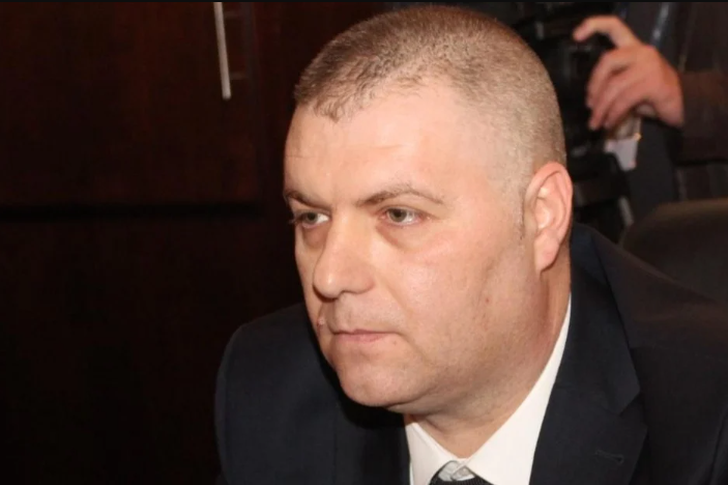
SPAK announced that it had directed the request to the Spe...
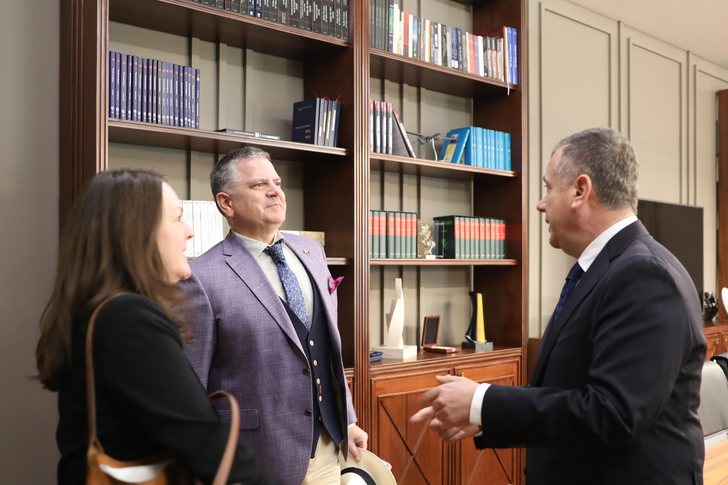
The Chargé d'affaires of the Embassy in Tirana, H. Martin ...
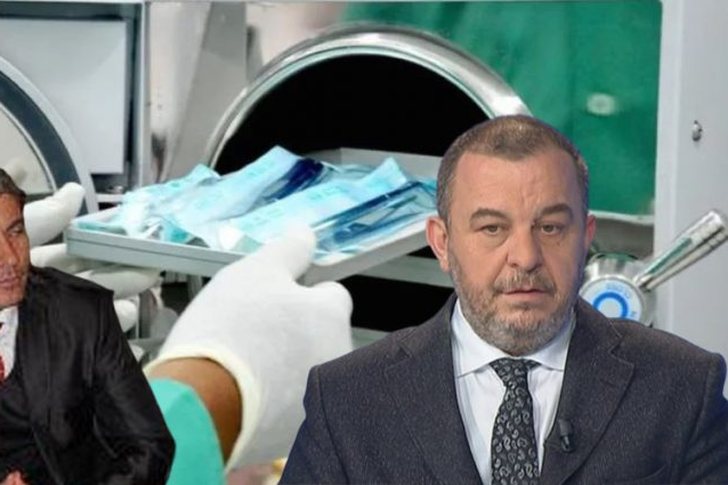
Today SPAK has arrested the former Deputy Minister of Heal...
In a panic, the former Minister of Finance, Shkëlqim C...

Crown Prince Mohammed bin Salman has been invited to visit...

A Moscow magistrate's court has fined US tech giant Google...
Deputetja e PD-së, Ina Zhupa ka reaguar pas arrestimeve të...
On August 16, the Beer Festival in Korçë started, one ...
A car accident happened today in Gjirokastër. As a result...

Prime Minister Edi Rama reacted regarding the wounding of ...
SPAK sprung into action after long investigations into wha...
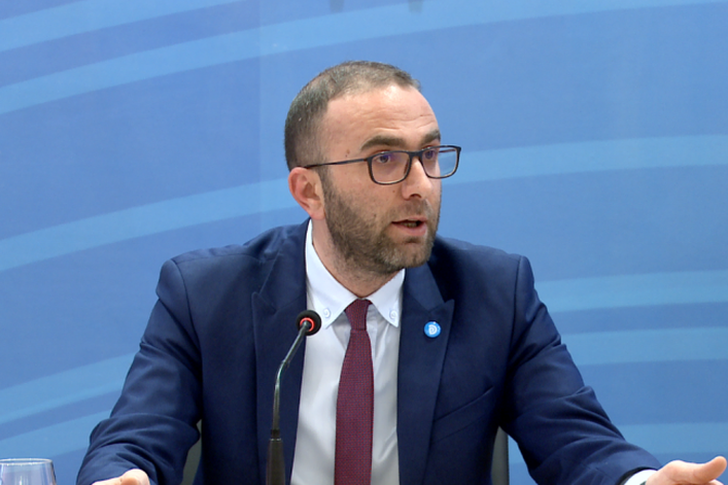
Gazment Bardhi has reacted after the arrest of former Depu...

Today, the Special Prosecutor's Office has put the former ...

Irfan Hysenbelliu is a businessman that we call "Irfan the...

In March 2026, CNA launched another investigation centered...
The arrested mayor of Tirana, Erion Veliaj, with 13 charge...
CNA has uncovered the tentacles of the head of the Supreme...

The Special Board of Appeal (KPA) decided this Monday ...

The KPA vetting decided this Thursday to dismiss the p...

Suela Salavaçi, a prosecutor in the Prosecutor's Offic...

The Special Board of Appeal reinstated the prosecutor ...
New details are being learned regarding the incident that ...
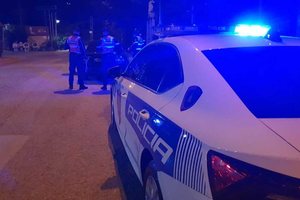
Several gunshots were reported this evening in Elbasan. T...
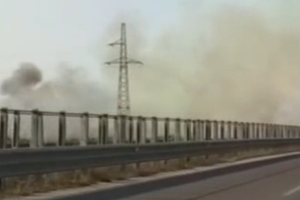
A section of the Fier-Vlora highway was engulfed in flames...
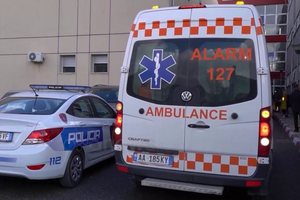
A road accident occurred this Monday near Gramsh. As repo...
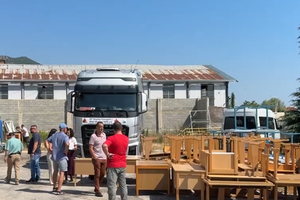
Another humanitarian aid shipment from Germany has arrived...
Residents of the village of Memëlisht in the Municipality ...

On Monday, our country will be under the influence of rela...
On Sunday, our country will remain under the influence of ...

US President Donald Trump responded with harsh rhetoric to...

US President Donald Trump said on Monday that Israeli Prim...

Hungary's Prime Minister, Péter Magyar, took many people b...

The mediators in the Middle East conflict between the Unit...

At a time when industrial products are increasingly taking...

Trust among people is not just a three-syllable word. It c...

Master of humor Todi Llupi has passed away at the age of 7...

The ninth edition of "MIK Festival" kicked off with one of...

Deputy Minister of Economy and Innovation, Enkelejd Musabe...
This Monday, one US dollar is bought for 81 lek and sold f...
In Golem and Durrës, the season seems dynamic: buses with ...

This Sunday, one US dollar is bought for 81 lek and sold f...