


Protests/ Klosi: PS will not withdraw from mandate
The Socialist Party rules out the possibility of the gover...

The Socialist Party rules out the possibility of the gover...

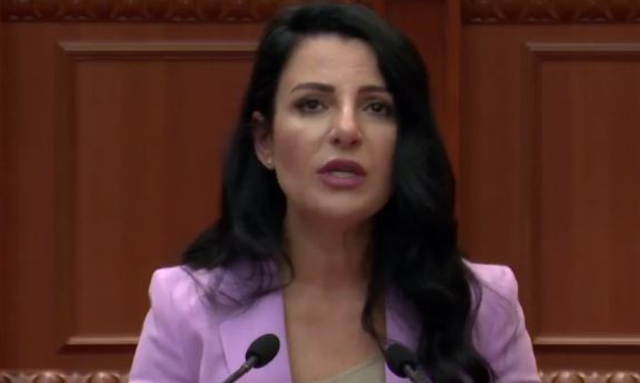
The government's number two, Belinda Balluku, has revealed more details of the draft law on electronic communications.
In her speech to the Assembly, Balluku emphasized that we are in a time of deep, rapid changes in a critical sector which has to do with electronic communications, the development of digital technologies, applications, machine-to-machine communications, or new services. which today enable digital infrastructures and electronic communication tools as one of the basic requirements of all sectors.
The draft law "On electronic communications in the Republic of Albania" comes precisely as a necessity to reflect these rapid technological developments and to respond better to the needs of the time and to have a strong legal framework which will also have stability in time.
According to Balluk, this draft law aims to increase the standards in an important sector such as the telecommunications sector, bringing them closer to the standards of the European Union.
The Deputy Prime Minister said that the main goal is to review and improve the general regulatory framework for electronic communications, defined in the 2008 law, in order to encourage investments in electronic communications networks with very high capacities, both those with optical fiber and wireless ones, 5G networks.
Belinda Balluk's speech in the Assembly
We live in the time of what is considered the digital revolution. A time of deep, rapid changes in a critical sector which is related to electronic communications, developments in digital technologies, applications, machine-to-machine communications, or new services, which today enable digital infrastructures and electronic communication tools such as one of the basic requirements of all sectors.
And of course, the only way to move forward at this time is to adapt the national legislative framework, aligning it with European directives and standards.
The draft law "On electronic communications in the Republic of Albania" comes precisely as a necessity to reflect these rapid technological developments and to respond better to the needs of the time and to have a strong legal framework which will also have stability in time.
It is a draft law that comes today to the Assembly through the transposition of the 2018/1972 Directive of the European Parliament and of the Council, known as the European Electronic Communications Code, which aims to raise standards in an important sector such as the telecommunications sector by brought them closer to the standards of the European Union.
The main goal is to review and improve the general regulatory framework for electronic communications, defined in the 2008 law, in order to encourage investment in electronic communications networks with very high capacities, both fiber optic and wireless. 5G networks.
The draft law completely revises the regulations in force, in relation to the frequency spectrum, the response of services and their universal regime, the rules for consumer protection, numbering and communications in case of emergencies, and certainly enriches the rules for access, interconnection and market regulation of telecommunications as a whole, based on the best practices of the European Union.
The general authorization regime, defined in the 2008 law, marked at that time a deep and innovative reform regarding the opening of the electronic communications market as it facilitated market entry and created the conditions for its full liberalization. This regime is also preserved in the new draft law, to guarantee continuity and legal certainty.
Maintaining the continuity of the main regulations, as a legal guarantee for all those entrepreneurs operating in the market for the provision of electronic communications networks and services, the draft law brings several very important innovations.
First, it establishes as a general political objective the construction of networks with very high capacities, which constitutes an innovation in the new legal and regulatory framework for electronic communications.
Electronic communications networks with very high capacities are a need and necessity for all expected developments for the digital economy and in important sectors such as transport, energy, smart developments/smart cities, public services, health, etc., to guarantee us fast, secure communications, in large volumes of data, but of course also in real time.
The draft law underlines the implementation of policies for the promotion of freedom of expression and information, the promotion of cultural, linguistic and media diversity in the development of electronic communications networks.
Also, the draft law increases the financial and operational independence of the AKEP regulatory body, aiming to strengthen its positions on the eve of the expected rather large developments in terms of electronic communications.
In the new regulations related to the expected developments, there is a provision for conducting a geographic survey for networks with very high capacities, broadband. The carrying out of geographic surveys is expected to be carried out by AKEP, in cooperation with the ministry and other related institutions as appropriate within three years from the entry into force of this law and is closely related to future developments for achieving the objectives for a gigabit society. This is a process that will be carried out periodically and constitutes an innovation in the regulation of the electronic communications sector.
What is very important and what should be mentioned and I want to emphasize is that the draft law foresees provisions for strengthening the security of electronic communications networks in particular. Several measures are foreseen to guarantee the security of providers, equipment suppliers of 5G networks and next generation networks. As you all know, Albania has already engaged with the US State Department to be one of the markets with systems and definitely with clean suppliers in terms of 5G networks.
In relation to the access to the radio frequency spectrum, an increase in the duration of the rights of use is foreseen for frequencies that require harmonized use. The draft law also provides rules for the transfer or leasing of individual rights to use the spectrum. Rules are also provided for regulating access for local networks in small areas, guaranteeing compliance with standards. In relation to access and interconnection, the powers and responsibilities of the AKEP regulatory body are foreseen, for ensuring access and interconnection, and towards subjects not providing electronic communications services, when this is necessary, for ensuring the end-to-end connection of the network , and for ensuring the interoperability of services. Regarding universal service obligations, in contrast to the legal and regulatory framework that we have in force, that is, the one from 2008, regarding universal service obligations, we have several innovations, in particular regarding the requirements for providing broadband access. Also, open internet regulations aim at access to a safe and open internet, transparency for ensuring access to the open internet, supervision and implementation of legal requirements, as well as required information and contracts.
I don't want to go any further as it is a technical issue and of course it is a very important issue, which has received the approval of all the committees that have had this task, but I want to say that this is a very technical bill, which is drafted with full diligence by our experts, i.e. from the Ministry of Infrastructure and Energy, whom I take the opportunity to thank for more than two years of work on this act, of course with the support of all commissioners and all experts of AKEP and of course this it is a law that has been consulted and agreed with all other members and main stakeholders, as in this case it is the European Commission.
With this draft law, we have tried to bring all the best experience of the European Union states harmonized with the needs and specifics of our country and market in the conditions of a very rapid development of technology, digitization and electronic communications. Without forgetting that the Albanian Government has more than 99% of services, for all citizens, digital and online. Undoubtedly, this is a good example which has been followed by the whole market and today Albania can be considered as one of the most digitized countries in terms of services
For all of the above, I invite all MPs to vote for this draft law, paving the way for a more modern law for the electronic telecommunications sector, the implementation of European Union standards and further development in the field of digitization and undoubtedly digital transformation as a integral part of the processes for the economic development of the country./ CNA

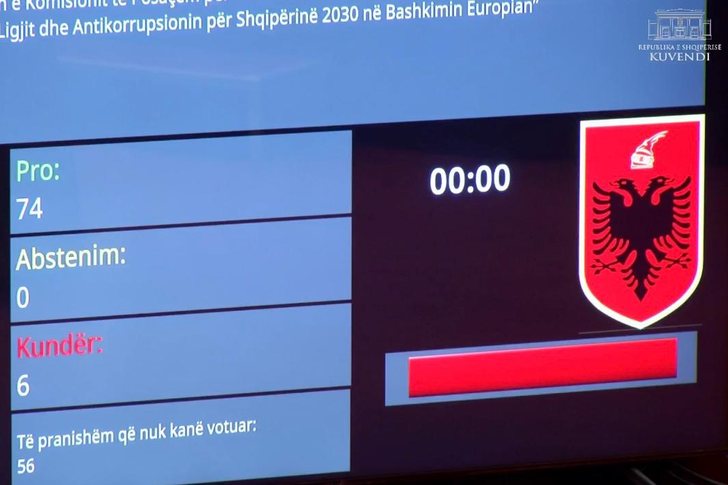
The Assembly has given the green light to the establishmen...
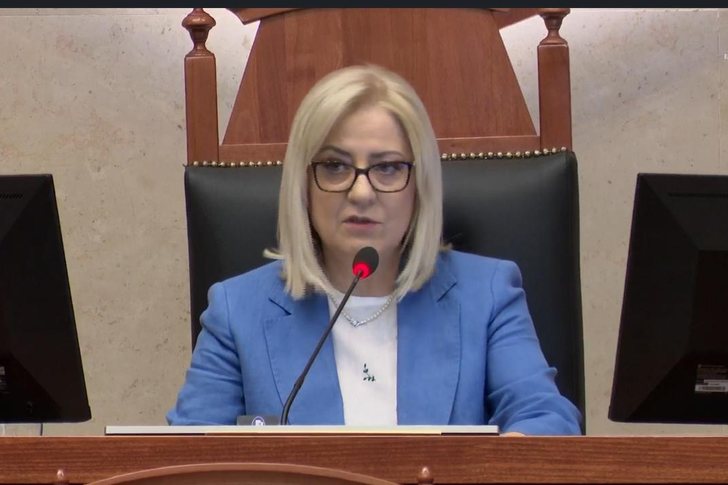
Today, in the parliamentary session, the Assembly appr...
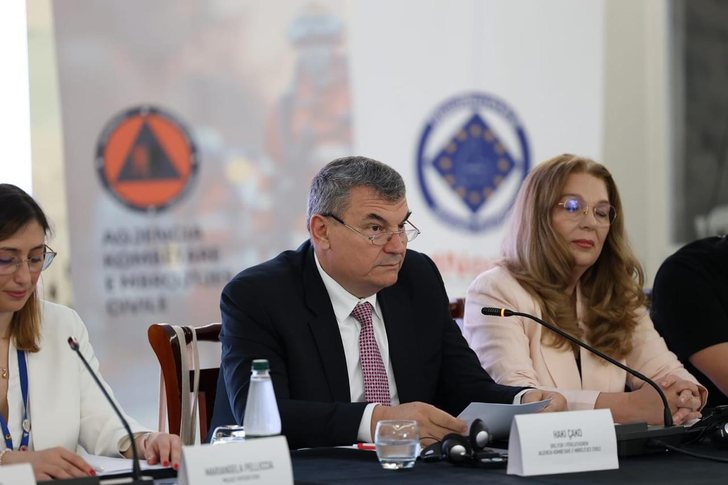
Natural disasters do not discriminate between states and n...
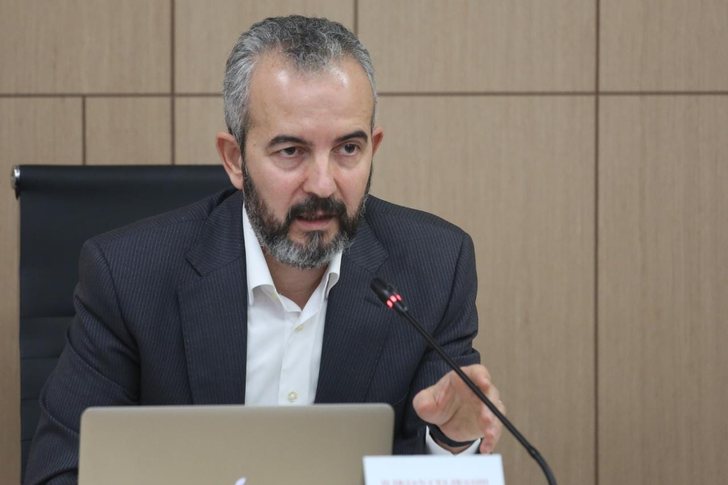
The head of the CEC, Ilirjan Celibashi, has stated tha...
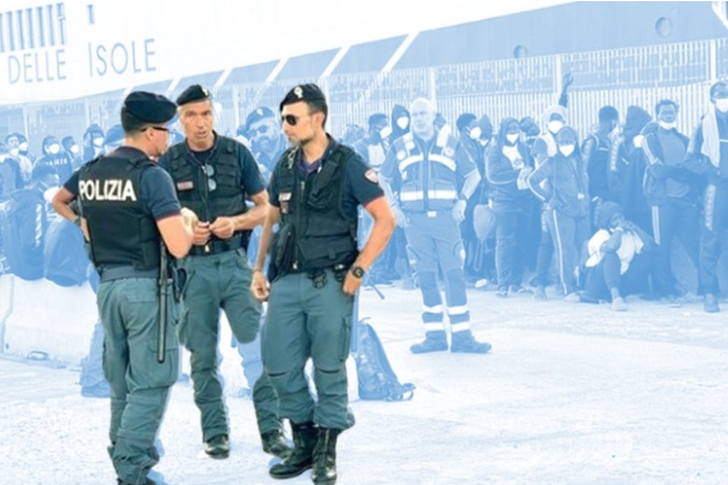
The Italian authorities have announced the start of work o...
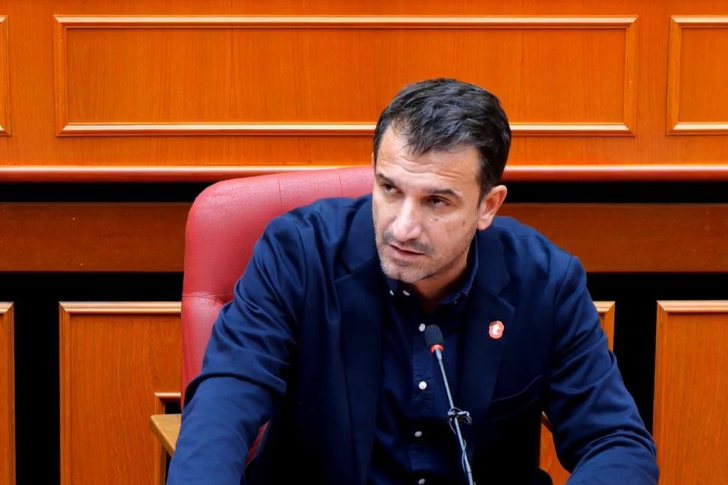
The Municipal Council met today and members of the DP Muni...
The Supreme Judicial Council approved on Wednesday, May 29...
Doctor Gjovalin Bushi has given details about the heal...

The Association of Professional Journalists of Albania and...
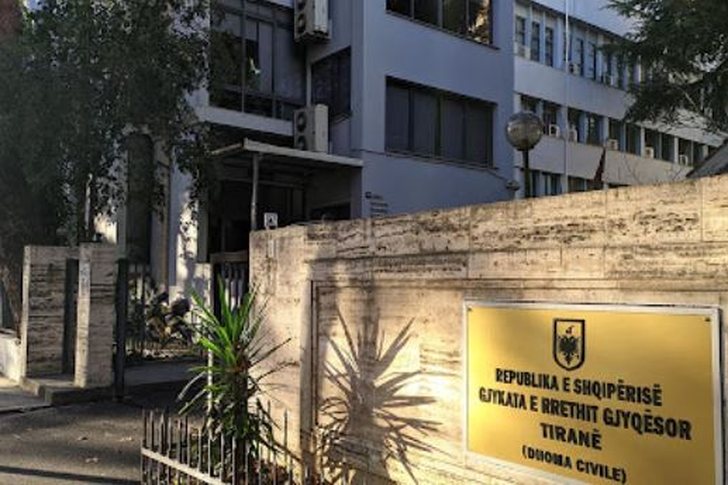
At noon on Thursday, a Russian identified as Aleksande...

A few days ago, the well-known artist, Agron Llakaj, l...

The act-verification process for the categorization of...

The testimonies of the two arrested persons, AMP employee ...
Today, the plenary session is taking place in the Assembly...
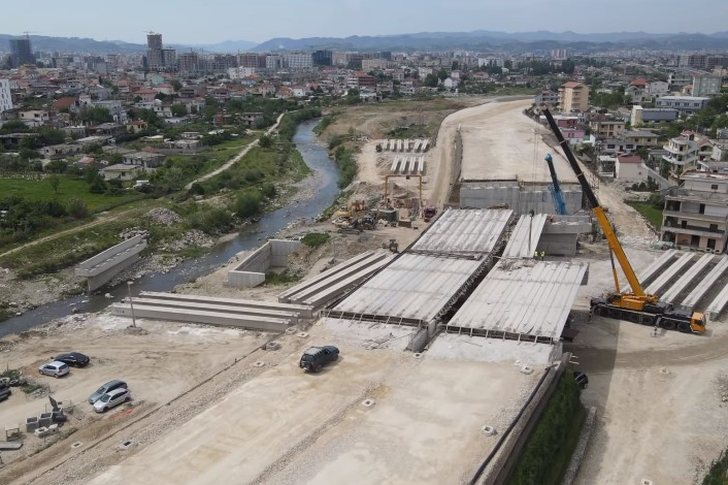
Prime Minister Edi Rama published this Thursday some pictu...

On Thursday morning, the police carried out checks in ...

At the start of the plenary session, journalists were orde...
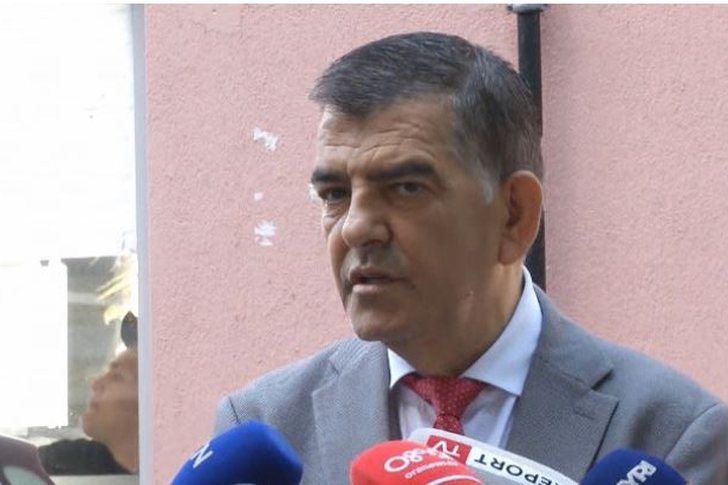
In a statement to the media, the head of Criminal Lawy...
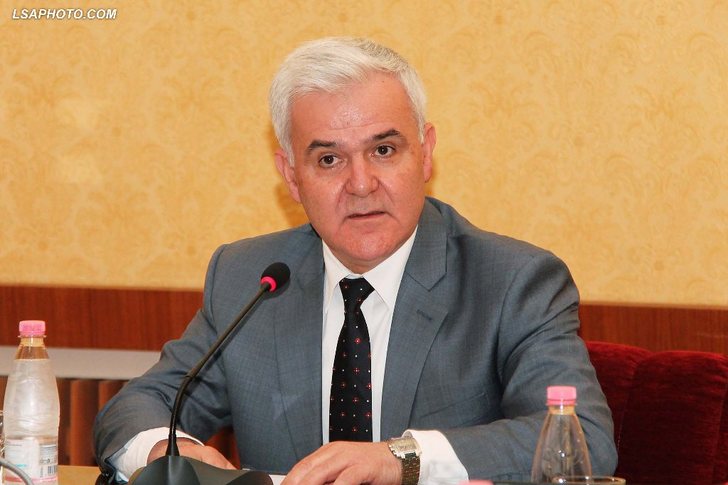
The majority will set up an anti-SPAK commission, for ...

The testimony of one of those arrested for yesterday's...
On the morning of July 7, 2026, the Ministry of Culture ur...

After the disclosure of the portfolio of properties an...

For 6 months now, CNA has been sending several letters to ...
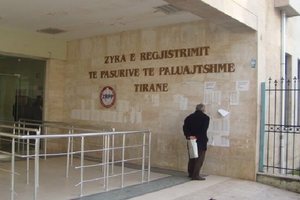
The word "fatherland" with properties is not enough. The m...

The Special Board of Appeal (KPA) decided this Monday ...

The KPA vetting decided this Thursday to dismiss the p...

Suela Salavaçi, a prosecutor in the Prosecutor's Offic...

The Special Board of Appeal reinstated the prosecutor ...

A serious incident occurred today in the village of Orizaj...

The State Police has finalized the operation codenamed "FA...
The court is expected to decide this Sunday on security me...
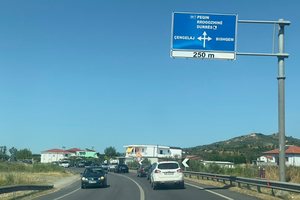
A road accident was recorded this Sunday on the Peqin-Rrog...

Today, our country will be affected by mainly stable weath...

A serious incident occurred this Saturday in neighborhood ...

27% of the retirement age population is being pushed inevi...

On Saturday, our country will be affected by stable weathe...

Apple's allegations: aggressive efforts by OpenAI to recru...

The new EU control system is causing problems at airports ...

Republican U.S. Senator Lindsey Graham has died after a br...

Many people believe that mosquitoes prefer those with "swe...

When I turned 10, another building was built in front of o...
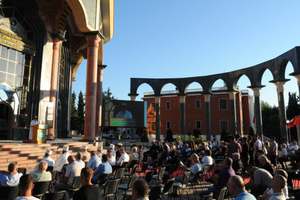
A special scientific conference was held by the World Bekt...

The German Embassy in Tirana has invited the Albanian publ...

Professor and literature scholar Ali Xhiku has passed away...

This Sunday, one US dollar is bought for 81.5 lek and sold...

The new old-age pensions in 2025 were on average 16,500 le...

This Saturday, one US dollar is bought for 81.4 lek and so...

The escalation of the conflict in the Middle East has once...