

IMF: Effective implementation of reforms could increase Albania's GDP by 9% in the medium term
The efficiency of reform implementation will increase the ...



The Alliance of Free Professionals (APL), in a letter addressed to the Ministry of Finance, raises concerns that the proposed draft decision to determine the reference price for the sale and purchase of apartments in districts does not reflect the reality of the real estate market and risks deforming the market and distorting average apartment prices.
Among the main issues for which concern is raised is the transparency of the reference price methodology and the establishment of a floor value.
In the detailed analysis of the draft decision "On the approval of the methodology, rules and procedures for determining the taxable value of real estate 'buildings', calculating the tax on the building and its payment" freelancers emphasize that in its current form, the draft for determining reference prices does not provide any guarantee that inflated transactions or transactions related to illegal phenomena, such as money laundering, have been filtered out, which could further distort average prices.
APL warns that reference prices do not follow the market trend, therefore such policies will drive the upward trend in apartment sales prices.
"The current legislation on income tax has already established a minimum value below which purchase and sale transactions are not accepted. The draft decision follows the same approach by not reflecting cases of price declines, even when these represent real market trends."
"Such a policy only encourages upward price trends, hindering the natural functioning of supply and demand. As a result, reference prices risk being used more as a fiscal instrument for increasing revenues, rather than as a real market indicator," the APL letter states.
Professionals recommend reviewing problematic provisions by establishing objective, measurable and verifiable criteria, as well as clear limitations to avoid arbitrariness and market distortions.
APL also emphasizes that the use of alternative methods for calculating tax without clear criteria may burden taxpayers due to institutional gaps and non-harmonization.
Following the publication for public consultation of the draft decision on the methodology for calculating the building tax, which proposes an increase in reference prices in districts, the Alliance of Free Professionals (APL) has also addressed a previous letter to the Minister of Finance Petrit Malaj, recommending that citizens' first homes be exempted from the building tax. According to them, such a change directly affects the middle classes and families that own only one residential property.
Letter to the Ministry of Finance
REPUBLIC OF ALBANIA
MINISTRY OF FINANCE, PRIME MINISTRY, MEDIA
Addressed to: Minister of Finance
For Information: Office of the Prime Minister, Media
From: Alliance of Free Professionals (APL)
Subject: Objections and recommendations on the Draft Decision: “On the approval of the methodology, rules and procedures for determining the taxable value of immovable property 'buildings', calculating the tax on the building and its payment”
Dear Sirs,
Within the framework of the public consultation on the draft decision in question, several observations and issues of an economic, legal and administrative nature are presented below:
Lack of methodological transparency and difficulty in reflecting market reality
The accompanying report provides that the reference prices are calculated based on transactions from 2022–2024, excluding those that "do not have economic logic" or that are below the reference level.
The term “lack of economic logic” is not accompanied by any clear, objective or technical criterion, which creates legal uncertainty and a risk of subjectivity in the selection of data. The selective exclusion of transactions that mark lower prices from the reference, without a clear argumentation, tends to create a biased picture of the market and produce an artificially increasing effect on prices, violating the principle of fiscal neutrality. There is no guarantee that inflated transactions or transactions linked to illegal phenomena, such as money laundering, have been filtered out, which could further distort average prices.
Limiting market mechanisms through setting a floor price
The current income tax legislation already sets a minimum value below which purchase and sale transactions are not accepted. The draft decision follows the same approach by not reflecting cases of price declines, even when these represent real market trends.
Such a policy only encourages upward price trends, hindering the natural functioning of supply and demand. As a result, reference prices risk being used more as a fiscal instrument for increasing revenues than as a real market indicator.
Using future projects as a pricing factor
The draft decision foresees that the price will be influenced by future development projects or urban strategic plans. This approach carries a risk, as it uses still uncertain and unrealized projections to justify higher prices, while real market data is excluded as inappropriate. The use of uncertain expectations as price-forming factors is unfounded in economic logic and may lead to market distortion.
Article 2, point 12(c) – Fiscal recognition of possessors without legal documentation
The provision that considers an individual who holds a unit in possession without a construction permit or ownership document, without applying for legalization, as a “user” also creates a questionable precedent. This constitutes a form of fiscal recognition of an illegal situation, risking being perceived as an indirect incentive for informal construction. Such a provision weakens efforts to reduce informality in the construction sector and creates a perception of legitimizing the fait accompli.
Article 4 – Hierarchy of data sources and legal consequences
Priority is given to data verified by the municipality on the ground when these result in a larger area than the area registered in the ASHK. This approach may also include informal constructions or illegal extensions, which are thus treated as facts committed for fiscal purposes. The lack of clear limitations on the implementation of this provision creates legal uncertainty and paves the way for administrative arbitrariness.
Article 5 – Classification of construction units
The provisions of Article 5 allow the fiscal classification of construction units independently of the intended use as defined in the legal documents (construction permit, use certificate, ownership certificate, etc.). This regulation risks relativizing the legal acts of planning and development of the territory, creating inconsistencies between the legal documentation and the fiscal treatment. This contradicts the principle of legality and creates a double standard between entities that respect the legislation and those that operate informally.
Article 16 – Alternative assessment of tax liability
The draft decision foresees the use of alternative methods for determining the taxable value in the absence of official data. This provision risks transferring the burden of the consequences of the lack of administration or institutional coordination onto the taxpayer, even when he has not acted in violation of the law.
The use of the alternative method should be limited to identified cases of intentional tax avoidance, not as a general mechanism to cover administrative loopholes. Otherwise, this would be contrary to the principle of good faith, tax equality and legal certainty.
cONcluSiON
The draft decision, in its current form, presents some uncertainties and controversial situations for the functioning of the real estate market, for legal certainty and for the principle of tax equality. It is recommended to review the problematic provisions by establishing objective, measurable and verifiable criteria, as well as clear limitations to avoid arbitrariness and distortions in the market.
Alliance of Freelance Professionals – APL/ Monitor

The efficiency of reform implementation will increase the ...

The Traffic Police have intensified 24/7 monitoring of roa...

The health condition of former Minister of Health, Ilir Be...
The government has proposed changes in the organization of...

The Tax Administration, following the implementation of th...

The General Directorate of Road Transport Services has not...
ASIG experts at the Directorate of Remote Sensing Data Pro...

Two fires started this afternoon near the village of Boriz...
Një vatër zjarri është përhapur në kodrat e fshatit Lapard...

The Albanian Naval Force ship "Lissus" and the 22 sailors ...

Prime Minister Edi Rama has published some images of the Q...
The National Inspectorate of Territorial Protection has di...
The Police Supervision Agency (Durres - Kavaja Region) has...

Champions will never be lacking, with Tring coming closer ...
The students of the “Kolë Idromeno” school in Shkodër will...
The National Civil Emergency Operations Center (QKOEC) at ...
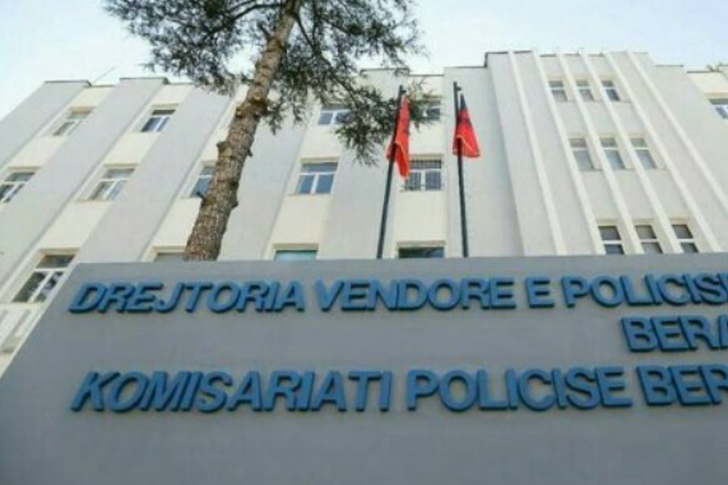
The Berat Local Police Directorate has presented the plan ...

Erion Veliaj, the mayor of Tirana, who is in the cells...
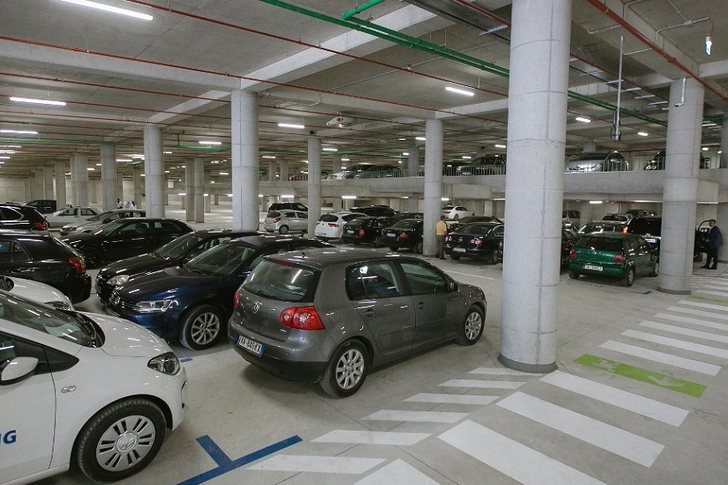
The increase in reference prices in the districts, in addi...

The well-known Shkodran artist Frederik Ndoci shared this ...

Irfan Hysenbelliu claims to be a big businessman, an hones...

The murder of officer Enea Mekolli in the line of duty has...

The next case broadcast on the show "Stop", this Thursday,...

The case published this Thursday, June 4, on the show "Sto...

The Special Board of Appeal (KPA) decided this Monday ...

The KPA vetting decided this Thursday to dismiss the p...

Suela Salavaçi, a prosecutor in the Prosecutor's Offic...

The Special Board of Appeal reinstated the prosecutor ...

A 38-year-old man was arrested today near the Kamza turnof...

A money changer in Durrës lost 60 thousand euros after bei...

The 6 citizens captured in Dubai, members of criminal grou...

A serious accident occurred on the Kardhiq-Delvinë axis, i...

Today our country will be affected by stable weather condi...

For many children and teenagers, the long summer holidays ...

Albania is facing an unprecedented demographic transition,...

On Thursday, our country will be affected by unstable weat...

On the eve of the EU-Western Balkans summit, Germany and F...

Russian President Vladimir Putin said the war in Ukraine c...

An extraordinary story of survival has been recorded in Ne...

The Peace Implementation Council in Bosnia and Herzegovina...

Korça is ready to open the summer season with one of the c...
Two years after his passing, the renowned Korçë poet Skënd...
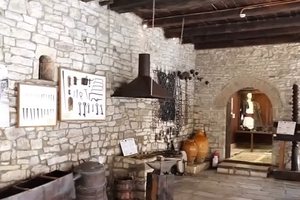
The Ethnographic Museum of Berat has opened its doors to v...
The story of Harilla Bakalli is one of the most chilling t...

Despite years of efforts at regional cooperation and free ...

Albania is the country with the highest level of severe ma...

This Friday, one US dollar is bought for 81.3 lek and sold...

The government aims to transform the country's industrial ...