

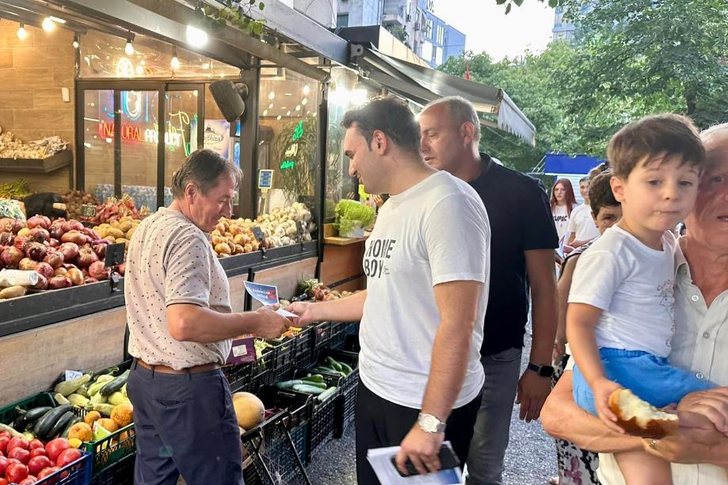
Kelliçi meetings with citizens: Tomorrow we will protest about the incinerator affair and the "5D" file
The political leader of the Democratic Party for Tiran...



The President of the Republic decreed local partial elections in Himare municipality. The decree caused numerous public debates, since the decision-making process in the CEC, the letter of the Council of Ministers on the vacancy and the President's decree were consumed within 90-100 minutes in a surprising inter-institutional synchronicity, while the elected mayor Dhionisios (Alfred) Beleri and his supporting political entity decided to appeal the President's decree to the Administrative Court.
The decision of the CEC to terminate the mandate of the mayor Himarë Dhionisios (Alfred) Beleri was made without allowing him to exercise the right of administrative appeal to the CEC or the Administrative Court and without publishing the decision in the Official Gazette. Beler "de facto" never received the mandate to exercise his function or delegate his replacement, as he was arrested a few hours before the elections and has already been convicted by the judicial system for electoral corruption. He was denied permission to take the oath, including permission in the form he was allowed to participate in the CEC session where his mandate ended. The former mayor who lost the 2023 election continued to lead until he was arrested for corruption, followed by two other names from the political party that lost the election, one of whom is also under investigation for corruption.
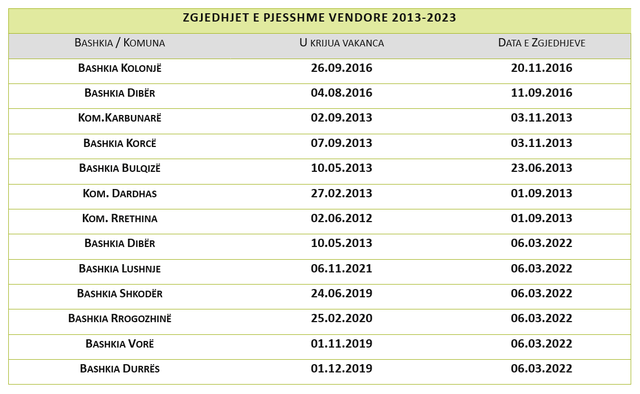
The holding of elections in the month of August and in one of the main touristic municipalities of the country constitutes a unique case in the history of Albanian elections. Referring to the table of experts of the Institute of Political Studies (ISP) on the partial local elections of the period 2013-2024, it results that there have never been elections during the summer holidays and that the decision-making deadlines between the period of creating the vacancy and the decree for the elections have not still a unified standard.
In the current case, Commissioner Celibashi, President Begaj, the government through the General Secretary, SP and DP, as well as the political and institutional actors involved in the debate had different readings of the legal provisions for such cases, often the same provisions. The statement of the President and the opposition were also based on different arguments of the same legislation.
An almost procedurally similar case occurred in 2016 when the President decreed the date of the elections without waiting for the publication of the relevant decision of the CEC and the Constitutional Court in the Official Gazette. At that time, the interested entity, the Socialist Party, which is already in power and defends the arguments opposite to 2016, asked the Administrative Court to secure a lawsuit by suspending the decree, as the way to suspend the elections in this municipality.
Sipas PS (2016) “ky akt individual i Presidentit të Republikës ka dalë në mënyrë krejt të papritur në vijim të një ‘njoftimi për media’ që Gjykata Kushtetuese ka nxjerrë dje mbi ankimin e kryetarit të shkarkuar të Bashkisë Peshkopi, z. Xhelili», ndërkohë në reagimin e tij Presidenti Nishani deklaroi se «data e zgjedhjeve nuk përcaktohet nga Presidenti, por nga vendimi i Gjykatës Kushtetuese dhe Presidenti ka vetëm dekretin e shpalljes së datës për të përgatitur institucionet e tjera, që nga KQZ-ja e deri te partitë politike. Gjykata Kushtetuese ka përcaktuar që janë vetëm dy të diela, 4 shtatori dhe 11 shtatori, dhe kjo nuk ndryshon edhe pas botimit në Fletoren Zyrtare të vendimit të Gjykatës Kushtetuese”.
Më 9 gusht 2016 Gjykata Administrative e rrëzoi kërkesën e Partisë Socialiste për pezullimin e dekretit të Presidentit, duke u bazuar në dy argumente. Së pari, se gjykata administrative jep vendime jopërfundimtare vetëm në rastin e mospranimit të padisë dhe të pushimit të gjykimit dhe së dyti, gjykata vendos mospranimin e padisë, kur padia nuk plotëson kushtet formale të paraqitjes së saj.
Pas 8 vitesh situata përsëritet me kahe të kundërta. Presidenti Begaj dekretoi datën e zgjedhjeve, PD në opozitë, në pozita të kundërta me 2016, e kundërshtoi dekretin dhe lajmëroi ndjekjen e procedurës ligjore të ankimimit në Gjykatën Administrative, kurse PS në qeveri, në pozita të kundërta me 2016, mbron dekretin e Presidentit.
Pavarësisht nga debati politik dhe ligjor rasti i Himarës nxori në pah disa çështje të rëndësishme që meritojnë trajtim politik, ligjor dhe administrativ, për njësim standardesh dhe shmangie të debateve të njëjta kontestuese në të ardhmen.
Së pari, Kodi Zgjedhor ka nevojë për njësim praktikash dhe procedurash me legjislacionin plotësues për zgjedhjet, si dhe me vendimmarrjet e krijuara mbi bazën e Kodit aktual. Hartimi dhe miratimi i një komentari të detajuar lidhur me Kodin Zgjedhor ka qenë sugjerim i hershëm i Institutit të Studimeve Politike (ISP), I cili ndonëse ka gjetur mbështetje nga KQZ, ende nuk është jetësuar prej tij.
Së dyti, zgjedhjet e pjesshme duhet të shmangin skemat taktike politike që krijojnë standarde të dyfishta dhe avantazhe të padrejta për palë të caktuara politike. Për shembull, mosmarrëveshjet politike midis KQZ, qeverisë dhe Presidentit vonuan për më shumë se 3 vjet shpalljen e zgjedhjeve të reja në bashkinë Shkodër dhe në periudha 1-2 vjeçare edhe në disa bashki të tjera (shih tabelën).
Së treti, aktet e KQZ duhet të krijojnë akses dhe standarde të njësuara kohore për ankimim, publikim dhe më pas shpalljen e zgjedhjeve dhe zhvillimin e tyre. Njoftimi i Këshillit të Ministrave dhe vetë dekreti i Presidentit duhet të jetë akte fundore, pas konsumimit të proceseve ankimuese dhe administrative.
Thirdly , the date for the partial elections should be a consensual product within the possible legal deadlines, as well as avoid as much as possible the holding of the elections in the months of July or December, two months that constitute the peak of the "election period" of excluded for parliamentary and local elections according to the Electoral Code.
Fourth , the concept of partial local elections should change to follow the many models in European countries, according to which the vacant mandate goes to the same party with the most voted councilor in the council. This form would ensure the continuity of the political mandate and avoid political crises, large financial expenses, incidents and inequality in the race. The same practice is essentially followed by the replacement of parliamentary mandates, which follow the next name on the list, although they may be deputies from different municipalities of the same district.
Finally, after more than three decades of experiments, parties must avoid candidates with criminal records in elections, the government must give up the misuse of power in electoral contests, the CEC must prove integrity and impartiality, the institution of the President must remain clearly separated from the political parties and the justice system should offer decision-making that creates unity of practices for similar cases of trial or appeal.
The essence of the elections is democracy in representation with the citizens and for the citizens, while the experiences so far unfortunately prove a clear deviation from this principle. Warning that the August 4 elections are expected to be a lost chance for maturity and continuity of the transition, the Institute of Political Studies (ISP) estimates that it is time for elections with integrity, parties with integrity, candidates with integrity and institutions with integrity./ISP

The political leader of the Democratic Party for Tiran...
In today's meeting of the Special Commission that will...

Fatbardh Kadilli, the creator of the new "IDE" party, ...
Lulzim Basha was betrayed by his most loyal man, Enkel...
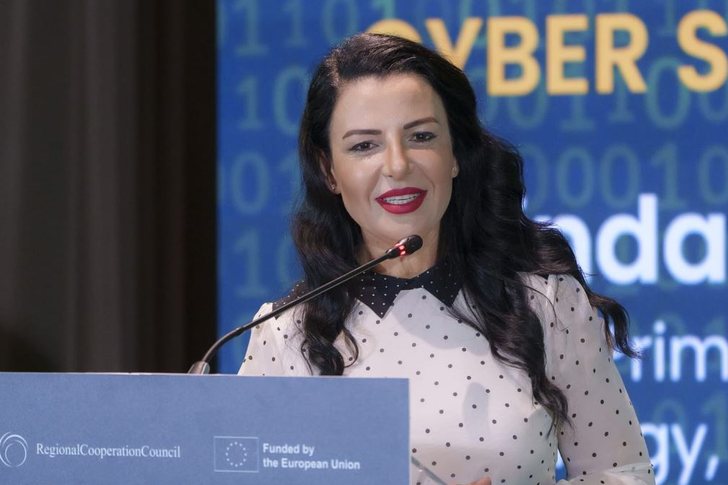
The Deputy Prime Minister, at the same time Minister o...
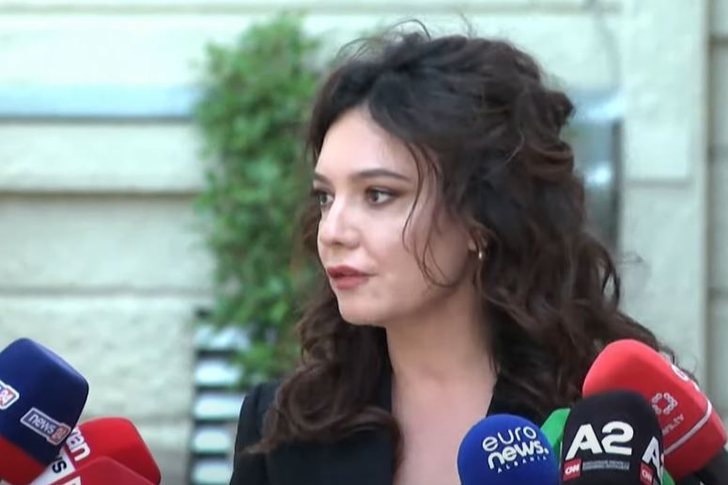
Yesterday, the Socialists submitted proposals for chan...
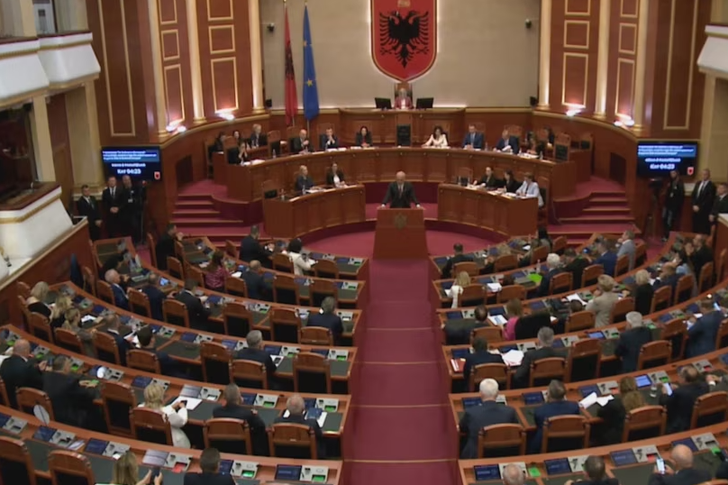
The Socialist Party and the Democratic Party have reac...
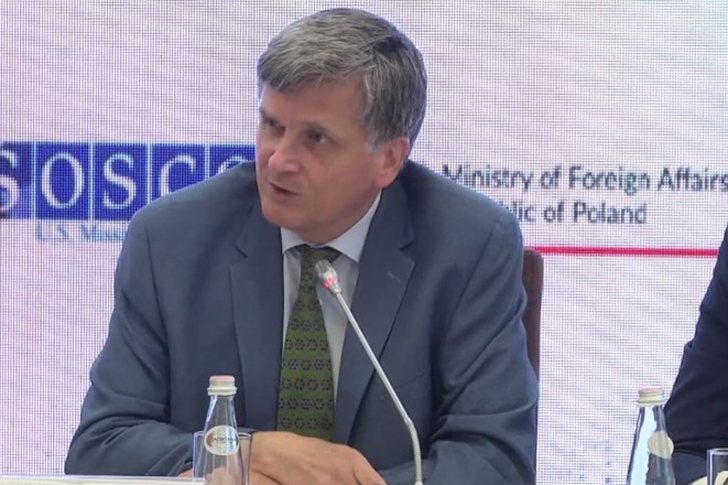
The head of the OSCE presence in Tirana, Michel Tarran...
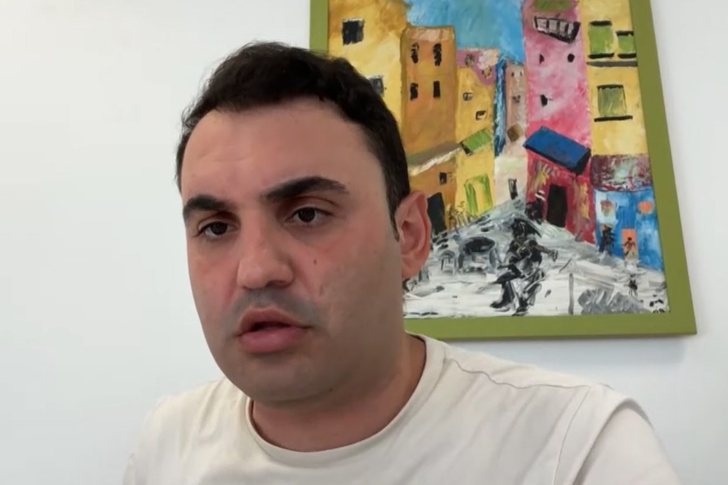
The leader of the DP for Tirana, Belind Këlliçi, "put ...
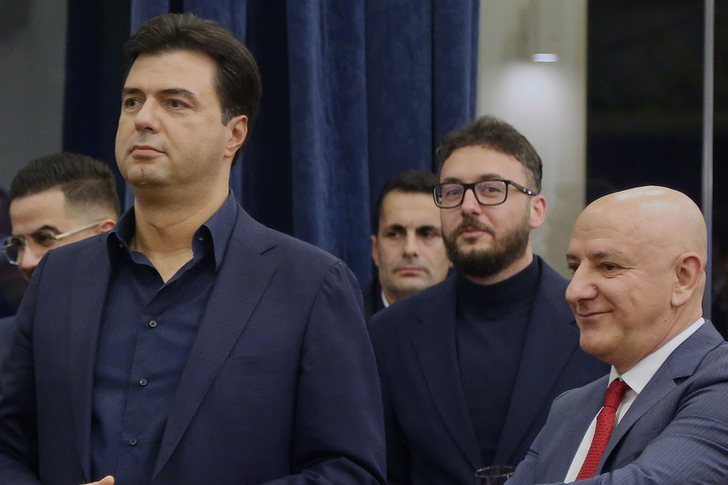
Lulzim Basha was betrayed by his soldiers as soon as t...
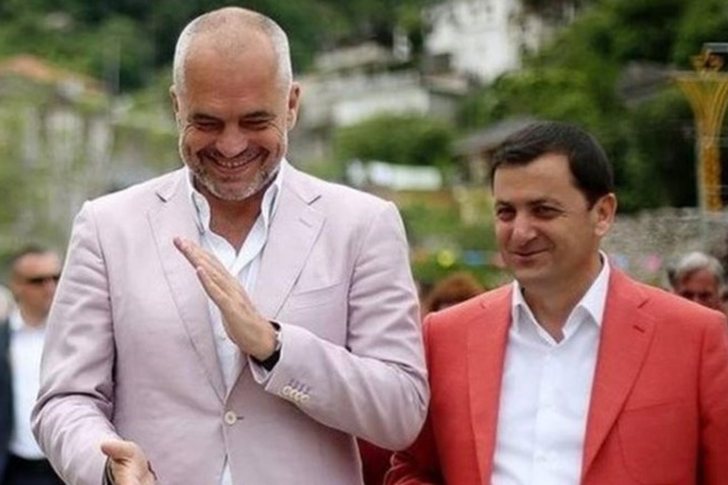
Vangjel Tavo spoke this Monday evening about his candi...
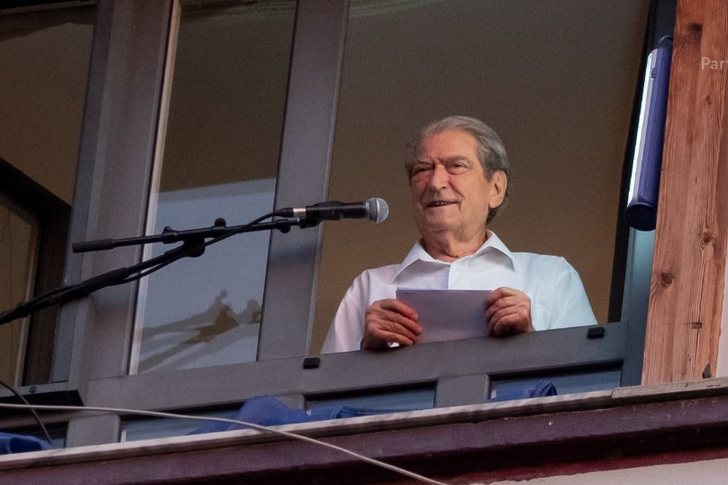
The head of the Democratic Party, Sali Berisha, attack...
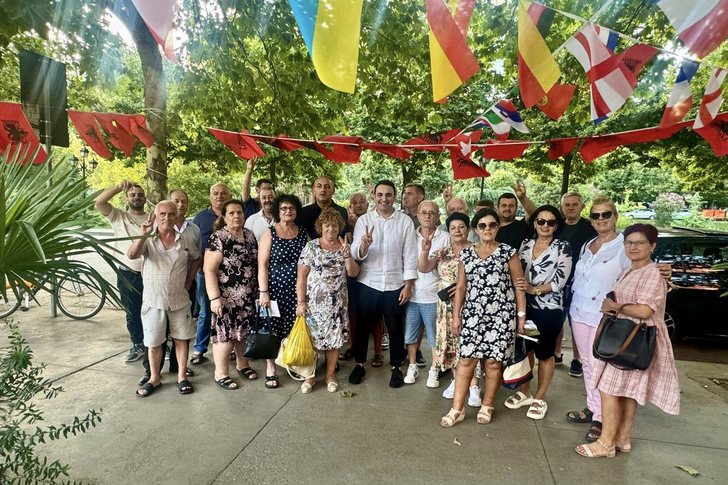
The political leader of the DP for Tirana, Belind Kelliçi,...
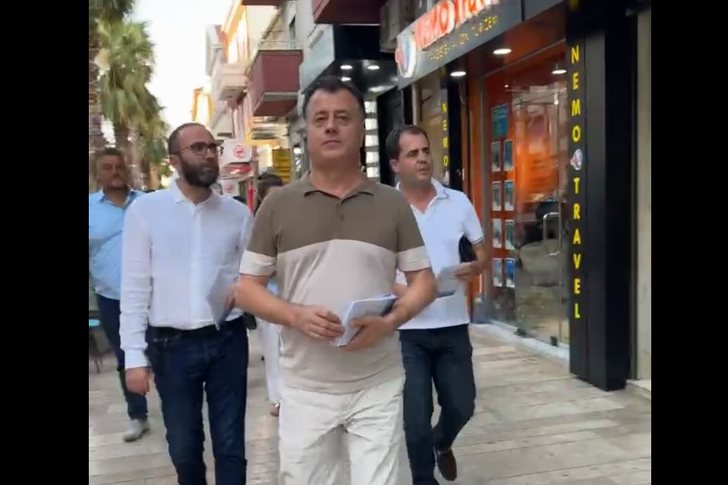
Under the motto of the July 11 protest "United in batt...
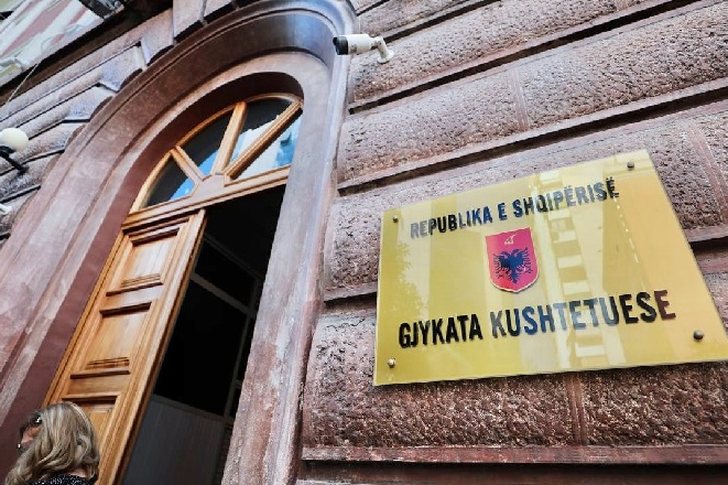
The Assembly has sent a letter to the Constitutional C...
Lulzim Basha, after losing the seal in the Court of Ap...
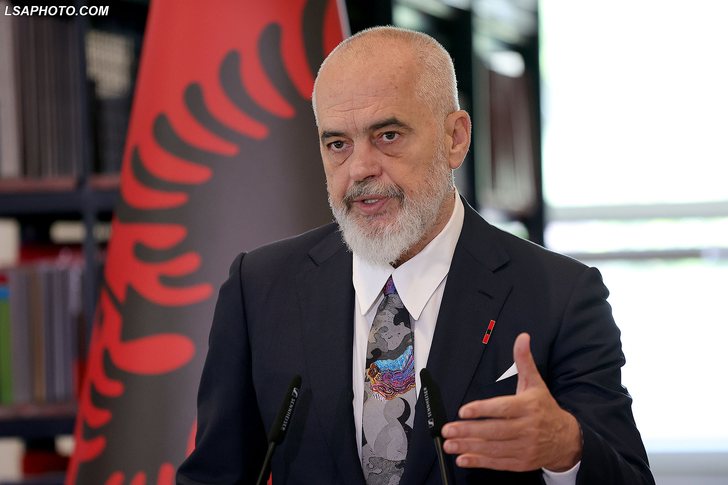
Other details have come to light from the meeting of P...
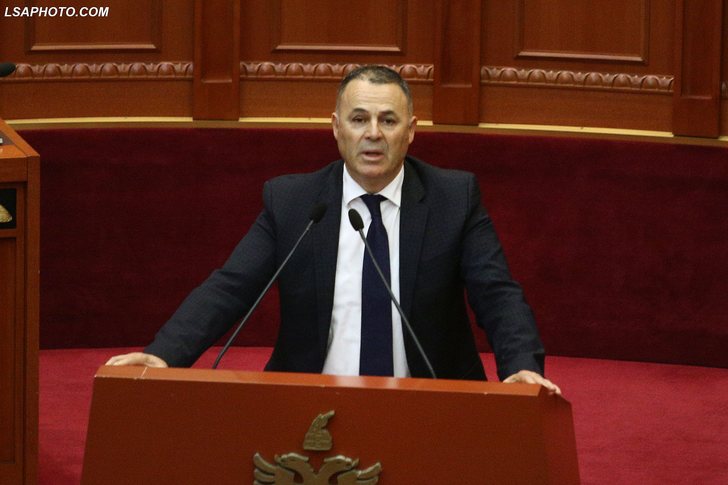
The deputy of the Democratic Party, Asllan Dogjani, ha...
The Socialist Party has submitted to the Assembly the ...
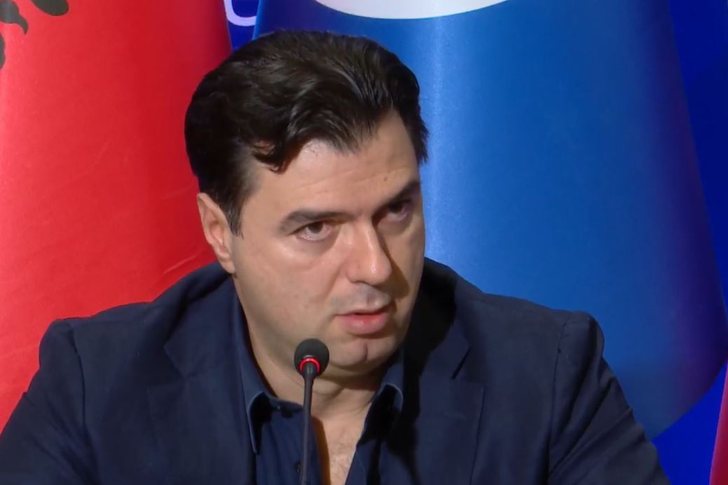
No one believes Lulzim Basha anymore! After the decis...

CNA has launched another investigation that could lead to ...

Irfan Hysenbelliu is a businessman that we call "Irfan the...

In March 2026, CNA launched another investigation centered...
The arrested mayor of Tirana, Erion Veliaj, with 13 charge...

The Special Board of Appeal (KPA) decided this Monday ...

The KPA vetting decided this Thursday to dismiss the p...

Suela Salavaçi, a prosecutor in the Prosecutor's Offic...

The Special Board of Appeal reinstated the prosecutor ...
A road accident occurred this evening on Nikolla Zoraqi St...

Three people were shot and wounded in Elbasan last night b...
A serious incident occurred this Tuesday in the Yrshek are...

An accident occurred this Tuesday on "Dituria" street in K...

All of Southern Europe will face changing weather conditio...

Albania was hit by temperatures significantly higher than ...

For the first time, Pogradec welcomed the Inter-Lake Chess...

Albania has achieved a record for the employment of foreig...
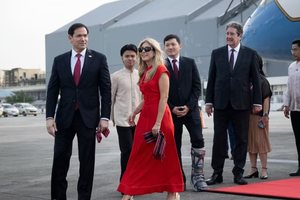
US Secretary of State Marco Rubio arrived in Manila on Jul...
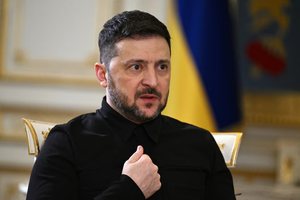
In the space of a few days, Ukrainian President Volodymyr ...
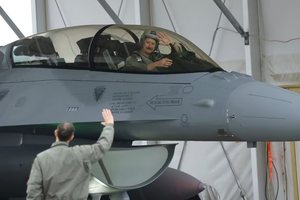
The spokesman for the Iranian Foreign Ministry warned Bulg...

Autoritetet italiane sekuestruan pako me afër 800 kilogram...

At a time when industrial products are increasingly taking...

Trust among people is not just a three-syllable word. It c...

Master of humor Todi Llupi has passed away at the age of 7...

The ninth edition of "MIK Festival" kicked off with one of...

Construction company licenses will have a validity period ...
The Centralized Purchasing Operator recently opened a tend...
The new draft law "On the Bank of Albania" provides that t...

This Tuesday, one US dollar is bought for 81.2 lek and sol...