


Saturday's "Black Moon"/ The special astrological phenomenon of the weekend
A new moon will occur at 2:06 a.m. Eastern Time on August ...



Scientists analyzed over a billion social media posts to discover how scorching temperatures are affecting our moods.
If the scorching temperatures are making you lose your cool, you're not alone. New research suggests that our warming world may be the cause of your bad mood.
Using social media, scientists from MIT and institutions around the world tracked people's emotions and linked them to days of extreme heat.
They analyzed more than 1 billion social media posts from more than 150 countries. Their findings? Heat doesn't just make us sweat, it also makes us irritable.
The study, published in the journal One Earth, found that when temperatures rise above 35°C, our collective mood drops significantly - especially in low-income countries.
They found that when temperatures rose above 35°C, the sentiments expressed in these posts became about 25 percent more negative in low-income countries and 8 percent more negative in high-income countries.
The effects of heat on mood in low-income countries were three times greater than those found in more economically affluent settings. The researchers say this highlights the importance of incorporating adaptation into future climate impact projections.
Is the hot weather making us angry?
As for why, there are a variety of theories. Some suggest that the weather can change the biology of our brains, with Finnish scientists linking high temperatures to levels of serotonin - an important brain chemical that regulates happiness, anxiety and our overall mood. Others suggest that hot weather increases testosterone levels, making us more aggressive.
However, it's important to remember that most studies show a correlation between hot weather and bad mood or behavior. This doesn't necessarily mean that these factors directly influence each other - many other factors may be involved. Will our moods be worse in the future?
Looking ahead, the researchers used long-term global climate models to estimate how rising temperatures could affect our emotional well-being by the end of the century. Even assuming that societies gradually adapt to the heat, their projections suggest a 2.3% decline in global well-being by 2100, driven by higher temperatures.
The researchers acknowledge that there is still much to be learned. First, social media users do not reflect the full population. Young children and the elderly, groups that are particularly vulnerable to extreme heat, are underrepresented on platforms like X and Weibo. This means that the actual emotional cost may be even higher than the study suggests.
While infrastructure can help us adapt to the physical effects of heat, research shows that understanding and preparing for its emotional impact may be just as critical./ CNA

A new moon will occur at 2:06 a.m. Eastern Time on August ...

NASA's Webb Space Telescope has found a new small moon aro...

For centuries, the moon and how it influences human behavi...

Centuripe, a city in Sicily, is known for its unique, huma...

The Perseid meteor shower is expected to peak in mid-Augus...

More than 50 years after his death, JRR Tolkien's fantasy ...

New evidence strongly suggests that Pompeii was repopulate...

A woman buried more than 2,000 years ago in Siberia's icy ...

Archaeologists have discovered Roman city churches and tom...

Two years ago, a strange watercolour hidden in a London ga...

A few days ago, when it was learned that US President Dona...
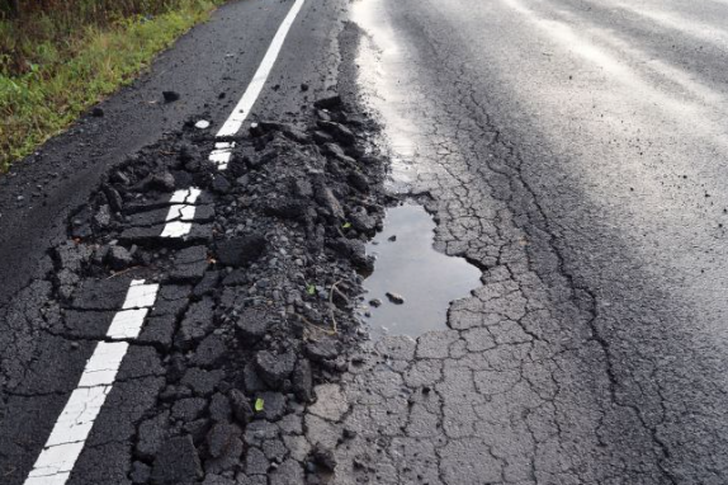
Driving is never completely safe, and especially during th...

Climate change is particularly threatening to the long-ter...

Europeans once had dark hair, dark eyes and dark skin. By ...

Located just 12 kilometers from the Sacred City of Caral-...
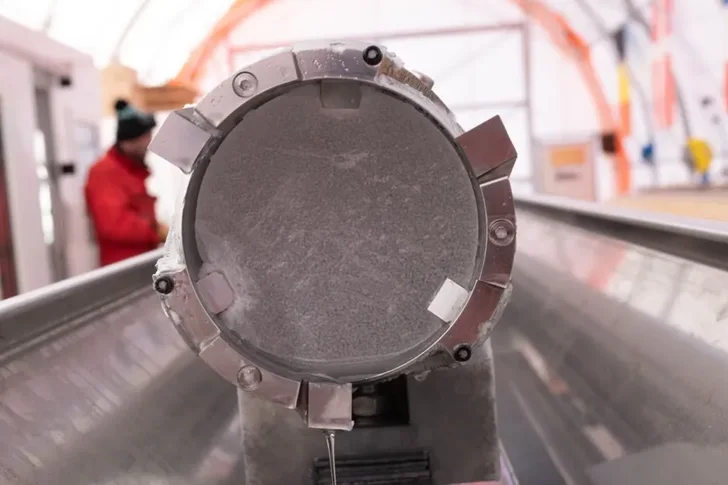
An ice core that could be more than 1.5 million years old ...

A Roman-era mosaic panel with an erotic motif was official...

Astronomers have discovered the earliest seeds of rocky pl...

Sea cucumbers clean up organic debris that lies on the oce...

This Monday evening presented a true star spectacle over t...

Irfan Hysenbelliu is a businessman that we call "Irfan the...

In March 2026, CNA launched another investigation centered...
The arrested mayor of Tirana, Erion Veliaj, with 13 charge...

CNA has uncovered the tentacles of the head of the Supreme...

The Special Board of Appeal (KPA) decided this Monday ...

The KPA vetting decided this Thursday to dismiss the p...

Suela Salavaçi, a prosecutor in the Prosecutor's Offic...

The Special Board of Appeal reinstated the prosecutor ...

New details are being learned regarding the incident that ...

Several gunshots were reported this evening in Elbasan. T...

A section of the Fier-Vlora highway was engulfed in flames...

A road accident occurred this Monday near Gramsh. As repo...

Another humanitarian aid shipment from Germany has arrived...

Residents of the village of Memëlisht in the Municipality ...

On Monday, our country will be under the influence of rela...

On Sunday, our country will remain under the influence of ...

US President Donald Trump responded with harsh rhetoric to...

US President Donald Trump said on Monday that Israeli Prim...

Hungary's Prime Minister, Péter Magyar, took many people b...

The mediators in the Middle East conflict between the Unit...

At a time when industrial products are increasingly taking...

Trust among people is not just a three-syllable word. It c...

Master of humor Todi Llupi has passed away at the age of 7...

The ninth edition of "MIK Festival" kicked off with one of...

Deputy Minister of Economy and Innovation, Enkelejd Musabe...

This Monday, one US dollar is bought for 81 lek and sold f...

In Golem and Durrës, the season seems dynamic: buses with ...

This Sunday, one US dollar is bought for 81 lek and sold f...