

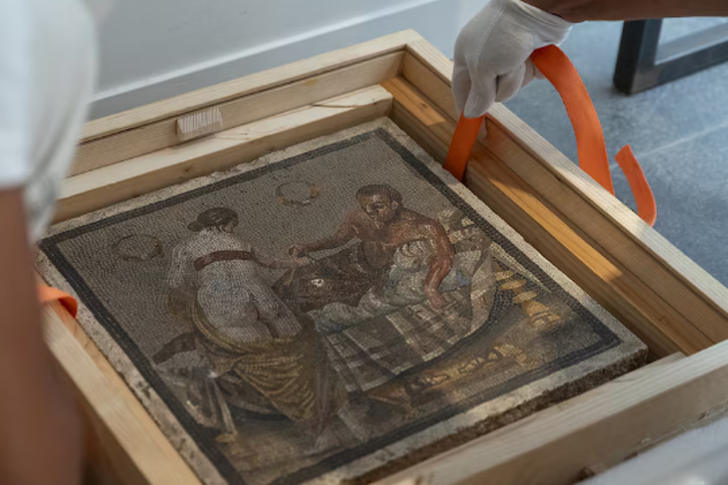
Stolen during World War II/Roman mosaic with erotic motifs returns to Pompeii
A Roman-era mosaic panel with an erotic motif was official...


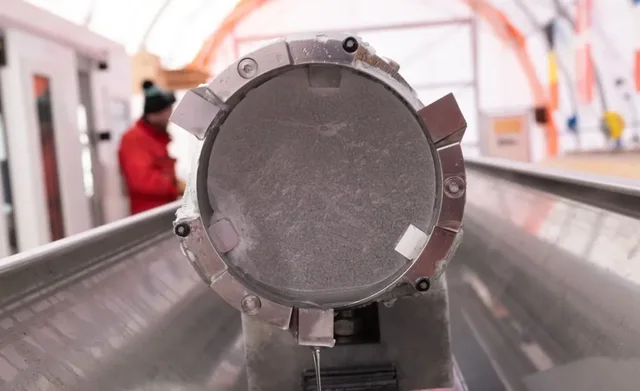
An ice core that could be more than 1.5 million years old has arrived in the UK, where scientists will melt it to reveal vital information about Earth's climate.
The frozen cylinder is the planet's oldest ice core, drilled from deep within the Antarctic ice sheet, and contains a wealth of new information dating back thousands of years that scientists say could "revolutionize" what we know about climate change.
“This is a completely unknown period of our Earth’s history,” says Dr. Liz Thomas, head of ice core research at the British Antarctic Survey.
On a work surface next to stacked ice boxes, Dr. Thomas points to the oldest cores, which may be 1.5 million years old. They glow and are so clear that we can see our hands through them.
For seven weeks, the team will slowly melt the hard-earned ice, releasing ancient dust, volcanic ash and even tiny marine algae called diatoms, which were trapped inside when the water turned to ice.
These materials can tell scientists about wind, temperature and sea level patterns more than a million years ago.
The tubes will feed the liquid to machines in an adjacent laboratory, which is one of the only places in the world that can do this science.
It was a huge multinational effort to extract ice cores from Antarctica, at a cost of millions. The ice was broken into 1-meter blocks and transported by ship and then in a refrigerated van to Cambridge.
Engineer James Veale helped extract ice near the Concordia base in East Antarctica.
"Holding it in my carefully gloved hands and being very careful not to drop sections - it was a wonderful feeling," he says.
Two institutions in Germany and Switzerland have also obtained 2.8 km core cross-sections.
The teams could find evidence of a time period more than 800,000 years ago, when carbon dioxide concentrations may have been naturally as high or even higher than they are now, according to Dr. Thomas.
This could help them understand what will happen in our future as our planet reacts to the warming gases trapped in our atmosphere.
"Our climate system has gone through so many different changes that we need to be able to go back in time to understand these different processes and different tipping points," says Liz Thomas.
The difference between today's eras and previous eras with high greenhouse gases is that humans have now caused the rapid increase in greenhouse gases in the last 150 years.
This is taking us into uncharted territory, but scientists hope that the records of our planet's environmental history locked in ice can give us some clues.
The team will identify chemical isotopes in the liquid that can tell us about wind patterns, temperatures and precipitation for a time period between 800,000 and up to 1.5 million years ago or possibly longer.
They will use an instrument called an inductively coupled plasma mass spectrometer (ICPMS) to measure over 20 trace elements and metals.
This includes rare earth elements, sea salts and marine elements, as well as indicators of past volcanic eruptions.
The work will help scientists understand a mysterious shift called the Middle Pleistocene Transition 800,000 to 1.2 million years ago, when the planet's glacial cycles suddenly changed.
The transition from warmer eras to colder ice ages, when ice covered much more of the Earth's surface, had occurred every 41,000 years, but suddenly changed to 100,000 years.
The cause of this change is one of the "most exciting unsolved questions" in climate science, according to Dr. Thomas.
The cores may hold evidence of a time when sea levels were much higher than they are now and when Antarctica's vast ice sheets were smaller.
The presence of dust in the ice will help them understand how the ice sheets shrank and contributed to rising sea levels - something that is a major concern this century./ CNA

A Roman-era mosaic panel with an erotic motif was official...
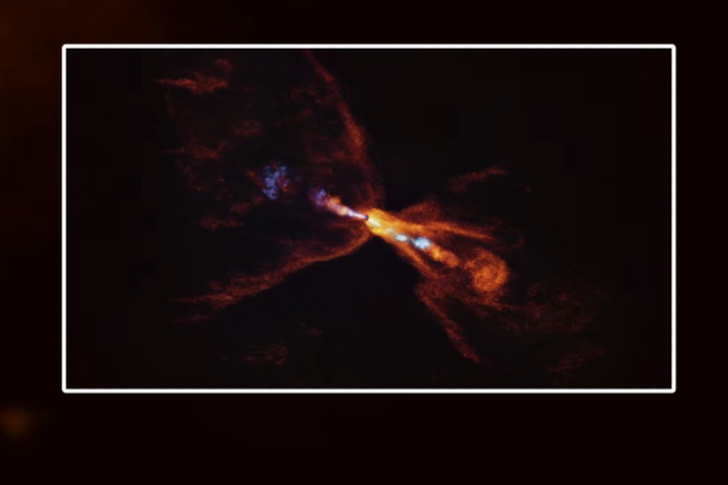
Astronomers have discovered the earliest seeds of rocky pl...
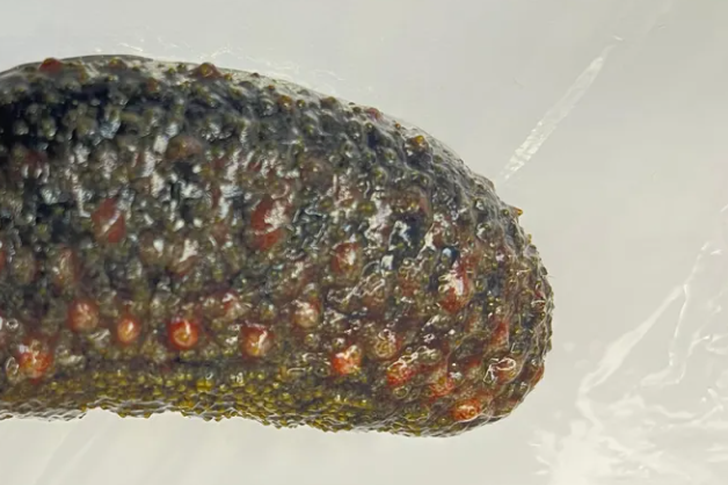
Sea cucumbers clean up organic debris that lies on the oce...

This Monday evening presented a true star spectacle over t...
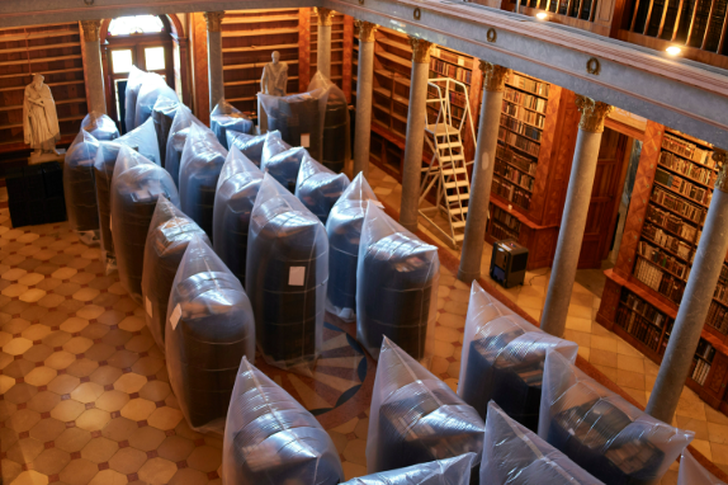
Tens of thousands of centuries-old books are being pulled ...

According to nutritionists, beans are part of a unique cat...
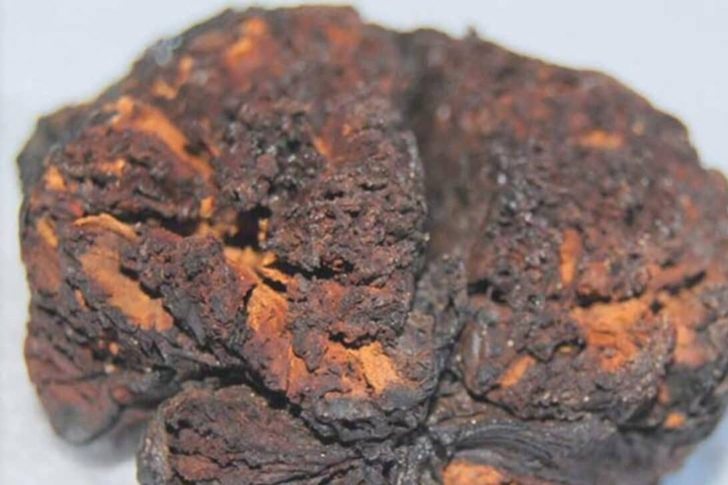
An interesting discovery in Turkey has caught the attentio...
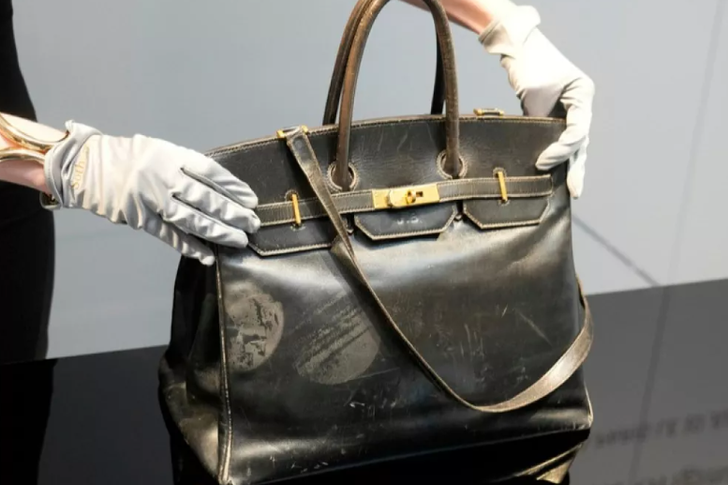
Some say you can't put a price on the right fashion access...

Europe's long-distance rail network will get another boost...
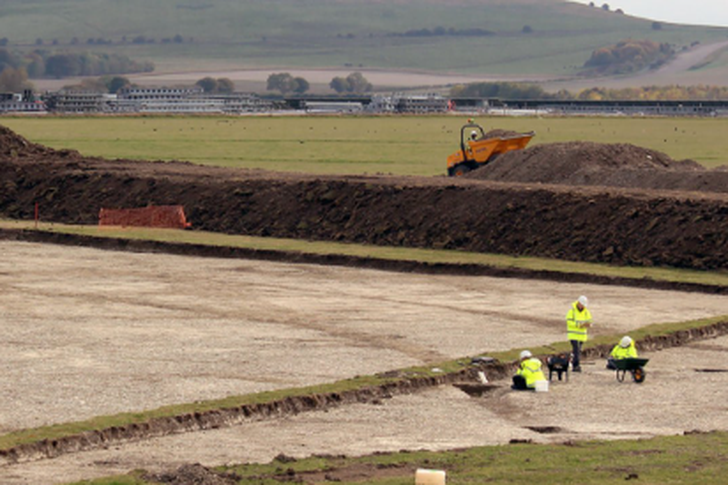
Archaeological excavations have uncovered a large settleme...

A work depicting Venice by 18th-century Italian painter Ca...
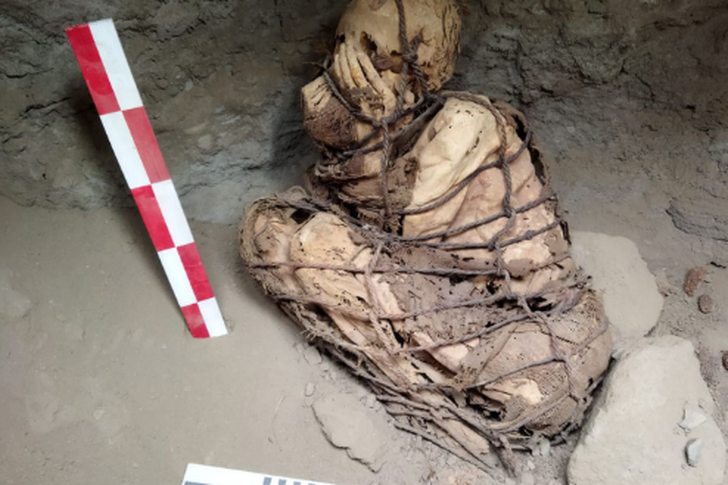
While laying gas pipes in Lima's Puente Piedra neighborhoo...
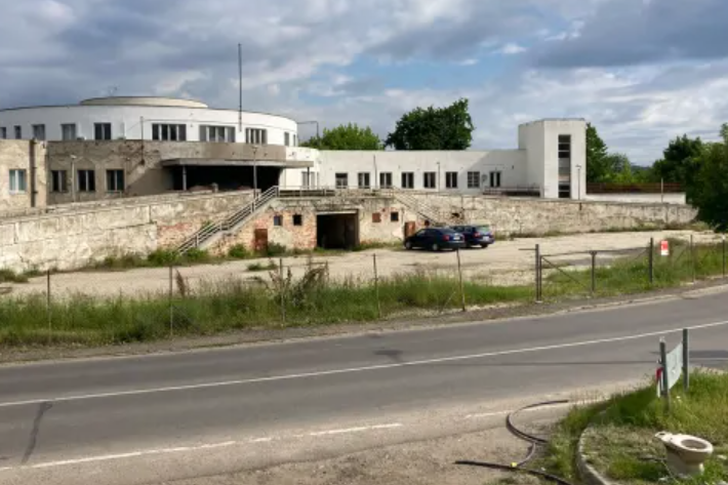
Walking into Budapest's Budaörs Airport feels more like en...

For years, a rumor has circulated that Ludwig van Beethove...

As ocean temperatures rise, marine biologists are racing t...
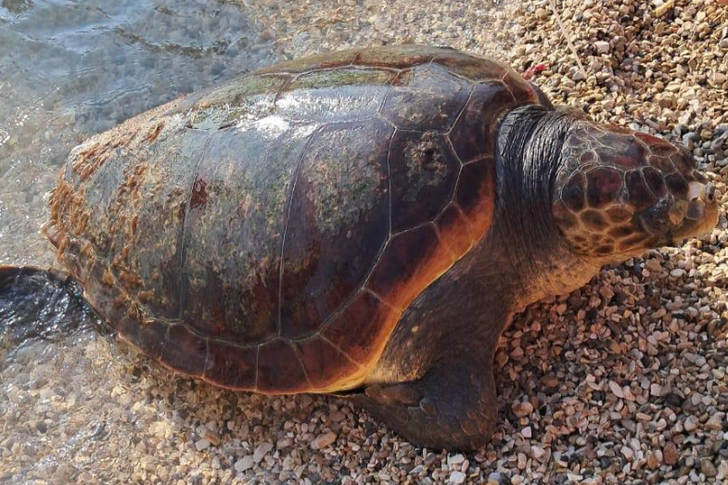
A rare event has thrilled vacationers on the beach of Sara...
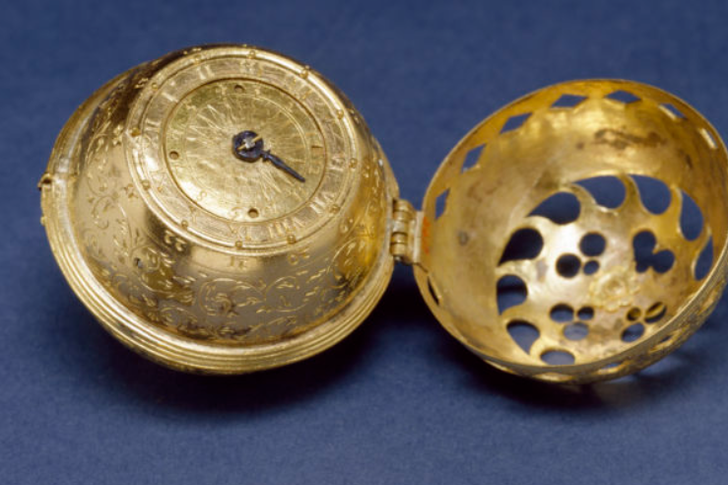
Watches developed from clocks in the 15th and 16th centuri...
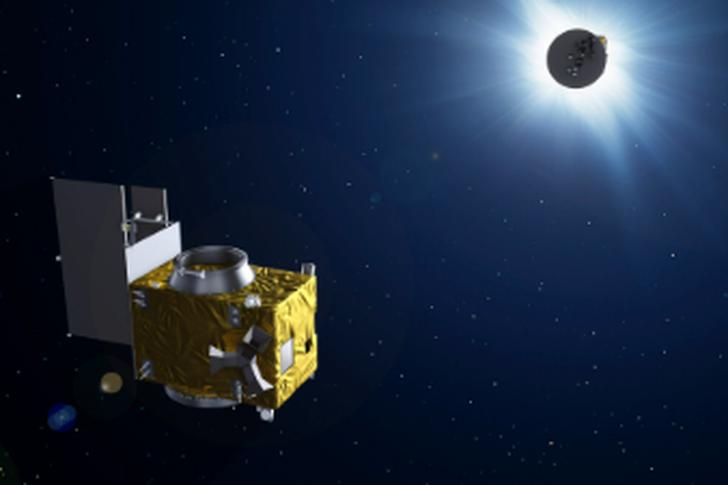
A pair of European satellites have created the first artif...
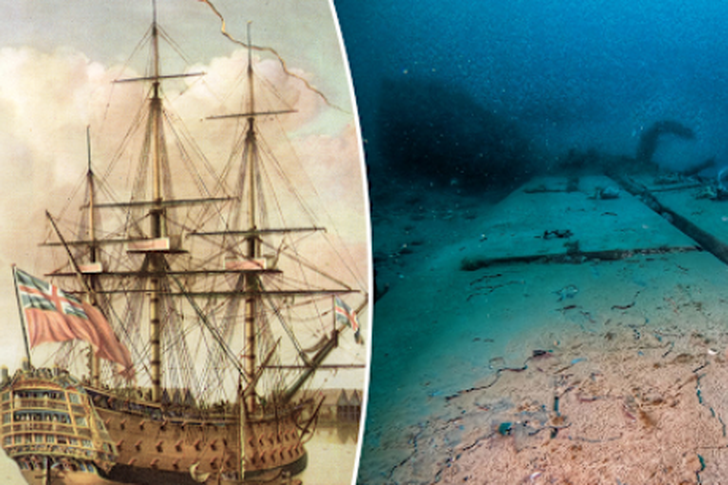
A 16th-century merchant ship has been discovered 2,567 met...

Scientists have discovered a new species of dinosaur - in ...

Irfan Hysenbelliu is a businessman that we call "Irfan the...

In March 2026, CNA launched another investigation centered...
The arrested mayor of Tirana, Erion Veliaj, with 13 charge...

CNA has uncovered the tentacles of the head of the Supreme...

The Special Board of Appeal (KPA) decided this Monday ...

The KPA vetting decided this Thursday to dismiss the p...

Suela Salavaçi, a prosecutor in the Prosecutor's Offic...

The Special Board of Appeal reinstated the prosecutor ...

New details are being learned regarding the incident that ...

Several gunshots were reported this evening in Elbasan. T...
A section of the Fier-Vlora highway was engulfed in flames...

A road accident occurred this Monday near Gramsh. As repo...
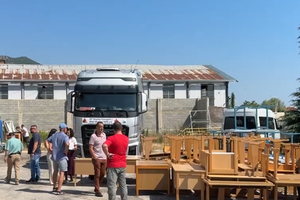
Another humanitarian aid shipment from Germany has arrived...
Residents of the village of Memëlisht in the Municipality ...

On Monday, our country will be under the influence of rela...

On Sunday, our country will remain under the influence of ...

US President Donald Trump responded with harsh rhetoric to...

US President Donald Trump said on Monday that Israeli Prim...

Hungary's Prime Minister, Péter Magyar, took many people b...

The mediators in the Middle East conflict between the Unit...

At a time when industrial products are increasingly taking...

Trust among people is not just a three-syllable word. It c...

Master of humor Todi Llupi has passed away at the age of 7...

The ninth edition of "MIK Festival" kicked off with one of...

Deputy Minister of Economy and Innovation, Enkelejd Musabe...

This Monday, one US dollar is bought for 81 lek and sold f...
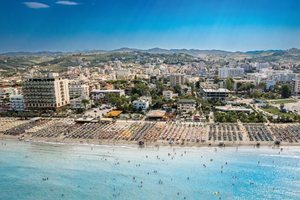
In Golem and Durrës, the season seems dynamic: buses with ...

This Sunday, one US dollar is bought for 81 lek and sold f...