

Forcat izraelite nisin sulme tokësore dhe ajrore në Deir al-Balah
Forcat izraelite kanë nisur një sulm tokësor dhe ajror në ...


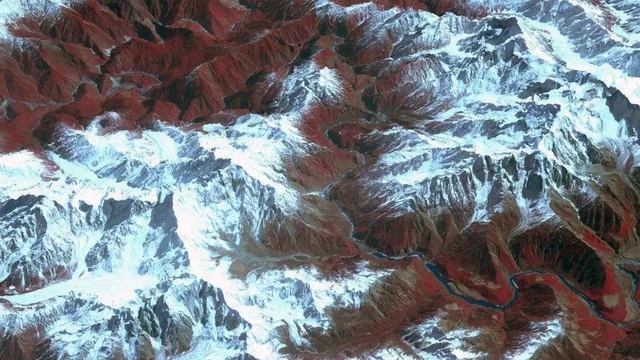
Chinese authorities have begun construction of what will be the world's largest hydroelectric dam in Tibetan territory, in a project that has raised concerns from India and Bangladesh.
Chinese Premier Li Qiang presided over a ceremony marking the start of construction on the Yarlung Tsangpo River on Saturday, according to local media.
The river flows through the Tibetan Plateau, as well as through many countries in South Asia. The project has drawn criticism for its potential impact on the millions of Indians and Bangladeshis who live downstream, as well as on the surrounding environment and local Tibetans. Beijing has said the development will prioritize ecological protection and promote local prosperity.
When completed, the 12 billion yuan ($1.67 billion; £1.25 billion) project, also known as the Motuo Hydropower Plant, will surpass the Three Gorges Dam as the world's largest and could generate three times as much power.
Experts and officials have raised concerns that the new dam will allow China to control or divert the transboundary Yarlung Tsangpo, which flows south into the Indian states of Arunachal Pradesh and Assam, as well as into Bangladesh, where it empties into the Siang, Brahmaputra and Jamuna rivers. A 2020 report published by the Lowy Institute, an Australia-based think tank, noted that “control over these rivers, on the Tibetan Plateau, effectively gives China a stranglehold on India’s economy.”
In an interview with news agency PTI earlier this month, Arunachal Pradesh Chief Minister Pema Khandu expressed concern that the Siang and Brahmaputra could "dry up significantly" once the dam is completed. He added that the dam "will pose an existential threat to our tribes and livelihoods. It is quite serious because China can also use this as a kind of 'water bomb'."
"Suppose the dam is built and they suddenly release water, our entire Siang generation will be destroyed," he said. "In particular, the Adi tribe and similar groups... will see all property, land and especially human life suffer devastating effects."
India's federal government has in the past raised concerns with China about the dam's impact on downstream communities. It also plans to build a hydroelectric dam on the Siang River, which would act as a buffer against sudden releases of water from China's dam and prevent flooding in their areas.
China's Foreign Ministry has previously responded to India, saying in 2020 that China has a "legitimate right" to build the dam on the river and has taken into account the downstream impacts. Bangladesh has also expressed concerns to China about the project, with officials sending a letter to Beijing in February seeking more information on the dam. Chinese authorities have long been eyeing the hydropower potential of the dam's location in the Tibet Autonomous Region.
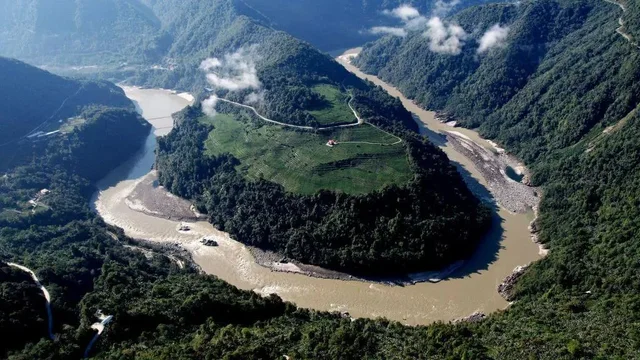
It is located in a massive canyon said to be the world's deepest and longest on land, along a section where the Yarlung Tsangpo - Tibet's longest river - makes a sharp U-turn around Mount Namcha Barwa.
During the process of making this bend, which has been called the "Great Bend", the river drops hundreds of meters in height. Previous reports indicated that authorities planned to drill several 20 km long tunnels through the Namcha Barwa mountain, through which they would divert part of the river.
A Xinhua report on Li Qiang’s visit said engineers would carry out “directional” work and “divert water through tunnels” to build five upstream and downstream power plants. Xinhua also reported that the hydroelectric dam’s electricity would be largely transmitted outside the region for use elsewhere, while also meeting Tibet’s needs. China has targeted steep valleys and mighty rivers in the rural west — where Tibetan territories are located — to build mega-dams and hydroelectric plants that could support the country’s power-hungry eastern metropolises.
President Xi Jinping has personally pushed this in a policy called “xidiandongsong,” or “sending western electricity to the east.” The Chinese government and state media have presented the dams as a win-win solution that reduces pollution and generates clean energy while providing livelihoods for rural Tibetans. But activists say the dams are the latest example of Beijing’s exploitation of Tibetans and their land, and past protests have been suppressed. Last year, the Chinese government arrested hundreds of Tibetans who had protested against another hydroelectric dam.
This resulted in arrests and beatings, with some people seriously injured, the BBC has learned through verified sources and footage. There are also environmental concerns about flooding of Tibetan valleys known for their biodiversity, as well as the potential risks of building dams in a region riddled with earthquake fault lines./ CNA

Forcat izraelite kanë nisur një sulm tokësor dhe ajror në ...

The powerful leader of an Ecuadorian gang, Adolfo Macías V...

A new heat wave is hitting Italy. The hottest day is expec...

Sunday seems to have been a day of complete detachment fro...
Iran has agreed to meet with three major European countrie...
More than 128,000 people have been displaced in a week due...

Russian President Vladimir Putin is ready to move towards ...

Pope Leo XIV today renewed his call for an immediate cease...

Israeli Prime Minister Benjamin Netanyahu has suffered foo...
The situation in Suwayda province is reportedly under cont...
The US Geological Survey has issued a tsunami warning afte...
14 people have died as a result of floods and landslides c...
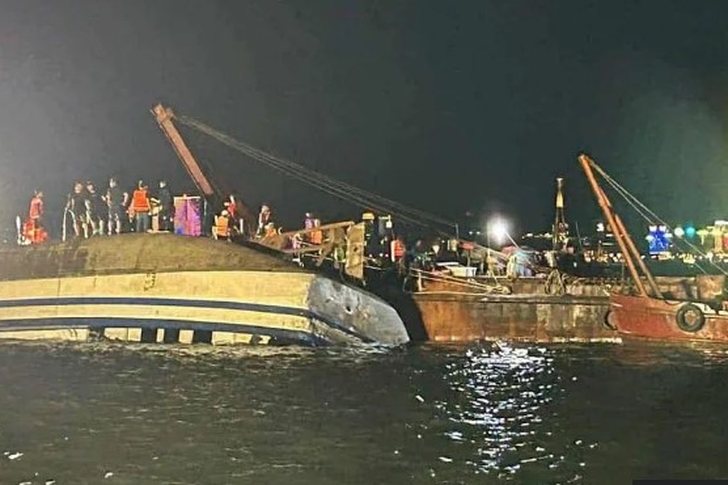
The death toll from a cruise ship capsized in Vietnam due ...

Around 100 masked men, armed with fireworks and other obje...

Ukrainian President Volodymyr Zelensky said today that Kie...
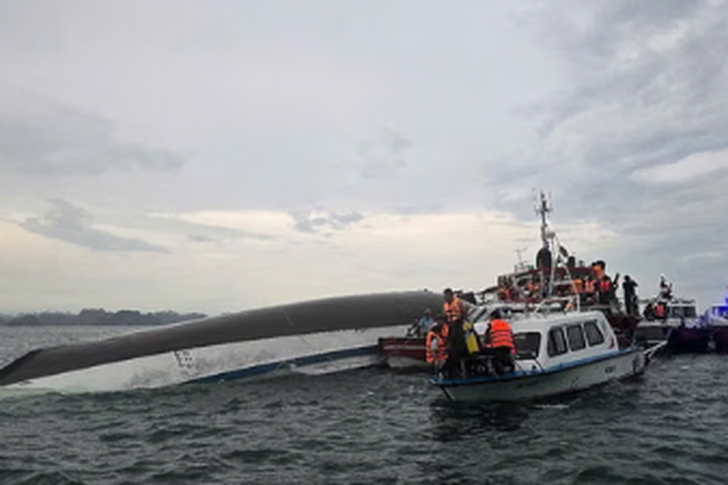
At least 34 people have died and eight others are missing ...
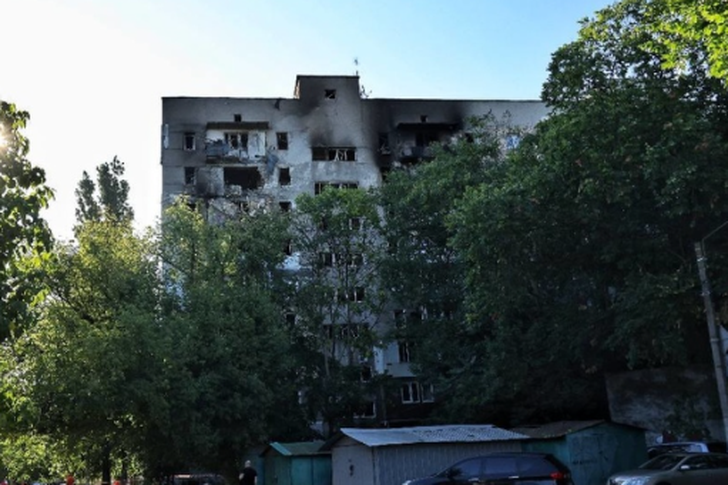
Russia launched more than 300 drones and over 30 missiles ...

A vehicle crashed into a crowd of people waiting to enter ...

Kosovo President Vjosa Osmani shared a commemorative messa...

At least 20 people have been injured after a vehicle cras...

CNA has launched another investigation that could lead to ...

Irfan Hysenbelliu is a businessman that we call "Irfan the...

In March 2026, CNA launched another investigation centered...
The arrested mayor of Tirana, Erion Veliaj, with 13 charge...

The Special Board of Appeal (KPA) decided this Monday ...

The KPA vetting decided this Thursday to dismiss the p...

Suela Salavaçi, a prosecutor in the Prosecutor's Offic...

The Special Board of Appeal reinstated the prosecutor ...

Citizen MH, 61, a fisherman, was found dead near the islan...

Another phase of the international operation, codenamed "T...

Police have arrested a 34-year-old woman at Rinas Airport ...

A serious accident has occurred on the Lezhë-Shëngjin axis...

The Institute of Geosciences has shared a forecast for wea...
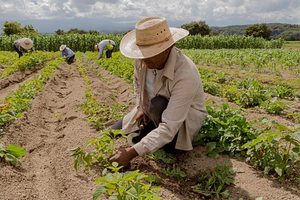
Rising energy and fertilizer prices are expected to contin...

Over 18,000 foreign citizens from 140 countries have appli...

This Wednesday, our country will be under the influence of...

Prime Minister Andy Burnham has announced that most bus fa...

France's parliament has passed a law to ban social media f...

US Secretary of State Marco Rubio arrived in Manila on Jul...

In the space of a few days, Ukrainian President Volodymyr ...

At a time when industrial products are increasingly taking...

Trust among people is not just a three-syllable word. It c...

Master of humor Todi Llupi has passed away at the age of 7...

The ninth edition of "MIK Festival" kicked off with one of...

Businesses will no longer be required to simply register t...

Despite economic growth and income in recent years, Albani...

This Wednesday, one US dollar is bought for 81.4 lek and s...

Construction company licenses will have a validity period ...