


Macron asks schools to address the issue of anti-Semitism
French President Emmanuel Macron on Wednesday asked sc...


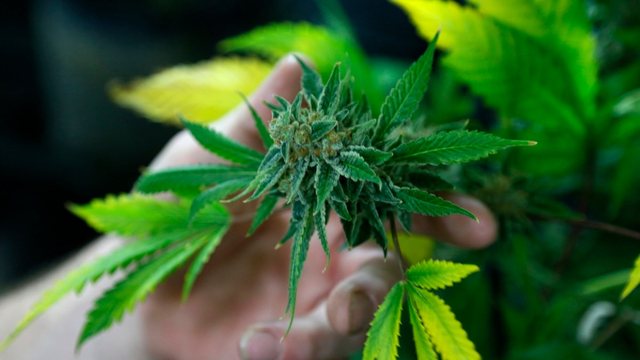
Maryland this week became the latest state to announce mass pardons for people convicted of marijuana-related crimes, as part of efforts to improve the lives of those who ended up in prison as a result of the country's 10-year war on drugs.
Under Gov. Wes Moore's plan, more than 175,000 people convicted of possession of cannabis or drug paraphernalia will be pardoned, but not permanently erased from the criminal records of these individuals.
Next, a look at American attitudes in dealing with old cases with marijuana convictions.
The marijuana legalization group NORML says about 2.5 million cannabis convictions have been expunged or forgiven in recent years.
"It's a small number when you consider the fact that over the past 50 years or so, over 30 million Americans have been arrested at the state or local level for marijuana," Paur Armentano, deputy director of the NORML group, said in an interview.
Pardoned people regain their civil rights, such as the right to vote, serve on a jury, or own a gun.
Conviction settlements go further, completely hiding conviction history and records; which enables individuals who receive federal tuition assistance to qualify for public housing and allows parents to participate in their children's school activities, among other benefits.
Executive branch officials such as mayors, governors and the president can pardon someone, but few leaders have done so like Maryland's. Similar decisions have been made in Massachusetts, Nevada, Oregon, Birmingham, Alabama and Kansas City.
President Joe Biden has ordered multiple pardons for those convicted of possession of cannabis on federal property or in the District of Columbia.
It is not clear who and how many people benefit. To understand whether they have been pardoned or not, convicts must apply for a certificate; as of this month, just over 200 people who were eligible for President Biden's pardon had applied.
It takes a court, usually based on a statute, to order a criminal record expunged, though Oregon provides this along with pardons, and Maryland's approach makes it easier.
Marijuana laws have changed a lot since the late 1990s, when states began allowing the medical use of marijuana, a practice that has been embraced by most states.
Twenty-four states have legalized recreational use for adults, 26 have decriminalized it, and the United States Department of Justice this year moved to reclassify it as a less dangerous drug, giving hope to activists in support for the legalization of marijuana, for allowing its use in the 12 states that prohibit it.
The legalization of marijuana in Colorado and Washington, the first states to take such action, raised a question: Should people with past convictions continue to suffer consequences for something that is now legal?
A growing number of voters and lawmakers say no. Most states that have legalized marijuana recently have made it part of the new policy how to clear past marijuana possession convictions.
A expungement provision for those who qualify was part of a voter-approved measure that supported the 2022 legalization of marijuana in Maryland.
But in many cases these provisions require convicted people to seek expungement of their records, a process that can take time and requires the help of an attorney.
Advocates say multiple pardons and commutations, like the one in Maryland, are a way to address long-standing racial disparities.
According to some studies, African Americans have suffered more from the consequences of national drug policies than white Americans, although data show that marijuana use by both groups is at a similar rate.
An analysis by the American Civil Liberties Union (ACLU) found that African Americans were three times more likely than whites to be charged with possession of marijuana in 2018. Disparities were noted in every state.
Pardons and automatic commutations cover all who qualify, reducing opportunities for inequity.
A 2020 study by University of Michigan Law School professors found that fewer than 7 percent of people who qualified for criminal record clearance took advantage. Most did not apply.
"Under the old model, it took a lot of resources to get a criminal record cleared ," said Adrian Rocha, policy manager at the Last Prisoner Project, which, like other advocacy groups, is committed to pardon and cleanup policies. of extensive criminal history.
"Blanket amnesties for all categories of activities that were criminal in the past help communities of color and make it easier to deal with issues that communities have faced in the past," says Cat Packer, of the Drug Policy Alliance./ VOA

French President Emmanuel Macron on Wednesday asked sc...

The Greek government has faced strong accusations from...

Turkish Foreign Minister Hakan Fidan's visit to China ...

Israeli forces may have repeatedly violated basic prin...
The representatives of the member countries of the Eur...

The President of Romania, Klaus Iohannis, is expected to a...

The Iranian winner of the Nobel Peace Prize, Narges Mo...

Russian President Vladimir Putin and North Korean lead...

Bird flu is spreading across the US in a surprising de...

Thousands of North Koreans chanted "welcome Putin" and lin...
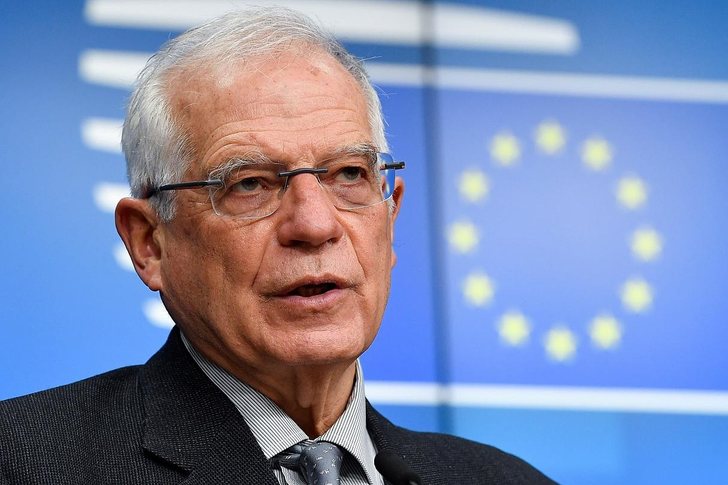
The high representative of the European Union for fore...

The United States on Tuesday called for an end to cros...

North Korean Supreme Leader Kim Jong Un has recently d...
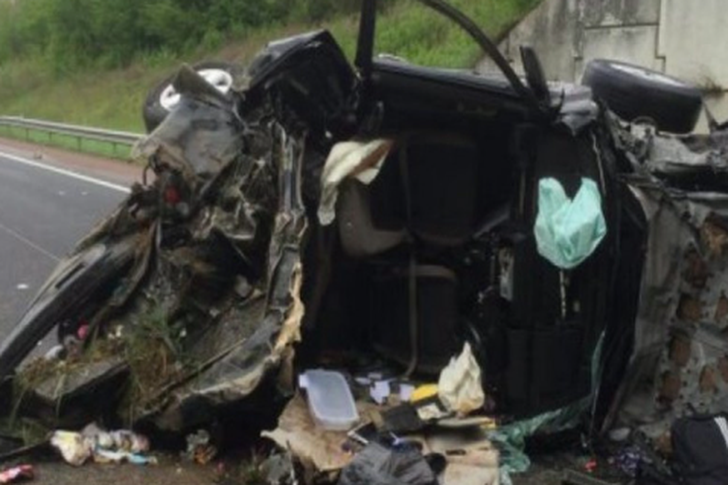
Seven people have lost their lives and two others have...

Greek border authorities are said to have taken refuge...

A large explosion has occurred in a warehouse in Chad,...

A cargo ship sank in the Red Sea after an attack by Ye...

Russian President Vladimir Putin has arrived in North ...
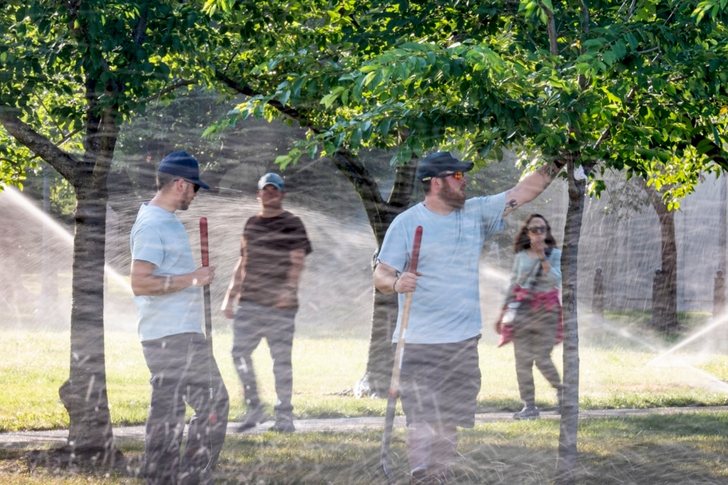
More than 70 million Americans – about one in five – a...
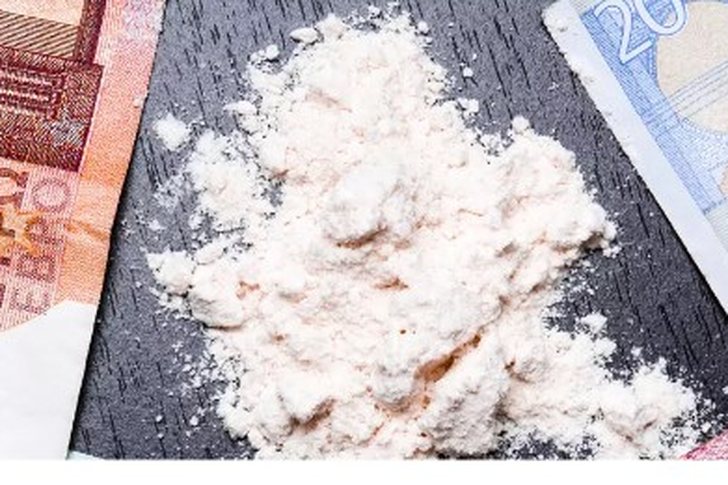
A record amount of 35 tons of cocaine, which was desti...

CNA has launched another investigation that could lead to ...

Irfan Hysenbelliu is a businessman that we call "Irfan the...

In March 2026, CNA launched another investigation centered...
The arrested mayor of Tirana, Erion Veliaj, with 13 charge...

The Special Board of Appeal (KPA) decided this Monday ...

The KPA vetting decided this Thursday to dismiss the p...

Suela Salavaçi, a prosecutor in the Prosecutor's Offic...

The Special Board of Appeal reinstated the prosecutor ...

A road accident occurred this evening on Nikolla Zoraqi St...

Three people were shot and wounded in Elbasan last night b...

A serious incident occurred this Tuesday in the Yrshek are...

An accident occurred this Tuesday on "Dituria" street in K...

All of Southern Europe will face changing weather conditio...
Albania was hit by temperatures significantly higher than ...

For the first time, Pogradec welcomed the Inter-Lake Chess...

Albania has achieved a record for the employment of foreig...

US Secretary of State Marco Rubio arrived in Manila on Jul...

In the space of a few days, Ukrainian President Volodymyr ...

The spokesman for the Iranian Foreign Ministry warned Bulg...

Autoritetet italiane sekuestruan pako me afër 800 kilogram...

At a time when industrial products are increasingly taking...

Trust among people is not just a three-syllable word. It c...

Master of humor Todi Llupi has passed away at the age of 7...

The ninth edition of "MIK Festival" kicked off with one of...

Construction company licenses will have a validity period ...

The Centralized Purchasing Operator recently opened a tend...

The new draft law "On the Bank of Albania" provides that t...

This Tuesday, one US dollar is bought for 81.2 lek and sol...