


The qualitative justice of the hyenas in trouble
For some time now, a group of people have had the same art...


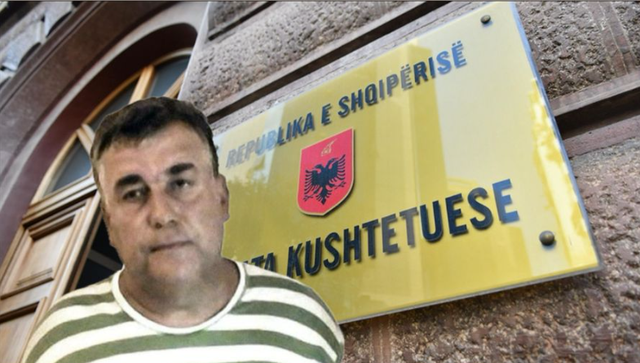
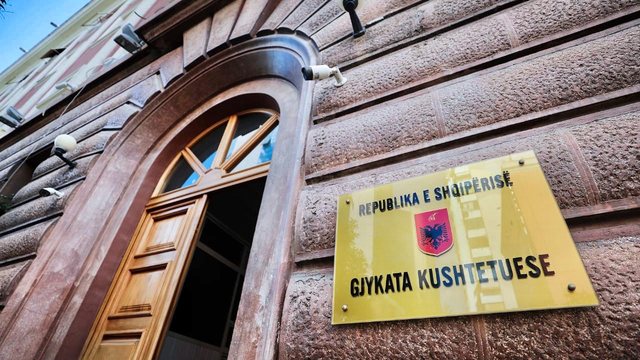
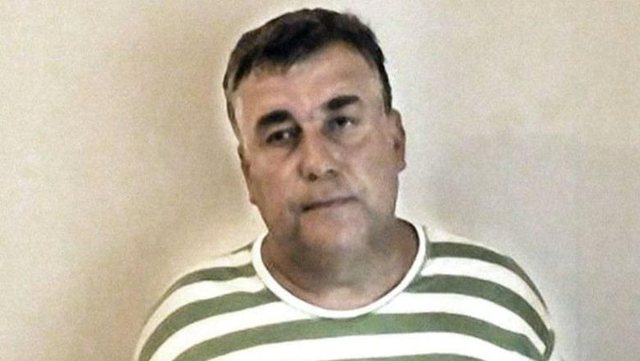
The latest decision of the Constitutional Court of the Republic of Albania, which partially accepts the request of Russian citizen Igor Kokunov, constitutes one of the most problematic legal acts of recent years, not only for its content, but above all for the inverted constitutional logic on which it is built.
Igor Kokunov is not a political persecuted person. Not every Russian outside Russia is where he is because he is politically persecuted.
Moreover, when he is caught by the country where he is staying, this happens for reasons related to the person's high criminality. And it is not related to his passport or political beliefs.
Our Constitutional Court's latest decision, if it were to be applied further to every criminal who needs to be extradited, would easily turn Albania into a state where extradition becomes impossible. Our Constitutional Court, prompted by the case of the Russian criminal, has set additional conditions for future extraditions.
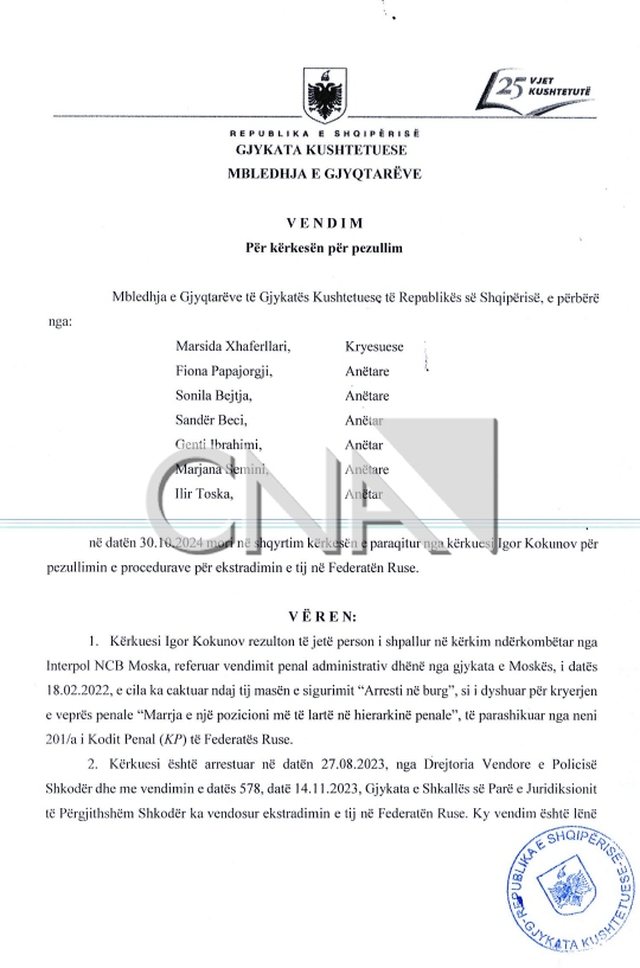
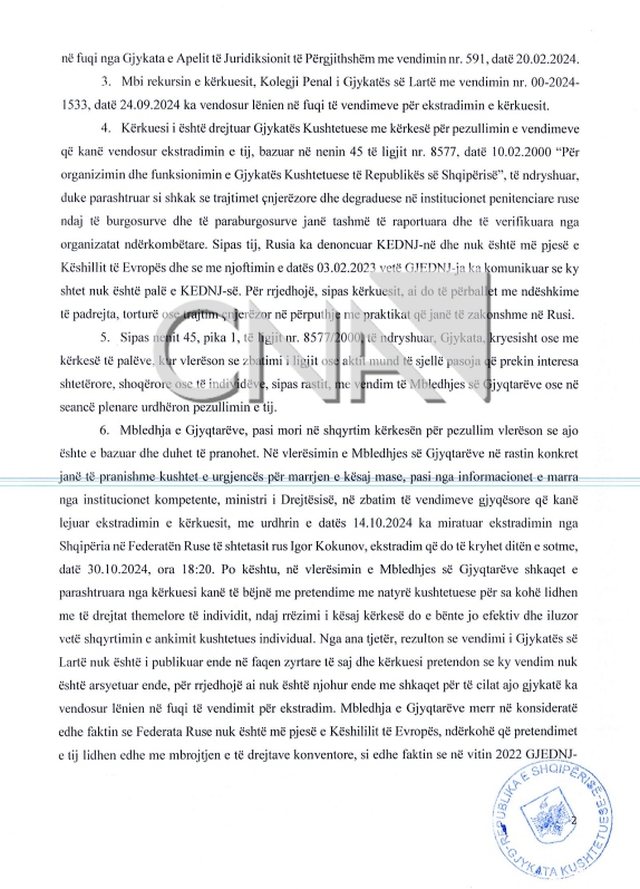
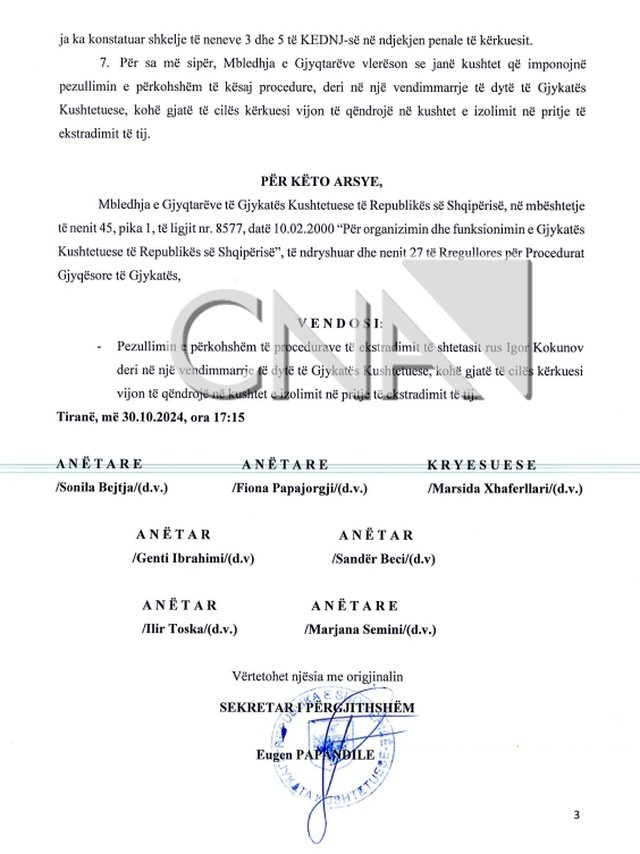
(Decision of the Constitutional Court)
1. violation of Article 25 of the Constitution (prohibition of inhuman or degrading treatment), in relation to the standard of judicial reasoning;
2. violation of Article 39 of the Constitution (prohibition of expulsion), regarding the obligation of the authorities to implement its decisions.
At first glance, the decision is dressed up as a protection of fundamental rights. But in essence, it is a legal act disconnected from factual, legal and constitutional reality and with serious consequences for the legal order and national security.
Note below the chronology of the case, which the Court cannot change:
-on 14.10.2024 – The Minister of Justice has issued a decision allowing extradition, following the final decision of the Supreme Court allowing his extradition to the Russian state.
-on 30.10.2024, 16:45 – the physical handover of Igor Kokunov to the Russian side has been agreed upon and carried out in Rinas.
-on 30.10.2024, 17:15 (half an hour later)– The Constitutional Court makes an interim suspension decision (according to the official announcement).
- 17:53 – (i.e. half an hour after it convened), the decision arrives by email at the Ministry of Justice. (It is not known how many minutes it took the Court to consider and decide. But it probably took less than half an hour.)
-6:04 PM – "the decision" arrives in the minister's anteroom email.
According to this chronology, by the time the Constitutional Court's "decision" was made, the extradition had been completed.
So, the jurisdiction of the Albanian state had ceased. Any action after boarding the plane would constitute kidnapping, not a "suspension of execution."
The claim that the Minister of Justice should have suspended an extradition before the decision was made by the Constitutional Court is not only absurd, but unconstitutional.
The Court considers that its decision should have forced the Minister to return the person who had already been handed over to foreign authorities.
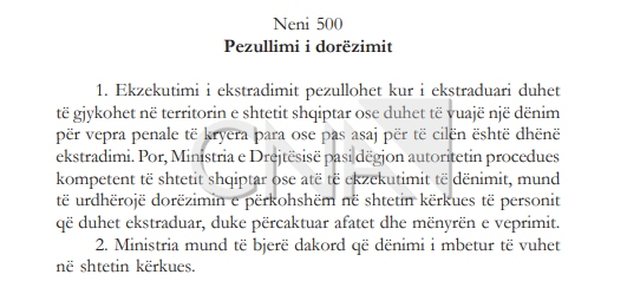
Article 500 of the Code of Criminal Procedure was deliberately ignored by the Constitutional Court in this case.
Article 500 of the CPC is clear: the execution of extradition is suspended only in cases expressly defined by law or when there is a suspension decision in force.
At 4:45 PM, there was no suspension decision. Bilé didn't even have a probation court at work!
The Minister of Justice does not have the prophetic power to predict decisions that have not yet been taken by the Constitutional Court. Even more so, this power is lacking with the cases of our Constitutional Court, which says what it says today, it does not say tomorrow. Our Constitutional Court cannot hold on to decisions, because its objectives are often shifting.
The Constitutional Court, with the reasoning of the crypto criminal case, has set a dangerous precedent: public authorities are held liable for the failure to implement an imaginary decision.
The inhumane treatment assessed by our Constitutional Court is a standard specially invented for an elite criminal, who is accustomed to paying with crypto!
-in a room with 6 people
-no television.
The court felt compelled to pursue the criminal to Russian prison cells.
This standard, if actually applied, would paralyze the entire international extradition system.
Article 25 of the Constitution and international jurisprudence do not protect comfort, but minimal human dignity. Otherwise, any prison outside Western Europe would automatically be grounds for refusal of extradition.
We recall that we are not dealing with a persecuted political figure, but with a multiple-convicted individual, with the highest rank in the hierarchy of Russian organized crime. And all this is happening at a time when Albania maintains diplomatic relations with Russia despite its status in the instruments of the Council of Europe.
The court had official knowledge:
-for the attempted escape from Rec prison;
-for the Albanian-Montenegrin criminal plan to kidnap him during a medical visit and
-for the extreme dangerousness of the subject.
This information, sent by specialized authorities, was ignored.
Instead of public safety, the narrative of artificial victimization was privileged for a criminal who pays with cryptocurrencies!
The 5:15 PM dark emergency!
Why was the Court convened urgently?
Why outside of office hours?
Why, according to sources, with judges gathered from home, in sportswear?
Certainly not for a Russian opposition politician.
But for a figure widely rumored as the "king of cryptocurrency," with shady financial connections and dangerous influence.
The justice of the Constitutional Court has often moved selectively lately. But when even haste becomes selective, it has ceased to be the justice of a high state institution.
In the end, it must be said that this decision, strangely advertised by some media outlets as being in defense of the Constitution, is a bit of a mouthful.
It's not a defense of human rights. It's a cryptic fabrication.
The Kokunov case has now taken the right path. It is no longer simply an extradition issue, but a test of the integrity of the Albanian state.
But the state cannot afford to lose its foundations because of some "standards" created specifically for an international crypto criminal. Even more so when this "standards" building occurs with the Constitutional Court.
Which coincidentally these days there is an inflation of decisions. How to make noise about the "standard" of the "Kokunov" case!/ CNA

For some time now, a group of people have had the same art...
The old cat on the cards looks a lot like Carlo Bollino. M...
In 2026, Albania continues to have the same face in politi...
Some thoughts that I would present at the January 9th roun...
"Woe to those who call evil good and good evil, who put da...
Modern banks, which began at least with the Medici fam...
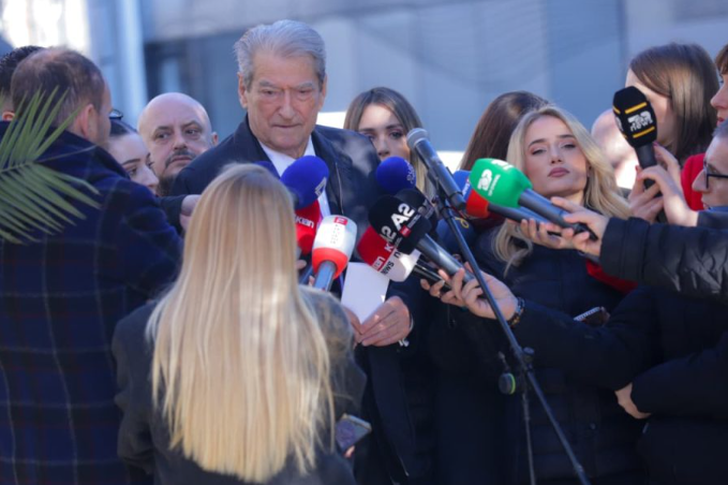
Former Prime Minister Sali Berisha appeared before SPAK to...
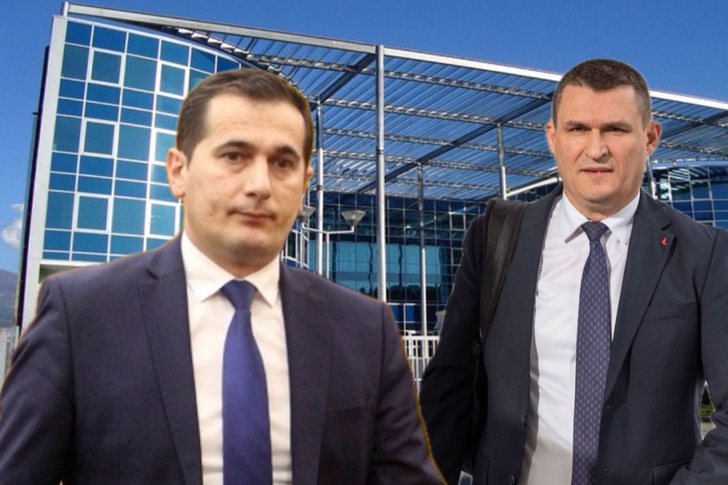
Klodjan Braho mori zyrtarisht detyrën e kreut të SPAK-ut, ...
The new US National Security Strategy has received greater...
"The Boys of Mul" and "The Boys of Grida" are not fighting...
A group of businessmen, citizens GS, FB, MP, Sh.F, SK,...
For nine months in Durrës prison, arrested by a court ...
A bust of Llazar Fundo was placed in Korça, on a pedes...

No form of violence has shown as much resilience and abili...
The countries that were really moving fast and hard toward...
The investigation against Deputy Prime Minister Belind...
The Special Court suspended Belinda Balluku from her posit...
Sot mediat raportuan se GJKKO kishte dhënë masë sigurie nd...
The online portal "Tema", owned by the Veliaj family journ...
The articles below are 2 of the articles of the Law on Tax...

CNA has launched another investigation that could lead to ...

Irfan Hysenbelliu is a businessman that we call "Irfan the...

In March 2026, CNA launched another investigation centered...
The arrested mayor of Tirana, Erion Veliaj, with 13 charge...

The Special Board of Appeal (KPA) decided this Monday ...

The KPA vetting decided this Thursday to dismiss the p...

Suela Salavaçi, a prosecutor in the Prosecutor's Offic...

The Special Board of Appeal reinstated the prosecutor ...

A road accident occurred this evening on Nikolla Zoraqi St...

Three people were shot and wounded in Elbasan last night b...
A serious incident occurred this Tuesday in the Yrshek are...

An accident occurred this Tuesday on "Dituria" street in K...

All of Southern Europe will face changing weather conditio...

Albania was hit by temperatures significantly higher than ...

For the first time, Pogradec welcomed the Inter-Lake Chess...

Albania has achieved a record for the employment of foreig...

US Secretary of State Marco Rubio arrived in Manila on Jul...
In the space of a few days, Ukrainian President Volodymyr ...

The spokesman for the Iranian Foreign Ministry warned Bulg...

Autoritetet italiane sekuestruan pako me afër 800 kilogram...

At a time when industrial products are increasingly taking...

Trust among people is not just a three-syllable word. It c...

Master of humor Todi Llupi has passed away at the age of 7...

The ninth edition of "MIK Festival" kicked off with one of...

Construction company licenses will have a validity period ...

The Centralized Purchasing Operator recently opened a tend...
The new draft law "On the Bank of Albania" provides that t...

This Tuesday, one US dollar is bought for 81.2 lek and sol...