



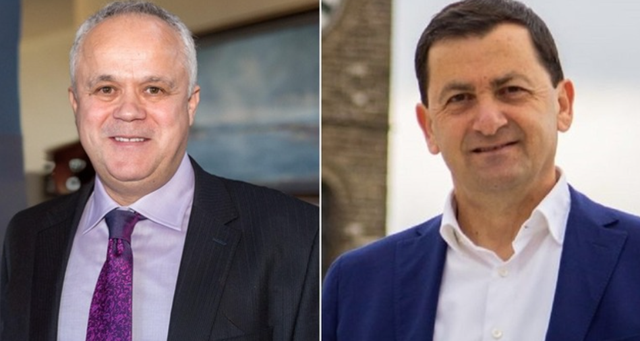
The candidacy of Vangjel Tavos and Petro Gjikurija in Himarë will be taken over by the spin-doctors of the Albanian public opinion, in order to present themselves in different forms in the service of the next political interest, where foreign interest against interest has a significant impact. national.
Above all, the local realities in the area of ??the deep south, and especially the Himar Municipality, will remain, as always, second hand, not only because the actors, for various reasons, will try to present a macro view of international Albanian relations. -Greek, not only because media clicks increase exponentially if it is treated in this way, but also for the simple reason that few political people have a real idea of ??the local realities in that territory, in the multitude of all-analysts and all-knowers of our public life.
So, let's take a look at what the two candidates represent and the motives of their proponents, the problems of the area and a final analysis of the 2024 elections.
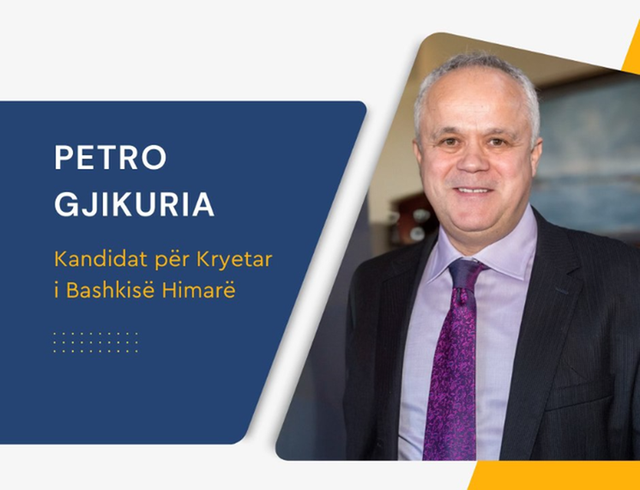
Petro Gjikuria is a philanthropist, self-identified as Greek, who emigrated early, after a sudden transition in Greece, to the United States of America. After his many transitions in the local Greek diaspora organizations, he was finally attached to the Panepirotic Federation of America, directed by Nicholas Gage. Even, on behalf of this federation, he welcomed the meetings in defense of the "Beleri" case after the last elections in Himara.
For anyone who doesn't remember, and especially for those who pretend they don't, Nicholas Gage, born in a Greek family in Thesproti (Cameri) and influential in American public life as a writer, has been for years "non-grata" in Albania, designated as such in 1995, when she was accused, not without right, of brutal interference in Albania's internal affairs, with the aim of destabilizing it and raising the "Eastern Epirus" issue.
The federation that he leads and of which Gjikuria is a part constitutes the center of anti-Albanian lobbying in the United States of America, as well as promoters of theses that came out of ink, that even the Greek state does not articulate, such as the one about "Northern Epirus".
Remaining "non-grata" until 2005, he suddenly reappears in Tirana, in meetings with the people who accused him, not without right, of having a hand in the almost civil conflict of 1997 and the attempt to violate the territorial integrity of Albania and that there were subsequent meetings with every Albanian political leader, who often see international reports as personal innovations that can change them, despite the fact that they are static and require the movement of experts.
From the above, its proponents went from a person convicted by the Greek state for the weapons taken in the Peshkepi Massacre, where the martyrs of the homeland, Fatmir Shehu and Arsen Gjini, were killed and five other soldiers, including a minority, were injured. from the person who, by the decision of the Strasbourg Court, desecrated the national symbols of the Republic of Albania and who started talking about "Vorio Epir" after the elections, to a candidate who is part of the anti-Albanian organization, who openly worked for "Vorio Epir" ", against the territorial integrity of the Republic of Albania, to the detriment of its international relations, and which was prohibited for years before the total complexification of Albania in relation to the Greek political nationalization, due to the Albanian political inability to find a solution real compromise with a more powerful actor in the region, like Greece.
The scenarios of his candidacy can be several. First, Gjikuria has full access to Greek political life, obtained not only from his Greco-Roman activity in the USA, but mostly from his activity in OMONIA.
Second, his access to some US senators, who as an American citizen (or Greek-American as he calls himself) have caused him to be seen, without reason, as a weight across the Atlantic, especially as his financiers wish to open some long closed doors.
I say without reason, because anyone who knows the American political system knows well that lobbying and financing of candidates does not change the realities of serious countries in international relations, in contrast to countries with not always serious politics, of which Albania is unfortunately a part.
The other two scenarios have different motives. For the direct proponents, he is a local figure, who will sell well, to convince the Albanian majority of over 85% of the area, that this "Greek-American" with weight will be able to influence the property issue, and will to calcify the Greek vote of the area, which does not exceed 15%.
For another part of the opposition, he is seen as the individual who can create a foothold in the opposing political forces, putting him in front of the pressure of a powerful actor in international relations, like our southern neighbor. Also, it opens a door of communication that breaks the isolation, even though this comes at the expense of the national interest, which the frivolous politics of this country treats as something unimportant.
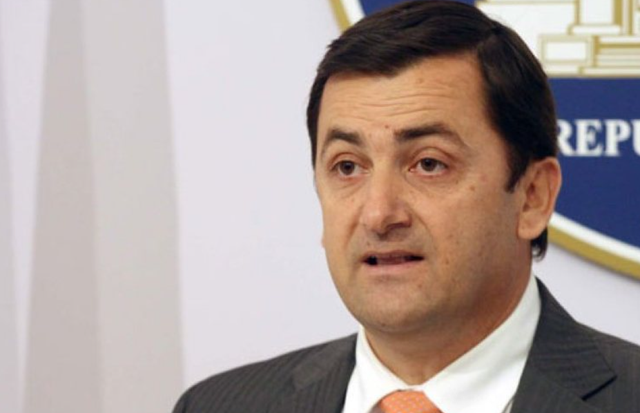
Vangjel Tavo has a longer political career in this country, so his introduction does not need many sentences. He has been elected deputy continuously since 1996 until the last parliamentary elections, first representing Dropulli, and then the entire district of Gjirokastra excluding the city (ie the Bektashi Kurvelesha Labëria, Luxhote and Orthodox Zagorite Labëria and the minority Dropulli). With the change of the electoral system, he was elected deputy of Gjirokastër District, until the last elections.
After returning to the proposing party, eight years after he had moved to another left-wing political force, he was appointed prefect of the Vlorë District and now, as a minority, he was imported as a candidate in Himara, which has over 85% Albanians. On the one hand, in 28 years of political career as deputy, minister and prefect, he has shown that he is the representative of the spirit of the Greek minority in the country, which is an integrated and peace-loving minority, patriotic Albanians without equivocations in their state identity and at the same time Greeks unfading in their ethnic identity and has been evidenced as someone who was always on the phone to his constituents, Bektashi Kurveleshi Laba, Lunzhërie e Zagorie Orthodox Laba, and Dropulli minorities, as well as being the target of Greek political nationalism quite a few times. .
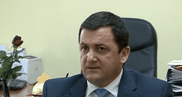
MAVI, of which Fredi Beleri has been accused by the Greek state of being a member, carried out two assassinations, one in Jorgucat in 1997 and one in Athens in 2001. Although, he has never been heard of nationalist theses to the detriment of order constitutional of the Republic of Albania and his parliamentary vote was not conditioned by anti-Albanian interests, his importation, turning that municipality into a battle of minorities, remains senseless anyway.
His candidacy in Himara, even though he does not come from that area, could have three scenarios, for which his proponents have not fully clarified. The first media scenario is that his candidacy came from his Greek nationality to appease Athens, which found the "Beleri" opportunity to hinder Albania's integration processes. If this scenario is realistic, we are dealing with naivety. First, because it is unnecessary for Albania's internal interests to demand the satisfaction of foreign actors.
Secondly, to think that the followers of the Greek political elite, which is liberal, will be able to triumph over that part of the elite (represented at high levels in the government) and especially the Greek nationalist bureaucracy, is ignorance of the Greek political landscape and the candidacy of Gjikuria with entry and exit at the Greek embassy in Tirana proves this.
If this media scenario remains, its proponents should be reprimanded for a marked lack of creativity, as other names, with weight in the Albanian and Greek public opinion, that Albanians call Albanians ethnically, and Greeks Greeks ethnically, exist.
The second media scenario tells us about his proposal to get the Greek vote of that municipality. If this scenario is realistic, we are dealing with a deep ignorance of the area, also due to the fact that for almost half a decade in that area there are no local representatives in the political directions of the two major parties, who have chosen catapults from other areas , risking that the leaders will know the area only after they finish their mandate.
First, the Greek vote in the Himar Municipality is 15% and is not influential compared to the Albanian vote, which is over 85%. Secondly, that vote is mainly a vote of political nationalism, due to the denial by the majority of the existence of a minority in that municipality, which has produced nationalism, in contrast to the areas where the minority officially exists.
Consequently, this vote will never be taken by Tavo or another Albanian candidate, until the long-term correlation of political nationalism in the area is stabilized. The vote of OMONIA in that municipality proves this. The opposition vote that captured 50% together with the Beleri candidacy, will be explained a little below, as to why the Albanians voted, this time, for this candidate.
The third media scenario tells us that Tavo has been selected as the candidate who has confessed in his public political life that he exceeds community boundaries and, dealing with people and their problems, abstracts from the community vote. The municipality of Himara, consisting of Kurveleshi and Borshi, Fterre and Sasaj Bektashi Labas, coastal Orthodox Labas (Vuno, Pilur, Qeparo, Kudhes, Ilias, Nivicë, Shën Vasil, Lukovë, Piqeras, Çorraj) and Greek speakers with Albanian or Greek self-identification ( Himare, Dhërmi, Palasë), is very similar to his old electoral area in Gjirokastra discussed above. As such, he, as a good Albanian politician, beyond ethnicity and religion, could triumph, according to his proponents.
The electoral division in Himar Municipality is clear. The Albanian vote is over 85% and the Greek vote under 15%. This second one is compact around OMONIA, in contrast to the known minority where OMONIA makes up 20% of the votes, for reasons that need a separate article. The Albanian opposition vote reaches the level of 30%, concentrated in the former Lukovë Municipality, because in the Himarë Administrative Unit, from the games in support of the PBDNJ, almost all the founders of the DP today have gone with the SP.
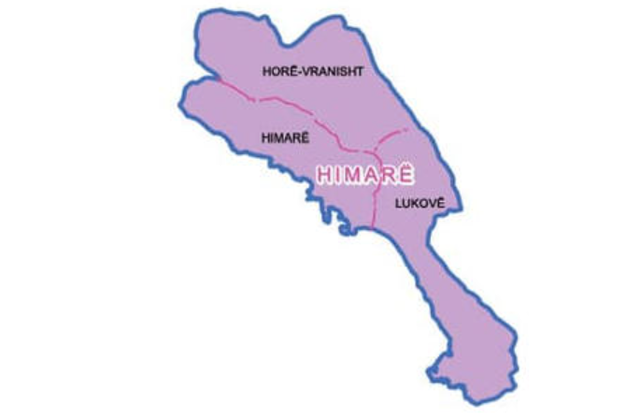
Fredi Beleri succeeded in the last elections, with a brilliant and modern campaign, with promises that deeply highlighted the problems of the area, to triumph only in Himare and Dhërmi with a very high number of immigrants, where the Greek vote is also concentrated in the Himare Administrative Unit. . In other villages (Palas, Ilias, Vuno, Pilur, Kudhes and Qeparo), he lost. He received the traditional opposition vote (as well as some votes bought according to the court's final decision), about 10% in Himara mountain Kurveles and about 30% in Borsh, where municipal investments have been missing for 3 decades. Unsurprisingly, he lost Fterra, Çorraj, Sasaj and Piqeras.
Surprisingly for eyes that do not know the area, he convincingly won in the patriotic Albanian villages of Nivicë, Saint Vasil and Lukovë. Nivica, the first village on the coast that opened an Albanian school and that even today is dominated by Albanian flags, has been voting for PBDNJ since 2005, after the betrayal of the major Albanian parties with the Kakome beach issue. Which of the candidates will convince the residents that that beach will be developed only after the residents have received what they deserve, will rightfully win in Nivica. Saint Vasili, historically a left-wing village, changed hands in the last elections, after an absurdity of a decision to remove the AMTPs of residents on another coveted beach and one of the most beautiful in the area, such as Krorëza.
Today, this issue has been resolved in favor of those residents. Whoever will convince the residents that that beach will be developed only after the residents have received what they deserve, will rightly win in Saint Vasil. Lukova, historically a right-wing village, this time voted for Fredi Beleri, after the news that the beach of Lukova would pass for massive development and the false rumor that it would happen like with Kakomena and Kroreza. Today, this rumor has been proven false. Whoever will convince the residents that that beach will be developed only after the residents have received what they deserve, will rightfully win in Lukovo.
The issue of properties, as a fundamental issue, does not mainly affect NJA Himarë, as the noise produced by Athens affects Tirana to be believed. There, the property badly divided by the law 7501, has placed opposite cousins ??who fight with each other and with the help of the big builders of Tirana they manage to triumph over the other cousin. There is no one left without earning a little bit. And so, there, this local shernaja, produced by local people and not by central politics in Tirana, has brought that every mayor, with the exception of the first Odhise Goron (1992-1996), presidents of SP, DP and PBDNJ, all of them, without party exception, have tried handcuffs and prison.
There, too, the vote is based on the vote along ethnic lines and only the arrival or not disproportionately of immigrants will affect. Campaign and properties do not. The small protest vote, which crosses ethnic lines, with the resolution of ownership certificate issues, which Tavo has initiated, is influential, but not to a great extent.
To the south of that municipality, in honest and patriotic Albanian villages, the properties of Kakomë, Krorëza and Lukova, and perhaps in the future also Bunec of Piqeras, influence the vote, where the injustice of the big Albanian parties is the worst. , who in 2011 contracted the construction of Kakome to private parties, without satisfying the residents, can win as a protest vote, and not as an anti-Albanian vote.
Other issues, such as the lack of investment in coastal Labëria beyond the front line of the sea, the lack of road lines and the water issues of curvy Labëria, as well as other accumulated problems of the reality of local politics, also influence the vote.
In this panorama of that municipality, which I tried to do without any manual, the major opposition parties are faced with three solutions. The first solution is to come out openly and support the candidate who works for "Vorio Epirin" in the race against the territorial integrity of Albania, as well as to come out openly and run for Radoj?i?in in the Kukës District in the next elections. As a person whose every root is from that area, I cannot close my eyes in front of a political ugliness that is ready to do everything for its own interests, artificially changing the centuries-old balance against the interest of those residents, who are Albanian patriots over 85% of real Greeks that we have unfairly not recognized under 15%.
The second solution is not to support any candidacy and under the carpet, to work for the candidate who supports Nikolas Gejxin, the most powerful anti-Albanian lobby in the USA, according to the principle, he throws the stone and hides his hand. The third solution is that of the Trojan Horse, to support anti-Albanianism under the guise of nationalism, as with the fictitious Bektashi candidacy employed by Bollano, who ran after a phone call with Athens in 2015.
For this scenario, if it happens, I will justify it in a separate article, but I must specify that we must be careful not to divide ethnically and religiously in any area of ??the country, as realistic as for long traditional reasons an Orthodox does not wins the Municipality of Konispol yet, a Muslim does not win the Municipality of Korça yet, a Catholic does not win the Municipality of Shkodra yet and a Bektashi does not win the Municipality of Himara yet. The reasons are numerous, acceptable and respectable, but Albanians win all four of these municipalities with screaming mathematical ease.
On the part of the majority, in any case, the choice of an imported person of Greek nationality, when there are dozens of normal Albanians or Greeks in that municipality who can run, is wrong. In particular, if he manages to win the Greek votes of the area, it will pose a risk to the political calculations of the future that can hardly be predicted today, but which in any case will be contrary to the national benefit. If Gjikuria, as I predict today, will win the Greek votes in Himare and Dhërmi, this would bring a clear change in the electoral behavior in that municipality, to the Albanian national benefit.
For the above, in the face of two elections so far, regardless of which of the three motives has pushed the proponents of Mr. To you, which I hope are not the first two, it makes no difference to me, because the choice is simple.
The proponents of Mr. Tavo can be criticized for lack of creativity and ignorance of the area, and although they cannot be accused of being anti-Albanian, or of being a weak candidate, they are doing a damage that can be irreparable. On the other hand, in front of him is a political nationalist, who worked in a Federation that works for "Vorio Epirin", under the false guise that he will solve property issues (which in NJA Himarë the local leaders themselves made a mess and in NJA Lukovë the fault lies in central politics), but which actually works for some interests against Albania.
Therefore, between the two elections, without a doubt, I would support the candidate who is a good Albanian, with Greek ethnicity that makes him happy and happy forever. Because, very simply, on the one hand there is the thesis of a strong Albania, it is a strong Albania for every Albanian, of the overwhelming majority with Albanian ethnicity and the respected minority with Greek ethnicity. This is not only wanted by those who eat their bread through political nationalism, who secure their income in those circles, where a weak Albania is a long-standing dream, and this is not Greece, but Greek political nationalism that has strong access to the state bureaucracy and in a certain political current.
The only risk in this analysis is if Tavo would succeed in getting the Greek votes of that municipality, which would complicate the way Tirana sees that municipality, against the national benefit. On the other hand, the Albanians of that municipality, who are over 85% and who are patriots, have understood best that the vote for Beleri, as a protest vote, never turned into a vote that would bring them the raising of the issue that they have right in Kakome, Krorëz, Plazhin e Lukova, Bunec, the missing investments in Borsh, the issue of misadministration in Himarjote Labëria and Kurvelesha Labëria.
Therefore, so that in the next elections the candidates are both natives of that municipality, whether with Albanian self-identification as the majority or Greek self-identification as the minority, but normal people who work for the problems of the municipality and not for nationalist interests that simply bring empty rhetoric blocking of the Motherland, not even for meager personal gains that then come back as the galloping corruption of the central government, when in fact it is a product of the local government, today they have the only solution to punish political nationalism without equivocation.
To crush the vote, that in the next elections, talk about Himara again, but not about Albanians and Greeks, but about Kakome and Krorez. Talk about what those residents have the right to and not what those residents don't want.
If, at the end of this process, it turns out that the Greek vote of Himara and Dhërmi goes to Tavo, or that the Albanian vote of the whole other area goes to Gjikuri, this will be a long-term damage to the Albanian national interest, in this matter that concerns us introduced Albanian politics, in this artificial battle of a Greek minority against a Greek political nationalist in a municipality with over 85% Albanians, are you saying that they could not find good native Albanian candidates, regardless of ethnicity.
Finally, a personal reflection. As a civil servant in this country, I am not involved in daily politics, according to the law. This article is again not politics of the day. As a researcher of international relations, and especially of religion/minority-politics-international relations relations, I cannot talk only about the dead, without talking about the living.
Without making predictions, which with my face in the game, turn out to be true or false. Fortunately, so far they have turned out to be true. That's why, this time too, I'm talking about international relations and not about daily politics. Because irredentism, neo-Nazism and the violation of the territorial integrity of Albania are not daily politics. Who has a problem with this approach of mine, I am not interested in any public position, before the interests of Albania and Albanians, which includes without the slightest distinction every Albanian beyond his ethnicity./ CNA

In the partial elections of Himara that will take plac...
The Chairman of the Parliamentary Group of the Democra...
The PBDNJ party and "OMONIA" have confirmed the candid...
The head of the Department of Health in the Democratic...
The Ambassador of the European Union in Albania, Silvi...
In a statement to the media from Shkodra, the ambassad...
The political leader of the DP for Tirana, Belind Këll...
On August 4, the elections for the new mayor of Himare...
The President of the Freedom Party, Ilir Meta, in a pr...

On Wednesday, the President of Kosovo, Vjosa Osmani, m...
The head of the Department of Education in the DP, Lil...
The President of the Republic decreed local partial el...
The political leader of the Democratic Party for Tiran...
In today's meeting of the Special Commission that will...
Fatbardh Kadilli, the creator of the new "IDE" party, ...
Lulzim Basha was betrayed by his most loyal man, Enkel...
The Deputy Prime Minister, at the same time Minister o...
Yesterday, the Socialists submitted proposals for chan...
The Socialist Party and the Democratic Party have reac...
The head of the OSCE presence in Tirana, Michel Tarran...

CNA has launched another investigation that could lead to ...

Irfan Hysenbelliu is a businessman that we call "Irfan the...

In March 2026, CNA launched another investigation centered...
The arrested mayor of Tirana, Erion Veliaj, with 13 charge...

The Special Board of Appeal (KPA) decided this Monday ...

The KPA vetting decided this Thursday to dismiss the p...

Suela Salavaçi, a prosecutor in the Prosecutor's Offic...

The Special Board of Appeal reinstated the prosecutor ...
A road accident occurred this evening on Nikolla Zoraqi St...
Three people were shot and wounded in Elbasan last night b...
A serious incident occurred this Tuesday in the Yrshek are...
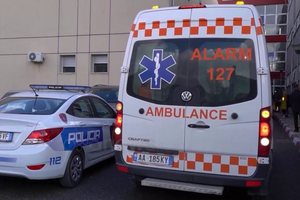
An accident occurred this Tuesday on "Dituria" street in K...
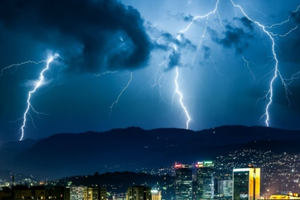
All of Southern Europe will face changing weather conditio...

Albania was hit by temperatures significantly higher than ...
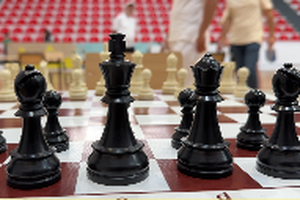
For the first time, Pogradec welcomed the Inter-Lake Chess...
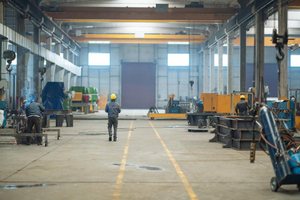
Albania has achieved a record for the employment of foreig...
US Secretary of State Marco Rubio arrived in Manila on Jul...
In the space of a few days, Ukrainian President Volodymyr ...
The spokesman for the Iranian Foreign Ministry warned Bulg...
Autoritetet italiane sekuestruan pako me afër 800 kilogram...

At a time when industrial products are increasingly taking...

Trust among people is not just a three-syllable word. It c...

Master of humor Todi Llupi has passed away at the age of 7...

The ninth edition of "MIK Festival" kicked off with one of...
Construction company licenses will have a validity period ...
The Centralized Purchasing Operator recently opened a tend...
The new draft law "On the Bank of Albania" provides that t...
This Tuesday, one US dollar is bought for 81.2 lek and sol...