


These are the 7 basic dog phobias
Just like us, dogs can be afraid of different things. Thes...


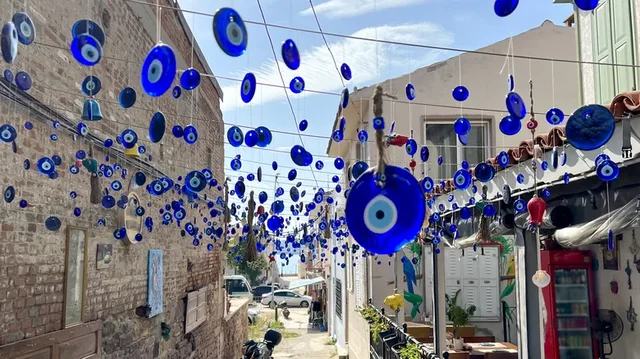
It is well known to many that the image of a blue eye placed in a ring symbolizes the "evil eye". It is so famous as an image that it was officially added to the emoji set in 2018 as part of Unicode 11.0.
And it quickly became popular in both social media and private digital communications, appearing in the posts of many celebrities. But while the "evil eye" is widely used to ward off bad luck and bring good luck, what is the origin of this superstition?
The "evil eye" has been used for a long time as a talisman in countries such as Turkey, Greece and other territories near the Mediterranean. Usually the symbol comes in the form of a glass bead. It is called "nazarlik", "nazar boncuk" or "nazar boncugu" in Turkey, and is presented as a talisman that tradition says protects people from the "evil eye".
The term "nazar" roughly translates to "to see" in Arabic, while "boncuk" comes from the Turkish word for pearl. In many cultures, rather than the symbol itself, the evil eye is an external curse that can befall a person or family through a dirty look, or what is sometimes known as the "stink eye."
The superstitious belief that one can be affected by bad luck due to such a sight is found in many cultures. In fact, it is observed worldwide, from the Mediterranean to Asia to Central America. And it is very ancient.
Researcher Marie-Louise Thomsen writes in the journal "Journal of Near Eastern Studies" that at the beginning of the 20th century historians found evidence of superstitions of the evil eye among the Assyrians and Babylonians and ancient Mesopotamia.
The evil eye is particularly associated with the idea of ??jealousy. It is the envious glance of a neighbor, a relative, a rival or a stranger that brings bad luck upon someone, especially someone successful. Basically, the concept of the evil eye is a warning to those who gain wealth and prestige regarding envy towards them, which can lead to the undoing of those successes.
It is said that even compliments can attract the evil eye to the recipient. Writer Diana Dark writes in her book "Eastern Turkey" that the eye of the Nazari is usually blue to represent the eyes of visitors to Turkey from Northern Europe, who often had blue eyes, something that is generally rare in Turkey and the surrounding regions. .
It is believed that foreigners - like tourists visiting a new country today - were more likely to see the locals, giving them the impression that they were giving them malevolent rather than curious glances. The association of the color blue with the evil eye is also found across the border in Greece.
The ancient Greek philosopher Plutarch claimed that people with blue eyes were especially capable of taking in those around them. Although today the image of nazarite is associated with a certain shade of blue glass, the modern symbol is believed to have evolved from an ancient people, the Phoenicians, who lived in the Eastern Mediterranean in the years 1500-300 BC and who decorated their jewelry theirs with blue eyes.
While the Nazari is the most famous symbol believed to ward off the evil eye, cultures around the world have developed a variety of different artifacts said to keep their wearers safe from the evil eye of those around them.
In India, where belief in the evil eye - buri nazar - permeates every stratum of society, there is a wide variety of objects used to ward off the evil eye. Many Indians always carry talismans similar to Mediterranean nazars.
Even business owners often hang talismans made of chili pepper and lemon around their necks to ward off curses from envious people. In Spain, where the evil eye has been associated with witches, herbal remedies were common in rural communities.
Also, to protect against the evil eye, some types of charms were burned or hung around the house. Throughout Northern Europe, brooches with special symbols were believed to ward off evil eye curses, just as amulets were used in the Mediterranean.
According to scholar Frederic Eluorti's book The Evil Eye, camel owners on the island of Cyprus, who feared that their camels would attract the evil eye, would protect them by adorning them with harnesses decorated with crescent moons. This tradition spread to Europe and as far as India to protect camels but also horses./ Translated and adapted by CNA

Just like us, dogs can be afraid of different things. Thes...

A storm of rocks "as deadly as Hiroshima" was accidentally...

Wi-Fi experts have shared the most common household items ...

Only those with a fast-paced analytical mind will be able ...
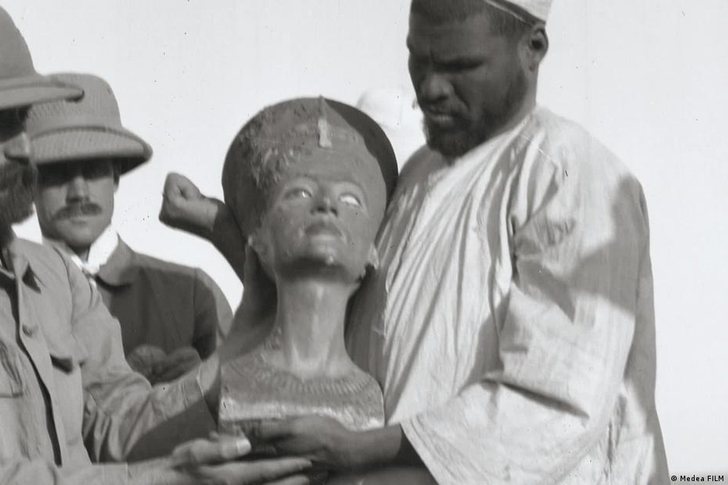
Nefertiti looks proud as she looks away. Not much is known...

If it seems like the weather has gone "crazy" recently, be...

The biggest illusion ever sold to us by modern advertising...

Sharks have scared people this summer in different areas o...

Mosquitoes are a major concern for many people in this hot...

Airports Council International (ACI Europe) has rated the ...

Në mbarë botën ekzistojnë 100 ose më shumë fise “të pa kon...

The leaf-filled tram in Antwerp was part of a local council ...

Scientists have discovered that taurine, a substance found i...

A new data center building being built in Heidelberg, Germ...

It cannot be said precisely how the idea of "spring clea...

Humans have evolved to survive and succeed as social creat...

The American Space Agency, NASA held, this Wednesday, the ...

When it comes to choosing the best beaches in the world, t...

In the heart of New York City, amid the towering skyscrape...

Even for those who don't know much about the Catholic ...

CNA has launched another investigation that could lead to ...

Irfan Hysenbelliu is a businessman that we call "Irfan the...

In March 2026, CNA launched another investigation centered...
The arrested mayor of Tirana, Erion Veliaj, with 13 charge...

The Special Board of Appeal (KPA) decided this Monday ...

The KPA vetting decided this Thursday to dismiss the p...

Suela Salavaçi, a prosecutor in the Prosecutor's Offic...

The Special Board of Appeal reinstated the prosecutor ...

New details have emerged from the serious accident that oc...

A serious accident occurred this Wednesday on the Elbasan-...
Citizen MH, 61, a fisherman, was found dead near the islan...

Another phase of the international operation, codenamed "T...

The Institute of Geosciences has shared a forecast for wea...

Rising energy and fertilizer prices are expected to contin...

Over 18,000 foreign citizens from 140 countries have appli...

This Wednesday, our country will be under the influence of...

Prime Minister Andy Burnham has announced that most bus fa...

France's parliament has passed a law to ban social media f...

US Secretary of State Marco Rubio arrived in Manila on Jul...

In the space of a few days, Ukrainian President Volodymyr ...

At a time when industrial products are increasingly taking...

Trust among people is not just a three-syllable word. It c...

Master of humor Todi Llupi has passed away at the age of 7...

The ninth edition of "MIK Festival" kicked off with one of...

Businesses will no longer be required to simply register t...

Despite economic growth and income in recent years, Albani...

This Wednesday, one US dollar is bought for 81.4 lek and s...

Construction company licenses will have a validity period ...