


Why does modern life not make us happy?
The biggest illusion ever sold to us by modern advertising...


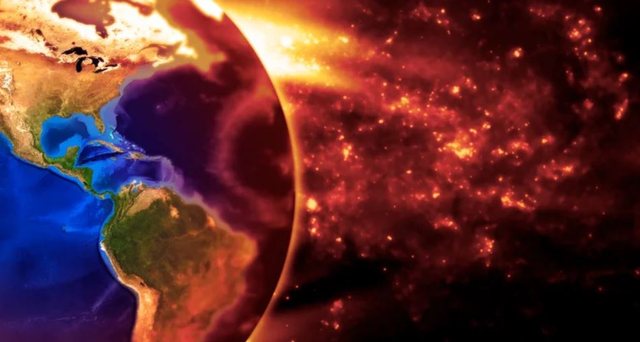
If it seems like the weather has gone "crazy" recently, becoming generally much warmer, this is happening because of the global climate change phenomenon. So the Earth's average surface temperature is steadily rising, largely due to humanity's steadfast refusal to stop filling the atmosphere with heat-trapping greenhouse gas emissions.
And this despite the fact that almost every scientist in this field has asked us for this during the last decades. The science is very clear on this matter. Human activity is causing the phenomenon. While there are a large number of people who refuse to believe it, this approach does not make it any less true.
For those who are constantly worried about this issue, some basic questions arise: How serious can the increase in temperatures become and how quickly will this happen? What will be the effects of global climate change, and how will they affect us?
And more importantly, what can be done to address this problem? According to an analysis by the Intergovernmental Panel on Climate Change, a body of the United Nations, the average temperature of the Earth's surface has increased by about 1 degree Celsius since the time of the Industrial Revolution.
Of course this is a global average. Because in some parts of the world, average temperatures have risen even more, and the effects are already beginning to be felt. The 2015 Paris Climate Agreement among UN member states to limit greenhouse gas emissions into the atmosphere aims to keep this rise below 1.5 degrees
Because beyond this level, some changes may be irreversible. It is worth asking the question: How much can the Earth heat up, if we continue to pump greenhouse gases into the atmosphere without any restrictions? Unfortunately there is no upper limit. But there is a point at which Earth would become completely uninhabitable: when the temperature is about 12 degrees above pre-industrial levels.
And this is not a hypothetical scenario, because the Earth has experienced 5 great extinctions in the past. The worst occurred 252 million years ago, when a combination of environmental factors, including excessive release of carbon and methane into the atmosphere, caused the average global temperature to rise by more than 5 degrees, wiping out more than 90 percent of all species on Earth.
On the other hand, natural weather phenomena can cause significant damage, even though it may be temporary. Among them, the one that raises the most concern is El Niño, the periodic warming of sea surface temperatures, which can have drastic and unpredictable effects on both local weather and the overall global climate.
Its final phase was expected to arrive at the end of this year. During the previous episode - between 2014 and 2016 - Earth recorded its hottest year ever. On July 3, 2023, the hottest day ever observed in human history was officially recorded.
And scientists warn that this is just the beginning. Rising sea temperatures could completely wipe out coral reefs. A warmer atmosphere will make extreme weather events - such as extremely powerful hurricanes - even more common.
If warming continues beyond the global average of 2 degrees Celsius above pre-industrial levels, its effects will become more pronounced. Although this is unlikely to happen within the time we are alive as adults, children and especially grandchildren will inherit a radical change and a very hostile world.
According to the UN report, an increase in the average global temperature of 2.5 degrees could occur by 2100. This would cause the death of thousands of people due to frequent extreme heat waves, the worldwide threat of catastrophic floods, more epidemics or pandemics of deadly diseases, a large increase in areas affected by food and water insecurity, and a partial or complete collapse of entire ecosystems.
With global warming above 3 degrees Celsius, we would experience the kind of extreme heat waves that occur once in a generation today, and are capable of killing thousands of people, 30 times more often tomorrow. And our infrastructure for coping with extreme heat and water management will become useless.
Agriculture will suffer greatly and livestock will die en masse, leading to widespread epidemics of malnutrition and starvation. Fires will be rampant and much of the coastal areas will disappear due to rising ocean levels, and this will lead to the displacement of millions of people.
If global average temperatures reach 4 degrees Celsius above pre-industrial levels, Earth will begin to look like a horrific dystopian hellscape that even Hollywood would struggle to imagine. In 2014, the World Bank published a report outlining this possible scenario.
Almost all the coastal cities of the world will be lost under the waters of the seas, food and water shortages will be common, and new and terrible diseases will wipe out large numbers of the population. Those regions of the world that will not be baked by heat waves will be under constant threat from large storms and relentless floods.
Oceans will become acidic, leading to the loss of thousands of marine species. In short a Hell on earth. However, there is some good news: The technology and knowledge to avoid the consequences of climate change, partially or even completely, already exist.
Abandoning fossil fuels in favor of renewable energy, new construction and industrial projects with a focus on energy efficiency, switching from diesel and gasoline cars to electric ones, and reducing deforestation are some of the measures required. Of course, the question is whether the world's governments will take the necessary action and whether the energy corporations that benefit from the current status quo can be forced to change course./ Adapted from CNA
Taken with cuts

The biggest illusion ever sold to us by modern advertising...

Sharks have scared people this summer in different areas o...

Mosquitoes are a major concern for many people in this hot...
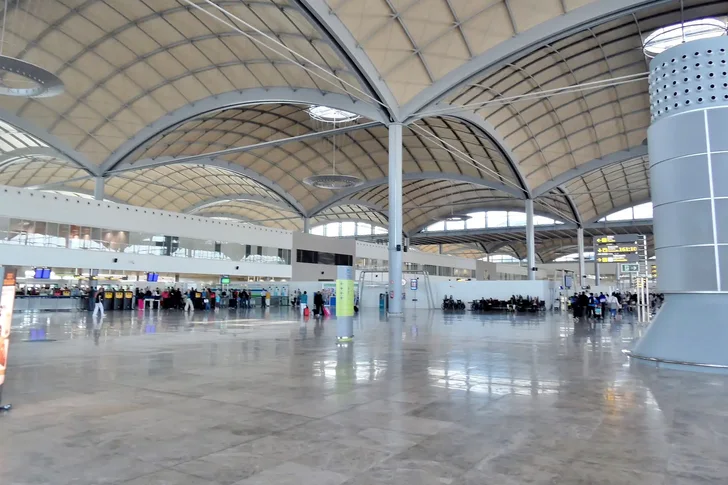
Airports Council International (ACI Europe) has rated the ...
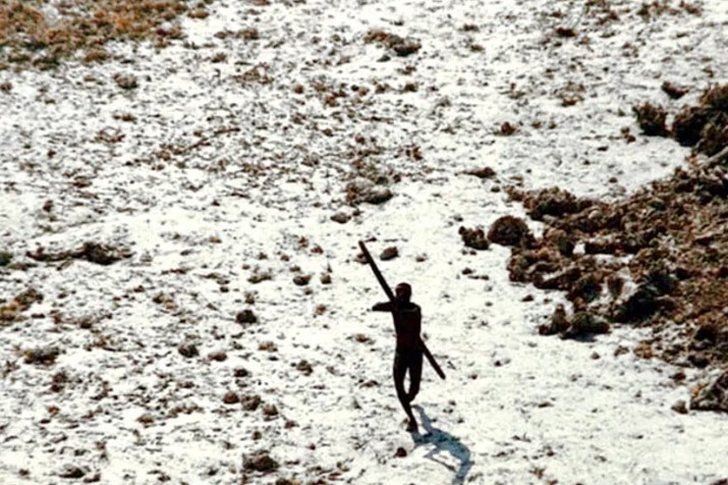
Në mbarë botën ekzistojnë 100 ose më shumë fise “të pa kon...

The leaf-filled tram in Antwerp was part of a local council ...
Scientists have discovered that taurine, a substance found i...

A new data center building being built in Heidelberg, Germ...

It cannot be said precisely how the idea of "spring clea...

Humans have evolved to survive and succeed as social creat...
The American Space Agency, NASA held, this Wednesday, the ...
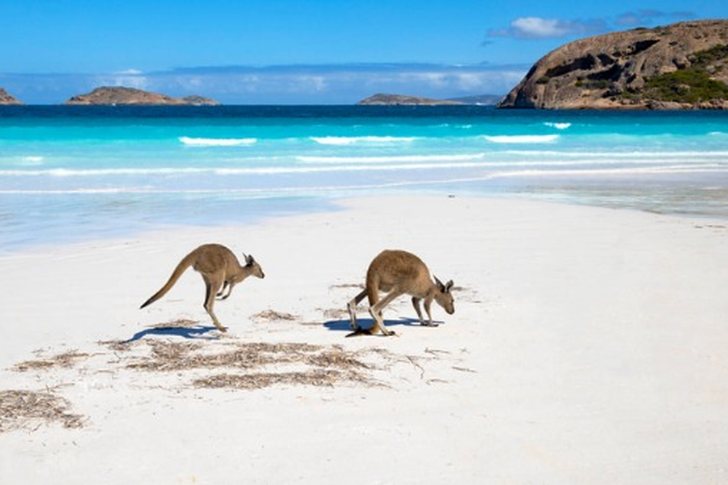
When it comes to choosing the best beaches in the world, t...
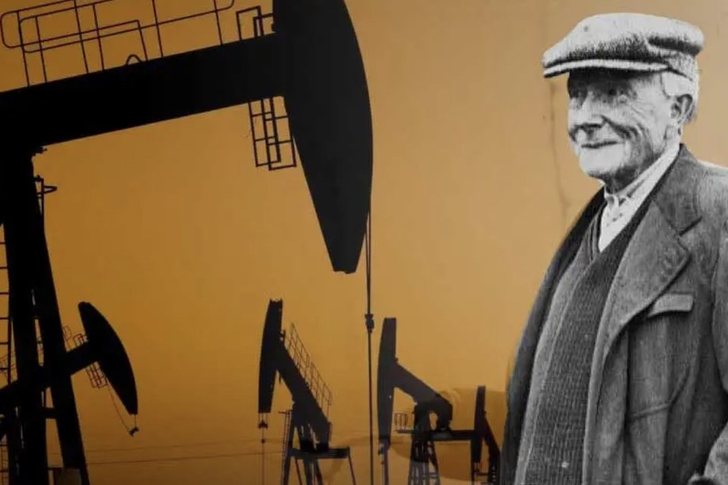
In the heart of New York City, amid the towering skyscrape...

Even for those who don't know much about the Catholic ...

Same family tree, same parents, and usually a small age di...

Men are twice as likely as women to think of themselves as...

Beliefs in the supernatural, religious and mythical, a...

Queen Elizabeth II faced an assassination threat during a ...

Çdo vit profesori Steve Hanke (Steve Hanke) i Universiteti...

The Portuguese capital Lisbon has been chosen as the most ...

CNA has launched another investigation that could lead to ...

Irfan Hysenbelliu is a businessman that we call "Irfan the...

In March 2026, CNA launched another investigation centered...
The arrested mayor of Tirana, Erion Veliaj, with 13 charge...

The Special Board of Appeal (KPA) decided this Monday ...

The KPA vetting decided this Thursday to dismiss the p...

Suela Salavaçi, a prosecutor in the Prosecutor's Offic...

The Special Board of Appeal reinstated the prosecutor ...

New details have emerged regarding the accident that occur...

New details have emerged from the serious accident that oc...

A serious accident occurred this Wednesday on the Elbasan-...

Citizen MH, 61, a fisherman, was found dead near the islan...

The Institute of Geosciences has shared a forecast for wea...

Rising energy and fertilizer prices are expected to contin...

Over 18,000 foreign citizens from 140 countries have appli...

This Wednesday, our country will be under the influence of...

US President Donald Trump has issued another warning to Ir...

Prime Minister Andy Burnham has announced that most bus fa...

France's parliament has passed a law to ban social media f...

US Secretary of State Marco Rubio arrived in Manila on Jul...

At a time when industrial products are increasingly taking...

Trust among people is not just a three-syllable word. It c...

Master of humor Todi Llupi has passed away at the age of 7...

The ninth edition of "MIK Festival" kicked off with one of...

Businesses will no longer be required to simply register t...

Despite economic growth and income in recent years, Albani...

This Wednesday, one US dollar is bought for 81.4 lek and s...

Construction company licenses will have a validity period ...