


5 facts/ Sharks, millions of years older than dinosaurs
Sharks have scared people this summer in different areas o...



The biggest illusion ever sold to us by modern advertising is not that we need to buy bottled water or that rocks are the best "pets". Rather, it is the illusion that we should expect to be happy all the time.
This idea would surely have been news to our ancient ancestors. Over millions of years, they became the dominant hominids on the planet because their brains evolved to be survival machines, not happiness generators. The first laughs around those early fires weren't because everyone was having a good time.
Laughter evolved as a social bond signal to communicate the message to the rest of the tribe: "Now we are safe from that sharp-toothed tiger." Dopamine, the chemical that makes us feel good, was not there to make them enjoy their lives, as many of us believe today.
Dopamine was released as a chemical to prompt them to seek more nutritious foods. When your ancestors woke up each morning feeling hungry, their dopamine levels would rise to motivate them to look for a bird's nest from which to get eggs or a beehive from which to gather honey in addition to the berries and nuts they found.
But the dopamine effect is designed to be short-lived. After they ate the foods they found and got the reward of an extra dopamine rush—along with the release of feel-good opioids again—these levels dropped quickly and even dropped below baseline.
After all, if the dopamine didn't drop again, where would they have found the motivation needed to seek the next meal? Studies have found that one of the main reasons why early humans dominated other apes is that they had greater amounts of this "molecule that makes us want more".
However, if you have the time and money to read articles about happiness today, you will likely have a roof over your head and enough food for your next meal. Even if your fridge contains little more than a jar of stale pasta sauce and a wilted carrot, you probably have a supermarket nearby.
And if you don't feel like preparing something yourself, you can probably order any dish you want, which can arrive in 1 hour at your home. While your ancestors spent about 80 percent of their lives foraging, you don't even need to get up from your couch.
But apart from a few slight changes due to genetic selection over the years, you have essentially the same brain as your ancient family members, and it runs through the same reward system. And this despite the fact that the environment in which modern people live has changed a lot.
Our 21st century economies are built entirely around products and services designed to give you what you want, when you want it, and for almost no effort. We expect a steady supply of everything that's just a tap away to make us feel good: whether it's music, movies or food.
The problem is that happiness is designed to be a transitory state and not permanent all the time. For most of human history, we have instinctively known this. It wasn't until the creation of the New World in America that happiness was embodied as something we should enjoy all the time.
As our needs were more easily met in industrialized societies, happiness was seen as a commodity that could be purchased. This approach was exploited by the advertising industry, which immediately sold us products with the promise of how happy they would make us.
As television spread throughout the home in the 1950s, television channels aired commercials featuring smiling housewives buying washing machines, as if their happiness depended on them. Over the next few decades, the idea that happiness can—and should—be a stable state from which we need not deviate was reinforced by the laughs attached to comic strips and the smiley faces emblazoned on badges and T-shirts.
As more people could afford to buy a camera, the standard guideline when posing for a photo was to smile, and look like you were enjoying every moment. As religion became a less important part of many people's lives, they no longer looked forward to happiness in the next life.
On the contrary, they loved him now and started going more and more to the psychologist to tell them why they were not happy. The more we earned materially, the more we believed we deserved emotionally. The comfort of the modern world began to trick us into thinking that easily achieved happiness was our birthright.
When everything is provided to you with very little effort, it is not surprising that this system becomes overloaded and "measures". If we have too much pleasure we tip the balance into a state of dopamine deficiency. Our baseline for satisfaction may continue to decline. When everything is designed to be pleasant, nothing is experienced very well. Therefore, it should come as no surprise that despite all its luxuries and conveniences, modern life does not make us as happy as we might expect. Mental health around the world is deteriorating, in part because our finely calibrated reward system has turned against itself, putting more of us in a state of 'anhedonia', a loss of motivation, which I addressed in the first popular book on the subject.
We would do much better if we reminded ourselves that happiness was never supposed to be a permanent state of mind. Living in the 21st century with a prehistoric brain out of step with reality doesn't mean moments of joy can't be achieved.
But if we want to improve the state of our mental health, which seems to be getting worse with every generation, it will help us face the fact that happiness requires a little more conscious effort than we've been led to believe./ Adapted from CNA

Sharks have scared people this summer in different areas o...

Mosquitoes are a major concern for many people in this hot...

Airports Council International (ACI Europe) has rated the ...

Në mbarë botën ekzistojnë 100 ose më shumë fise “të pa kon...

The leaf-filled tram in Antwerp was part of a local council ...
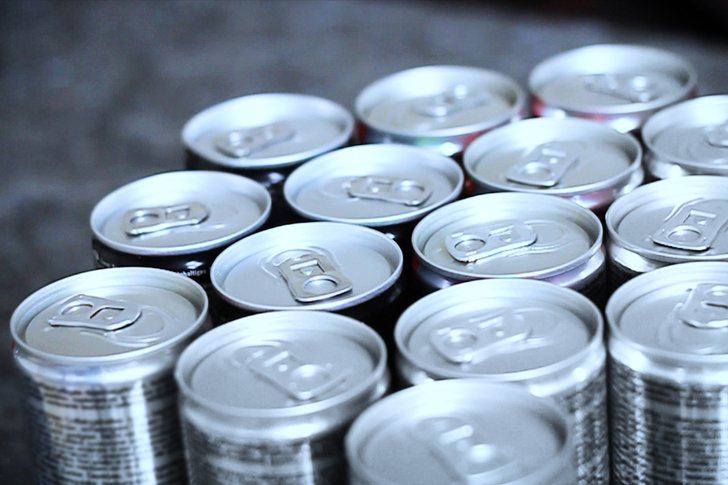
Scientists have discovered that taurine, a substance found i...

A new data center building being built in Heidelberg, Germ...

It cannot be said precisely how the idea of "spring clea...

Humans have evolved to survive and succeed as social creat...

The American Space Agency, NASA held, this Wednesday, the ...

When it comes to choosing the best beaches in the world, t...

In the heart of New York City, amid the towering skyscrape...

Even for those who don't know much about the Catholic ...

Same family tree, same parents, and usually a small age di...

Men are twice as likely as women to think of themselves as...

Beliefs in the supernatural, religious and mythical, a...

Queen Elizabeth II faced an assassination threat during a ...

Çdo vit profesori Steve Hanke (Steve Hanke) i Universiteti...

The Portuguese capital Lisbon has been chosen as the most ...
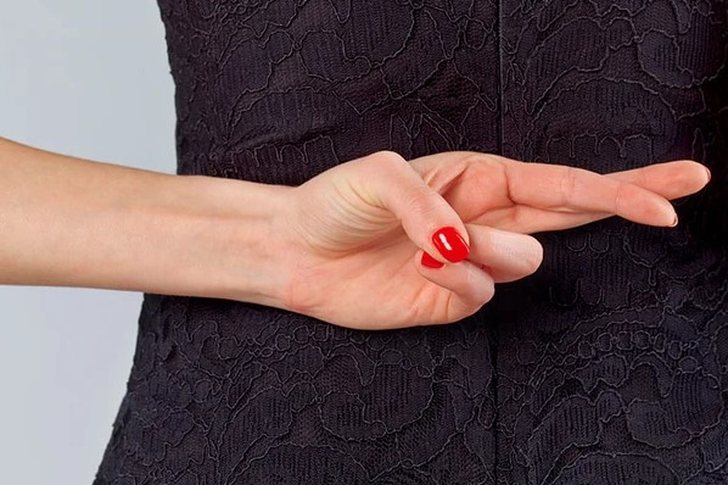
Whether it's an innocent white lie, or a deep, dark secret...

CNA has launched another investigation that could lead to ...

Irfan Hysenbelliu is a businessman that we call "Irfan the...

In March 2026, CNA launched another investigation centered...
The arrested mayor of Tirana, Erion Veliaj, with 13 charge...

The Special Board of Appeal (KPA) decided this Monday ...

The KPA vetting decided this Thursday to dismiss the p...

Suela Salavaçi, a prosecutor in the Prosecutor's Offic...

The Special Board of Appeal reinstated the prosecutor ...

New details have emerged regarding the accident that occur...

New details have emerged from the serious accident that oc...

A serious accident occurred this Wednesday on the Elbasan-...

Citizen MH, 61, a fisherman, was found dead near the islan...

The Institute of Geosciences has shared a forecast for wea...

Rising energy and fertilizer prices are expected to contin...

Over 18,000 foreign citizens from 140 countries have appli...

This Wednesday, our country will be under the influence of...

US President Donald Trump has issued another warning to Ir...

Prime Minister Andy Burnham has announced that most bus fa...

France's parliament has passed a law to ban social media f...

US Secretary of State Marco Rubio arrived in Manila on Jul...

At a time when industrial products are increasingly taking...

Trust among people is not just a three-syllable word. It c...

Master of humor Todi Llupi has passed away at the age of 7...

The ninth edition of "MIK Festival" kicked off with one of...

Businesses will no longer be required to simply register t...

Despite economic growth and income in recent years, Albani...

This Wednesday, one US dollar is bought for 81.4 lek and s...

Construction company licenses will have a validity period ...