

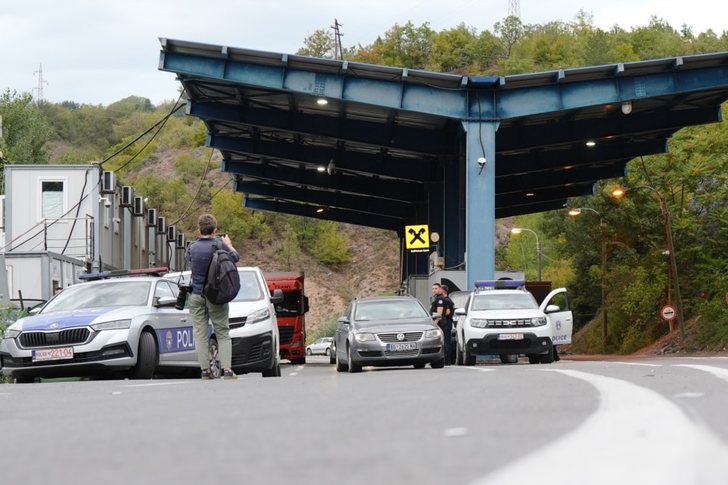
Kosovo detains a member of the Serbian Police
Kosovo authorities have detained a member of the Serbian P...


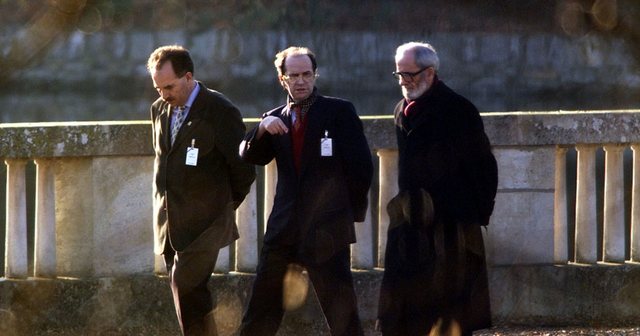
Rambouillet, Vienna, Brussels - three cities, three processes, three attempts to decide the fate of Kosovo. The first two, to end the war and resolve the status, brought tangible results, despite Serbia's refusals; the third, to normalize relations between the two countries, has remained on hold for years.
The dialogue between them for this purpose officially began in 2011. The Kosovo government accepted it as an international obligation, after the UN General Assembly voted on a resolution in 2010.
With the mediation of the EU and the support of the US, the first meeting was held on March 9, 2011. The Kosovo delegation was led by Edita Tahiri, while the Serbian delegation was led by Borislav Stefanovi?.
Negotiations between the parties over the months produced several agreements - from free movement to border management and cadastral issues.
Although it was announced that only technical issues would be discussed, the process moved to a political level in the fall of 2012. The first meeting between the then Prime Minister of Kosovo, Hashim Thaçi, and the Prime Minister of Serbia, Ivica Daçi?, took place on October 19.
And, less than six months later, they reached the first agreement to normalize relations - a moment that EU mediator Catherine Ashton described as "a step closer to Europe".
"I want to congratulate them for their determination during these months and for the courage they have shown. It is very important that what we are seeing now is a step away from the past and a step closer to Europe," said Ashton.
Over 12 years have passed since then. Kosovo remains the only country in the Western Balkans that is not a candidate for EU membership, while Serbia has not opened any new chapters of accession negotiations since 2021.
Over the years, the parties held dozens of meetings - often marathon-long ones. Both negotiators and mediators changed, but most of the agreements reached were never fully or at all implemented.
Tensions, accusations, and recriminations were almost never absent and reached their peak in September 2023, when an armed group of Serbs attacked the Kosovo Police in Banjska, killing a sergeant.
The incident was described as the most serious since the post-war period and caused the current Prime Minister of Kosovo, Albin Kurti, to refuse to this day any high-level meeting with the President of Serbia, Aleksandar Vu?i?.
His condition for resuming dialogue was and remains the surrender of the suspected perpetrator of the attack, Milan Radoi?i?.
"As long as Radoi?i? and his group are free and protected in Serbia, there is no trust in the normalization dialogue," he said at a government meeting last year.
Kurti's government has been in office for several months. This week, he was asked by Serbian media whether, after the formation of the government, there is any plan to continue the dialogue. He stressed that he remains committed to the normalization of relations, but reiterated that any step forward is closely linked to the handover of Radoi?i? and the implementation of the Agreement on the Path to Normalization of Relations - reached between him and Vu?i? in February 2023.
"It seems that this will not happen soon, because Serbia, unfortunately, is turning into a second Belarus in Europe. If the Kremlin has Belarus in the northeast, in the southeast of Europe, unfortunately, it has Serbia," Kurti said.
Serbian President Vu?i? appears open to dialogue in public statements, but at the same time reiterates his position that his country will never recognize Kosovo's independence.
For former diplomat Ylber Hysa, Serbia's rejectionist and confrontational stance has been known since the Rambouillet and Vienna negotiations, where he himself was part of the Kosovo delegation.
Hysa sees the current dialogue only as a continuation of these processes and emphasizes that Kurti should have shown more persistence, considering that the previous generation of negotiators created an irreversible reality - an independent Kosovo - despite threats, even existential, to the people of Kosovo.
"Mr. Kurti seems to have wanted to buy time, for fear that he might accept something that would challenge his political perception as the only leader who opposed all those paths of dialogue and international cooperation. He had his own concept of Vetëvendosje, in the sense that he decides for himself. And, perhaps this has been a political burden for him, to move forward," Hysa says to Radio Free Europe's Exposetë program.
The motto of the Vetëvendosje Movement, from its beginnings, was “No negotiations, Vetëvendosje.” Under this slogan, Kurti’s party also built its political identity, opposing any form of dialogue with Serbia, which, according to it, violated the principle of self-determination of the people of Kosovo.
In 2012, after the first Thaçi-Daçi? meeting, Vetëvendosje also organized protests against the talks, describing them as a concession to Serbia.
Over a decade later, Hysa says Kurti came to the position of accepting the Agreement on the path to normalization of relations with Serbia, which, according to him, was the first offer of international diplomacy that did not foresee mutual recognition for Kosovo - although it continues to be unimplemented by either side.
He now doubts that there is still room for any real progress in this process, due to international circumstances.
"It's a runaway train in the geopolitical sense as well. What could have been done during the time of [former US President Joe] Biden, when there was an attempt to reconnect with the transatlantic community, is now a thing of the past. It was also the time before the war in Ukraine. It was a momentum that did not suit Mr. Vu?i? very much. However, after the war in Ukraine, he found the path of survival. Serbia became one of the only countries that did not impose sanctions on Russia and, at the same time, sold weapons to Ukraine," says Hysa.
Aleksandar Popov, from the Center for Regionalism in Novi Sad, notes that transatlantic relations are now at an extremely low point. With global attention drawn to the crises in Ukraine, the Middle East and elsewhere, the Kosovo-Serbia dialogue, he says, functions more as a tool to maintain the status quo than to bring about real solutions.
Popov does not see - at least for now - any clear path that could restore the dialogue to a functional and effective trajectory.
"Kurti has no reason to push it forward, because, to a large extent, he has achieved his goal: the extension of authority in northern Kosovo. The only thing he has not achieved is to make Kosovo a member of more international organizations. It also does not suit Vu?i?, because every day we have anti-government protests in Serbia and the government is losing control over the situation," Popov tells Exposena.
Marc Weller, who served as Kosovo's legal advisor at the Rambouillet Conference and the Vienna process, emphasizes that the necessity of resolving the issues between Kosovo and Serbia is undeniable, due to their geographical proximity. He recalls that in the two previous processes, Serbia refused to sign the agreements, while Kosovo unilaterally assumed obligations to achieve independence.
Today, in the Brussels dialogue, Weller says, pressure is again falling on Kosovo to make new concessions, but Kurti, according to him, is less flexible and less cooperative with internationals.
"And that's exactly where we're stuck - Kosovo is being told it must first establish the Association of Serb-majority Municipalities, but no one knows whether Serbia will then implement its part of the agreement," Weller tells Exposé.
He emphasizes that the dialogue needs a new beginning and a more balanced approach by the West towards Kosovo and Serbia, so that both states can fulfill their obligations.
Unlike the Rambouillet and Vienna periods, when Europe and the United States acted in unison, he notes that the current US administration's engagement is unpredictable.
“We don’t know exactly how the Trump administration will handle the Kosovo issue. I think Kosovo has reason to be a little nervous about its return, as well as its special representative [Richard Grenell], who may try to impose some kind of action,” Weller says.
Relations between Kurti's government and the US have been complicated since the first administration of President Donald Trump. At that time, his government was overthrown by a no-confidence motion from coalition partner LDK, but Kurti accused Grenell of interfering, with the aim, as he claimed, of reaching an agreement between Kosovo and Serbia.
The “Kurti 1” government fell in March 2020, while in September of that year, the agreement on economic normalization between Kosovo and Serbia was signed at the White House, in the presence of President Trump. The signatories were the Prime Minister of Kosovo from the ranks of the LDK, Avdullah Hoti, and the President of Serbia, Vu?i?.
Last week, the current European Union mediator, Peter Sorensen, stayed in Pristina, where he held talks with chief negotiator Besnik Bislimi on, as it was said, the implementation of the Agreement on the path towards normalization of relations.
In August, Sorensen met with the leaders of both countries, in Kosovo and Serbia, but saw no sign of a quick resumption of high-level dialogue.
Radio Free Europe attempted to speak with Sorensen about his plans to mediate this process and others, but without success.
Similarly, the EU did not respond to REL's emails.
According to former diplomat Ylber Hysa, Kosovo and Serbia are expected to remain in a prolonged political stalemate - this time not only due to their will, but also due to the lack of a real international incentive to move the talks forward.
"The model of success for Kosovo and the Balkans has been transatlantic unity and consensus of domestic actors. This has been a recipe that has produced historic results in Rambouillet and Vienna. I fear that we no longer live such a reality in today's political life," says Hysa.
And, no one has an accurate prediction of what might happen if political disagreements escalate into violence - as political representatives often warn.
In Hysa's words, the lack of any news about Kosovo and Serbia in 2025 could be good news./REL

Kosovo authorities have detained a member of the Serbian P...
Ukrainian military authorities have insisted that their fo...
US President Donald Trump said on Saturday he has ordered ...
China's ruling Communist Party recently held a major meeti...
The remains of three dead people recently handed over by t...

A knife attack has occurred on a train near Peterborough i...
Russian attacks on Ukraine continued overnight, killing at...
The acting Prime Minister of Kosovo, Albin Kurti, has deli...
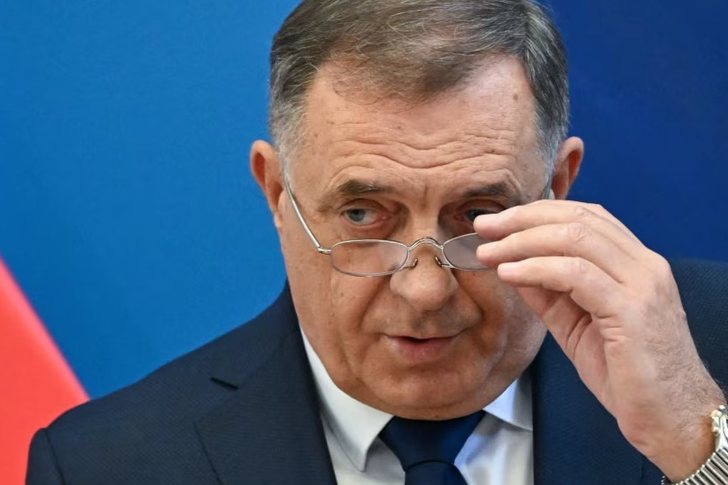
The United States lifted sanctions on Milorad Dodik, but i...
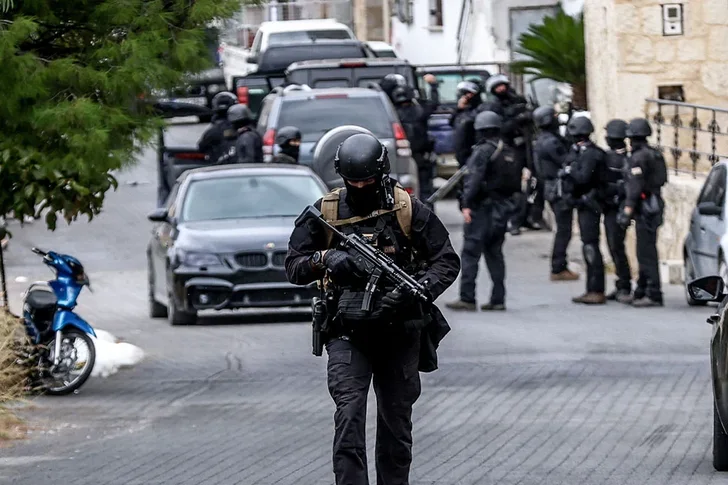
Schools in the village of Vorizia in Crete have suspended ...
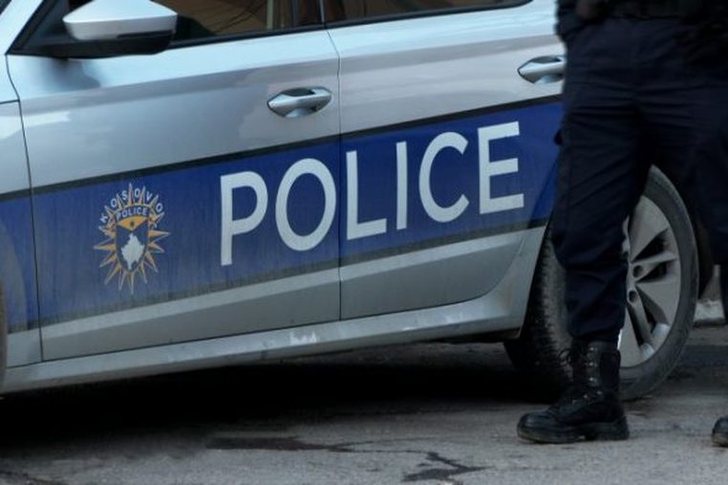
A gunshot murder occurred this afternoon in Kosovo. The in...
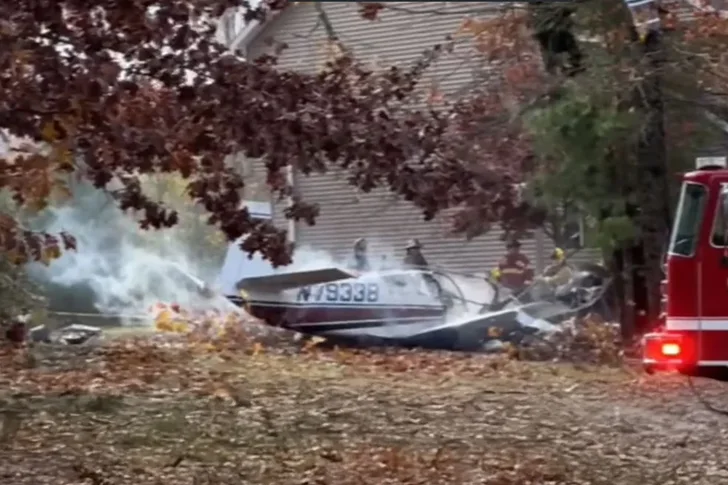
A small plane has crashed in Saratoga County, New York, ki...
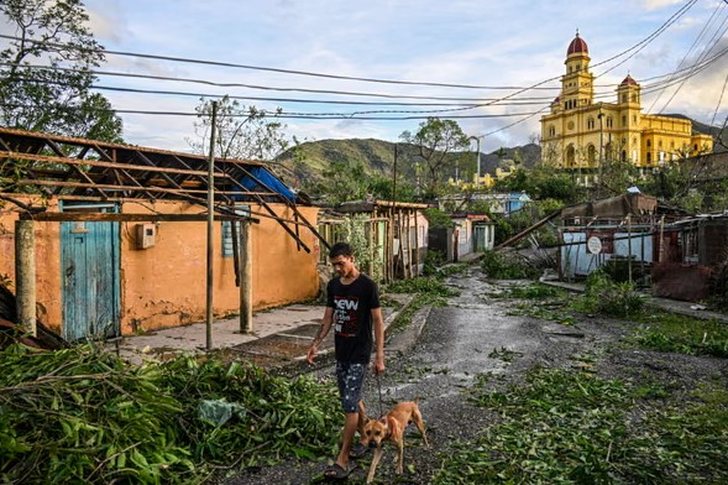
The death toll from Hurricane Melissa has risen to 49 as t...
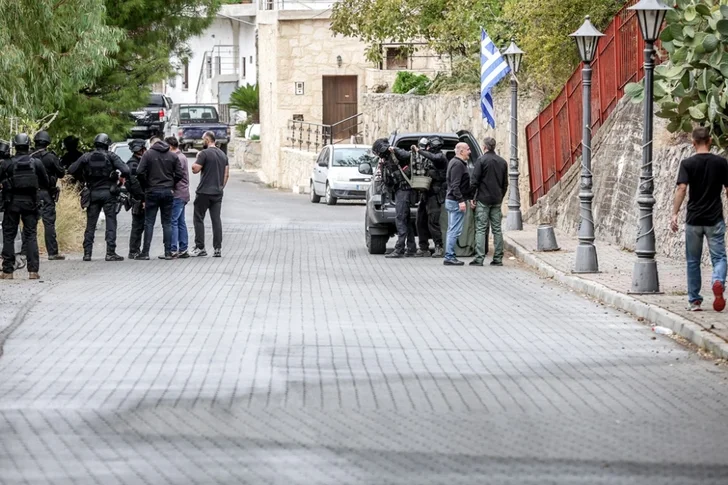
A serious incident has shaken Crete with a massacre caused...
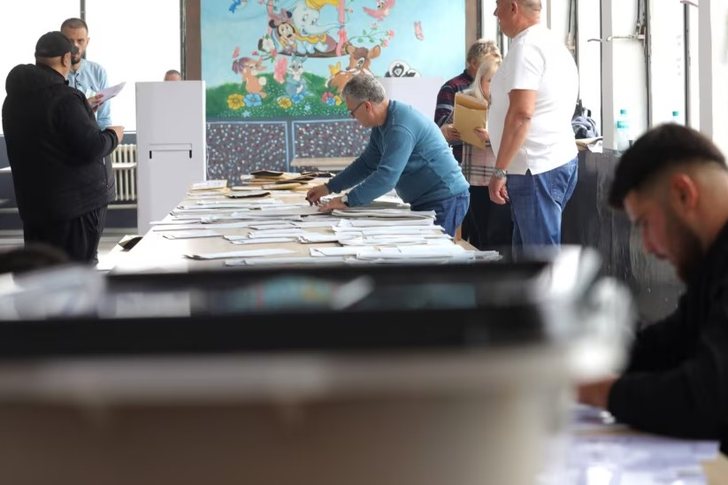
The confrontations between VMRO-DPMNE and the National All...
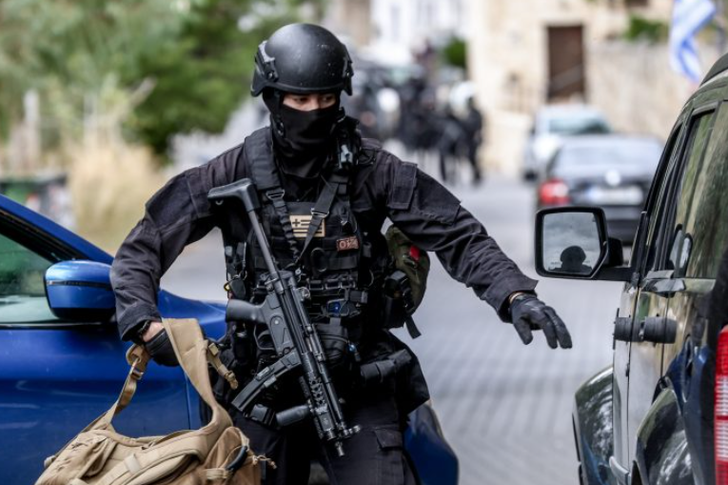
Terror in Heraklion, Crete. Greek media have reported a sh...
Historical and cultural differences between North Macedoni...
Faruk Fatih Ozer, founder of the cryptocurrency company Th...
Nationwide protests have gripped the country for nearly a ...
Kiev and international authorities have condemned Russia's...

CNA has launched another investigation that could lead to ...

Irfan Hysenbelliu is a businessman that we call "Irfan the...

In March 2026, CNA launched another investigation centered...
The arrested mayor of Tirana, Erion Veliaj, with 13 charge...

The Special Board of Appeal (KPA) decided this Monday ...

The KPA vetting decided this Thursday to dismiss the p...

Suela Salavaçi, a prosecutor in the Prosecutor's Offic...

The Special Board of Appeal reinstated the prosecutor ...
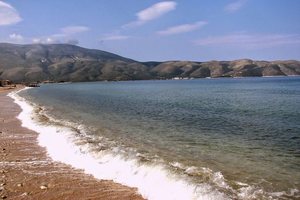
A person has died today on Orikum beach. According to repo...
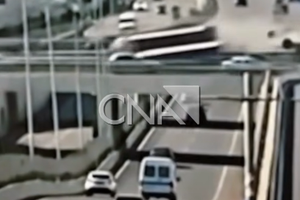
Footage emerges from the serious accident that occurred th...

A Shkodra traffic police officer was hit with hard objects...
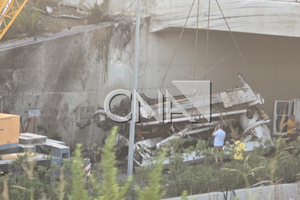
This Wednesday, around 4:00 PM, a serious accident occurre...

Children without parental care, for whom alternative famil...

On Thursday, our country will be under the influence of st...
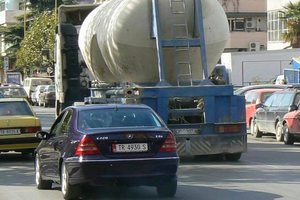
A serious accident that occurred this Wednesday with the c...

The Institute of Geosciences has shared a forecast for wea...

Artificial intelligence (AI) models from the American comp...
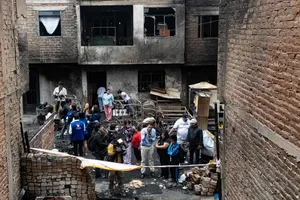
At least 10 people have died after a fire broke out in a h...
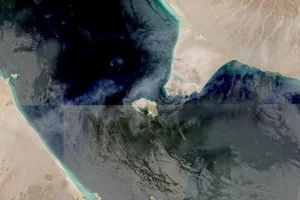
Yemen's Houthis have claimed to have attacked two Saudi oi...
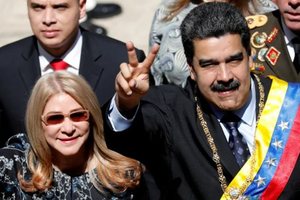
The trial of ousted Venezuelan President Nicolas Maduro on...

At a time when industrial products are increasingly taking...

Trust among people is not just a three-syllable word. It c...

Master of humor Todi Llupi has passed away at the age of 7...

The ninth edition of "MIK Festival" kicked off with one of...
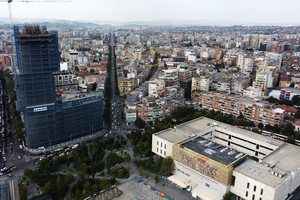
The average sale price of apartments in Tirana reaches rec...

This Thursday, one US dollar is bought for 81.5 lek and so...

The price of diesel reached 206 lek per liter from 198 lek...

Businesses will no longer be required to simply register t...