


Compared to 2013
According to recent comparisons with the European Unio...

According to recent comparisons with the European Unio...

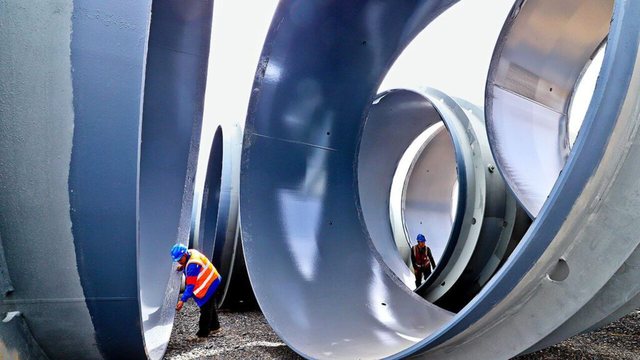
China's ruling Communist Party recently held a major meeting to review the country's new five-year plan. The plan will cover the rest of the decade and influence decision-making for much longer.
Some 370 members of the party's Central Committee attended. Among them were ministers, provincial governors, generals, a historian and even a journalist. Of the roughly 200 members with voting rights, over 50 have engineering degrees.
Like the previous plan, the new document included an extensive list of “major engineering projects,” from wetland restoration to improving high-performance metal alloys.
These initiatives will rely on the world's largest engineering workforce, estimated to number over 20 million by 2023. China also aims to attract foreign talent.
On October 1, it introduced a new “K” visa, which allows science, math, and engineering graduates to enter the country without a prior job offer. The decision has angered many local tech experts, who saw it as underestimating their skills.
Engineering has become a source of pride and power for China. According to author Dan Wang, in his new book "Breakneck," the country has become an "engineering state."
Despite the labels attached to it, China's true commitment is to infrastructure and industry, bridges and machinery, construction and manufacturing, as well as to some of the darker forms of "social engineering," such as the one-child policy and the "zero-COVID" policy.
Wang compares China's thirst to rebuild the world and reshape society with American passivity. He writes that the country he now lives in is "a legal society that blocks everything that can, good or bad."
His book recalls a famous saying attributed to Bill Clinton: “You have too many engineers” – he is said to have said during a visit to China in 1998, “while we have too many lawyers… let’s exchange them!”
Today, China's drive for engineering has taken on a new significance. China seeks to master "strategic" technologies, such as advanced chip manufacturing, that it can no longer import from the US and its allies.
Students are responding to this challenge. Among undergraduate students, 36% enroll in engineering majors, a percentage that has been increasing even as total undergraduate enrollment has expanded.
Chinese experts argue that the country's technological advances represent an "engineering dividend" that is replacing the "demographic dividend" that China benefited from in past decades.
But there are economic forces that even an “engineering state” cannot control. A leadership and a student body filled with engineers have been unable to stop the decline in manufacturing and construction as a share of GDP, a consequence of deep-seated trends in productivity and demand.
Perhaps Clinton was wrong when she said China had many engineers, but recent evidence suggests that it has many builders and manufacturers. “The label 'engineering nation' fits less today than it did in the 1980s–2010s,” notes US analyst Jonathon Sine.
Economists have observed that industrialization follows a curve-like trajectory, rising, peaking, and then falling. As workers shift from agriculture to industry, output increases as a share of the economy.
But as societies become richer, consumption shifts towards services and the weight of manufacturing falls. These trends are also reinforced by price changes: manufactured goods become more affordable due to faster productivity growth, which does not occur in other sectors. Thus, their share in GDP falls, except when statistics are calculated at constant prices.
It seems reasonable to assume that the trend for engineering also follows the same trajectory: it increases as industrial production gains importance and falls when a country deindustrializes.
The discipline is most popular in upper-middle-income countries, such as Malaysia. It also remains strong in countries with communist legacies, such as the former Soviet republics.
China is no exception, its percentages are in line with the international average, including vocational education. It itself went through such a “curve”: the share of university students enrolled in engineering fell from 36% in 2001 to less than 32% between 2004 and 2011.
The Chinese leadership once seemed to agree with this model. Its 13th Five-Year Plan (2016–2020) aimed to increase the share of the services sector in GDP from 50.5% in 2015 to 56% in 2020.
The composition of the top leadership also reflected this evolution: the number of engineers at the highest levels of the party decreased, being replaced by managers, economists, social scientists, and even lawyers.
In 2013, Cheng Li of the Brookings Institution wrote about the “rapid rise” of lawyers in China’s political hierarchy. “This elite transformation,” he wrote, “is likely to influence the leadership’s socio-economic and political policies.”
But that was not to be. By the end of the decade, China's leaders became increasingly determined to curb the shift toward services.
During Donald Trump's first presidency, export restrictions nearly paralyzed some of the most popular Chinese technology firms, including ZTE and Huawei.
In response, Xi Jinping insisted that the country must build a "complete" industrial system, making it less dependent on others and others more dependent on it.
The five-year plan approved in early 2021 dropped the commitment to increase the share of services in GDP and instead promised to keep the share of manufacturing stable. Meanwhile, the percentage of students choosing engineering was again on the rise, as was the number of engineers in the Party Central Committee.
However, this political turnaround has not stopped industrial difficulties. China's vast industrial and construction output is struggling to find buyers. Many new homes remain unsold.
Factory prices for industrial products have fallen for almost three years in a row. And while students are willing to pursue engineering, that doesn't mean they're equally willing to work in manufacturing.
A survey last year by employment agency Zhaopin found that only 8% of students want to work in the manufacturing sector (while over a quarter prefer IT).
Even among those who study science or engineering, only 37% pursue careers related to the field, according to a 2022 article by Qin Fang and her colleagues at Southwest University of Finance and Economics in Chengdu.
When the Party Central Committee, with the broad participation of engineers, reviews the new five-year plan, it will have to decide whether to fight against these trends or adapt to them.
Recent political signals suggest that the Chinese leadership may once again emphasize service consumption as a solution to the chronic lack of demand in the economy.
If that happens, they might find solace in a Daoist fable that two former leaders, Mao Zedong and Jiang Zemin, liked to tell: A foolish old man was determined to level two mountains blocking his path, with just a pickaxe.
After dedicating his life and subsequent generations to this task, the gods were amazed by his perseverance and moved mountains, opening the way for travelers visiting his village.
Even this "divine engineering project" was, ultimately, in the service of travel and tourism: the mountains were moved and in their place a service industry flourished./ Monitor.al


The remains of three dead people recently handed over by t...

A knife attack has occurred on a train near Peterborough i...
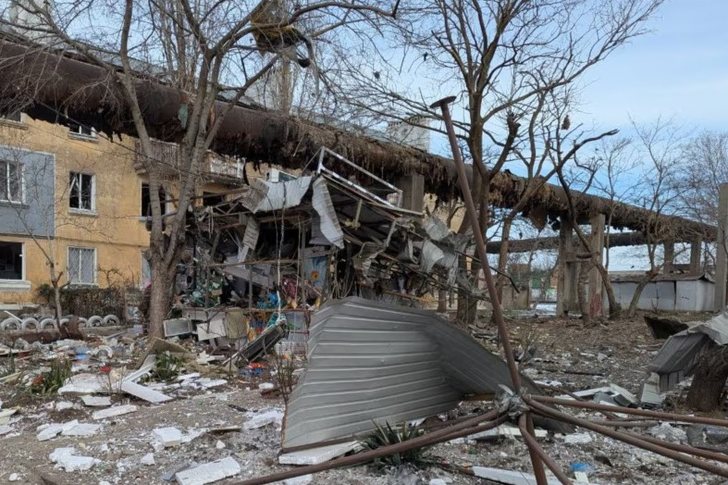
Russian attacks on Ukraine continued overnight, killing at...

The acting Prime Minister of Kosovo, Albin Kurti, has deli...
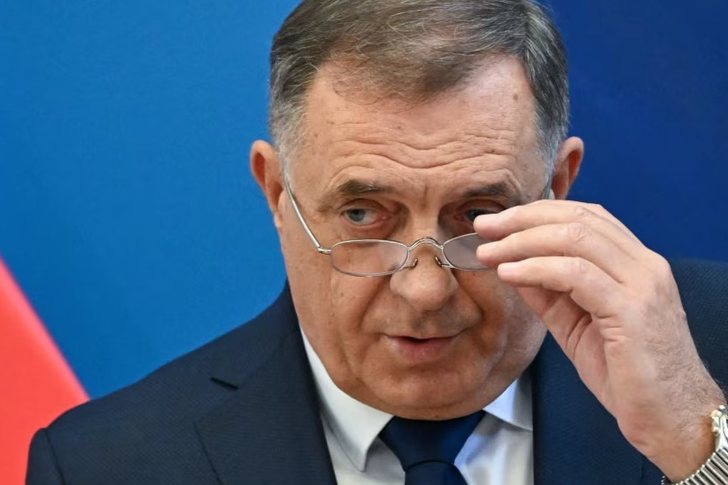
The United States lifted sanctions on Milorad Dodik, but i...

Schools in the village of Vorizia in Crete have suspended ...

A gunshot murder occurred this afternoon in Kosovo. The in...

A small plane has crashed in Saratoga County, New York, ki...

The death toll from Hurricane Melissa has risen to 49 as t...

A serious incident has shaken Crete with a massacre caused...

The confrontations between VMRO-DPMNE and the National All...

Terror in Heraklion, Crete. Greek media have reported a sh...

Historical and cultural differences between North Macedoni...

Faruk Fatih Ozer, founder of the cryptocurrency company Th...

Nationwide protests have gripped the country for nearly a ...
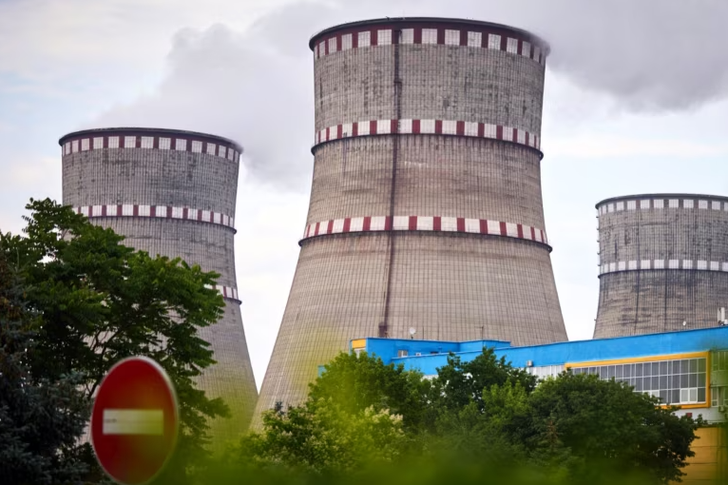
Kiev and international authorities have condemned Russia's...
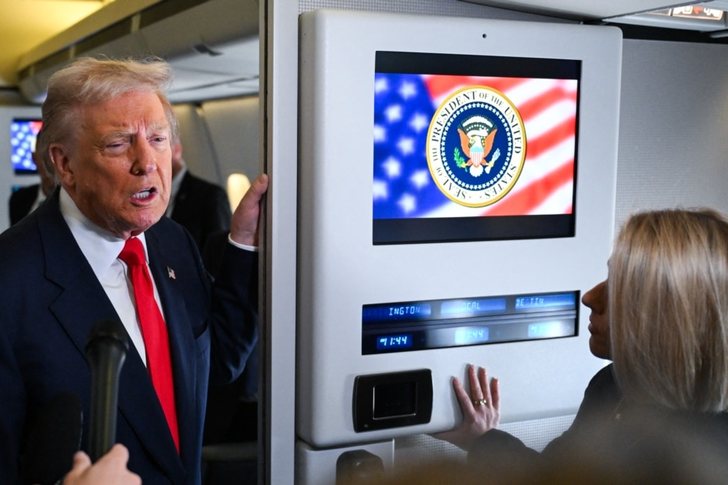
US President Donald Trump said on October 31 that he is no...
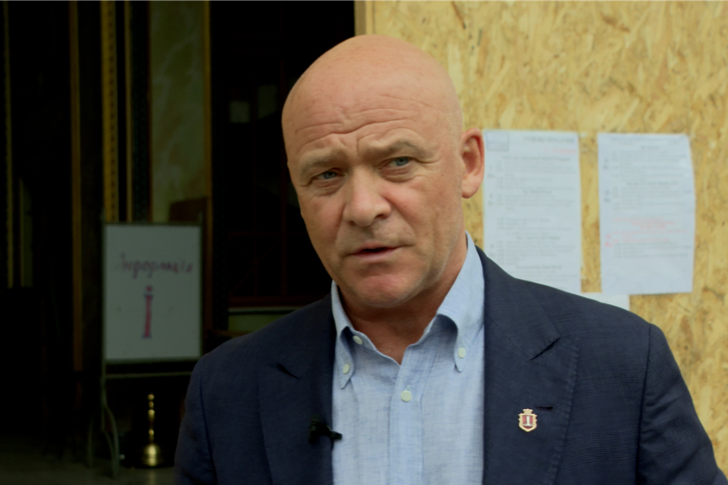
A court in Kiev has imposed 60 days of house arrest on for...

Kazakhstan has intensified its fight against financial cri...
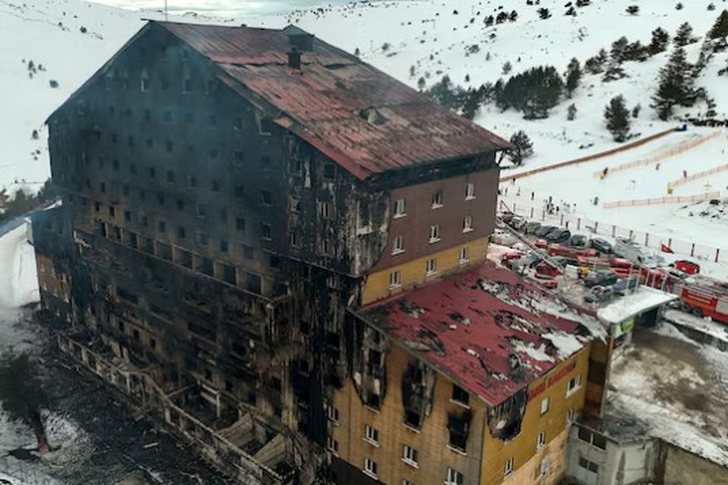
A Turkish court today sentenced 11 defendants to life in p...

CNA has launched another investigation that could lead to ...

Irfan Hysenbelliu is a businessman that we call "Irfan the...

In March 2026, CNA launched another investigation centered...
The arrested mayor of Tirana, Erion Veliaj, with 13 charge...

The Special Board of Appeal (KPA) decided this Monday ...

The KPA vetting decided this Thursday to dismiss the p...

Suela Salavaçi, a prosecutor in the Prosecutor's Offic...

The Special Board of Appeal reinstated the prosecutor ...

A person has died today on Orikum beach. According to repo...

Footage emerges from the serious accident that occurred th...

A Shkodra traffic police officer was hit with hard objects...

This Wednesday, around 4:00 PM, a serious accident occurre...

Children without parental care, for whom alternative famil...

On Thursday, our country will be under the influence of st...
A serious accident that occurred this Wednesday with the c...

The Institute of Geosciences has shared a forecast for wea...

Artificial intelligence (AI) models from the American comp...

At least 10 people have died after a fire broke out in a h...

Yemen's Houthis have claimed to have attacked two Saudi oi...

The trial of ousted Venezuelan President Nicolas Maduro on...

At a time when industrial products are increasingly taking...

Trust among people is not just a three-syllable word. It c...

Master of humor Todi Llupi has passed away at the age of 7...

The ninth edition of "MIK Festival" kicked off with one of...

The average sale price of apartments in Tirana reaches rec...

This Thursday, one US dollar is bought for 81.5 lek and so...

The price of diesel reached 206 lek per liter from 198 lek...

Businesses will no longer be required to simply register t...