


Ukraine-Russia attacks/Oil depots and houses near the Black Sea hit
A massive fire at an oil depot is breaking out near the Ru...


Last year, America recorded a budget deficit of 7% of Gross Domestic Product (GDP). This deficit could grow even larger soon.
President Donald Trump's "One Big Beautiful Bill Act," which would extend the 2017 tax cuts permanently, provides more for hospitality workers and seniors, and increases payments to children from poor families.
The proposed legislation would translate into trillions of dollars in additional borrowing over the next decade.
Trump's theatrical way of attracting attention is striking, but many other wealthy countries are also following the same course of high spending.
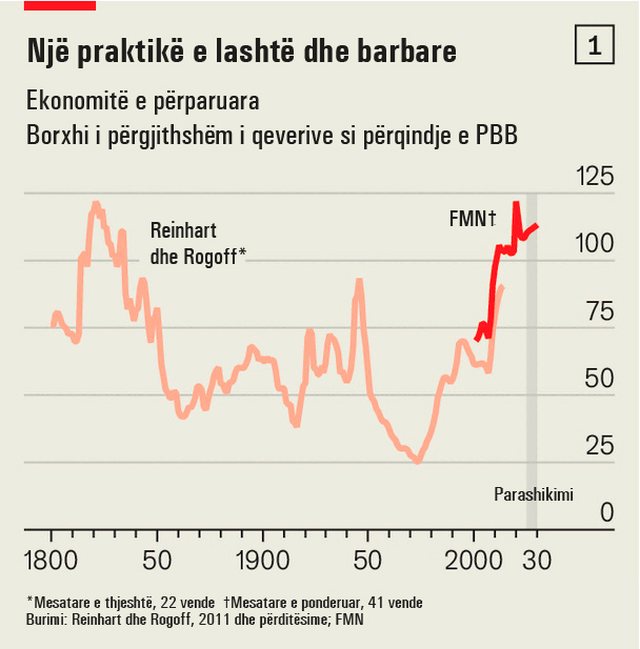
Governments across the developed world are spending more frequently (see chart 1). This year, France will record a deficit of 6% of GDP; Britain's will be slightly smaller.
The German government will borrow the equivalent of 3% of GDP. Canada's budget balance is also heading into negative territory. Jean-Baptiste Colbert, a bureaucrat under Louis XIV, defined tax policy as "pulling as many feathers as possible with as little noise as possible."
Today's governments are not plucking the goose's feathers, but, like the producers of 'foie gras' (a French food made with goose liver), they are force-feeding it.
Governments have always run deficits. France, the land of foie gras, has not had a surplus since 1974. Also, a government can borrow and reduce its debt level at the same time if the economy grows faster than the debt increases.
But what's happening now is unprecedented. The deficit levels wouldn't be unusual if the economy were in recession. The economy in the rich world is showing good growth.
Unemployment is near historic lows. Corporate profits are at stable levels.
Meanwhile, borrowing costs have risen sharply. The average interest rate on 10-year debt instruments from a wealthy government is now 3.7% per year, up from just 1% during the Covid-19 pandemic.
Under these conditions, economic models would recommend at least reducing the deficit. But today's governments choose to deepen the loss even further.
Many are promising to increase defense spending. It may be inevitable, but it is not necessary.
In Japan, political parties are advertising fiscal incentives, from cash handouts to VAT cuts, to boost their chances in elections to the Upper House of Parliament.
The British government was forced to back down on plans to cut disability benefits and energy bill payments for the elderly. South Korea is cutting inheritance tax. Australia is cutting income tax.
Edhe vendet që dikur ishin të kujdesshme po ndryshojnë drejtim. Qeveria gjermane planifikon të marrë hua 800 miliardë euro për investime në mbrojtje dhe infrastrukturë.
Edhe Zvicra, e cila kishte një suficit të konsiderueshëm përpara pandemisë, tani po regjistron suficit më të vogël. Vitin tjetër, ajo do të nisë pagesën e “muajit të 13 të pensionit shtetëror”. Edhe pse të moshuarit atje duket se nuk kanë nevojë, kjo nuk ka rëndësi, sepse në ditët e sotme, të gjithë marrin diçka.
Pse janë qeveritë kaq të pakujdesshme në shpenzimet e tyre?
Gjatë pandemisë, politikanët krijuan zakonin që të shpëtonin bizneset dhe familjet në vështirësi financiare. Më pas, inflacioni nxiti kërkesa për kompensim ndaj “krizës së jetesës”.
Sot, ata në pushtet shpresojnë të ndalojnë populistët duke shpërndarë para. Sa herë që një politikan propozon një ulje shpenzimesh, mediat dhe rrjetet sociale përhapin menjëherë histori prekëse, duke krijuar presion për të mos bërë ndryshime. Përgjegjshmëria fiskale është bërë më e papëlqyeshme se kurrë.
Deri në kohët e fundit, qeveritë mund të vijonin me politika liberale fiskale pa pasoja të dukshme. Në 2021–2023, PBB nominale rritej në nivele të kënaqshme, inflacioni ishte i lartë, ndërsa normat e interesit ishin të ulëta.
Në këto kushte, qeveritë e pasura mund të mbanin deficite të mëdha “primare” (para pagesës së interesit të borxhit) dhe prapë të ulnin raportin borxh/PBB.
Disa vende, si Japonia, mund t’ia dilnin të ulnin borxhin edhe me një deficit primar 12%. Për këtë arsye, sot dy të tretat e qeverive të botës së pasur kanë më pak borxh sesa pesë vite më parë.
Raporti borxh/PBB i Japonisë ka rënë me 24 pikë, ai i Greqisë me 68 pikë.
Por tani, rritja është më e dobët, inflacioni është ngadalësuar, ndërsa normat e interesit janë rritur. Si pasojë, për të ulur borxhin, vendet e pasura duhet të balancojnë buxhetet primare.
Në Itali, ky bilanc ka kaluar nga një deficit 3.1% i PBB-së në vitin 2023, në një suficit 1.3% këtë vit. Italia po ul deficitin, por jo mjaftueshëm.
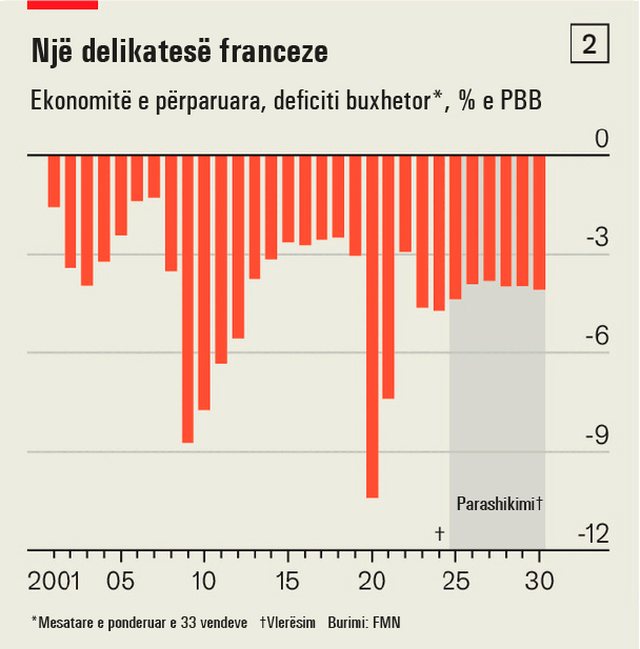
Ndërsa shumë vende të tjera po e ngadalësojnë reduktimin e nivelit të borxhit. Për më tepër, lufta tregtare rrit rrezikun e ngadalësimit ekonomik, ndaj borxhi publik në vendet e pasura pritet të rritet sërish (shih grafik 2).
Në fakt, ky është një moment i papërshtatshëm. Demografët kanë parashikuar prej dekadash se mesi i viteve 2020 do të ishte koha kur brezi “baby-boomer” (të lindurit midis viteve 1946 dhe 1964) do të dilte në pension, duke çuar në rritje të kërkesës për shërbim shëndetësor dhe pensione.
Edhe Zyra për Përgjegjshmëri Buxhetore e Britanisë (OBR) në 2015 sugjeroi se, edhe në kushte të favorshme, kjo periudhë do të ishte koha kur qeveria do të përballej me vështirësi për të ndaluar akumulimin e borxhit.
Një ngërç demografik dhe politikat fiskale të karakterizuara nga shpenzime të mëdha pritet të ndërthuren në mënyra të pakëndshme.
No one can predict exactly when or if markets will lose patience, forcing interest rates to rise sharply.
But there must be a limit to this thirst for debt. As every foie gras lover knows, even the most voracious goose cannot afford to overeat without consequences./ Monitor.al

A massive fire at an oil depot is breaking out near the Ru...

Mainland Portugal will enter a state of alert from midnigh...
Iran's President Masoud Pezeshkian warned against excessiv...
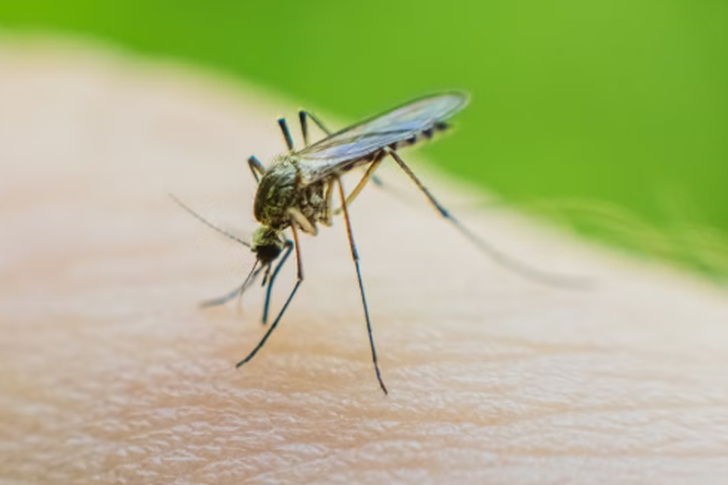
The number of deaths from West Nile virus in Italy since t...

A rare archaeological discovery has been made in the Ulpia...

Deputeti i Kuvendit të Kosovës, Adem Hoxha, bashkëshortja ...
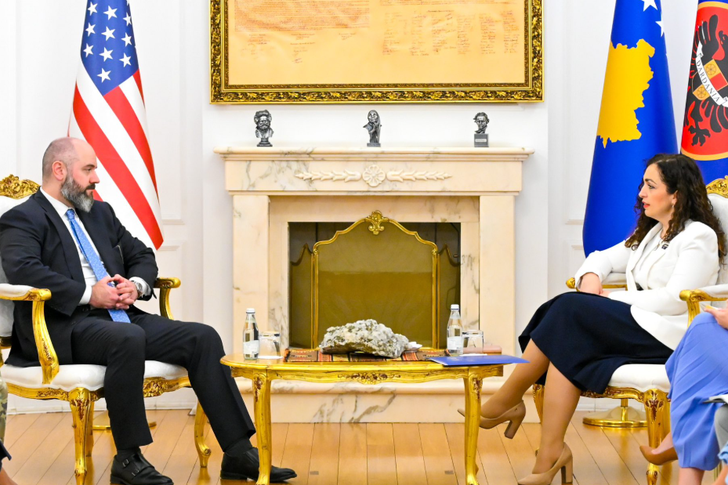
The President of Kosovo, Vjosa Osmani, hosted this Saturda...

The month of August has just begun, and so has the tempera...

Serbia's National Security Council will meet on Saturday a...

Chicago briefly had the worst air quality in the world, ac...

US President Donald Trump has fired the head of one of Ame...

The NATO-led KFOR mission is continuing to place new marke...

One miner died and five others went missing after an accid...
Donald Trump has posted on Truth Social that he is orderin...
France has suspended its program to host Palestinians leav...

Serbian President Aleksandar Vučić said that his country's...

The President of the United States of America, Donald Trum...

The European Court of Justice (ECJ) has strengthened the c...

The trade war between the US and Canada has escalated sign...

The Prime Minister of the Republic of Kosovo, Albin Kurti,...

CNA has launched another investigation that could lead to ...

Irfan Hysenbelliu is a businessman that we call "Irfan the...

In March 2026, CNA launched another investigation centered...
The arrested mayor of Tirana, Erion Veliaj, with 13 charge...

The Special Board of Appeal (KPA) decided this Monday ...

The KPA vetting decided this Thursday to dismiss the p...

Suela Salavaçi, a prosecutor in the Prosecutor's Offic...

The Special Board of Appeal reinstated the prosecutor ...

Footage emerges from the serious accident that occurred th...

A Shkodra traffic police officer was hit with hard objects...

This Wednesday, around 4:00 PM, a serious accident occurre...

Tirana Police have shared details regarding the accident t...

A serious accident that occurred this Wednesday with the c...

The Institute of Geosciences has shared a forecast for wea...

Rising energy and fertilizer prices are expected to contin...

Over 18,000 foreign citizens from 140 countries have appli...

The trial of ousted Venezuelan President Nicolas Maduro on...

US President Donald Trump has issued another warning to Ir...

Prime Minister Andy Burnham has announced that most bus fa...

France's parliament has passed a law to ban social media f...

At a time when industrial products are increasingly taking...

Trust among people is not just a three-syllable word. It c...

Master of humor Todi Llupi has passed away at the age of 7...

The ninth edition of "MIK Festival" kicked off with one of...

The price of diesel reached 206 lek per liter from 198 lek...

Businesses will no longer be required to simply register t...

Despite economic growth and income in recent years, Albani...

This Wednesday, one US dollar is bought for 81.4 lek and s...