

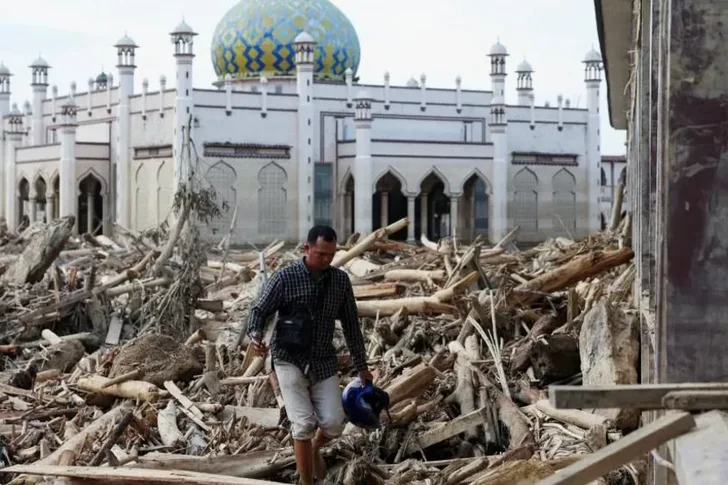
Devastating floods in Indonesia / Death toll exceeds 900
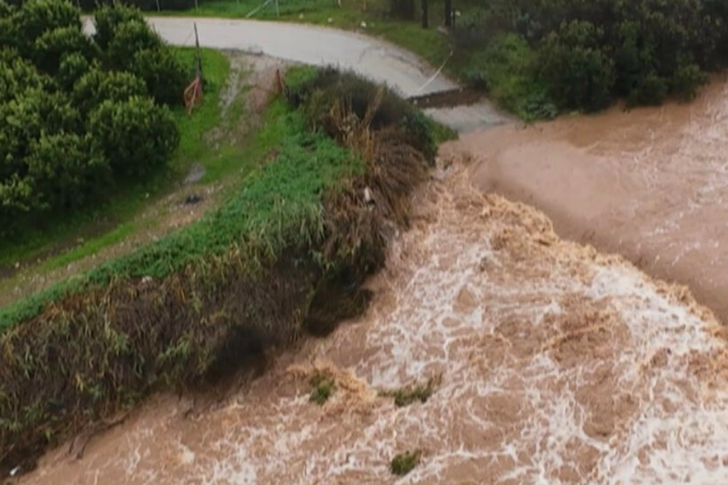
The death toll in Indonesia from recent floods has passed ...


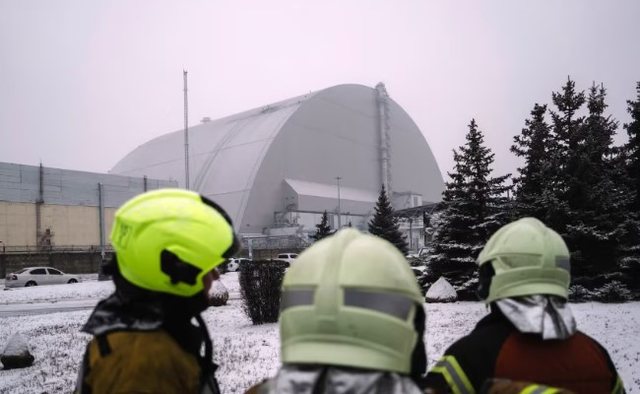
The protective shield built around the site of the Chernobyl nuclear disaster in Ukraine can no longer perform its function to contain radioactive waste as a result of a drone attack earlier this year, the International Atomic Energy Agency (IAEA) has announced.
"The New Safe Confinement (NSC) at Chernobyl, which was severely damaged by the drone attack in February, has lost its key safety functions, including containment capability," the IAEA statement said.
Ukraine has accused Russia of carrying out the February 14 attack on Chernobyl, a charge the Kremlin denies. The nuclear watchdog has recommended a major overhaul of the giant steel structure, which was put in place several years ago to enable cleanup operations and ensure the country's safety nearly four decades after the worst nuclear power plant accident in history.
"Limited temporary repairs have been carried out on the roof, but timely and comprehensive restoration remains essential to prevent further degradation and ensure long-term nuclear safety," said IAEA Director General Rafael Mariano Grossi.
It's not the first time Chernobyl has been in the spotlight during Russia's nearly four-year war in Ukraine. Russian forces seized the nuclear plant and its surrounding area in the early days of Moscow's full-scale occupation, taking it over in February 2022 and holding staff hostage. They left the plant and returned control to Ukrainian personnel a little over a month later.
The NSC is a massive, arch-shaped steel structure built at the Chernobyl site to cover the destroyed reactor No. 4 and contain its radioactive material.
As the world's largest movable ground structure, the colossal hangar is a monumental feat of engineering. Built in 2010 and completed in 2019, it was designed to last 100 years and has played a crucial role in securing the country.
The project cost 2.1 billion euros and was financed by contributions from more than 45 countries and donor organizations through the Chernobyl Shelter Fund, according to the European Bank for Reconstruction and Development, which in 2019 praised the undertaking as "the largest international cooperation ever in the field of nuclear safety."
On April 26, 1986, an explosion destroyed reactor No. 4 at Chernobyl, in what was then the Soviet Union, spreading radioactivity across large parts of Ukraine, Belarus, Russia and beyond.
More than 30 people lost their lives in the nearby city of Pripyat in Ukraine, while many others have suffered from symptoms resulting from radiation exposure since then, according to the IAEA and the World Health Organization, birth defects and cancer rates among residents of the radiation-exposed area are still high. /CNA

The death toll in Indonesia from recent floods has passed ...

A massive fire has engulfed a nightclub in Goa, India, kil...
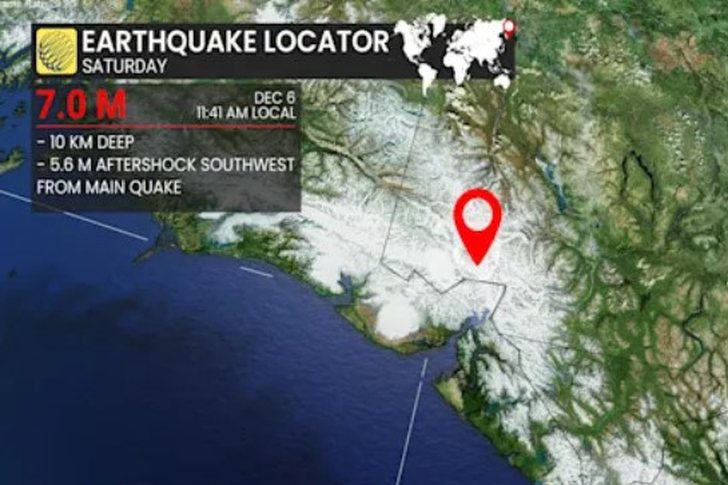
A powerful earthquake struck northwestern Canada this even...
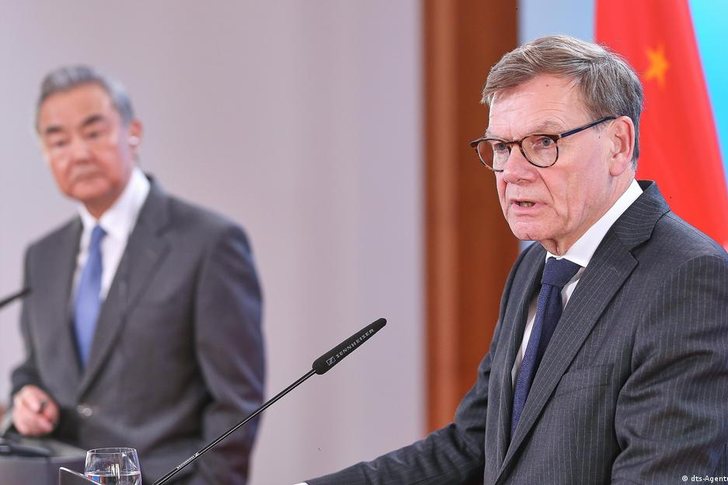
Finally: From Sunday to Wednesday next week (07.12 -10.12....
Ukrainian President Volodymyr Zelensky said he had a "very...
A drone and missile attack in Sudan's South Kordofan regio...

Famous footballer Cristiano Ronaldo called US President Do...

A boat carrying at least 20 migrants has sunk off the sout...

Turkish President Recep Tayyip Erdogan held a phone conver...

Sunday, November 17, 2019. This date is engraved in the me...
Ukrainian President Volodymyr Zelensky again accused Mosco...

Billionaire Elon Musk has reacted sharply to the EU after ...

For two years, all public Christmas celebrations in Bethle...
Rusia i ka dhënë fund marrëveshjeve të bashkëpunimit ushta...

U.S. and Ukrainian officials will meet in Miami, U.S., for...

At least 11 people have been killed in a mass shooting at ...

The European Commission imposed a 120 million euro fine on...

With increased blockades on main roads and customs across ...

Asylum applications in Germany fall by 51% thanks to Merz ...
The competent authorities of the Trikala Regional Unit are...

CNA has launched another investigation that could lead to ...

Irfan Hysenbelliu is a businessman that we call "Irfan the...

In March 2026, CNA launched another investigation centered...
The arrested mayor of Tirana, Erion Veliaj, with 13 charge...

The Special Board of Appeal (KPA) decided this Monday ...

The KPA vetting decided this Thursday to dismiss the p...

Suela Salavaçi, a prosecutor in the Prosecutor's Offic...

The Special Board of Appeal reinstated the prosecutor ...

A serious accident has occurred on the Lezhë-Shëngjin axis...

A serious incident has occurred in Morina, Kukes. Citizen...

The bad weather that swept the country on Tuesday evening ...

A road accident occurred this evening on Nikolla Zoraqi St...

This Wednesday, our country will be under the influence of...

All of Southern Europe will face changing weather conditio...

Albania was hit by temperatures significantly higher than ...

For the first time, Pogradec welcomed the Inter-Lake Chess...

Prime Minister Andy Burnham has announced that most bus fa...

France's parliament has passed a law to ban social media f...

US Secretary of State Marco Rubio arrived in Manila on Jul...

In the space of a few days, Ukrainian President Volodymyr ...

At a time when industrial products are increasingly taking...

Trust among people is not just a three-syllable word. It c...

Master of humor Todi Llupi has passed away at the age of 7...

The ninth edition of "MIK Festival" kicked off with one of...

Businesses will no longer be required to simply register t...

Despite economic growth and income in recent years, Albani...

This Wednesday, one US dollar is bought for 81.4 lek and s...

Construction company licenses will have a validity period ...