

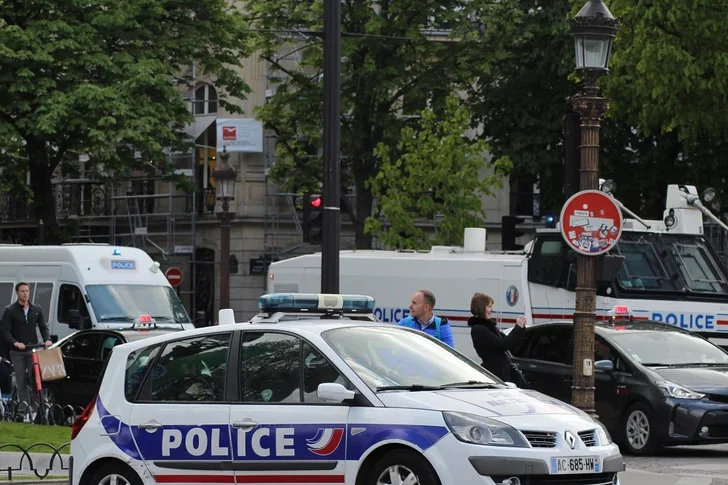
Knife attack in France/ One immigrant killed, another in serious condition
Two people were attacked with a knife this evening in ...


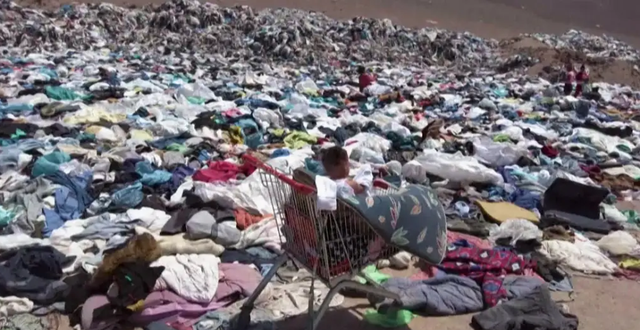
France is issuing a new law to impose new rules on companies producing fast fashion, although others would prefer to use a different method.
France's new fast fashion law was voted unanimously in the Lower House of Parliament, creating a consensus that rarely happens in the National Assembly, where the government does not have an absolute majority and often faces stubborn opposition. But unanimity in the vote does not mean that all French people welcomed the method used by the government. The new rules will affect companies that produce a certain number of products per day.
The government has targeted fast fashion giants such as manufacturer Shein and online platform Temu, both China-based companies. Such companies will have to publish on their websites clear messages about the impact of their products on the environment and must encourage customers to recycle the products, otherwise they will face fines of over 15 thousand euros (16 160 dollars).
A new eco-point system will rate fashion companies. Those companies that are rated badly will have to pay an initial fine of 5 euros and later, after 2030, of 10 euros (about 11 dollars) for each product.
The government has said that it will ban advertising for fast fashion companies and their products starting in 2025. Failure to implement this law will be accompanied by penalties worth over 100,000 euros. The law must also be approved by the Senate in France before it takes effect in the coming months.
'We won a culture battle'
However, the bill is "very good news" for Julia Faure, fashion designer and president of the En Mode Climat group, which includes nearly 600 companies that produce fashion with sustainable development paths.
"We have won a cultural battle because fast fashion is an environmental problem, a social problem and a cultural problem that sweeps away like a colossus everything else in the market except the luxury sector," she told Deutsche Welles.
Faure thinks that the government is sending the right signals by giving ecological plus points to fashion with cotton products and produced locally, while products produced in very long distances and with synthetic pieces are evaluated as bad. "And now we have to be vigilant and make sure that the bar at which fast fashion companies are valued is not set too high," she adds.
But Philippe Moati thinks that the limit should not be set too low either. He is a professor of economics at Paris Cite University and founder of ObSoCo, a Paris-based market analysis company.
Very fast fashion 3% of the French fashion market
And Moati disagrees with the method used by the government. "The draft law stigmatizes those corporate clients who, according to a study we did, are less informed and have a lower income. It is important for them to be able to buy fashion products and feel part of society," i he told Deutsche Welles.
Economist Moati estimates that what he calls "very fast fashion" constitutes 3% of the fashion market in France, there are no exact figures. Moati says that the fast fashion business should be regulated with strict laws, but with existing methods. "The government should enforce French laws such as the two-year warranty on fashion products, the ban on sales below cost and the requirement that price cuts be calculated using prices that refer to reality," he says.
"In addition, we should impose import taxes on all imported textiles, not only those that cost more than 150 euros, as is the case now," he demands, adding that fast fashion is characterized by producing a series of very of products, which means that they have virtually no unsold products.Shein, Temu, Zara and H&M either declined or did not respond at all to an interview request made by Deutsche Welle.
France can 'lead the way'
Gildas Minvielle, director of the Economic Observatory at the Paris-based fashion school Institut Francais de la Mode, thinks time will tell if the government's approach is right. "This is uncharted territory, we have to prove whether it works or not," he told Deutsche Welles. "However, it is important to remind consumers of the destructive effect that fast fashion has on the environment."
For him, the unanimous vote in parliament showed that French politicians have realized that the time has come to act. "The draft law is a response to the deep crisis that the pret-a-porter sector [designer clothes sold at the price of ordinary clothes - editor's note) has had since 2022, a crisis accompanied by the bankruptcy of several firms," ??he says. "France, where fashion is at home, can now lead the way. These rules should be spread throughout Europe because the fashion market is a European market," he says.
In the National Assembly there were some dissenting voices, such as from Antoine Vermorel-Marques, a parliamentarian of the conservative Les Republicains party, who comes from the Loire region in central France. "The fashion companies in the area where I live used to employ around 10,000 people in the 1980s, but that number dropped to 2,000 when they moved production to Asia," he told Deutsche Welles.
"Only recently have they started to put workers back into work, with the start of the trend to buy more local produce. Fast fashion is now putting more pressure on cost reductions and we need to take measures to combat this, " he adds.
In addition, this politician does not welcome all chapters of the bill. "Banning advertising will hinder the market, not regulate it. We need to focus now on the ecological point system that allows us to take into account invisible negative effects, for example have companies paid for the negative effects on the environment and the negative social impact of the products theirs," he says.
But Pierre Condamine, spokesman for the group Stop Fast Fashion, a group that includes several non-governmental organizations that fight for the protection of the environment, thinks that the new rules do not bring any great benefit. "The established limit determines that fast fashion must be embodied directly in the law and it must be set so low that even French companies, for example the sports goods distributor, Decathlon, can take it," he told Deutsche Welles. "Companies must pay the minimum payment if they get negative ecological points, something that so far has not been included in the plans."
He adds that fast fashion companies should be forced to publish sales figures in France.
"This is the only way we can understand what we are dealing with and try to work to meet the goals of the Paris Climate Agreement," he says, urging France's citizens not to buy "more than five new fashion things" a year, as they do now who buy 50."/ DW

Two people were attacked with a knife this evening in ...

The two major parties in the United States have two differ...
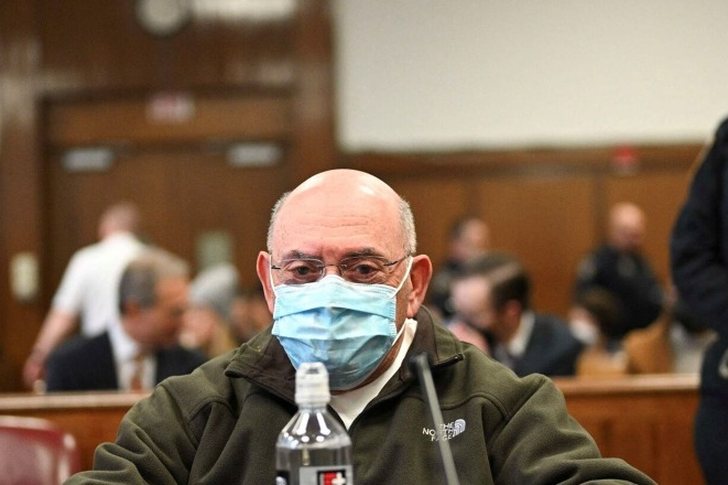
Allen Weisselberg, the former chief executive of Donal...
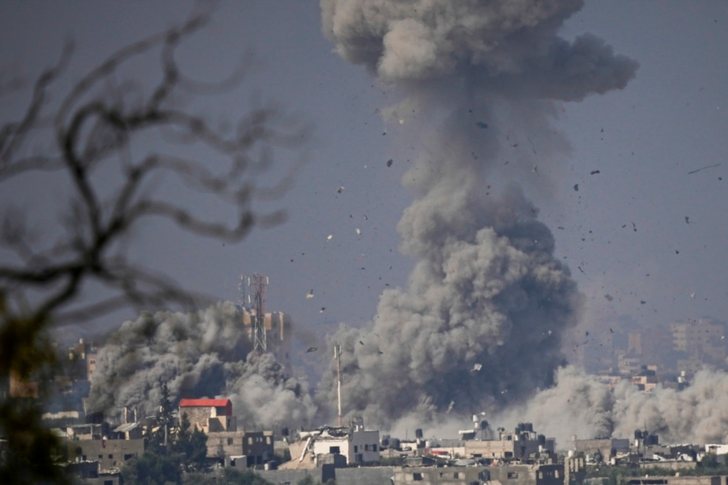
The three sons of Hamas leader Ismail Haniyeh were killed ...
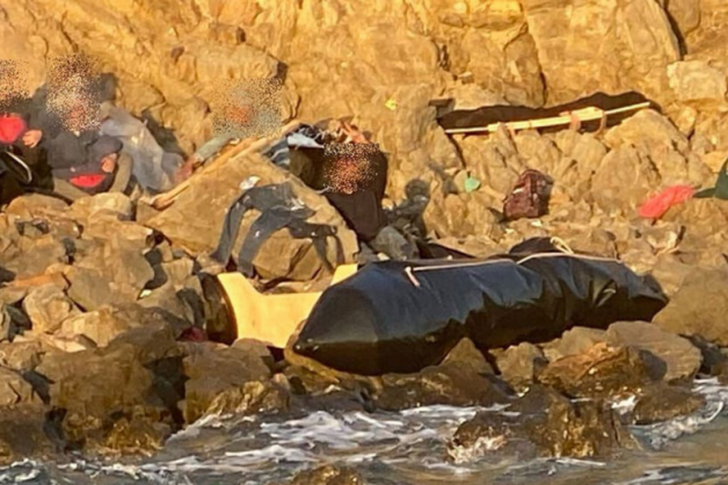
A boat capsized while transporting illegal immigrants ...

A shocking video comes from the US, about violence aga...
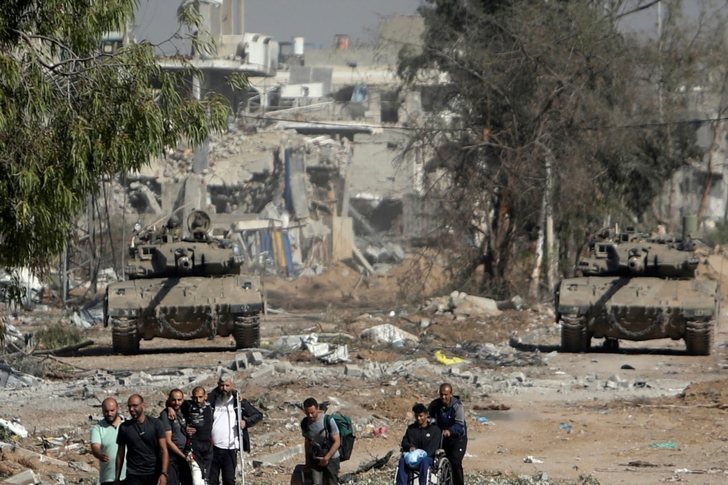
In its sixth month, the war between Israel and Hamas in Ga...
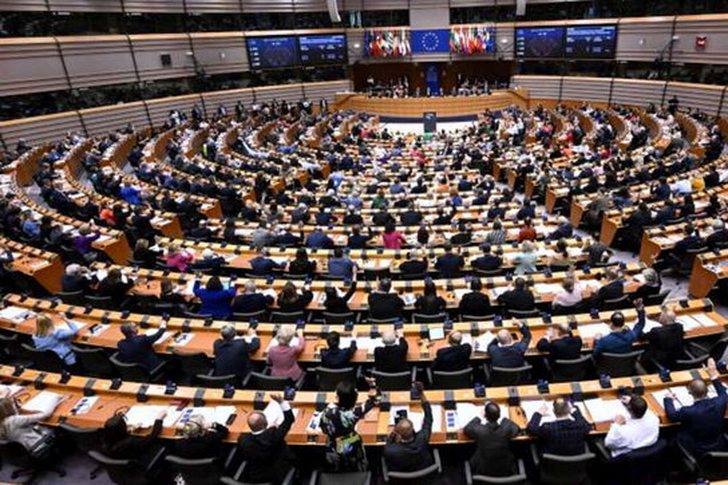
After many years of negotiations, the European Parliam...
In March, the Biden administration presented anothe...

The Financial Supervision Authority took 28 measures again...
By the decision of the government of Giorgia Meloni, t...

The search for the four missing after the tragic explo...
Dhjetra besimtarë në Gaza u mblodhën për të falur namazin ...
American voters say the economy is one of their biggest co...
The European Union is approaching a historic decision ...
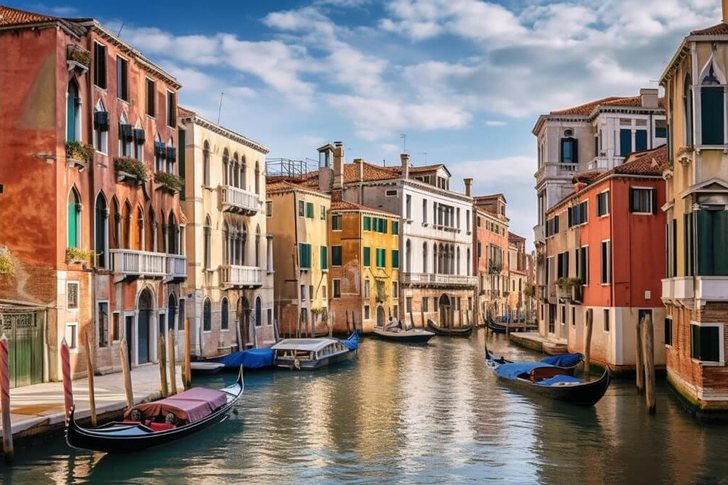
Udhëtarët ditorë që dëshirojnë të vizitojnë zonën hist...
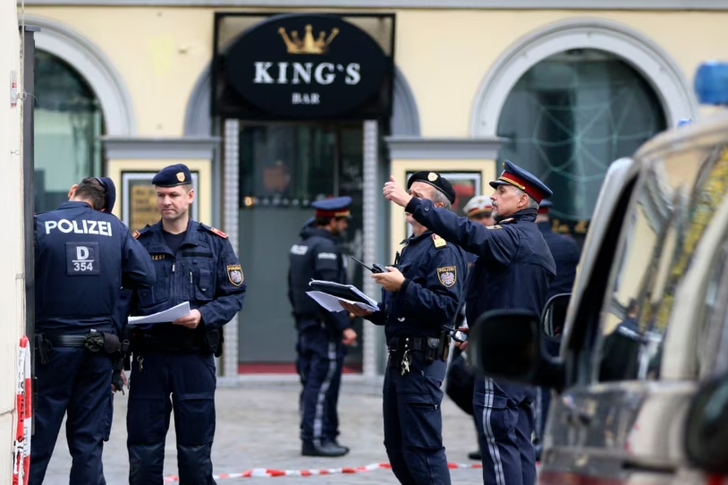
The European Union's Fundamental Rights Agency, FRA, s...

Xhamia Yeni, në Selanik të Greqisë është rihapur pas 102 v...
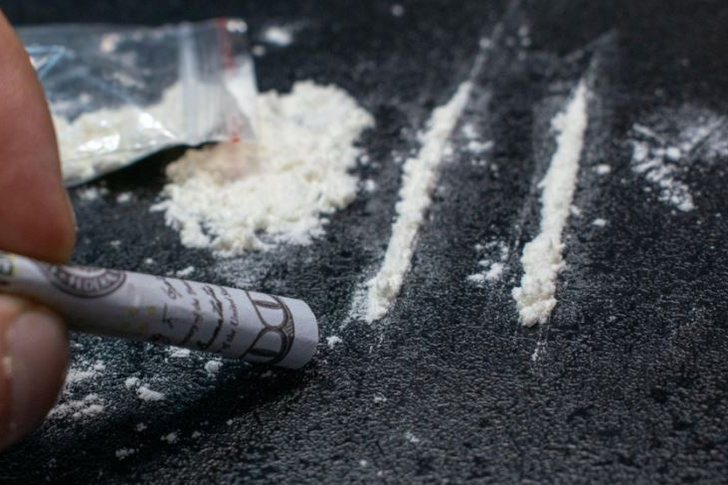
Studiuesit nga "King's College" në Londër kanë publiku...
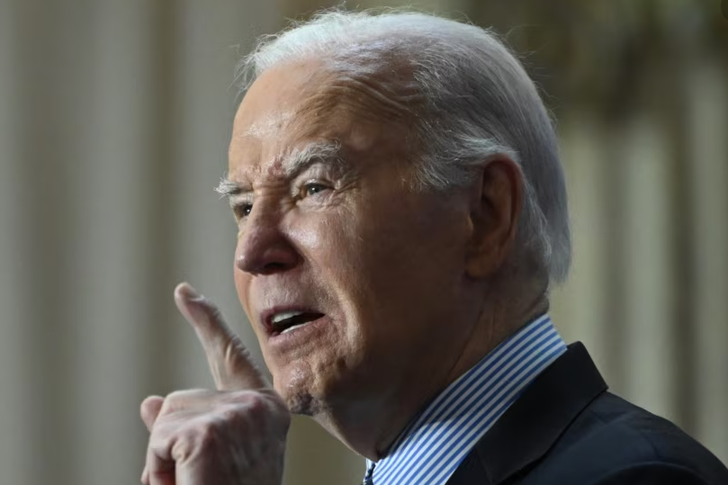
The President of the United States, Joe Biden, said that h...

CNA has launched another investigation that could lead to ...

Irfan Hysenbelliu is a businessman that we call "Irfan the...

In March 2026, CNA launched another investigation centered...
The arrested mayor of Tirana, Erion Veliaj, with 13 charge...

The Special Board of Appeal (KPA) decided this Monday ...

The KPA vetting decided this Thursday to dismiss the p...

Suela Salavaçi, a prosecutor in the Prosecutor's Offic...

The Special Board of Appeal reinstated the prosecutor ...

A road accident occurred this evening on Nikolla Zoraqi St...

Three people were shot and wounded in Elbasan last night b...

A serious incident occurred this Tuesday in the Yrshek are...

An accident occurred this Tuesday on "Dituria" street in K...

All of Southern Europe will face changing weather conditio...
Albania was hit by temperatures significantly higher than ...

For the first time, Pogradec welcomed the Inter-Lake Chess...

Albania has achieved a record for the employment of foreig...

US Secretary of State Marco Rubio arrived in Manila on Jul...

In the space of a few days, Ukrainian President Volodymyr ...

The spokesman for the Iranian Foreign Ministry warned Bulg...

Autoritetet italiane sekuestruan pako me afër 800 kilogram...

At a time when industrial products are increasingly taking...

Trust among people is not just a three-syllable word. It c...

Master of humor Todi Llupi has passed away at the age of 7...

The ninth edition of "MIK Festival" kicked off with one of...

Construction company licenses will have a validity period ...
The Centralized Purchasing Operator recently opened a tend...
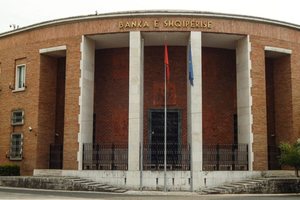
The new draft law "On the Bank of Albania" provides that t...
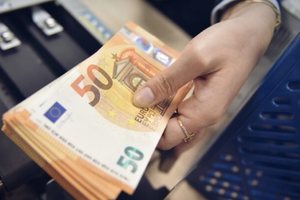
This Tuesday, one US dollar is bought for 81.2 lek and sol...