

IMF's Weber: "Fiscal Peace" Raises Concerns About Money Laundering and Terrorist Financing
The Albanian economy is growing at a rapid pace compared t...


Albania's economic growth has remained strong in recent years, supported mainly by tourism, construction, and real estate.
However, this model is showing its limitations, as the economy faces structural challenges such as lack of diversification, low productivity, and high emigration of skilled labor.
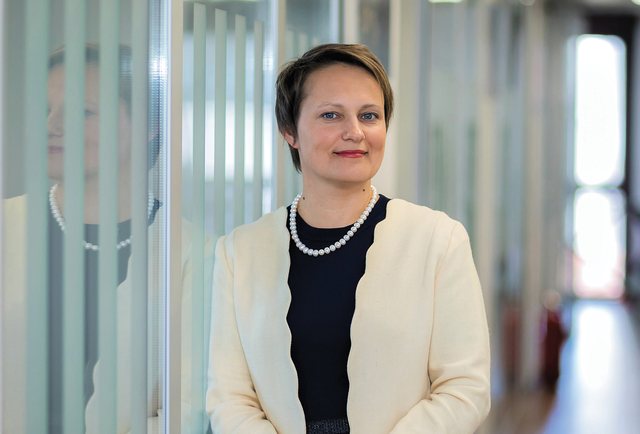
In this interview for "Monitor", Ekaterina Solovova, Resident Representative of the European Bank for Reconstruction and Development (EBRD) in Albania, emphasizes that the transition towards a more balanced economic model, based on investments in human capital, innovation and a green economy, is essential for long-term development.
She also underlines that without significant improvements in governance and the business climate, Albania risks losing its demographic advantage, making the return and attraction of talent one of the most critical challenges for the country's economic future.
How do you assess the performance of the Albanian economy in 2025?
Economic growth remained strong in the first half of 2025, although it moderated slightly compared to a year earlier, with Gross Domestic Product expanding by 3.6% in annual terms.
This growth was driven mainly by tourism, real estate and construction. Despite contraction in some sectors, such as industry and agriculture, as well as competitiveness challenges caused by the strengthening currency, government consumption and services exports continued to support broad-based growth in the economy.
The current account deficit narrowed, helped by improved performance across all its components, while Foreign Direct Investment flows reached a record level, concentrated mainly in the financial and real estate sectors.
We estimate that GDP growth remained at similar levels in the second half of the year and we predict a growth of 3.5% for the whole of 2025.
What are your expectations for 2026? What are the main potentials and risks for the economy?
We expect moderate economic growth to continue in the short term, although risks remain present.
GDP growth is expected to reach 3.5% in 2026, with downside pressures coming from weak demand in the Eurozone and deteriorating external competitiveness, as a result of rising wages and the strengthening of the Lek.
On the contrary, there are several positive factors that could support the economic outlook, including the continuation of structural reforms, progress towards European Union membership, opportunities for EU financing through the Growth Instrument, and the stable performance of the tourism sector.
In the short term, tourism, construction, and private consumption are expected to remain the main growth drivers. However, continued reliance on these sectors increases the economy's exposure to external shocks.
If this pattern continues, Albania risks facing higher economic fragility and a lack of diversification of growth sources.
The EU accession process, meanwhile, offers a valuable opportunity to reorient the growth model towards more sustainable drivers, such as increasing the competitiveness of domestic producers, developing a knowledge-based economy, and expanding export capacities.
Successfully exploiting this opportunity could enable Albania to achieve sustainable income convergence with the EU and build a more resilient economic structure.
Achieving this transformation requires the continued implementation of comprehensive and well-coordinated reforms, particularly in areas related to the business climate and governance.
Significant progress in these areas is essential to fully unleash the benefits of European integration and ensure long-term and sustainable economic development.
INSTAT data shows that public administration has made the main contribution to economic growth in the last two years. How do you assess this trend and what is your recommendation for a productivity-driven economic model in the medium and long term?
Such a development is temporary in nature, as it is related to the recent correction of public sector wage levels, and its impact is expected to fade over time. The Albanian economy is mainly led by the private sector, which is expected to support economic growth in the medium and long term.
However, the recent economic expansion is being driven mainly by the tourism and real estate sectors, raising some concerns due to the weak performance observed in the manufacturing industry and agriculture.
Although the tourism sector, which has experienced rapid development in recent years, is expected to remain a main pillar of economic growth in the near future, this dependence highlights the need for a more balanced structure of the economy.
Empirical evidence shows that investment, in its broadest sense, is consistently associated with productivity growth.
The Albanian economy can benefit greatly from increased investment in human capital, technological progress and innovation, the development of a greener economy, and strengthening governance.
Such strategic investments would create the conditions for a gradual transition towards a more sustainable growth model, supporting the development of higher value-added tourism and the expansion of sectors with higher productivity and value-added.
Model
The Albanian economy can benefit greatly from increased investment in human capital, technological progress and innovation, the development of a greener economy, and strengthened governance. Such strategic investments would create the conditions for a gradual transition to a more sustainable growth model, supporting the development of higher value-added tourism and the expansion of higher-productivity, value-added sectors.
The EBRD has been active in financing solar energy projects in Albania. How do you assess the potential of this segment? How prepared is the supporting infrastructure to cope with the rapid expansion of photovoltaic investments in the country?
Albania has very good potential for the development of solar energy, thanks to its favorable geographical position and high level of solar radiation, factors that continue to attract strong and growing interest from investors.
The EBRD has been a long-term development partner of Albania in the energy sector and has played a key role in strengthening the country's energy security, both through policy assistance and targeted investments.
Although the potential is considerable, large-scale integration of renewables requires appropriate infrastructure. Despite significant progress in recent years, grid capacity and system flexibility remain key challenges.
For this reason, our approach combines financing of renewable generation projects with investments in critical supporting infrastructure, including support for national energy distribution and transmission operators.
A concrete example is the sustainability-related financing package that the EBRD has provided to OSHEE this year.
By restructuring short-term liabilities into more sustainable long-term financing, this package helped free up investment for essential distribution network improvements, increasing system resilience and facilitating the integration of higher levels of renewable energy.
In parallel, we have worked closely with the transmission system operator, OST, through two technical cooperation projects funded by European Union grants:
(i) the first project aims to close the national transmission network ring and modernize the Fier substation, currently one of the most congested areas for photovoltaic energy in the country; and
(ii) the second project supports the development of a new cross-border transmission line with Kosovo, strengthening regional connections and increasing flexibility for renewable energy flows.
Beyond investments in physical infrastructure, we continue to support the development of the political and market framework that enables this transition.
Through initiatives such as the Renewable Energy Market Acceleration Program (REMA), the Bank has already assisted authorities in commissioning around 800 MW of new renewable capacity through the Contracts for Difference (CfD) scheme[1].
Looking ahead, the next phase of Albania's green energy transition will require greater system flexibility, including the integration of energy storage solutions, such as pumped hydropower (systems that store electricity) and battery energy storage systems (BESS).
Albania is at a critical point: rich in high renewable energy potential, but simultaneously facing infrastructure constraints that require significant investments in grid capacity and system stability.
It is important to maintain momentum and ensure that, with the right combination of policy reforms, strategic investments and strong partnerships, Albania manages to fully exploit its renewable energy potential and position itself as a regional energy hub.
How would you assess the progress of the Tirana - Durrës railway and other railway projects in Albania?
I would like to emphasize at the outset that large infrastructure projects are inherently complex. They require extensive preparation, coordination between many stakeholders, and careful management of environmental and social impacts. They also require significant funding, which means that their implementation is usually spread over several years.
The first railway project — the Tirana-Durres line — required considerable preliminary work, due to the general state of the railway network in Albania. Originally conceived several years ago, the project has evolved in content and scope over time.
Thanks to the joint efforts of the EBRD, international partners and Albanian institutions, the institutional capacities of Albanian Railways have been significantly strengthened, benefiting from the experience and lessons learned from this first project.
This capacity improvement has accelerated the preparation of subsequent projects. Today, three railway lines are already in the process of being rehabilitated to the highest international standards, supported by financing from the European Union, the EBRD and the European Investment Bank (EIB).
In this context, Albania's railway sector marked important steps forward during 2025. The Tirana - Durrës line is advancing at a rapid pace, with most of the infrastructure works completed and the construction of stations having begun at all points.
Meanwhile, the rehabilitation of the Vorë - Hani i Hotit and Durrës - Rrogozhinë segments is continuing, while several other projects are in the preparatory phase.
The EBRD and its partners are not only providing financing, but are also contributing to building institutional capacities within Albanian Railways, to implement projects that meet international standards.
This technical assistance is accelerating implementation and opening up the rail market. These developments demonstrate the EBRD's strong commitment to modernizing Albania's rail infrastructure and strengthening regional connectivity.
At the same time, this progress shows how cooperation with international financial institutions and strengthening institutional capacities can lead to faster implementation and more ambitious projects.
How do you assess the performance of your projects in Albania? Which sectors do you consider most promising for funding and support in the future?
Over the past five years, working closely with Albanian partners, the EBRD has significantly expanded its support for the Albanian economy.
We have invested 920 million euros of our funds in over 100 projects, while we have also mobilized more than 300 million euros in grants from the European Union to support investments and technical assistance.
Of particular importance is the fact that over 50% of investments are oriented towards private sector projects.
These efforts have brought about noticeable improvements in infrastructure, economic governance, and private sector competitiveness.
In the energy sector, over the past five years we have supported four competitive auctions for renewable energy — three for solar power and one for wind power — adding over 800 MW of new capacity, including financing the first large-scale solar park in Albania, in Karavasta.
In infrastructure, we have contributed to the advancement of railway reform and have provided funding for the rehabilitation of the Vorë – Hani i Hotit and Durrës – Rrogozhinë lines.
In the banking sector, through the AATSF (Albanian Agribusiness and Tourism Support Framework) program, we have mobilized 180 million euros in loans for Small and Medium Enterprises in agribusiness and tourism, combining financing with professional advice.
2025 was an exceptionally active year for the EBRD in Albania. We provided €218 million in financing to 30 projects across a range of sectors — a record level of engagement. Notably, half of this financing went to sustainable infrastructure projects, mainly in rail and energy.
The remaining 50% focused on strengthening SMEs and increasing the competitiveness of the private sector, through partner banks or direct financing.
Looking ahead, support for the green economy, the connectivity agenda, and the preparation of the private sector for European integration will remain key priorities.
We will focus on the implementation of renewable energy projects through competitive auctions, strengthening the electricity grid and distribution systems, as well as investing in energy storage solutions.
These efforts will enable Albania to fully integrate new solar and wind capacities, increase energy security, and position itself as a future energy exporter.
Beyond the energy sector, we will continue to support the rehabilitation of the railway network and are ready to contribute to the development of critical water supply, sewage and waste management infrastructure.
In the private sector, our commitment to improving access to finance remains strong. We will expand partnerships with domestic banks and implement targeted programs such as SME Reboot and Go Digital, along with risk-sharing instruments to boost lending and competitiveness.
We are also exploring the possibility of direct financing for large corporate projects, including cross-border expansions of Albanian companies and vice versa.
Recent data for Albania shows high emigration of highly educated citizens and relatively low return rates, a similar challenge in other countries in the region and beyond. How does Albania compare to countries facing the same trend, and what approaches from these experiences could be useful for strengthening talent retention and attraction in Albania?
In fact, the latest EBRD Transition Report highlights that, among highly educated people in Albania, almost a quarter have left, while relatively few highly educated people have come from other countries.
This trend is observed in many emerging European economies in general and in the Western Balkans in particular, where only a few countries (such as Bosnia and Herzegovina) also have higher emigration rates of people with university education.
The experience of other countries, from Poland to Mexico, suggests that as conditions improve and incomes rise, the net migration balance gradually changes. Educated individuals return in greater numbers and skilled workers begin to seek to move to the country from other countries.
The challenge for policymakers is to create the right conditions for those who return with ideas, skills, and capital gained abroad, conditions that enable them to be as productive as possible.
Drawing on the experience of other countries, some practical measures to encourage the return of skilled people could include, for example, accelerated business registration for returning emigrants, tax breaks, and co-investment schemes, where the state or supporting institutions match their capital with additional contributions.
Equally important, if not more so, are measures aimed at further strengthening governance and improving the business climate in general.
Return of talents
Drawing on the experience of other countries, some practical measures to encourage the return of skilled people could include, for example, accelerated business registration for returning emigrants, tax breaks, and co-investment schemes, where the state or supporting institutions match their capital with additional contributions./ Monitor

The Albanian economy is growing at a rapid pace compared t...
The landslide in Vlora has taken alarming measures. This ...

Residents of Durrës held a protest in front of the municip...
The recent floods in Albania are not just natural events. ...
Fillimi i 2026-ës e gjeti Shqipërinë nën presionin e motit...
The Institute of Statistics (INSTAT) will now be headed by...
Vehicle traffic on the Dardhas Administrative Unit road re...
The Special Prosecution Office has closed the investigatio...
The Institute of Geosciences has shared a forecast regardi...

SPAK has sent the criminal proceedings against a cocaine t...
The Supreme Court will review SPAK's appeal against former...
Prosecutor Arqile Koça has been elected Deputy Prosecutor ...
Intense rainfall and snowfall, accompanied by low temp...
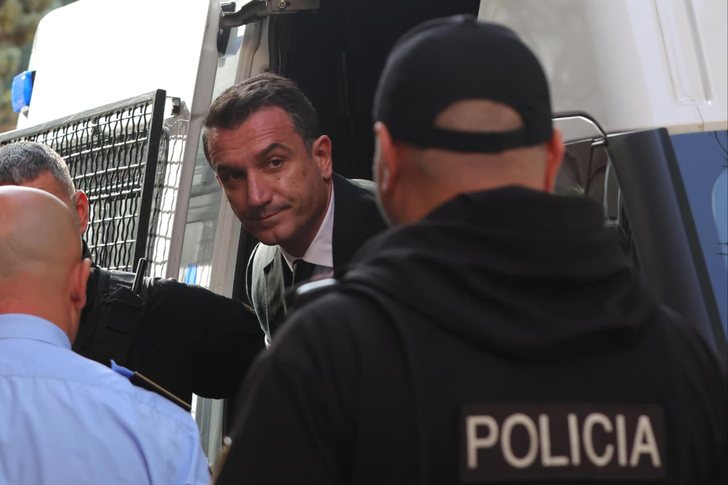
CNA denounced a flagrant case, where Mayor Erion Veliaj de...
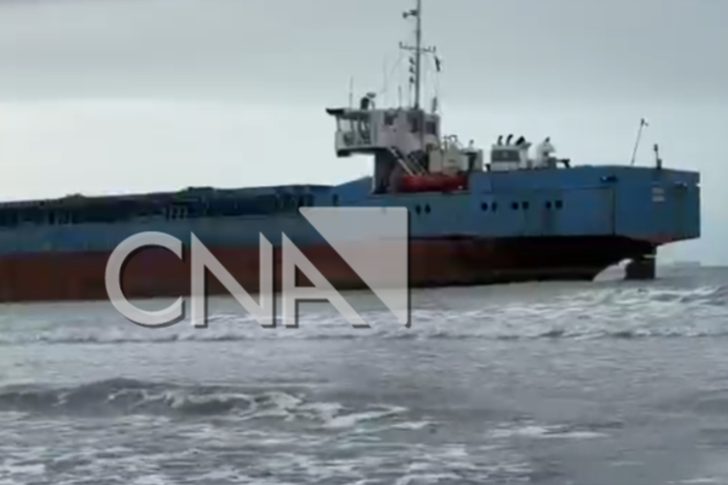
The Tanzanian-flagged ship remains stranded near the coast...
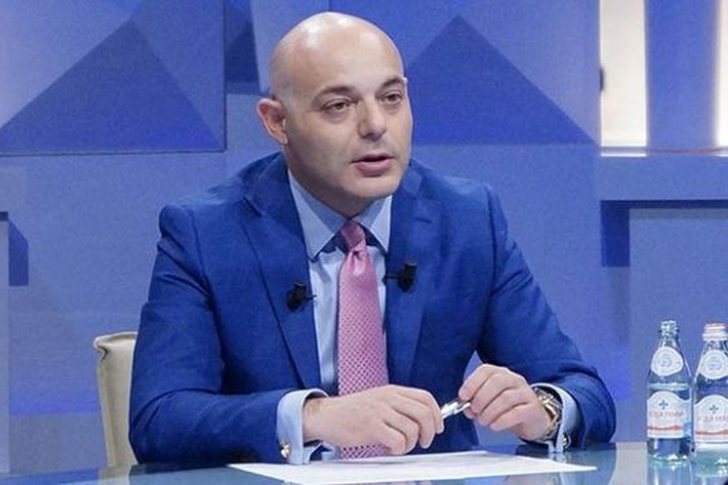
Journalist and moderator of the show "Opinion", Blendi Fev...
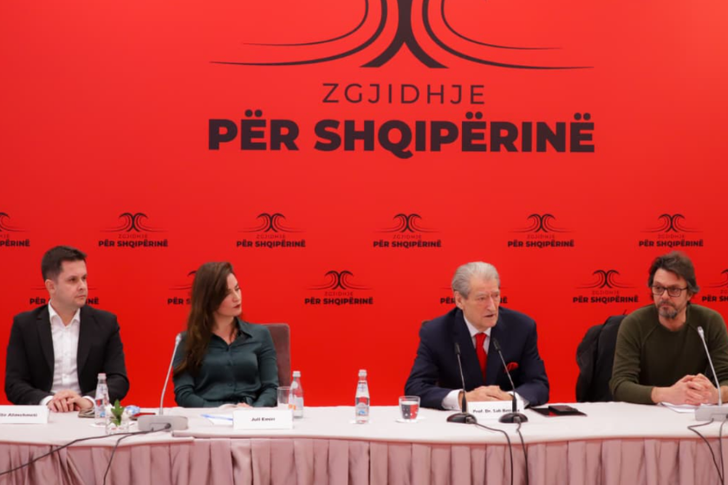
The leader of the Democratic Party, Sali Berisha, has made...
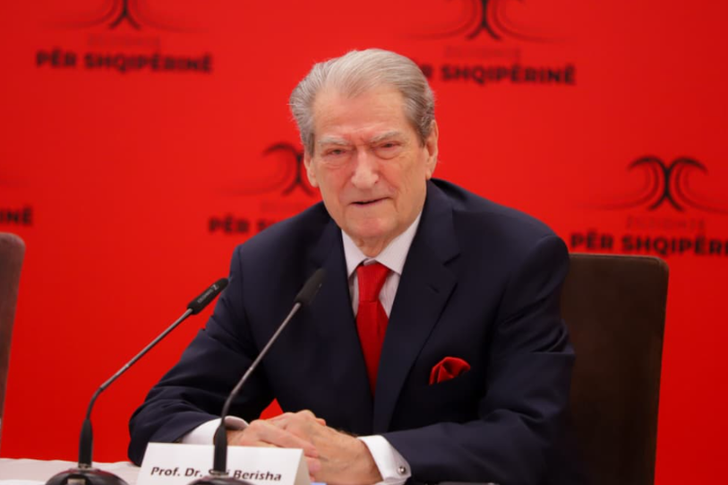
The leader of the Democratic Party, Sali Berisha, in a joi...
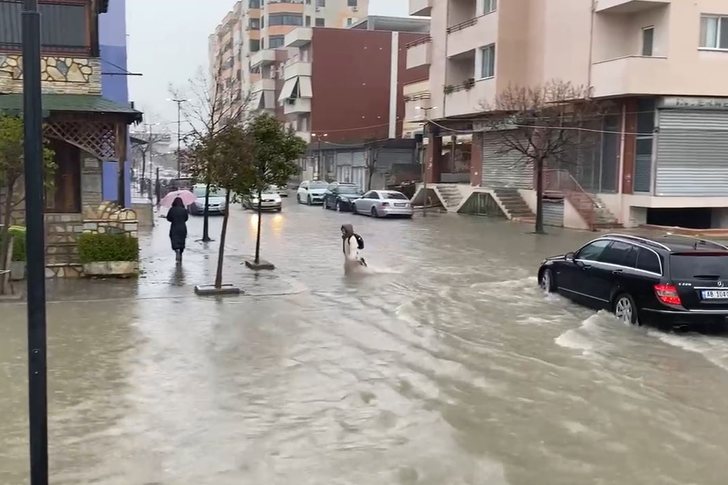
The situation in the Municipality of Durrës remains seriou...
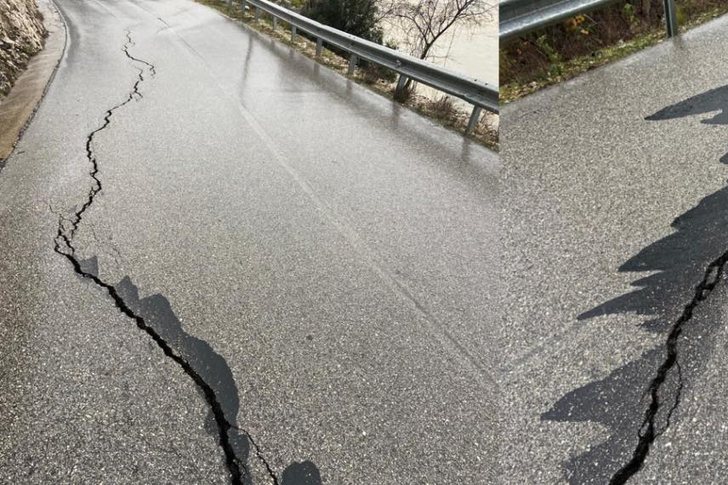
The Prefect of the Gjirokastër District informs citizens a...
Irfan Hysenbelliu claims to be a big businessman, an hones...

The murder of officer Enea Mekolli in the line of duty has...
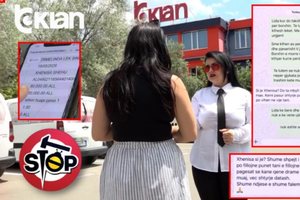
The next case broadcast on the show "Stop", this Thursday,...
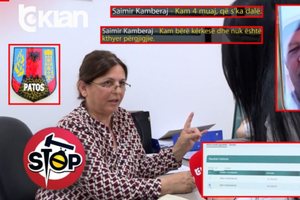
The case published this Thursday, June 4, on the show "Sto...

The Special Board of Appeal (KPA) decided this Monday ...

The KPA vetting decided this Thursday to dismiss the p...

Suela Salavaçi, a prosecutor in the Prosecutor's Offic...

The Special Board of Appeal reinstated the prosecutor ...

A 38-year-old man was arrested today near the Kamza turnof...

A money changer in Durrës lost 60 thousand euros after bei...
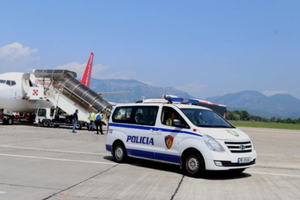
The 6 citizens captured in Dubai, members of criminal grou...
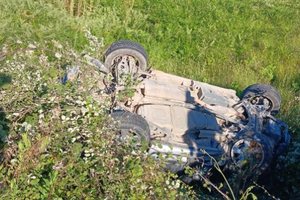
A serious accident occurred on the Kardhiq-Delvinë axis, i...
Today our country will be affected by stable weather condi...

For many children and teenagers, the long summer holidays ...
Albania is facing an unprecedented demographic transition,...
On Thursday, our country will be affected by unstable weat...
On the eve of the EU-Western Balkans summit, Germany and F...
Russian President Vladimir Putin said the war in Ukraine c...
An extraordinary story of survival has been recorded in Ne...
The Peace Implementation Council in Bosnia and Herzegovina...
Korça is ready to open the summer season with one of the c...
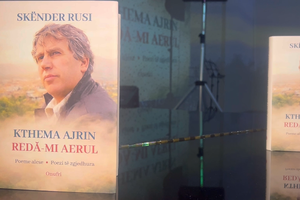
Two years after his passing, the renowned Korçë poet Skënd...
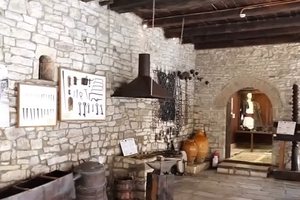
The Ethnographic Museum of Berat has opened its doors to v...
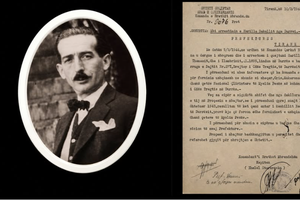
The story of Harilla Bakalli is one of the most chilling t...
Despite years of efforts at regional cooperation and free ...

Albania is the country with the highest level of severe ma...

This Friday, one US dollar is bought for 81.3 lek and sold...
The government aims to transform the country's industrial ...