

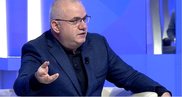


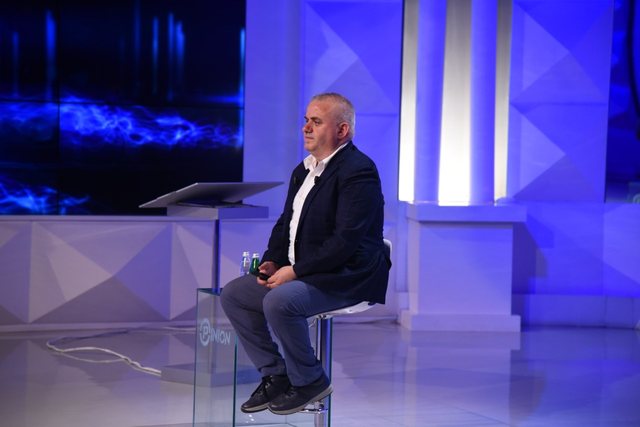
Journalist Artan Hoxha has given an interview, following the incident that occurred today at the Greek border.
Hoxha has said that his "non grata" declaration by the Greek state comes as a result of his duty as a journalist.
However, the journalist says he is not surprised by this decision, considering similar decisions against his colleagues.
The journalist said that the Greek police returned him to the checkpoint and he remained at the Greek immigration police station for about an hour.
After being questioned, Hoxha reveals that the Greek police handed him a decision from their country declaring him "undesirable".
Hoxha revealed that before being declared non grata, he had received warnings several times, after publishing several articles about Fredi Beleri.
What additional details can you give us about the moment of the arrest?
Hoxha: The latest action of the Greek state comes because of my position as a journalist in the last 25 years, since as a citizen I have never had problems in Greece. In fact, I have published dozens and dozens of articles in the written press and documentaries in the visual media, where I have denounced concrete actions by the Greek side or ultranationalist organizations supported by Greek politics and the state, to the detriment of the interests of the Albanian state and nation. The action was actually not unexpected, considering how they have acted in the past with fellow journalists like Marin Mema, who have denounced the anti-Albanian actions of the Greek state. In fact, I have not attacked the Greek state or interests, but I have defended the interests of my country and the Albanian citizens.
How did it all start at the border crossing?
Hoxha: I was going through a routine check at the border crossing point in Kakavija, when the Greek border policeman, as soon as he entered my passport into the system, immediately asked me who my parents were and what my profession was. He said that I could no longer continue my journey to Greece and that I had to go to the second control line for a more detailed questioning session.
How long were you held in Greek police custody and how were you treated during this period?
Hoxha: Yes, I spent about an hour at the Greek immigration police station. First, they took my general information, then my fingerprints and a photograph. After asking me about my activities, they told me that they would give me a decision from the Greek state declaring me “undesirable”. Although I asked for the reason for this decision, they only gave me the form declaring me undesirable and asked me to leave Greek territory immediately.
Did they immediately explain the reason for the ban to you?
Hoxha: No, they didn't give any concrete reasons, except for the written form they handed me. But, from the way they asked me questions and the arrogant attitude of the immigration officer, it was clear what the motive was. I violated Greek interests while I was defending the interests of my country and nation.
How do you personally describe this decision by the Greek authorities to declare you "non grata", since as is known, journalist Marin Mema was also declared "non grata" earlier?
Hoxha: This is a scandalous decision, almost medieval for a European country, which actually shows the true face of this country's democracy. The Greek state, even though it is an EU country, continues to have a discriminatory attitude towards Albanian journalists who have denounced anti-Albanian actions and projects of the Hellenization of southern Albania. This is not the first time; colleague Mema has been a victim of such an attitude for nearly 13 years. Unfortunately, there has been no concrete action by the Albanian government or the Ministry of Foreign Affairs in defense of the integrity of its citizens, especially when they are journalists who have defended the interests of the country.
Had you previously received any signals or warnings that you might be blacklisted?
Hoxha: Yes, I was warned earlier, after 2009, after I had published articles and several documentaries on the show "Jungle", regarding the agreement on the delimitation of the maritime border. Then, after 2018, when I published the video where Konstantinos Katsifas appeared armed with a Kalashnikov and a Greek special forces military uniform, shooting at the unarmed police of the Dropulli police station.
In 2019, after the Serious Crimes Prosecution launched an investigation against Fredi Bejler in connection with the Peshkëpi Massacre in 1994.
The denunciations and publication of new facts about Fredi Bejleri's involvement in the Peshkëpi Massacre, or his intervention to release Albanian criminals from Greek prisons, allegedly because they were Greek minorities persecuted by Albanian governments, apparently filled the glass. During the years 2023–2024, I had several court proceedings in the criminal court in Tirana, initiated by Fredi Bejleri, but he did not succeed in intimidating me into silence.
During the electoral campaign for the European Parliament elections, where Beyler was a candidate for the ruling party in Greece, Prime Minister Mitsotakis' New Democracy, I collaborated with major Greek media outlets, bringing them information that showed Beyler's problematic past to the Greek public. Apparently, all of this influenced the Greek state to identify me as an obstacle to its plans and interests, for the Hellenization of the south of the country.
The latest decision is a pure attempt at pressure and intimidation to refrain from denouncing anti-Albanian interests supported by certain political circles and the Greek state.


The day begins with the holiday lights and you can find th...
The United States, as part of its program to combat organi...
The Institute of Geosciences has today shared a forecast f...
The Food and Veterinary Agency in Kosovo has announced tha...
Tirana Police has published a plan of measures to guarante...
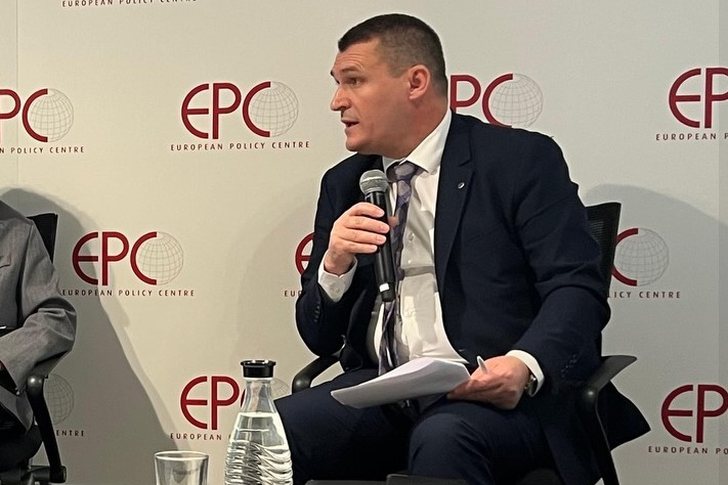
SPAK Chief Prosecutor, Altin Dumani, spoke at the European...
The Union of Albanian Journalists (UGSH) has reacted sharp...
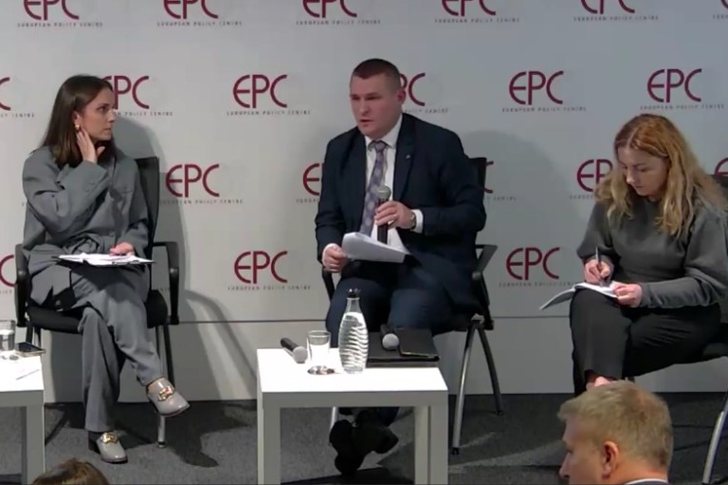
The Head of the Special Prosecution Office, Altin Dumani, ...
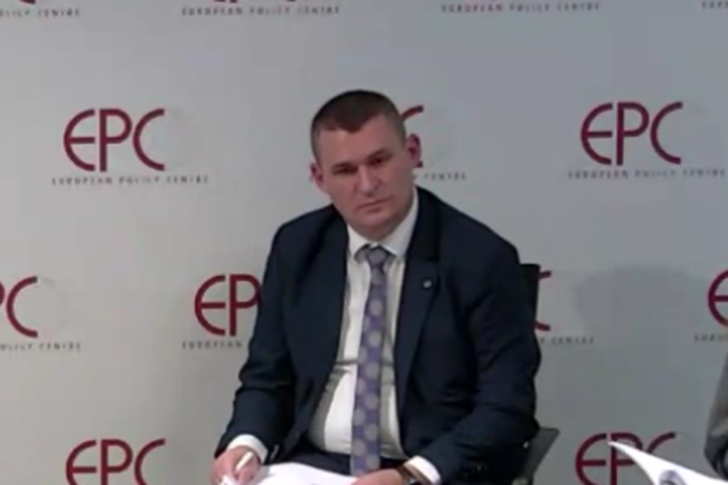
SPAK head Altin Dumani from Brussels, in a statement for t...
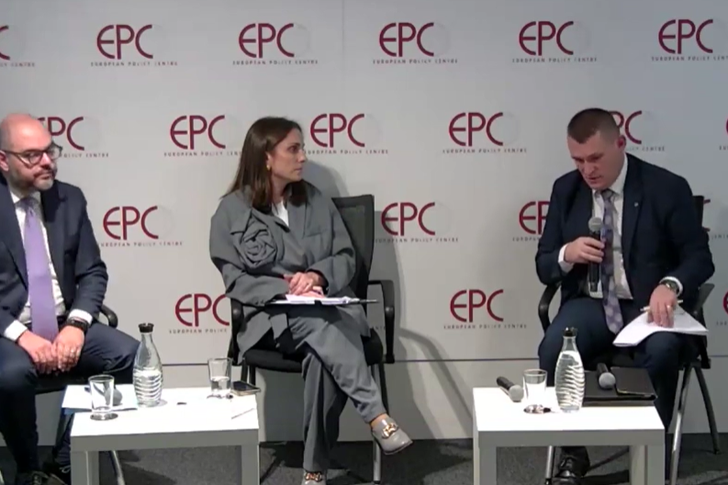
The head of SPAK, Altin Dumani, during his visit to Brusse...

The Competition Authority has adopted a new regulation tha...
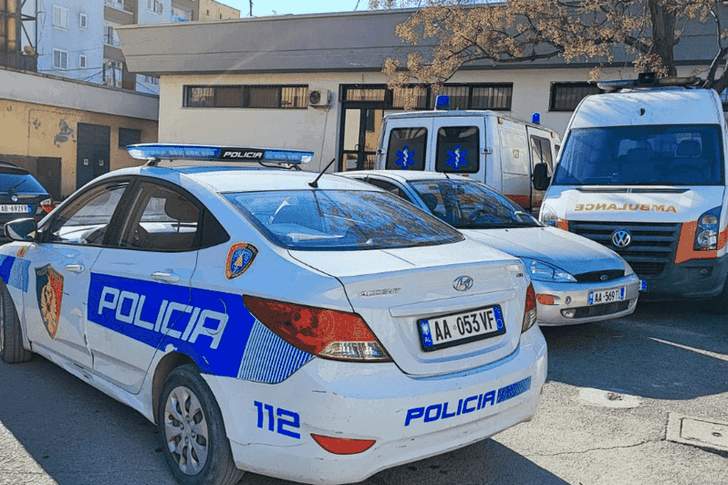
A road accident occurred today on the "Korça-Ersekë" axis,...
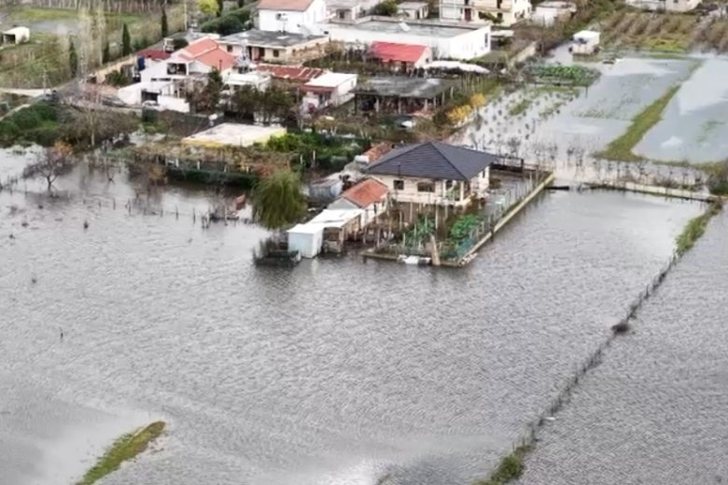
Rainfall in the territory of the Lezha region continues wi...
Meteorologist Lajda Porja has predicted what the weather w...
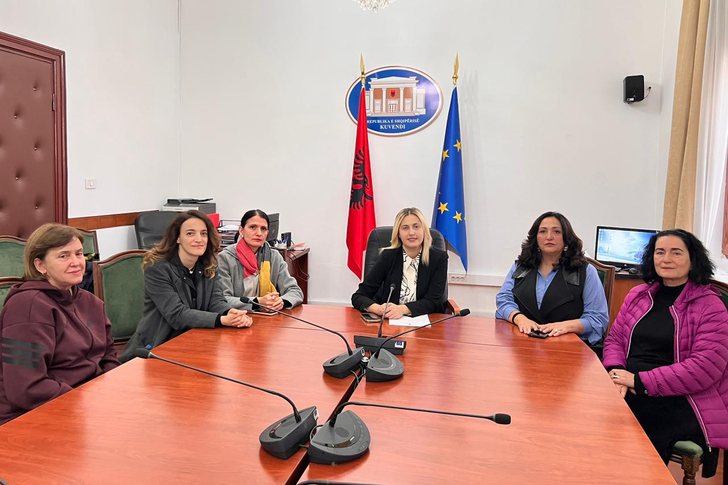
Democratic Party MP Ina Zhupa has submitted a new bill to ...

The authorities of the Republic of Greece declared yesterd...
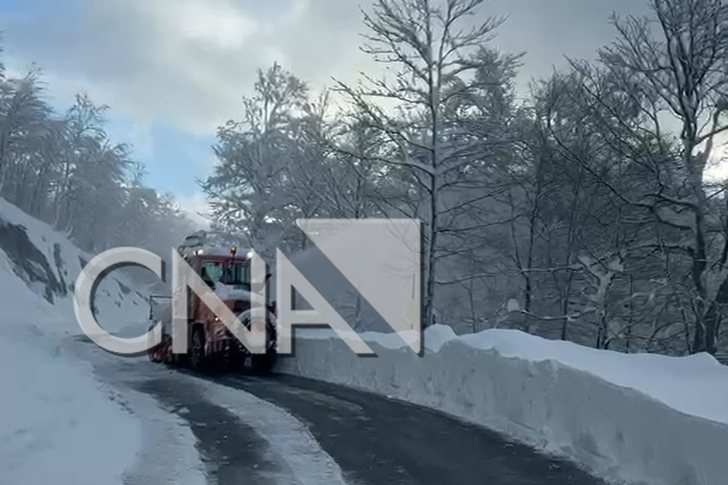
Snowfall has stopped in the mountain axes Koplik-Bogë, Ded...
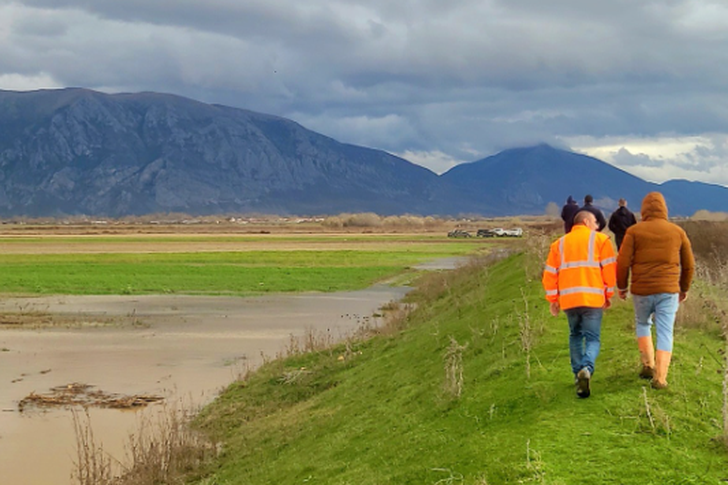
The recent rainfall has caused a number of problems in the...

The newspaper "Panorama" opens with the headline: "INAUGUR...
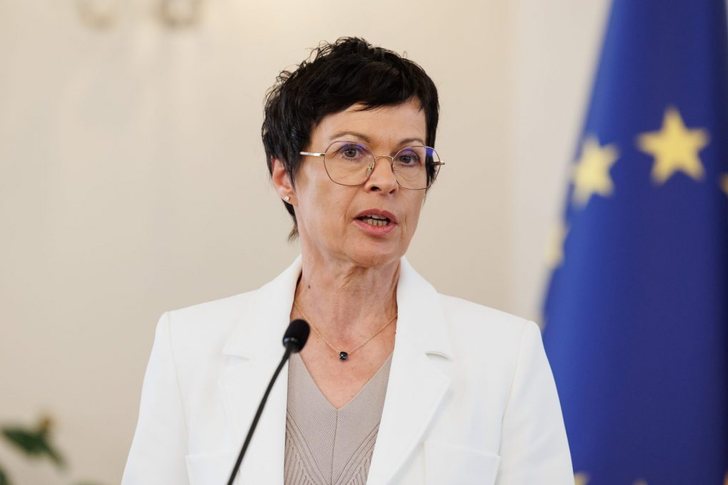
EU Commissioner for Enlargement, Marta Kos, spoke in an in...

CNA has launched another investigation that could lead to ...

Irfan Hysenbelliu is a businessman that we call "Irfan the...

In March 2026, CNA launched another investigation centered...
The arrested mayor of Tirana, Erion Veliaj, with 13 charge...

The Special Board of Appeal (KPA) decided this Monday ...

The KPA vetting decided this Thursday to dismiss the p...

Suela Salavaçi, a prosecutor in the Prosecutor's Offic...

The Special Board of Appeal reinstated the prosecutor ...
A conflict occurred this Thursday evening in the toy area ...
A person has died today on Orikum beach. According to repo...
Footage emerges from the serious accident that occurred th...
A Shkodra traffic police officer was hit with hard objects...

Children without parental care, for whom alternative famil...
On Thursday, our country will be under the influence of st...
A serious accident that occurred this Wednesday with the c...

The Institute of Geosciences has shared a forecast for wea...
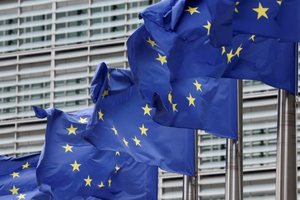
The European Union Office in Kosovo has called on all poli...
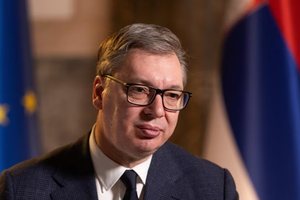
Serbian President Aleksandar Vučić, at a press conference ...
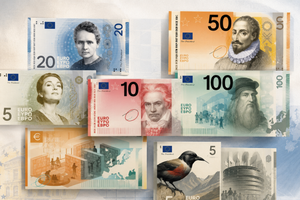
For the first time since the launch of the euro, European ...

Artificial intelligence (AI) models from the American comp...

At a time when industrial products are increasingly taking...

Trust among people is not just a three-syllable word. It c...

Master of humor Todi Llupi has passed away at the age of 7...

The ninth edition of "MIK Festival" kicked off with one of...
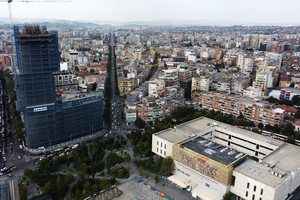
The average sale price of apartments in Tirana reaches rec...
This Thursday, one US dollar is bought for 81.5 lek and so...
The price of diesel reached 206 lek per liter from 198 lek...

Businesses will no longer be required to simply register t...