

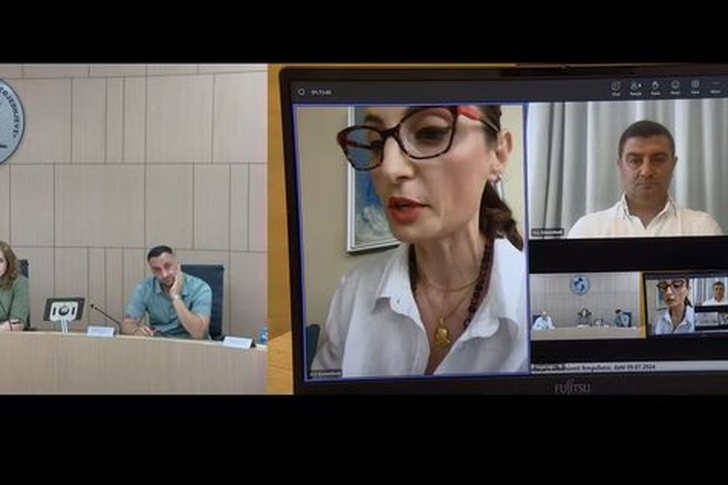
Debates in the Regulatory Commission/ The draft decision of the CEC for the elections in Himara is not approved
The Regulatory Commission in the CEC has not approved ...


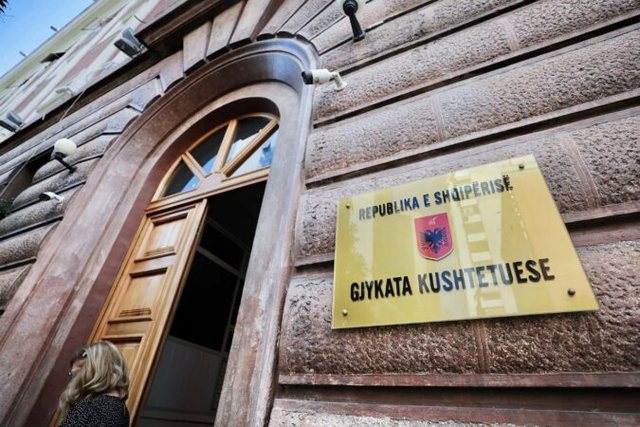
The Constitutional Court has partially accepted the opposition's request for the law on investigative commissions.
As a result, the Constitutional Court has abolished several articles of the law on investigative commissions.
The court has given 6 months to the Assembly to regulate the law on Investigative Commissions.
Regarding the merits of the case, the Court decided to partially accept the request, as follows:
1-Unanimity, finding the incompatibility with the Constitution of Article 4 of Law no. 106/2023, related to the initiative for the creation of the investigative commission, due to the legal gap in the content of this provision. The legal gap has to do with the need for "alternative formulations of the object of the investigation", as stated by the Court in its jurisprudence (decision no. 30/2014), as it infringes, in essence, the right of the parliamentary minority to establish the investigative commission .
For the above, the Court, without questioning the binding force of its decisions, notes that, although during the trial it was established that this provision was intended to reflect the constitutional jurisprudence, this reflection is incomplete, as long as they have been reflected only three criteria: i) the issue must be related to the legislative function and other functions of the Assembly; ii) the object of the investigation must focus on concrete issues or subjects; iii) there must be sufficient data or evidence for the existence of the case for which the establishment of the investigative commission is requested.
By leaving out of these criteria the "alternative formulation" of the object of the investigation, as one of the elements that enables the establishment of the investigative commission, the current formulation of the legal provision leads to the infringement to the point of impossibility of exercising the right of the parliamentary minority.
The court emphasized that parliamentary control is related to the direct democratic legitimacy of the Parliament and through it the governance itself also gains legitimacy.
2- By a majority of votes, the finding of incompatibility with the Constitution of the content of Article 7 of Law no. 106/2023, which provides for the interim decision to take evidence, due to the legal gap in its content, as long as this formulation does not contain full procedural guarantees to guarantee the right of the parliamentary minority to effective parliamentary control. Taking evidence from the commission of inquiry should aim to bring "light into the darkness" in order to enable the clarification of political responsibilities. The interim decision to reject evidence should be an exception to the general rule that evidence requested by the parliamentary minority should be taken. The decision to reject evidence must be justified in terms of reasons. A rejection decision may also lead to the emergence of a dispute of competences between the constitutional bodies.
3. With a majority of votes, the repeal of Article 9 of Law no. 106/2023, which added points 1/2 and 2/4 to Article 16 of the law on investigative commissions, which are related, respectively, to obtaining permission from the prosecution and the court for questioning witnesses, as well as the right of the witness to refused to testify.
The court, taking into account that the parliamentary investigation procedure pursues different goals from that of criminal proceedings, aiming to clarify an issue for political reasons, emphasizes that this goal is consistent with the principle of separation of powers.
For the above, the Court reached this conclusion due to the ambiguity in the formulation of these legal provisions.
Regarding point 1/2, the Court assessed that the wording is not clear in terms of the principle of separation and balance between powers, as well as the need for this intervention. The purpose of preserving investigative secrecy can be fulfilled by questioning witnesses behind closed doors.
And in relation to point 2/4, the Court notes that although it basically seems to refer to the content of Article 32 of the Constitution, regarding the guarantee of the constitutional right not to testify against oneself or one's family, this right is applicable directly not only by the constitutional norm, but it is also guaranteed within the principle of due process, according to the content of article 3, letter "b", of law no. 106/2023. In any case, it is also fulfilled by the guarantees offered by the Code of Criminal Procedure, which is applicable in the investigative procedure of parliamentary control.
4. By majority vote, the conciliatory interpretation of article 6, point 3, letters "c" and "d", of law no. 106/2023, regarding the taking of evidence without the participation of the public, after finding that this provision gives several results depending on the methods of interpretation, so the Court selected the result that is compatible with the constitutional norms.
The Court appreciates emphasizing that in the treatment of claims and violations of this provision, the right to information and transparency of the elected bodies, in the sense of Article 23, point 3, of the Constitution, in relation to other human rights (such as that of private, personal life, life, health, etc.). The court came to the conclusion that, as a rule, the activity of the investigative commission should be public and only exceptionally it can take place behind closed doors, when human rights prevail in relation to the right to information.
In addition to the above, regarding the "trade secret", according to the letter "c", the Court assessed that in the implementation of this provision, its definition according to the legislation in force should be applied. As for "secret in the interest of the state", according to letter "d", the Court assessed that it should be interpreted as any data provided as classified information based on the law, including "investigative secret".
Regarding other provisions of the law no. 106/2023 contested by the applicant, the Court assessed their dismissal as unfounded./ CNA

The Regulatory Commission in the CEC has not approved ...
Mayor Erion Veliaj continues the saga of frauds. After...
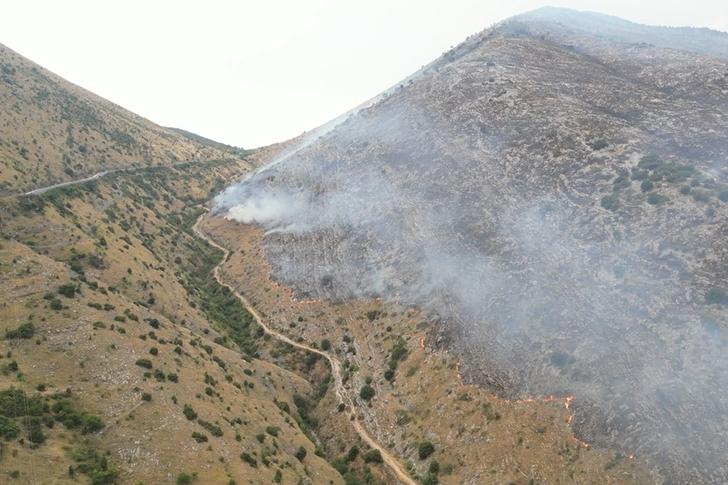
The Ministry of Defense has given details about the fi...
The political leader of the PD for Tirana, Belind Kell...

The Regional Cooperation Council (RCC), with the suppo...
The Central Election Commission decided this Friday to...
SPAK seized the company "5D" with de facto owners Mari...

The Supreme Court has postponed the court session for ...
After SPAK's investigations, the mayor Erion Veliaj ha...
The Prefect of Vlora, Vangjel Tavo, has revealed how h...
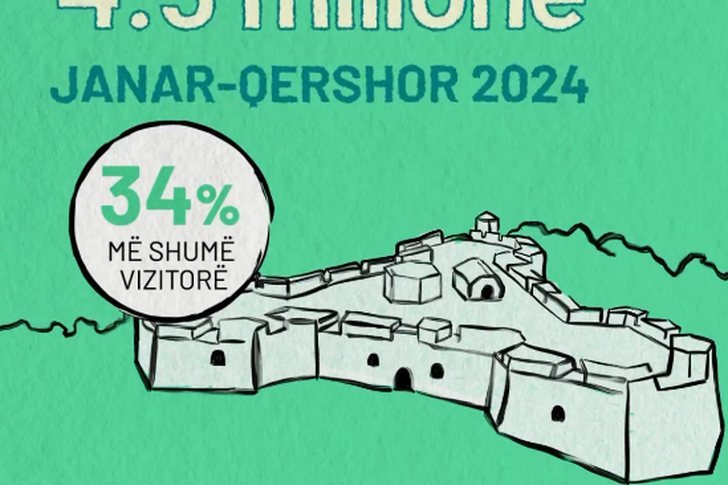
4.5 million foreign tourists entered Albania in the fi...

At noon on Tuesday, a fire is threatening to approach ...
They carried out fictitious procedures for the purc...

CNA has been reporting for months that SPAK has launch...
The process of self-cleaning of the State Police continues...
CNA reported a few months ago that SPAK is investigati...
The Special Court, at the request of SPAK, has seized ...
The Special Court, at the request of the Special Prose...

The television platform "DigitAlb" has gone up for sal...
They shot at least 8 times in the direction of the car in ...
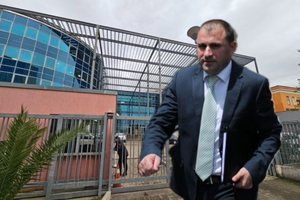
Dritan Prençi is the SPAK prosecutor who is sleeping on th...
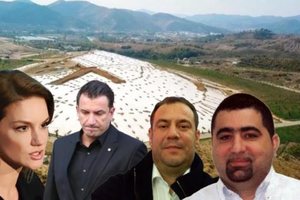
The in-depth investigations that SPAK conducted into Ajola...
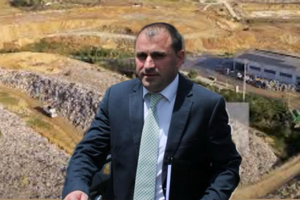
SPAK's standards, the way it investigates, how it secures ...

Irfan Hysenbelliu claims to be a big businessman, an hones...

The Special Board of Appeal (KPA) decided this Monday ...

The KPA vetting decided this Thursday to dismiss the p...

Suela Salavaçi, a prosecutor in the Prosecutor's Offic...

The Special Board of Appeal reinstated the prosecutor ...
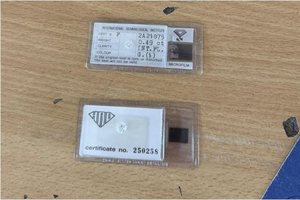
Durres Customs has announced that today, during checks car...
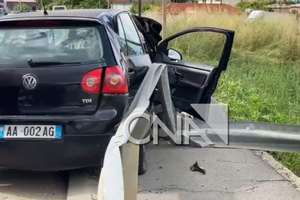
A road accident was recorded a few minutes ago on the Pogr...

The State Police has published new footage from the operat...

A TNT explosion has occurred in the village of Balldren i ...

Albania is facing a deep demographic crisis where official...
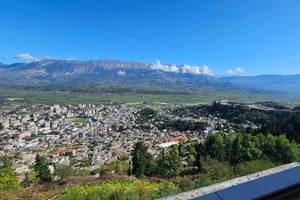
This Wednesday, our country will be affected by relatively...

The UN's World Meteorological Organization now warns that ...
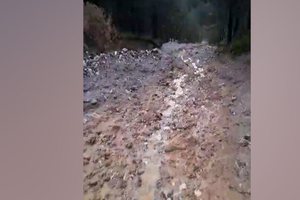
Intense rainfall has caused numerous problems in the Radom...
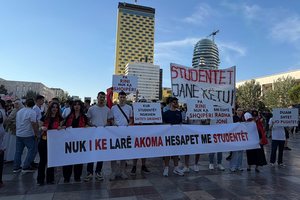
Citizens have gathered in Skanderbeg Square on the 11th da...
The United States, Australia, European allies and other co...

United States Secretary of Defense Pete Hegseth visited th...

Prices in the US in May rose at their fastest pace in thre...

Korça has transformed this weekend into the capital of cel...
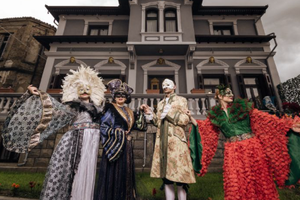
Korça is ready to open the summer season with one of the c...
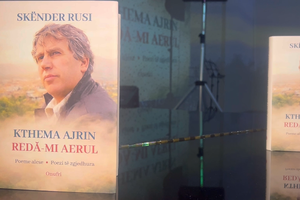
Two years after his passing, the renowned Korçë poet Skënd...
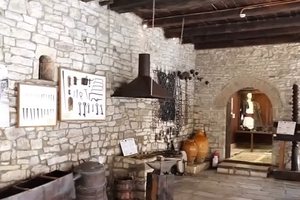
The Ethnographic Museum of Berat has opened its doors to v...

The non-performing loan ratio returned to decline in April...

This Wednesday, one US dollar is bought for 81.6 lek and s...

The 2025 turnover reassessment for businesses in Tirana ha...

Predictions of a severe oil shortage this summer have not ...