


Murder of the officer in Maliq/ New details, names and circumstances of the incident revealed
New details have emerged regarding this morning's serious ...

New details have emerged regarding this morning's serious ...

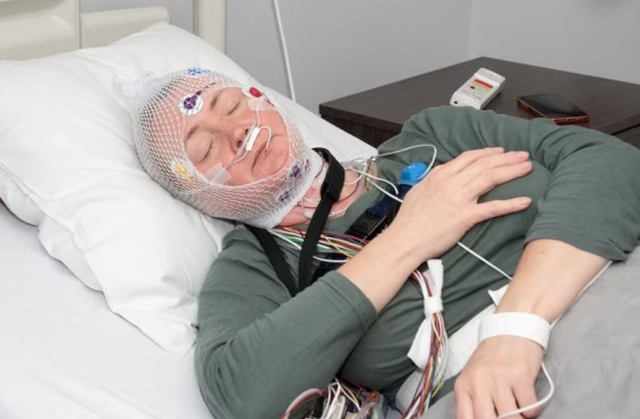
Your body talks while you sleep, and what it says could help doctors predict your future risk for serious illness, a new study says.
An experimental artificial intelligence (AI) called SleepFM can use people's sleep data to predict their risk of developing more than 100 health problems, researchers reported Jan. 6 in the journal Nature Medicine.
The study reported that SleepFM excelled at predicting various diseases such as cancer, pregnancy complications, heart problems and mental disorders. It can also predict a person's overall risk of death, the researchers noted.
“SleepFM is essentially about learning the language of sleep,” co-senior researcher James Zou, an associate professor of biomedical data science at Stanford Medicine, said in a press release.
The researchers trained the artificial intelligence with over 585,000 hours of sleep data from 65,000 people whose sleep was monitored at a sleep center.
These comprehensive sleep assessments record brain activity, heart activity, breathing, leg movements, eye movements and more, the researchers said.
The team then used long-term data from the Stanford Sleep Medicine Center to link sleep patterns to health risks. About 35,000 patients went to the center for sleep assessments and were followed for up to 25 years.
SleepFM analyzed more than 1,000 disease categories in patients' health records and found 130 that could be predicted with reasonable accuracy from their sleep data, the researchers said.
They used a statistic called the C-index, or compatibility index, to test the AI's ability to predict diseases. A C-index of 0.8 or higher indicates that it can predict diseases accurately.
SleepFM predictions were particularly strong regarding Parkinson's disease (C-index 0.89), dementia (0.85); hypertensive heart disease (0.84); heart attack (0.81); prostate cancer (0.89); breast cancer (0.87); and death (0.84).
The team found that there was some interaction between the heart and the head during sleep.
Heart signals during sleep were more important in predicting heart disease, while brain signals did so in predicting mental health, the researchers said. However, combining all the data that came in produced the most accurate predictions.
The team is now working on ways to further improve SleepFM's predictions, perhaps by adding data from other devices such as wearables.
Researchers are also trying to better understand what SleepFM is considering when making its predictions./ CNA


Focusing solely on weight can obscure other changes that i...

The United States has announced that it is reviewing child...

If you're looking for a simple and sustainable way to feel...

Orange juice, long considered problematic due to its high su...

As the new year begins, many of us set goals to eat health...

Did you overeat on New Year's Eve, feeling bloated from ca...

Honey varieties are classified primarily by the type of fl...

The new year is considered an ideal time to start new and ...

A New Year is the perfect time to reset and embrace habits...

St. Basil's Cake (Vasilopitės - from Greek, meaning "cake ...

To wash clothes better, read care labels, sort loads (colo...

Pickles are a favorite side dish, condiment, and appetizer...

In addition to its wonderful taste and aroma, pears are ri...

The holidays are a time of increased social, professional,...

When it comes to healthy foods, almonds and walnuts are of...

A new flu virus circulating this season is proving particu...
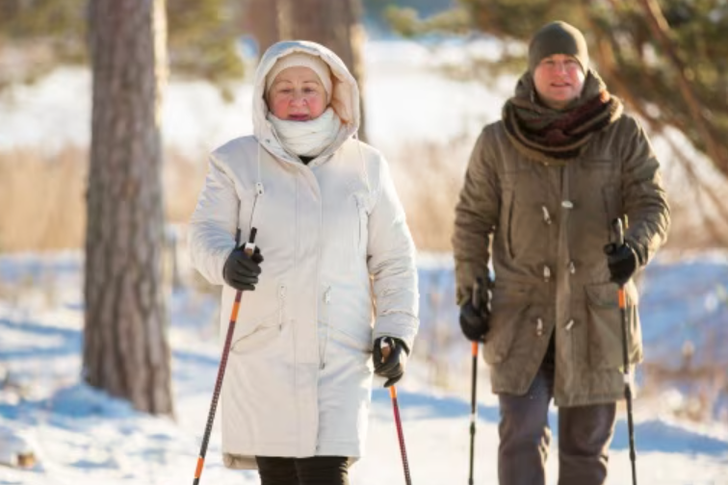
Most people know the basics of avoiding infection, such as...

Chocolate is facing a "climate barometer" as extreme weath...

The biggest problem with the holiday season is that we ten...

Food is our main source of energy and vitality. By adding ...

The case addressed this Wednesday, June 3, on the show "St...

The show "Stop" broadcast this Wednesday, June 3, the case...

Irfan Hysenbelliu claims to be a big businessman, an hones...

The show "Stop" dealt with a denunciation case this Tuesda...

The Special Board of Appeal (KPA) decided this Monday ...

The KPA vetting decided this Thursday to dismiss the p...

Suela Salavaçi, a prosecutor in the Prosecutor's Offic...

The Special Board of Appeal reinstated the prosecutor ...

New details have emerged regarding this morning's serious ...

A serious incident occurred this Thursday in Maliq, more s...

A road accident occurred this evening on the Tirana-Durres...

Policia e Lezhës ka dalë me reagim zyrtar lidhur me ngjarj...

Albania is facing an unprecedented demographic transition,...

On Thursday, our country will be affected by unstable weat...
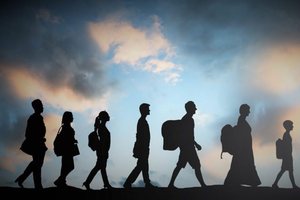
An alarming figure of more than 166.4 thousand Albanians a...

The weather today will be mostly clear and temperatures wi...

Israel and Lebanon have agreed to renew their fragile ceas...

United States President Donald Trump announced in a post o...

Asambleja e Përgjithshme e Kombet e Bashkuara ka përfundua...

At least nine people have been killed in Israeli airstrike...

Korça is ready to open the summer season with one of the c...

Two years after his passing, the renowned Korçë poet Skënd...

The Ethnographic Museum of Berat has opened its doors to v...

The story of Harilla Bakalli is one of the most chilling t...

Today, in the foreign exchange market, one US dollar is bo...

The Minister of Finance, Petrit Malaj, announced today a n...

Guvernatori i Bankës së Shqipërisë, Gent Sejko, priti m...
Today, in the foreign exchange market, one US dollar is bo...