





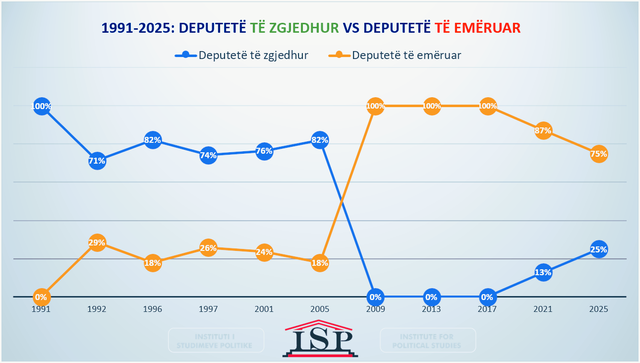
The Institute of Political Studies (ISP) has drawn up the ratio curve between elected deputies and appointed deputies during the transition, based on the fact that with the new legal changes with the SP-PD consensus, more than 100-105 deputies will be appointed, that is, without real opportunities to vote and compete.
The supporters of this variant point out that the deputies are appointed by the parties and indirectly within the parties themselves competitive preliminary elections take place, but experience has shown the opposite.
"None of the MPs removed from politics due to decriminalization and criminal records were the product of voting and internal competition in their political parties; they have been discovered, invited, proposed, supported and appointed deputies directly by the chairman of the political party. The need for votes and mandates prevailed over the need for quality democracy, and therefore absurd phenomena occurred, such as that of Lezha in 2013-2017, where criminal records exhausted the list of the majority, passing the last mandate to another political party. Thanks to this phenomenon, Albania became the only country in the civilized world that adopted the decriminalization law, according to which individuals with criminal records could not be MPs. Individuals removed from parliament did not leave political parties, continuing to have great political and electoral influence. In the last two legislatures, the phenomenon occurred, according to which the chairman of a political party appointed two deputies to the list, children of known individuals with criminal records, formally ensuring their "purity", but further feeding the corrupt system and abusers of the appointment of the "strong" in parliament. Which party and which party leader took and held responsibility for the negative costs they brought/brought to parliamentarism, the country, the political system and democracy in Albania? None. Never.
If in 1991 the majority system was applied, between the years 1992-2005 the mixed system was applied, with 100 / 115 areas in the majority and the rest in proportional order by the party, with obvious deviations from the practices of tactical voting (Dushku's scheme) on 2001 and 2005. In this period, officially, the level of election of deputies by citizens was relatively high, over 70%, while the constitutional changes of April 2008, initiated in the name of a system that promotes political elites, brought a reversal of the reports in favor of appointed deputies. From 100% nomination in the years 2009-2017 to the elections of 2021 with an easy opening where 18 MPs received more votes than the first threshold, among which only 3 overcame the ranking, securing the mandate", ISP concluded. .
With the new change in the 2025 elections, according to the experts of the Institute of Political Studies, it is expected that around 105-106 deputies will be appointed and the rest will go through a competitive process, mainly on the list of a political party.
"The system of appointed deputies penalizes moderate and critical elites, courageous and integrity politicians, and is fed by "yes-man" politicians, imitators and bodyguards of the next political leader to name.
The appointment of the parliament leads to the appointment of ministers and the government, the appointment of constitutional institutions that are elected by 71 votes, including the President of the Republic, and thus, the transformation of the political and governing system into an appointed system, where the citizens, the sovereign, has only a formalizing and where the chances of giving life to functional democracy and the rule of law remain increasingly minimal. This phenomenon comes in parallel with the weakening of parties as democratic institutions, their identification with the leader, the end of internal party democracy and the ranking of parties as the least reliable institutions in Albania. This phenomenon comes in deep contrast with the promise of democracy in the 90s and at the same time as a mentality and culture following the previous system where the leader/Bureau appointed the entire state and through him, "in the name of the people" controlled the society. ISP pointed out.
For ISP, as well as for free citizens in a free society, elections are not technical and formal voting processes where citizens vote a priori what is offered to them, but are essential processes of exercising democracy, of democratic formation, evaluation processes, judgement, competition and decision-making, the final product of which is the deputies and their quality, the integrity of the elected and their ability for good governance, a social contract that is based on values ??and visions for addressing the needs of the country and the most optimal solution of them in the future./ CNA

Congress where Veliaj got nothing and lost everything ...
Inaction and indifference towards the criminal ideolog...
Today, Prime Minister Edi Rama made some changes in hi...
Prime Minister Edi Rama denounced "traitors" within th...
The Greek media "Popaganda" has devoted an article to ...
Prime Minister Edi Rama landed in the Presidency immed...

At today's congress of the Socialist Party, the last E...
The Minister of State for Youth and Children, Bora Muz...

CNA reported with official sources that Prime Minister...

At the end of his speech at the SP Congress, Prime Min...
Niko Peleshi spoke to the media after the changes made in ...
Në kongresin e Partisë Socialiste, kryeministri Edi Ra...
Prime Minister Edi Rama announced changes in the gover...
Elisa Spiropali will be the new speaker of the Parliam...
CNA has reported on the schemes of the government, led...
Prime Minister Edi Rama has severely criticized the de...
The Minister of Youth, Bora Muzhaqi, lied publicly thi...
The deputy of the Socialist Party, Vullnet Sinaj, will...
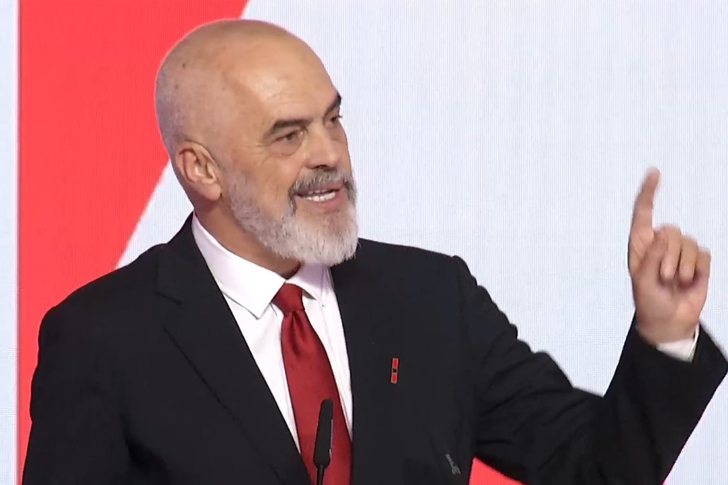
Prime Minister Edi Rama attacked the PD and the leader...
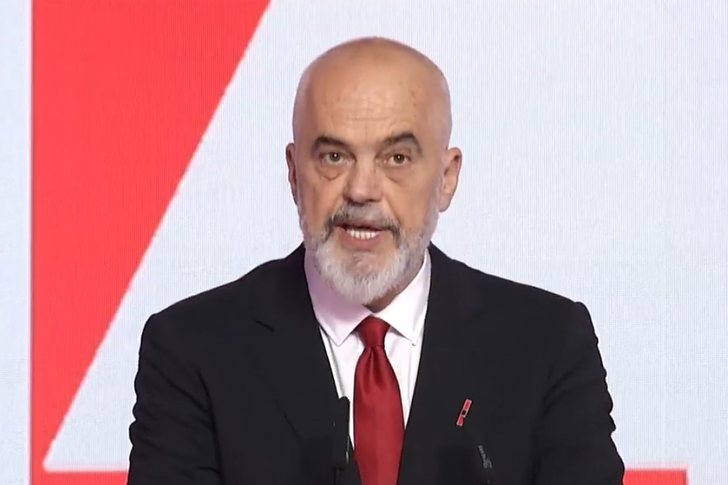
Prime Minister Edi Rama praised Lindita Nikolla, who r...

CNA has launched another investigation that could lead to ...

Irfan Hysenbelliu is a businessman that we call "Irfan the...

In March 2026, CNA launched another investigation centered...
The arrested mayor of Tirana, Erion Veliaj, with 13 charge...

The Special Board of Appeal (KPA) decided this Monday ...

The KPA vetting decided this Thursday to dismiss the p...

Suela Salavaçi, a prosecutor in the Prosecutor's Offic...

The Special Board of Appeal reinstated the prosecutor ...
A road accident occurred this evening on Nikolla Zoraqi St...
Three people were shot and wounded in Elbasan last night b...
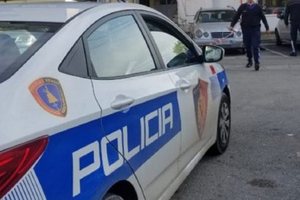
A serious incident occurred this Tuesday in the Yrshek are...

An accident occurred this Tuesday on "Dituria" street in K...
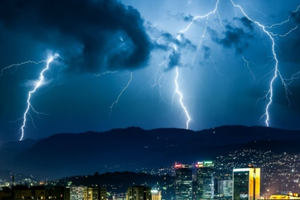
All of Southern Europe will face changing weather conditio...

Albania was hit by temperatures significantly higher than ...

For the first time, Pogradec welcomed the Inter-Lake Chess...
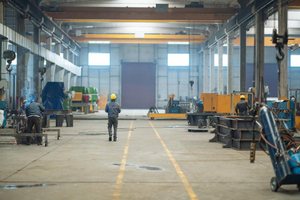
Albania has achieved a record for the employment of foreig...
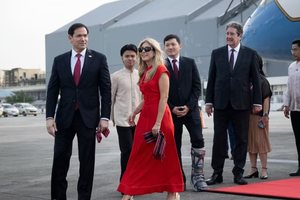
US Secretary of State Marco Rubio arrived in Manila on Jul...
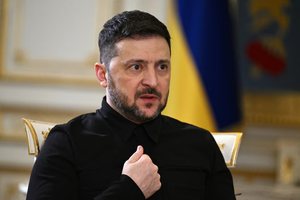
In the space of a few days, Ukrainian President Volodymyr ...
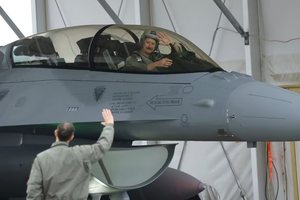
The spokesman for the Iranian Foreign Ministry warned Bulg...

Autoritetet italiane sekuestruan pako me afër 800 kilogram...

At a time when industrial products are increasingly taking...

Trust among people is not just a three-syllable word. It c...

Master of humor Todi Llupi has passed away at the age of 7...

The ninth edition of "MIK Festival" kicked off with one of...

Construction company licenses will have a validity period ...

The Centralized Purchasing Operator recently opened a tend...
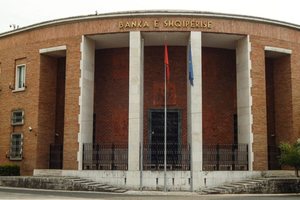
The new draft law "On the Bank of Albania" provides that t...

This Tuesday, one US dollar is bought for 81.2 lek and sol...