


Businessman Artur Shehu breaks his silence: I am a long-time land owner in Zvërnec, I don't know the investors at all
Albanian businessman Artur Shehu spoke on the Opinion show...

Albanian businessman Artur Shehu spoke on the Opinion show...

In every state of law, laws exist to protect the citizen from injustice. They are the shield of freedom against power, the guarantee of human dignity against arbitrariness. But as Montesquieu said, “when the law becomes a means of forcing people to think alike, it ceases to be law and becomes an instrument of tyranny.”
This is the danger that is knocking on the door of the Albanian state today. The draft law “On Gender Equality”, presented under the guise of “approximation with the European Union”, is neither approximation nor protection from discrimination. On the contrary. If the members of the Assembly, or anyone interested, were to read the EU directives themselves that are mentioned in the report, they would discover that none of them mention “gender identities”, “gender expression” or “multiple affiliations”. None. Zero. In fact, 7 out of 10 EU directives mentioned in the draft law itself, have the natural gender duality “man and woman” in the title. Also, EU law in this area is built on a single and clear principle: equality between women and men. This is the European standard, the only one that exists in the legally harmonized order of the EU.
The draft law "On Gender Equality", presented as a step towards "harmonization with the European Union", is in fact neither harmonization nor protection from discrimination.
It does not aim to protect women, men or people with different sexual orientations from real discrimination, but rather to impose an ideology that denies biological reality, imposes legal censorship and violates the fundamental principles of the constitutional order.
Violations of the Constitution of the Republic of Albania
The draft law “On Gender Equality” does not only contradict EU law, but also openly contradicts the very Constitution of the Republic of Albania. The content of this draft law is not a progress towards human rights, but a clear deviation from the spirit and letter of the Constitution of the Republic of Albania. In essence, it attempts to replace the legal order based on the biological and moral reality recognized in the Constitution, with a system of norms that stem from an imposed ideology. This constitutes a direct threat to the very foundations of the rule of law.
First, Article 18 of the Constitution guarantees equality before the law “without distinction of gender”, clearly referring to the two biological sexes, male and female, which are the foundation of the natural and legal order of the state. The draft law, by introducing concepts such as “multiple gender identities” or “interwoven affiliation”, exceeds the constitutional framework and creates a new legal category that does not exist in the fundamental text of the Republic. Thus, it not only distorts the spirit of Article 18, but also attempts to rewrite human anthropology through the law.
Secondly, Article 22 of the Constitution, which protects freedom of expression and the press, contradicts the provisions of the draft law that sanction speech differently. The criminalization, administrative punishment, or recognition of civil damages sanctioned in this draft, towards any position that does not comply with the doctrine of “gender identity” turns into a form of institutionalized censorship, which prohibits debate, scientific research, and moral or religious criticism. A law that punishes speech, by its nature, is a law that punishes thought and conscience, therefore it violates the very spirit of democracy.
Third, Article 24 of the Constitution, which guarantees freedom of conscience, thought, and religious belief, is directly at risk from this bill. If an imam, priest, or believing citizen expresses his religious principles, for example, by saying that God created male and female, and does not recognize multiple subjective gender identities, he risks being fined or punished for “gender discrimination,” or having civil lawsuits filed against him for damages. This absurd scenario means that the state, instead of guaranteeing moral pluralism, of thought, conscience, and religion, is imposing a new ideological “religion” that accepts neither opposition, nor debate, nor religious belief, but only submission without even having the chance to object.
Along the same lines, Article 54 of the Constitution recognizes the right of parents to provide their children with moral and religious education in accordance with their beliefs. The introduction of “gender education” with content that promotes multiple identity concepts, not only without the consent of the parents, but also in contradiction to their values, constitutes a direct violation of parental authority and family autonomy. The state, in this way, enters a field that does not belong to it, the conscience of children and the moral guidance of the family.
In essence, this bill overturns the fundamental balance between freedom and coercion. It replaces freedom of conscience with ideological imposition, free speech with fear, and moral conviction with forced conformity. Through vague terminology like “gender identity,” “multiple affiliations,” and “social intersectionality,” this law attempts to rewrite the very definition of human, turning biology into a matter of opinion and personal feeling into a source of legal obligation.
This is no longer equality. This is a new form of imposition through law, where the state does not protect the citizen from injustice, but punishes him if he dares to think differently. And when the law turns into doctrine, as the famous German jurist Gustav Radbruch said, “justice dies and only the naked power of power remains.”
Incompatibility with European Union law
The claim that the draft law “On Gender Equality” is a necessary requirement for “approximation with the European Union” has no legal basis, and is a lie that is being told to the Albanian public, the Albanian media, and even the members of the Albanian parliament themselves. As we said, no European Union directive mentions “gender identities”, “multiple affiliations” or “transgender” as legal categories, much less binding on member states.
The actual directives that form the core of European gender equality law, such as Directive 79/7/EEC, Directive 2006/54/EC, Directive 2004/113/EC and most recently Directive 2023/970/EU, are all built on the principle of equality between men and women, without any reference to ideological notions of “perceived gender” or “non-binary identity”. The European Union itself, through its fundamental treaties and its case law, has maintained a cautious approach, leaving it to the Member States to determine for themselves how to deal with issues related to the legal definition of gender.
In this context, the Court of Justice of the European Union (ECJ) has been clear. In case C-423/04 Richards, it emphasised that determining the conditions for the recognition of gender reassignment is a competence of the Member States, not an obligation deriving from Union law. In other words, the EU does not impose uniformity on matters of gender identity, and each State retains its sovereign right to determine what gender means in its legal order.
The facts speak for themselves: 21 out of 27 member states of the European Union recognize only the binary gender identity, male and female, as a legal category. So even at the level of individual EU member states, the legal reality within them is clear and undeniable: the vast majority of member states recognize only the binary gender identity, that is, the natural and legal division between man and woman. Only a very limited minority of states, such as Germany, Malta, and the Netherlands, have experimentally introduced a “third” or “neutral” category, which remains debatable, non-standardized, and often contested within their own constitutional and judicial systems. For anyone who has analyzed the text of the proposed model in Albania, he will notice that its content is much more extremely ideological than even the legislations of these countries.
Meanwhile, 21 other countries, such as France, Italy, Greece, Spain, Poland, Hungary, Austria, Croatia, Slovakia, Romania, Bulgaria, Portugal, etc., have clearly rejected the discourse of “non-binary gender identities”, maintaining the position that gender is a biological, legal and unchangeable category for civil effect. This factual and legal reality shows that there is no binding European standard for the recognition of “multiple gender identities”, and that any attempt to impose these concepts on Albania in the name of “harmonization with the EU” is legally incorrect and politically misleading. In fact, EU law, and the laws of EU member states, are binary. They protect the individual from real discrimination, in work, in wages, in education, but do not interfere with biology or conscience. It demands justice, not anthropological reformation. As the famous German philosopher Immanuel Kant said, "Freedom ends where the imposition of another's opinion begins."
In this light, the adoption of a law imposing the terminology of “multiple gender identities” in Albania is not an approximation to the European Union, but a deviation from it. Albania risks creating a legal framework that no member state has, introducing into its system an ideological element that finds no European precedent, and would constitute a major social and legal experiment in Albania, which can only be paralleled by the 1976 Constitution, which prohibited freedom of belief and conscience, and declared the only acceptable ideology to be atheistic-materialist, and condemned any ideology that did not comply with it.
Finally, it should be remembered what the European Court of Human Rights itself has emphasized (Goodwin v. the United Kingdom, 2002): freedoms and equality must be interpreted in light of “the need to maintain the moral order and natural law in a democratic society.” If Albania decides to abandon this fundamental principle, it will not get closer to the EU, but will move away from it, building a system that more closely resembles atheist-communist Albania than the rule of law.
Incompatibility with the current Albanian legal order
At the foundation of the Albanian legal order, there are various legal Codes that regulate in a codified and organized manner the relationships in each specific field. The Family Code is undoubtedly one of the most sensitive and most embedded laws in the moral and cultural structure of society. This Code, in Article 7, clearly defines that marriage and family are based on the union between a man and a woman, recognizing as the legal and moral pillar the biological reality on which social life is built. Any attempt to replace the term “gender” with “gender identity” constitutes a deep ideological intervention in this balance, because it attempts to change the very definition of the human being and family relationships in the law.
Such a change is not merely semantic; it would open up a real legal crisis at all levels of the system. In practice, it would cause direct clashes between the new law and the Family Code, raising fundamental questions: how will marriage, parenthood, or inheritance be defined? If the terms “man” and “woman” are replaced by multiple or fluid “gender identity persons,” will this mean that marriage can occur between two self-declared identities, regardless of biological sex? Will this mean that children will have “parent 1” and “parent 2” in official documents, instead of “mother” and “father”?
This would bring about profound legal confusion not only in civil registries, but also in the right of inheritance, parental responsibilities, social benefits and state statistics. The public administration itself would be forced to use ideological terminology in contradiction with the principle of state neutrality, which is sanctioned as a fundamental principle in Albanian and European constitutional jurisprudence. The state cannot adopt moral or anthropological doctrines, because at that moment it ceases to be neutral and becomes a propaganda tool of an ideology.
This deviation would also clash with other fundamental codes of the Republic, such as the Civil Code and the Labor Code, which are built on the biological categories of “male” and “female.” For example, in labor law, gender equality means fair treatment and equal opportunities for men and women, not self-declared identities. Likewise, in civil law, any definition related to marriage, paternity, maternity, or custody is built on biology as a legal fact and not on the psychological perception of self-identity.
In this context, the legal philosopher Montesquieu had warned that “Laws must be compatible with the nature of things”; that is, laws cannot be created that deny the very natural reality on which they are based. Trying to build legal institutes, or institutions, in contradiction to the laws found in nature is like trying to build a machine in contradiction to the natural laws of physics. Of course, such a machine that conflicts with the universal laws of nature and natural law is destined to fail.
While French jurist Jean Carbonnier, one of the drafters of modern family law reforms, emphasized that “The family is not a creation of law, but the recognition of a natural fact.” It is precisely this natural fact – the bond between man and woman – that is the foundation upon which not only the family is built, but also the cultural, moral and biological heritage of every nation.
If Albanian law begins to replace biology with ideology, then it will no longer protect reality, but will deny it. This would be an artificial reformatting of the legal system, which would require changes to the legal chain in every field, from education to health, from civil registries to social policy, plunging the state into a new crisis of positive law.
In the end, there can be no justice without truth, and there can be no equality without reality. A law that attempts to erase the words “man” and “woman” from the basic family code is, in essence, not just changing the language of the law, it is changing the very definition of a human being.
Violation of fundamental freedoms: expression, media, religion and education
One of the most dangerous dimensions of this bill is the way it touches the very foundation of individual freedoms, those that the Constitution, the European Convention and every democratic order have deemed inviolable. Essentially, when a law no longer limits unjust behavior, but begins to limit thought itself, then we no longer have protection from discrimination, but the criminalization of conscience.
Once the vague notion of “multiple gender identities” is introduced into the legal text, any discussion or criticism of this theory can be interpreted as “discrimination.” Thus, a journalist who analyzes the influence of gender ideologies on the education system, a teacher who biologically explains the difference between gender and sex, or a citizen who defends traditional family values, can end up being punished for “discriminatory language.” In practice, this encourages a silent censorship and fearful self-control of public speech, not because of violence, but because of fear of punishment.
This is the greatest danger to democracy: when citizens remain silent not because they are convinced, but because they are afraid. In fact, the European Court of Human Rights, in the case of Handyside v. the United Kingdom (1976), has clearly defined this principle:
“Freedom of expression applies not only to ideas that are received with approval, but also to those that offend, shock or disturb the state or a section of society. These are the requirements of pluralism, tolerance and open-mindedness, without which there is no democratic society.”
So what this law does in reality is replace pluralism with ideological orthodoxy, where only one way of thinking and speaking is permitted, and any other opinion is labeled as “discriminatory.” A society that begins to punish free speech in the name of sensitivity is not moving toward justice, but toward totalitarianism.
In this sense, the law directly violates Article 22 of the Constitution of the Republic of Albania, which guarantees freedom of expression and of the press, as well as Article 10 of the European Convention on Human Rights, which protects the right to express opinions “without interference by public authority.” As philosopher John Stuart Mill pointed out, “If the opinion of one man is silenced, the world loses a possible truth; if the opinion of the majority becomes law, the world loses freedom.”
But beyond philosophy, the consequences are concrete: this bill establishes a legal obligation to use ideological language, for example, to use pronouns that do not reflect biological reality. Thus, a journalist who refuses to do so could be fined; a teacher who explains the biological division of male and female could be accused of discrimination; a priest or imam who quotes sacred texts about the natural order of creation could face civil lawsuits.
This is the moment when the law stops being a protector of freedom and becomes a weapon of fear, because it forces citizens to accept a language that does not stem from reality, but from ideology.
As George Orwell would say, “If freedom means anything, it is the right to tell people things they do not want to hear.” If this right is lost, then we no longer have democracy, but forced conformity. And a nation that loses the courage to speak the truth gradually loses the right to be free.
No democratic society can survive without freedom of conscience and belief. This freedom is among the most sacred, because it belongs to the deepest sphere of human being, the relationship of man with God and with truth. For this reason, Article 24 of the Constitution of the Republic of Albania clearly declares that “1. Freedom of conscience and religion is guaranteed. 2. Everyone is free to choose or change his religion or beliefs, as well as to manifest them individually or collectively, in public or in private life, through worship, education, practices or the performance of rites. 3. No one may be forced or prohibited from participating in a religious community or in its practices, as well as from making his beliefs or beliefs public.” Likewise, Article 9 of the European Convention on Human Rights recognizes this as a fundamental right, emphasizing that: Everyone has the right, either individually or in community with others and in public or private, to have and manifest his religious beliefs.
However, the new bill puts this pillar of freedom at risk. It creates an absurd situation where an imam who reads the Quran, a priest who preaches the Gospel, or a theologian who defends the principle of creation “male and female,” can face a lawsuit for “gender discrimination” simply because he has expressed a doctrine of his faith. If the sacred word is translated as a legal violation, then we no longer have the separation of state and religion, we have state interference in faith.
Such a situation would constitute a direct violation of the constitutional order, because it turns the state into a judge of dogma and a controller of religious conscience. As the European Court of Human Rights emphasized in the case of Kokkinakis v. Greece (1993), “Freedom of religion is one of the foundations of a democratic society; it constitutes the most precious asset of believers and non-believers, because it guarantees the pluralism that distinguishes democracy from totalitarianism.”
If a law gives the state the right to punish religious speech because of its content, it is transforming religious freedom into freedom by permission, a notion that contradicts every standard of European and international law. Religious teaching, public preaching, and theological doctrine are not “political discourse” that can be regulated according to the ideological agendas of the day; they are manifestations of moral conscience, which must be protected precisely because they constitute the pillar of social pluralism.
In fact, the philosopher Voltaire himself, who was a critic of religion, strongly defended the right to express it, saying: “I do not agree with what you say, but I will fight to the end for your right to say it.”
But with this law, that right is being eroded. It risks causing preachers, clerics and religious scholars to self-censor for fear of retribution, keeping silent about the fundamental principles of their beliefs. An imam who mentions the natural order of creation, a priest who quotes the book of Genesis or a rabbi who speaks of divine law, could be accused of “discriminatory language” simply because they speak according to their religious beliefs.
This is an existential risk for Albanian society, which has historically been a model of interfaith harmony and mutual respect between religions and the state. If faith becomes a legal danger zone, we not only lose religious freedom – we lose the spirit of pluralism that has been the essence of our national identity.
Because, after all, as Alexis de Tocqueville said, “Freedom of conscience is the foundation of every other freedom. Whoever violates it violates them all.”
No society can be free if its education is not free. The moment school no longer teaches children how to think, but what to think, it ceases to be an institution of knowledge and becomes an instrument of ideology. This is precisely the danger posed by the introduction of the term “gender education with multiple identities” into the Albanian education system, an ambiguous formulation that, under the guise of “equality”, risks shifting education from science to ideological doctrine.
If this concept is passed into law, teachers will no longer be forced to teach biology as a science, but “personal sense of gender” as a definition of reality. Children will no longer be told that there are two biologically determined genders, male and female, but that gender is “fluid,” “selectable,” “multiple,” and “in constant flux.” Thus, biology will be replaced by subjective psychology, and education will lose its natural, scientific, and rational basis. As Nobel laureate Albert Einstein warned, “Education is what remains after you have forgotten everything you learned in school. But if what you learn is false, then what remains is also a lie.”
This deviation constitutes a clear violation of Article 57 of the Constitution of the Republic of Albania, which guarantees the right of every person to education and stipulates that education should aim at the development of the personality and human dignity in accordance with democratic principles. Likewise, Protocol No. 1 to the European Convention on Human Rights, in Article 2, recognizes the fundamental right of parents “to ensure that the education and teaching of their children is in accordance with their religious and philosophical convictions.”
This means that the state cannot impose on parents and children a doctrine that conflicts with their faith, conscience or convictions. In fact, the European Court of Human Rights in the case of Folgerø v. Norway (2007) ruled that the inclusion of religious or philosophical content in compulsory curricula, without the possibility of opting out, violates the right of parents to an education in accordance with their convictions. The same logic applies to any ideological content, including that on gender identities.
If a Muslim, Christian, or atheist parent does not want their child to be taught concepts that contradict their biology or faith, they have the legal right to object. Education is not the property of the state, it is the right of the citizen. And when the state violates this right, it violates the very fundamental contract of trust between itself and society.
In this regard, academic freedom is another clear victim of this bill. Professors and researchers who want to defend the scientific criteria of biology or debate “gender theories” with critical thought will live under the fear of disciplinary punishment or fines and civil lawsuits for “discrimination.” Thus, universities, which should be temples of free debate and the search for truth, will turn into spaces where truth is allowed only if it is ideologically acceptable.
Philosopher Karl Popper, in his work "The Open Society and Its Enemies," warned: "The moment we stop discussing a truth in the name of ideological peace, we have closed the path to knowledge."
If Albania follows this path, then its schools will no longer be places where free minds grow, but where children will be trained to think according to a predetermined ideological model. This is the opposite of democratic education, it is legal indoctrination.
Ultimately, a society that allows ideological limits to be placed on science has lost its way to knowledge and justice. For, as the philosopher Immanuel Kant said, “Education is the light that separates man from ignorance, and whoever dares to darken this light works against humanity itself.”
Just like education, sports and medicine are fields that touch on the very essence of the human being, the body, dignity and justice. But these fields also risk being distorted if the law replaces biological reality with the term “gender identity”. In the name of “equality”, it violates the principle of natural justice in competition and clinical safety in healthcare, two pillars that cannot be negotiated in a society that respects science and human life.
In sports, the inclusion of biological males in women’s competitions is the clearest example of the injustice that ideology produces when it replaces science. Even the International Olympic Committee (IOC) has acknowledged in its 2023 guidelines that the participation of transgender athletes in the female category raises “serious questions about the integrity of the competition and the equality of the playing field.” In many countries, sports federations are reassessing their rules to maintain a balance between respect for the individual and the protection of fairness in sport.
Because sport is built on the fundamental principle that everyone should have equal opportunities based on physical, not biological, differences. And biology here is not prejudice, but science: muscular strength, bone density, cardiovascular capacity, and testosterone all affect performance. Ignoring these factors in the name of “identity” is an injustice to women who have fought for decades to gain their equal space in sport. As the legal philosopher Ronald Dworkin has said, “Equality does not consist in identical treatment, but in respect for real differences.”
In medicine, the consequences are even more serious, because here not only justice is affected, but life itself. Forcing doctors to treat patients not according to their biological gender, but according to their “declared identity”, can have fatal consequences. Diagnoses, medications, hormone therapies and surgeries depend on biological reality, not on individual feelings. If a doctor is legally forced to ignore biology in order to adapt to an ideological category, he not only loses his professional freedom, but also faces criminal, administrative, civil and ethical risks.
In fact, many international medical associations have raised the alarm about this deviation. The Cass Review (UK, 2024), an independent study on the treatment of minors with gender dysphoria, warns that “medical decisions cannot be based on ideology, but on scientific evidence and careful clinical care.” This is a principle also defended by the Universal Declaration on Bioethics and Human Rights (UNESCO, 2005), which emphasizes that human dignity and health security must prevail over any political or ideological pressure.
Legally, Article 55 of the Constitution of the Republic of Albania guarantees the right of every person to be protected from treatments that endanger life, health or physical and moral integrity. If a law forces doctors to follow ideological categories instead of scientific diagnosis, it conflicts with this article and with the fundamental principles of medical ethics, including the principle of non-harm (primum non nocere) and the principle of professional competence.
Indeed, herein lies the greatest paradox of this law: in an attempt to protect an “identity,” it endangers the real human body. In sports, it violates equality; in medicine, it endangers life. And, as the French physician and philosopher Alexis Carrel said, “Societies that deny human biology do not become less humane, they become more false.”
Therefore, a state that seeks to call itself democratic must defend the truth of the body and the justice of competition, not destroy them in the name of ideology. Because in the end, as Aristotle reminds us, “Justice is the effort to give to each his due.” If a girl loses her medal to a biologically male competitor, or a patient loses her health because his doctor was forced to treat “identity” and not the body, then justice has been violated, and with it, the person himself.
One of the most serious blows this bill deals to the rule of law is the overturning of the principle of the presumption of innocence, one of the foundations of any democratic legal system. In essence, it establishes an inverted logic: no longer “innocent until proven guilty”, but “guilty until proven innocent”. This approach, hidden behind the language of “protection from discrimination”, constitutes one of the most dangerous precedents in Albania’s legal history.
In fact, the principle of the presumption of innocence is not exclusively criminal, it extends as a general principle of the legal order, also accepted in administrative and civil law. This is one of the foundations that distinguishes the rule of law from ideological regimes, because it protects the citizen from the arbitrariness of power and from accusations without evidence.
In cases of accusations of “gender discrimination” or “multiple affiliations,” the draft law places the burden of proof on the accused, forcing them to defend themselves against a subjective perception. In other words, it is enough for one person to feel “offended” by an opinion or statement for the other to be forced to prove that they did not discriminate. This is a form of inverted justice, where the plaintiff’s personal feelings replace factual evidence.
In administrative law, this principle is clearly applied in the procedures of administrative fines and sanctions. The Code of Administrative Procedures itself provides that public administration must be based on the principle of legality and provability. Any administrative punitive measure, including fines, requires clear and verifiable evidence that proves the violation by the subject. The administration cannot punish on the basis of assumptions, feelings or ideological interpretations. Also, Article 82 of the same Code clearly establishes that the burden of proof for the legality of the act lies with the administrative body that issued it.
This means that, in any case of fine or disciplinary measure, it is not the citizen who must prove his innocence, but the administration that must prove the violation. This is an inseparable principle from legal certainty, any subversion of it turns the law into an instrument of repression.
Even in civil law, the burden of proof always lies with the party claiming the infringement or damage. This fundamental principle is defined in Article 12 of the Code of Civil Procedure of the Republic of Albania, which states: “The party claiming a right has the obligation, in accordance with the law, to prove the facts on which it bases its claim”. Thus, if a person claims to have been discriminated against or to have felt “morally harmed”, he must bring concrete evidence that proves the fact of discrimination and the causal link between the word or action and the damage suffered. Only after an objective verification can civil liability be established. Otherwise, the system would allow any subjective feeling to be turned into a legal weapon against the freedom of another.
In practice, this means that a teacher who explains biology according to scientific criteria, a journalist who expresses an opinion critical of gender theories, or a priest who quotes his holy book, can end up in court simply because someone “felt discriminated against.” And instead of the court requiring proof of the existence of discrimination, it will require proof of its absence, a legal absurdity that turns the burden of the defense into a punishment in itself.
Such justice does not protect equality, but installs fear. Because every professional, citizen or believer will think twice before speaking, not out of respect for the other, but out of fear that he may be punished for his opinion. And a society that lives under the fear of free thought is no longer a free society, it is an ideological state. Ultimately, this proposed law is not a step forward towards justice, but a step back towards the logic of the inquisition, where a different opinion is treated as guilt and silence as protection. And Albania cannot build a free society on foundations of injustice.
Conclusion: Justice yes, ideology no!
No society becomes more just by forbidding thought. No law can protect freedom by destroying it. And no state becomes more European by badly imitating Europe, or by using its name to justify the imposition of an ideology that many European Union countries have already firmly rejected.
This draft law, which is presented as “for gender equality” and as “obligation of approximation with EU legislation”, is in fact an ideologically misunderstood and legally dangerous product. It is neither approximation nor progress, but a deviation from the constitutional order, from the fundamental principles of justice and from the natural identity of man.
In essence, it does not protect anyone from real discrimination, but creates new mechanisms to punish thought, to impose language, to control education, to silence faith, and to reformat the very concept of man. It turns the state from a guarantor of freedoms into an arbiter of thoughts, from a defender of rights into a producer of fear.
From a constitutional point of view, the draft law contradicts the fundamental articles of the Republic of Albania. In the European plan, this law is a public fraud. No European Union directive mentions “gender identity”, “multiple affiliations” or “transgender” as a legal category. All these directives speak of equality between men and women, not between perceptions. Even the Court of Justice of the EU has clearly emphasized that determining the conditions for gender recognition is the competence of the member states, not a community obligation. Therefore, to say that this law “requires us from Europe” is a deliberate lie, which aims to deceive the public, the deputies and the Albanian society itself.
If this law is approved, the Albanian Parliament will go down in history not as a defender of justice, but as the one that opened the door to legal censorship in the name of “tolerance.” It will be a law that did not bring equality, but fear; did not protect man, but ideology; did not bring Albania closer to Europe, but distanced it from itself.
Therefore, these days the Assembly faces not just a vote on a law, but a historical test: Will Albania defend the principles of the Constitution, of reason and freedom, or will it surrender to the imposition of ideology? Will it stand on the foundation of law, or will it slide into ideological authoritarianism packaged as "tolerance"?
The solution is clear: The terms “multiple gender identities” and “gender identity” should be completely removed from the draft law. Equality should remain what it is, equality between men and women, not between feelings. Fundamental freedoms, of expression, religion, media, education, and conscience, should be preserved as the cornerstones of the Republic.
If not, Albania will become the first laboratory of an ideology that Europe itself is abandoning, and history will remember this moment not as a moment of emancipation, but as the moment when a small nation dared to violate human reason itself with law. As it did in the wicked year of 1976, which installed in the Constitution the only atheist-communist ideological dictatorship in the constitutional history of modern states. And the consequences are known.
Therefore, justice yes. Ideology, never!

There are laws that pass unnoticed; quietly, without debat...

We are experiencing a total degradation of the political s...
The Program for International Student Assessment (PISA) ha...
There is an unwritten law in politics: the more murky your...
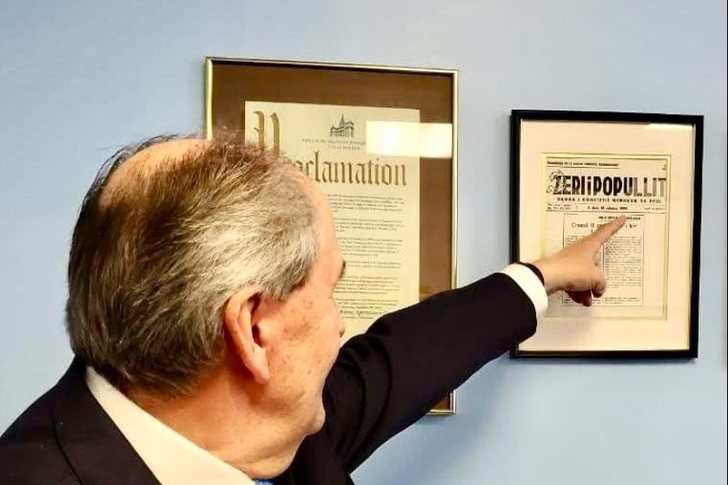
Elez Biberajt, on the date of birth Just as they had divi...
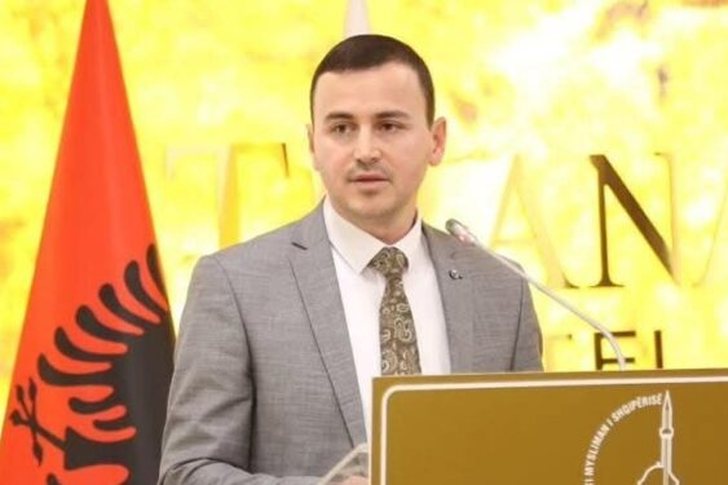
A counterargument to the public statement of Mr. Ben Blush...

Food safety in Albania has become one of the most discussed ...
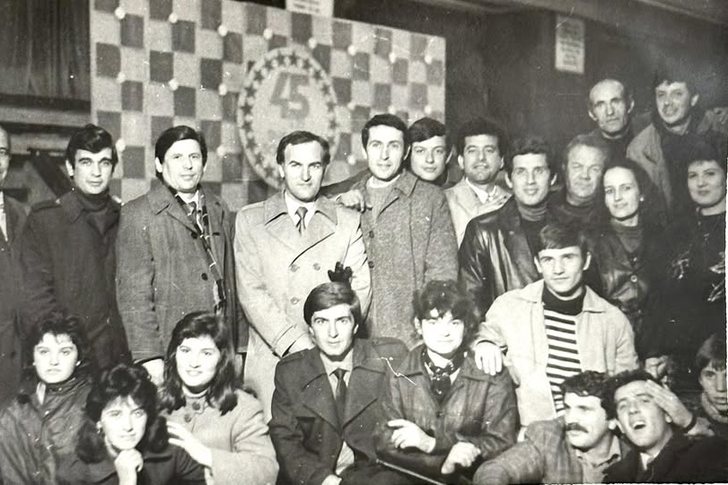
Through photography, not simply as an art form that has it...

I live in the "Paris Commune". Because of my little girls,...
As I was reading the European Commission’s annual reports on...
Do you know the democrats of the city of Vlora and its sur...
The elections were held. The ballot boxes were counted, th...
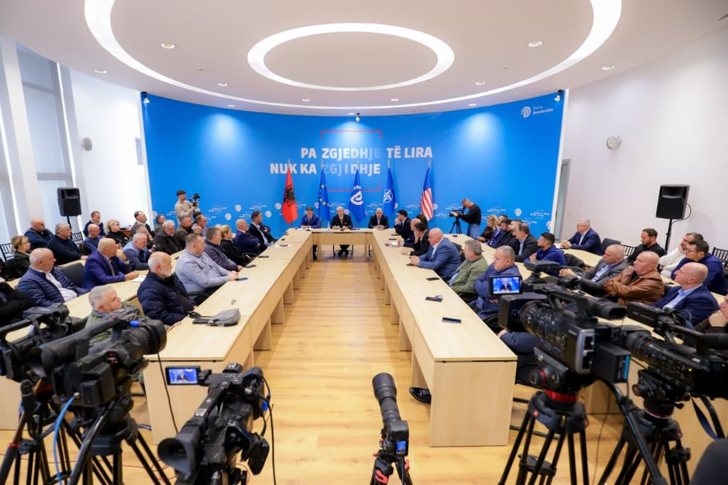
I followed Mr. Berisha's speech today at the meeting with th...
November for Albanians has two dates close to each oth...
Yesterday evening, like everyone who lives in this country...

Albania and Kosovo held partial local elections yesterday....
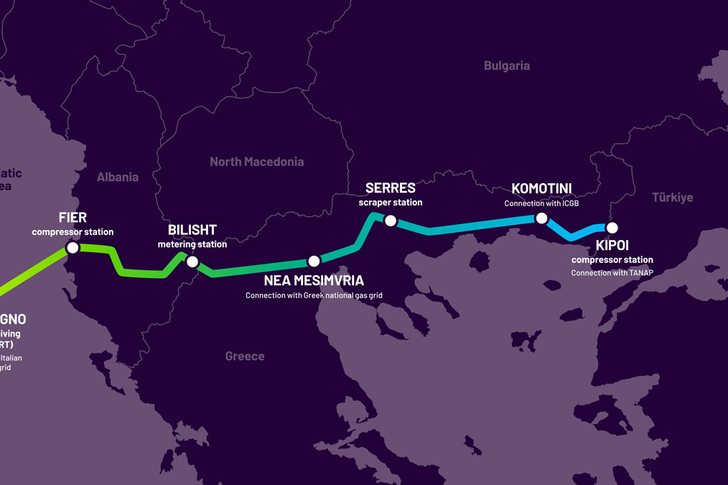
A green transition that requires a sustainable foundation ...
In Albania, a file that is opened is enough to trigger a p...
At the next table, two middle-aged men were drinking coffe...

Your prime minister knows nothing, and neither have the ot...
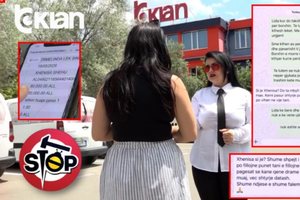
The next case broadcast on the show "Stop", this Thursday,...
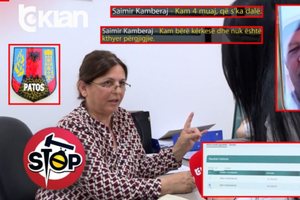
The case published this Thursday, June 4, on the show "Sto...

The protests of recent days related to the situation in Zv...

The case addressed this Wednesday, June 3, on the show "St...

The Special Board of Appeal (KPA) decided this Monday ...

The KPA vetting decided this Thursday to dismiss the p...

Suela Salavaçi, a prosecutor in the Prosecutor's Offic...

The Special Board of Appeal reinstated the prosecutor ...
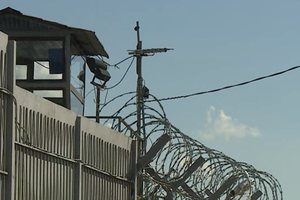
A convict was found dead today in the premises of the Pris...

Several images provided by CNA show the area where this mo...

A quantity of explosive material exploded this morning at ...
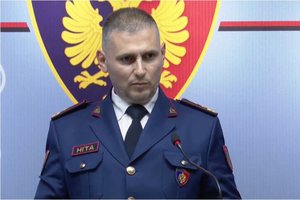
The Head of the State Police, Skënder Hita, expressed his ...

For many children and teenagers, the long summer holidays ...

Witnesses in Lozhan, Maliqi, have shared details from the ...

Albania is facing an unprecedented demographic transition,...

On Thursday, our country will be affected by unstable weat...
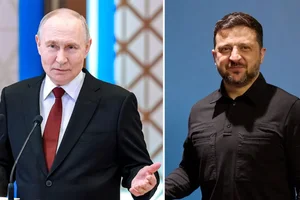
Russian President Vladimir Putin said the war in Ukraine c...

An extraordinary story of survival has been recorded in Ne...
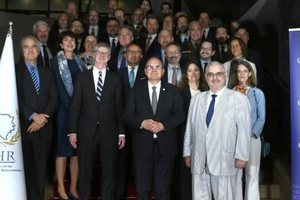
The Peace Implementation Council in Bosnia and Herzegovina...
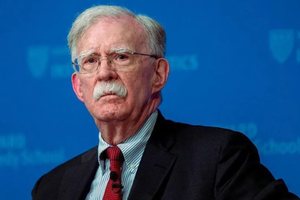
John Bolton, the former national security adviser to US Pr...
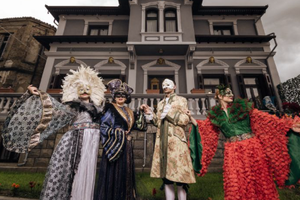
Korça is ready to open the summer season with one of the c...
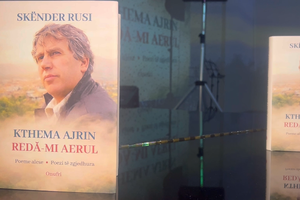
Two years after his passing, the renowned Korçë poet Skënd...

The Ethnographic Museum of Berat has opened its doors to v...
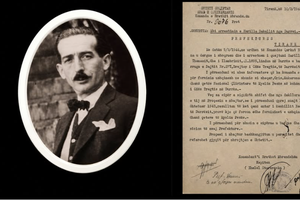
The story of Harilla Bakalli is one of the most chilling t...

The government aims to transform the country's industrial ...

Kursi i këmbimit të euros me lekun ka rënë më tej këtë jav...

Profit margins in the construction sector have increased s...

The Transparency Board, at its meeting today, decided to i...