


Murder of police officer in Maliq/ Police: Wanted man was hiding in the tent, opened fire on officers
Korça Police has shared detailed information regarding the...

Korça Police has shared detailed information regarding the...

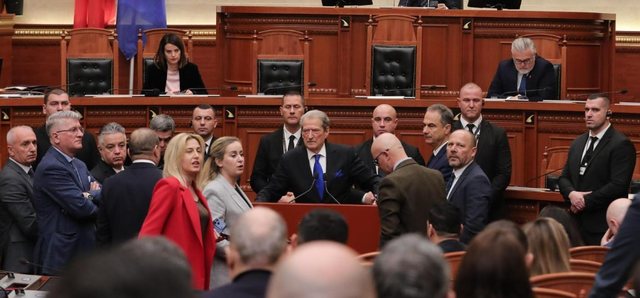
They accuse Rama of wanting to annihilate the opposition. But in which country in the world does the government not aim to "annihilate" the opposition?
Albania is a land of paradoxes, which do not arise by chance.
One of them is the accusations against Edi Rama that senior DP officials publicly articulate that he "wanted to annihilate the opposition, but thankfully the historic leader understood this and saved it."
An accusation that sounds dramatic, but is essentially hypocritical to the core. A political accusation with a strange life: it is born as dramatic, grows as victimizing and ends as an alibi. This is not an Albanian invention.
Let's put it bluntly: in which country in the world does the position not aim to weaken, divide, and eliminate the opposition? Pure moral politics, nor idyllic coexistence. It is a clash of interests. From the United States of America to France, from Italy to Great Britain, from Spain to the Netherlands, (I am not mentioning Russia, Turkey, or any other country here) every majority, in every system, has a clear objective: to win, to maintain power, and, if possible, to make the opponent as insignificant as possible. Therefore, it uses every political, legal, and propaganda tool to stay in power and to make the opposition as powerless as possible.
In the US, parties fight with investigations, with the media, with aggressive campaigns. In France, the opposition is hit with political maneuvers. In Italy, governments are replaced on the ruins of weakened opponents. In Greece, they put a homosexual at the head of the opposition and crush it. While in Great Britain, the opposition often comes out torn apart by internal battles more than by government attacks. So, the desire to politically “disappear” the opponent is not a deviation, it is an instinct and a goal.
But here begins the essential difference with Albania. In functional democracies, the opposition can be hit, but it does not fall so easily. Because there are structures, there are ideas, there are elites that circulate, there is a minimum of seriousness that keeps it on its feet even when it loses.
The problem in Albania is not that the government tends to dominate. The problem is that beyond the government's demand for dominance, the Albanian opposition does not need to be annihilated, it self-annihilates. It has shown that it knows how to disintegrate itself, cyclically and almost methodically. With a dedication, persistence and determination that any political strategist would envy. With division, with leaders who consume more energy fighting within their own kind than against the government, with causes that are announced with fanfare and abandoned in silence. With a discourse that often does not convince even those it was supposed to represent and with a lack of vision that makes the government seem stronger than it really is.
In this reality, the accusations against Rama sound like a convenient alibi and survival strategy. It is easier to say “they wiped us out” than to admit “we disintegrated ourselves”. Easier to shout about dictatorship than to build an alternative. Easier to shift responsibility from oneself to the opponent and build a narrative of persecution than to admit the failure to build public trust.
It's easier to say: "They wanted a sold-out opposition, than I want a personal party!"
This does not mean that power is innocent. On the contrary, any power that does not encounter serious opposition tends to expand, centralize, and abuse the spaces left vacant.
Yes, the government will always try to survive as long as possible. Yes, it will use any space it is given. But this is precisely why a strong opposition is vital, not as a victim, but as a counterweight.
Because democracy is not measured by the desire of the position to dominate; it is measured by the ability of the opposition to rise up, to be an alternative, and to convince.
This is the essence: In Albania we do not have a very strong government. We have a very weak opposition, which serves as a crutch for the government. An opposition that, instead of building resistance mechanisms, builds mechanisms of self-destruction. Instead of producing alternatives, it gives excuses. Instead of gaining ground, it loses what it had day by day, making Rama's job even easier.
And when the opposition falls on its own, no one needs to destroy it. The government doesn't have to work hard, it just sits and watches. It waits. It smiles. Sometimes it even applauds... /CNA

To get away from the daily political noise and return to h...

He, through others, tells you (he has been telling you for 3...

The increase in fuel prices to 200 lek/liter is not simply...
-What I am writing is not an analysis of Ramadan, nor of t...
Who knows what those hundreds of demonstrators who gathere...

When the screen rewards ignorance and society accepts it a...

In these days of new and escalating conflict between Israe...
It is often said that the strength of the courts lies not ...

In addition to the ridiculous amounts offered for monthly ...
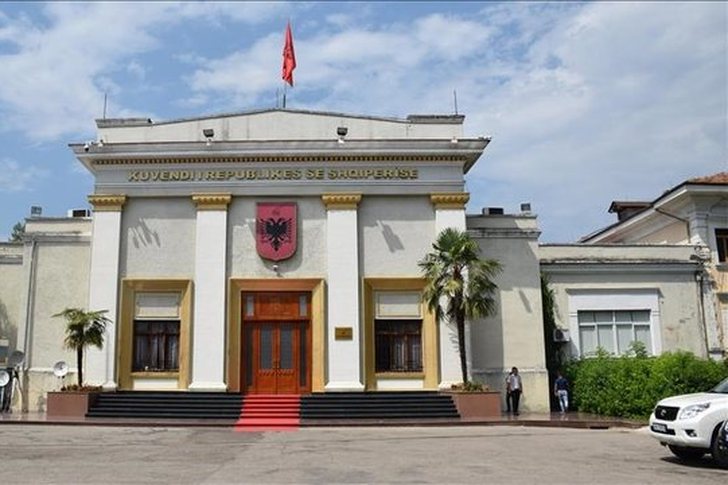
It has often been seen in the history of international rel...
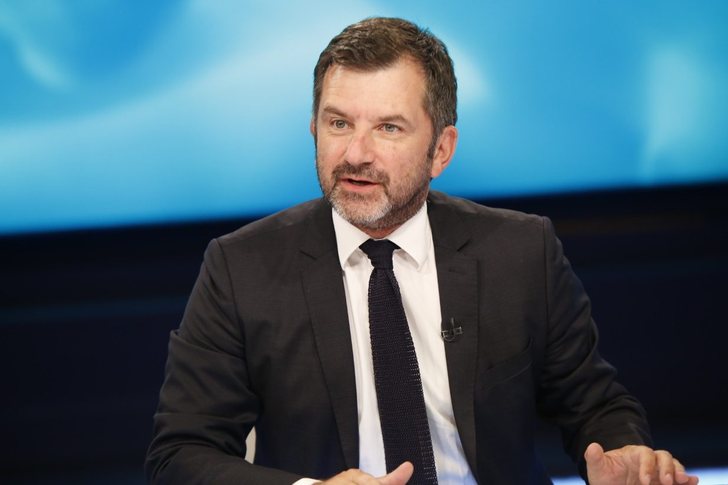
What happened at Edi Rama's press conference was not a ban...

The shift of US military assets to the Middle East in rece...
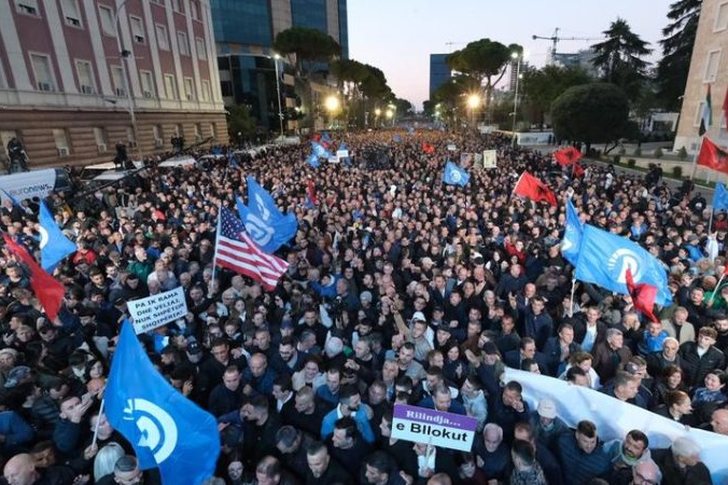
If you want Parliament to turn into a law office for the m...

Today is the 80th anniversary of Namik Dokle; one of the m...

Albania today has one of the most expensive fuels in Europ...
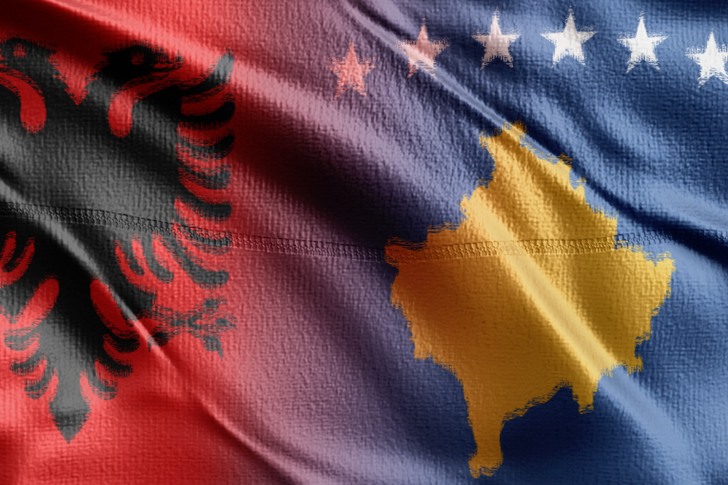
Albania and Kosovo are two parliamentary republics, where ...

March 8th, in fact, is not a holiday, but a day that symbo...
March 8th - that romantic day of the year when women get a...
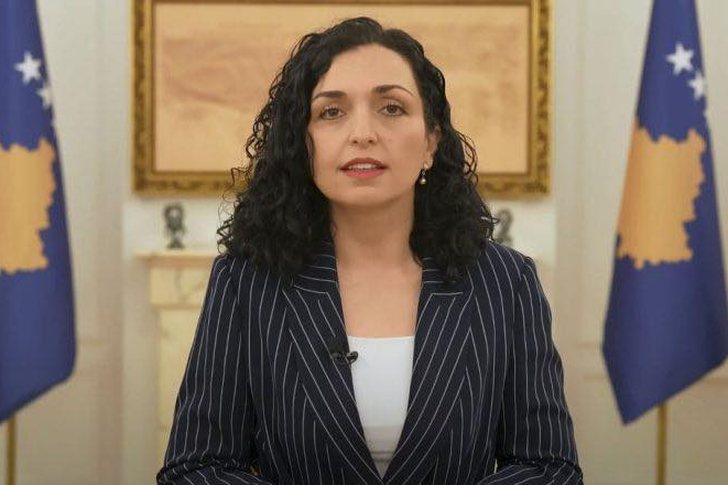
To begin with, I think that Vjosa Osmani could be a good p...
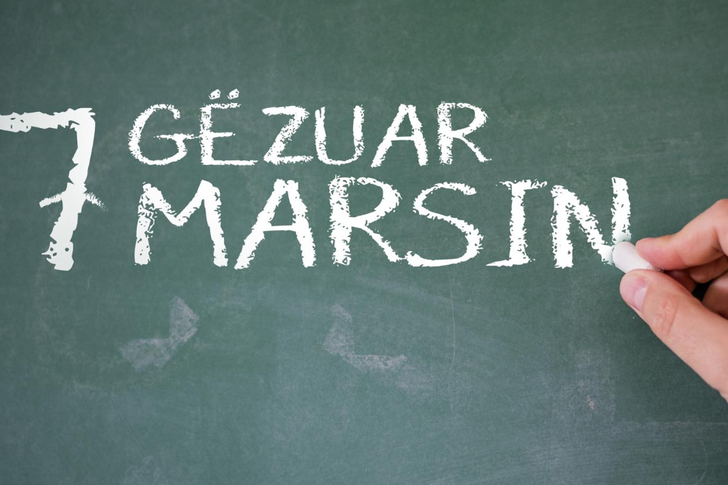
Every year, on March 7, social networks are filled with co...
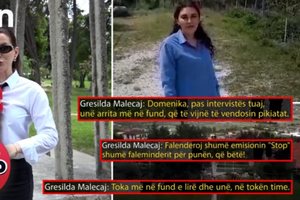
The case addressed this Wednesday, June 3, on the show "St...
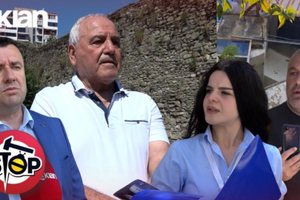
The show "Stop" broadcast this Wednesday, June 3, the case...

Irfan Hysenbelliu claims to be a big businessman, an hones...
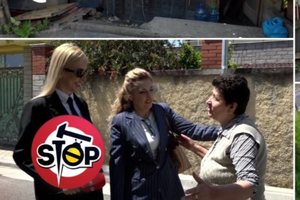
The show "Stop" dealt with a denunciation case this Tuesda...

The Special Board of Appeal (KPA) decided this Monday ...

The KPA vetting decided this Thursday to dismiss the p...

Suela Salavaçi, a prosecutor in the Prosecutor's Offic...

The Special Board of Appeal reinstated the prosecutor ...
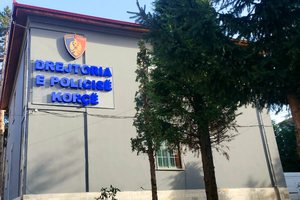
Korça Police has shared detailed information regarding the...
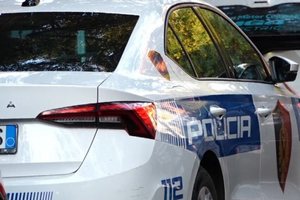
New details have emerged regarding this morning's serious ...

A serious incident occurred this Thursday in Maliq, more s...

A road accident occurred this evening on the Tirana-Durres...

Albania is facing an unprecedented demographic transition,...
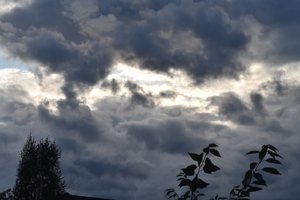
On Thursday, our country will be affected by unstable weat...

An alarming figure of more than 166.4 thousand Albanians a...
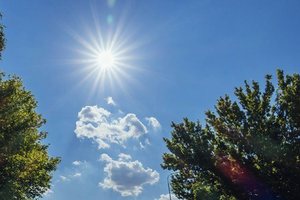
The weather today will be mostly clear and temperatures wi...

Israel and Lebanon have agreed to renew their fragile ceas...

United States President Donald Trump announced in a post o...
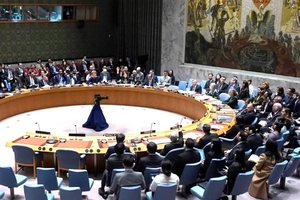
Asambleja e Përgjithshme e Kombet e Bashkuara ka përfundua...
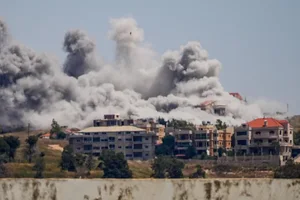
At least nine people have been killed in Israeli airstrike...
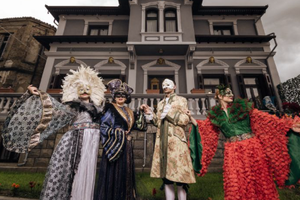
Korça is ready to open the summer season with one of the c...
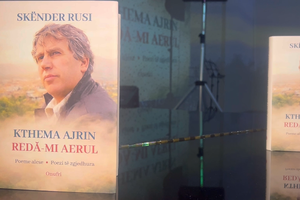
Two years after his passing, the renowned Korçë poet Skënd...
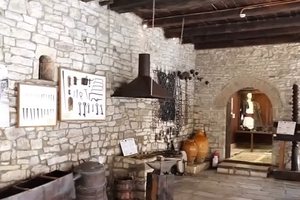
The Ethnographic Museum of Berat has opened its doors to v...
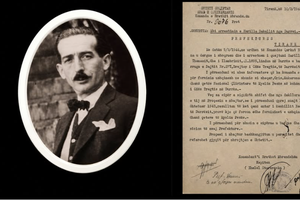
The story of Harilla Bakalli is one of the most chilling t...

Today, in the foreign exchange market, one US dollar is bo...
The Minister of Finance, Petrit Malaj, announced today a n...
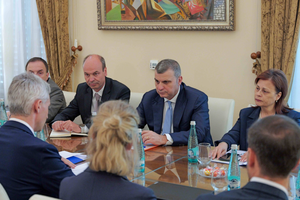
Guvernatori i Bankës së Shqipërisë, Gent Sejko, priti m...
Today, in the foreign exchange market, one US dollar is bo...