

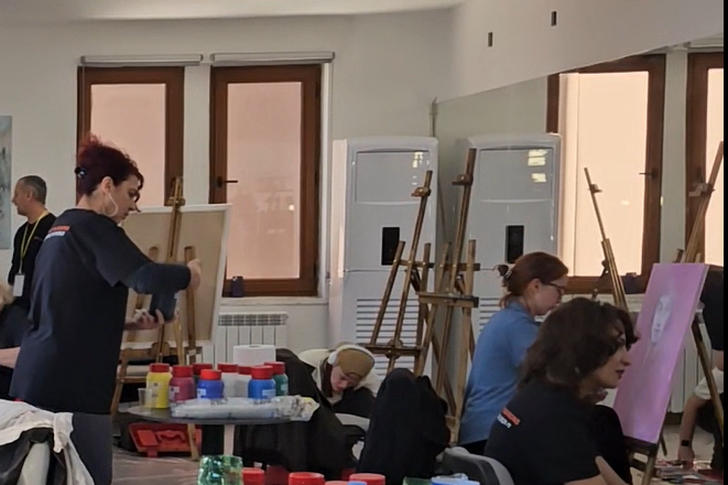
"Ditët e Mio"/ The 15th Edition of the International Colony of Figurative Arts Opens in Korça
The 15th edition of the international fine arts colony "Di...


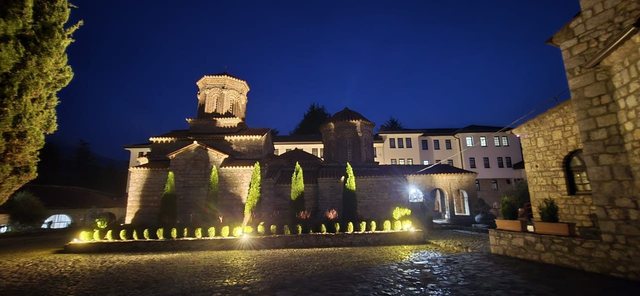
Born in 830, Saint Naum is known in history as one of the missionaries who spread Christianity to the Slavic peoples. He, along with Clement, Gorazd, Angelus and Sava, were disciples of Cyril and Methodius, with whom they would carry out a religious mission in Moravia in 863. Likewise, in 867 they would travel to Rome where Saint Naum would be ordained a priest (1). While after Cyril's death in 868, he and other collaborators would accompany Methodius back to Moravia and Pannonia. With the latter's death in 885, this group of missionaries would move to the court of the Bulgarian king Boris (2). In the capital, Preslav, Saint Naum would initially work with a close group of collaborators to translate the Holy Scriptures into Slavic. Later, as a preacher of Christianity and teacher of the Slavic language, he would replace Saint Clement in several areas and cities of the Bulgarian kingdom. Finally, Saint Naum would retire from this activity and in 905, he would settle in the monastery that he would found on the shores of Lake Ohrid. It was here that he would become a monk, until he passed away on December 23, 910 (3).
"Saint Naum has been and continues to be one of the most popular saints not only in the territories once covered by the Patriarchate of Ohrid, but also in Bulgaria, Serbia and Russia," emphasizes the scholar Kliti Kalamata (4) about his figure. Likewise, he remains a respected saint for the Church and Orthodox believers in Albania, a fact that is seen in several aspects. It should be emphasized that this phenomenon has deep roots and is related to the activity of Saint Naum, during the period of the Bulgarian occupation of part of the Albanian territories (861-1018) (5). Included in the province of Kutmi?evica that stretched between Ohrid, the Adriatic coast, the Shkumbin River and Vlora, they would become the arena of activity of a number of religious missionaries (6). It was the time when King Boris, in order not to be under the influence of Byzantium, had embarked on the path of creating a Bulgarian church and clergy. In this context, he would engage Clement, Naum and their associates, with the mission of preacher and teacher of Christianity and the Slavic language, among the Bulgarian population settled in Kumichevitsa (7).
The final goal was to establish the structures of this church and to use Slavonic as its language and administration. It was precisely in this province, which also included the cities of Ohrid, Devoll and Glavinica, that Clement would serve for seven years. King Boris would grant him several places for rest in Ohrid and Glavinica, writes the Archbishop of Ohrid, Theophylact, in his book ''Long Biography''. But with the coming to power of King Simeon, Boris's son, Clement would be appointed in 893, bishop of ''Dragvista and Velica''. Thus, in his place in Glavinica, Saint Naum would now go as a missionary, and would serve there for a period of time (9). The well-known historian and scholar, Dimitri Obolenski, citing several previous works, qualifies in this case, Saint Naum, as the friend and continuer of Clement's activity (10). It was precisely the service in this region of Albania that would make the cult of this saint venerated since the 11th century. Meanwhile, there is a series of data collected by the scholar Theofan Popa, in the area of ??Ballsh (Mallakastër), Berat and Myzeqesë, where the activity of Clement, Naum, Gorazd and Angjellari is attested. Regarding this problem, Metropolitan Anthim Aleksudhi, in his book, “Brief historical description of the holy metropolis of Berat”, emphasizes the presence of these missionaries in Berat (11). In Myzeqe, traces of the cult of Slavic missionaries have been preserved to this day, who in the Christian-Slavic tradition are seven, such as: Cyril, Methodius, Clement, Naum, Gorazdi, Angjellari and Sava, emphasizes Theofan Popa in the scholarly article, ''Some general considerations about post-Byzantine painting in Albania'' (12). We also find such a thing in the mural paintings of the church ''Nativity of the Virgin Mary'' in Ardenica. Realized by Constantine and Athanas Zografi in 1744, this fresco program would become the model that would be applied in all the churches of Myzeqe (13). It should be noted that in iconography, the figures of Cyril and Methodius, or their disciples, Clement and Naum, were presented before the 18th century. Meanwhile, it would be the master of easel painting, Kostandin Hieromonk (1692-1726), who would consolidate the iconographic presentation of the figure of Saint Naum. We encounter such a thing in the icons painted by him in the churches of Voskopoja and the monastery of ''Saint Naum''. Likewise, the image of the saint would later be developed by the painters Kostandin and Athanas Zografi (14). Meanwhile, in the city of Berat, the ancient tradition of venerating the figures of Saint Gorazd and Saint Angel, two of the Seven Slavic Saints, is still preserved, accompanied by an apocrypha published in Venice (15). Likewise, the relic with part of their relics is preserved in the premises of the cathedral ''Assumption of the Virgin Mary'', today the National Museum of Iconography ''Onufri'' (16). While other writings about the life and work of Saint Naum,have also been published in the past in Voskopoja and Korça.
"One of the first printing houses in the Balkans, the printing house of Moscopol, bore the name of Saint Naum ... ", emphasizes in the book "Icon" author Kliti Kallamata (17). Likewise in Voskopoja, in the 18th century, two akulthi were written and published by Grigor Kostaninidhi, during the years 1740-1742, one dedicated to the Seven Saints, and the other to Clement and Naum (18). Meanwhile, the veneration of the figure of Saint Naum by the Albanians is not only related to the influences of Balkan Orthodoxy, or the Patriarchate of Ohrid, but also to other causes. Here, we can mention the case of Archimandrite Joseph, who when he came to Korça as a school director at the beginning of the 19th century, found a special veneration for this figure in the local tradition, who was considered the "Protector of Albania" (19).
"As for the strengthening of the national features of the Ohrid church, the clearest expression is in the popularization of local saints, who had carried out their activity in the territory of this archbishopric and were canonized as such by the Ecumenical Patriarchate, or the archbishopric of Ohrid itself," Kliti Kallamata emphasizes in another study (20). Meanwhile, the veneration of the figure of Saint Naum also comes from the miracles he had performed in Albania. Thus, on one occasion when he was going to Korça by climbing the Ploça Pass, the horse stopped and did not move further. Even today, the toponym ''Saint Naum's Stone'' and the traces of his horse are preserved here (21). Wherever he went, the saint helped the poor, healed the sick and blessed the believers with his prayers. He would bless the villagers of Zagorcan in Pogradec with the wish: ''Sow wheat and the witchcraft without bread do not remain''. While in Tushemisht, his blessing would be for the cows of this village which saved him from the attack of dogs. While in the place where he would establish the monastery that bears his name, Saint Naum, would heal a sick girl with the water of Najazma, a spring located in the territory of Albania, near the present-day border. Likewise, in this place he would help a farmer whose bear had eaten one of the oxen's feathers. Every year during the sowing, the bear would come and sharpen itself on the farmer's plow together with the other ox, a miracle illustrated in the mosaic located above the monastery gate (22).
To honor his cult, monks and clergy from Albania have also contributed to the maintenance of the monastery of ''St. Naum'' over the years. According to the manuscripts, we learn that Grigori or Gavrili from Voskopoja, the abbot in 1664, with the efforts made would save this object from abandonment and destruction. Likewise, the Ballamaçi family would finance in 1828 the construction of the stone bridge that led to the monastery. While in 1887, at the expense of Parashqevi Kote from Korça, its porch would also be rebuilt (23). Also during the 18th-19th centuries, there would be no shortage of numerous donations, among which the names of Ali Pasha Tepelena or Ismail Bey Plasa are also mentioned. Even for the Saint Naum fair, which attracted dozens of pilgrims from different parts of Albania, inns were built, such as those in Pogradec, Korça, Voskopoja, Starova, Hoçisht, Dishnica, etc. (24). In the monastery, which consists of the church of the "Archangels Michael and Gabriel", the paraclese-mausoleum of Saint Naum and the guest houses, some of the masters of Albanian iconography have also worked. Thus, in 1711, along with the carving of the church's iconostasis, the Hieromonk Constantine would paint his icons. While in 1806, Tërpo Zografi would decorate the paraclese of "Saint Naum" with frescoes (25). Likewise, in 1942, the Holy Synod of the Autocephalous Orthodox Church of Albania would also appoint Bishop Irine Banushi (26). Meanwhile, even today, the monastery serves as a place of pilgrimage for Albanians. There are not only Orthodox believers and pilgrims, but also numerous tourists, who at any time along the border crossing points of Qafë Thana and Tushemisht, cross into the territory of the Republic of Macedonia. of the North, to visit this sacred object. Saint Naum is not only a saint appreciated by Albanians, but also a historical figure who connects the peoples of the Balkans with each other.
*****
1-K. Kallamata, Ikona, K & P. SBILIAS S. A. Athens 1998, f. 126-127; D. Obolenski, Klementi i Ohrit dhe Shqipëria, Konferenca kombëtare për formimin e popullit shqiptar, ASH RPSH, Tiranë 1982, f. 67-72
2-Po aty, f. 126-127; f. 76-68; K. Nihoritis, Tradita e kultit të shtatë shenjtorëve në Shqipëri, 2000 vjet art dhe kulturë kishtare në Shqipëri, KOASH, Tiranë 2003, f. 87-90
3-K. Kallamata, Ikona, K & P. SBILIAS S. A. Athens 1998, f. 126-127; ?. ?. ????????, ????????? ?? ??????????? ?????????? ? IX-X ?r, ??????????? ???????? ?? ???????, ????? 1962, 102
4-Po aty, f. 126-127
5-Dimitri Obolenski, Klementi i Ohrit dhe Shqipëria, Konferenca kombëtare për formimin e popullit shqiptar të gjuhës dhe kulturës së tij, ASH RPSSH, Tiranë 1982, f. 67-72
6-Po aty, f. 67-72
7-D. Obolenski, Klementi i Ohrit dhe Shqipëria, Konferenca kombëtare për formimin e popullit shqiptar të gjuhës dhe kulturës së tij, ASH RPSSH, Tiranë 1982, 67-72; K. Kallamata, Ikona, K & P. SBILIAS S. A. Athens 1998, f. 126-127; Akademia e Shkencave, Historia e Popullit Shqiptar, Toena, Tiranë 2002, f. 218
8-Paul Gautiers, Theophylacte D'Achrida: Discours, Traites, Poesies (Corpus Fontium Historiae Byzantinae), Thesalonique 1980; A. Milev, Grutskite zhitiya na Kliment Okhridski, Sofia 1966, f. 76-146
9-Dimitri Obolenski, Klementi i Ohrit dhe Shqipëria, Konferenca kombëtare për formimin e popullit shqiptar të gjuhës dhe kulturës së tij, ASH RPSSH, Tiranë 1982, f. 67-72
10-D. Obolenski, Klementi i Ohrit dhe Shqipëria, Konferenca kombëtare për formimin e popullit shqiptar të gjuhës dhe kulturës së tij, ASH RPSSH, Tiranë 1982, 67-72; ?. ?. ????????, ????????? ?? ??????????? ?????????? ? IX-X ?r, ??????????? ???????? ?? ???????, ????? 1962, 102
11-Anthimos D. Alexoudes, Syntonos Historike Perigrafe Tes Hieras Metropoles Belegradon, H Ionia, Kerkyra 1868, f. 111
12-Theofan Popa, Disa konsiderata të përgjithshme rreth pikturës post bizantine në Shqipëri, Studime historike, 2, Tiranë 1967, f. 95
13-Mihallaq Qarri, Prifti i parë i botës biblike në ikonografike Shqipëtare, Monumentet, 2002, f. 132
14-K. Kallamata, Ikona, K & P. SBILIAS S. A. Athens 1998, f. 127; K. Kallamata, Rreth tipareve të reja të programit ikonografik në pikturën murale të shek. XVIII, 2000 vjet art dhe kulturë kishtare në Shqipëri, KOASH, Tiranë 2003, f. 266-267
15-Kostas Nihoritis, Tradita e kultit të shtatë shenjtorëve në Shqipëri, 2000 vjet art dhe kulturë kishtare në Shqipëri, KOASH, Tiranë 2003, f. 87-90
16-Th. Popa, Mbishkrime të kishave në Shqipëri, Tiranë 1998, f. 141; Th. Popa, Glavinica e lashtë në Ballshin e sotëm, Studime historike, 1964, 2, f. 238-241
17-K. Kallamata, Ikona, K & P. SBILIAS S. A. Athens 1998, f. 127
18-Kostas Nihoritis, The Tradition of the Cult of the Seven Saints in Albania, 2000 Years of Church Art and Culture in Albania, KOASH, Tirana 2003, p. 88-89
19-Ibid., p. 88-89
20-Kliti Kallamata, About the New Features of the Iconographic Program in the Mural Painting of the 18th Century, 2000 Years of Church Art and Culture in Albania, KOASH, Tirana 2003, p. 266
21-Gjergji Tasi Gusho, Monastery of Saint Naum, Tempulli, 4, Korçë 2001, p. 27-39
22-Ibid., p. 27-39
23-Ibid., p. 27-39
24-Ibid., p. 27-39; A. Llukani, Monastery of Saint Naum and Irine Banushi, Discussions, 24-25 November 2019, p. 26-27
25-Ibid., p. 27-39; p. 33
26-A. Llukani, Metropolis of Berat from the apostolic years to our days, Tirana 2020, p. 43; A. Llukani, Monastery of Saint Naum and Irine Banushi, Discussions, 24-25 November 2019, p. 31

The 15th edition of the international fine arts colony "Di...
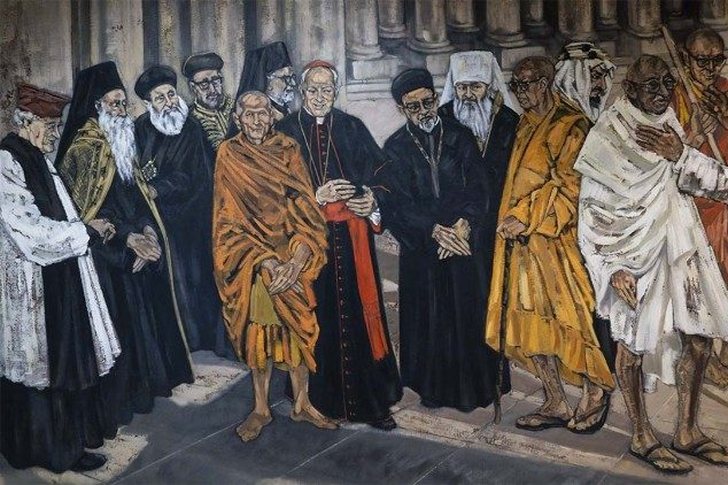
October 28th of this year marks the 60th anniversary of Nost...
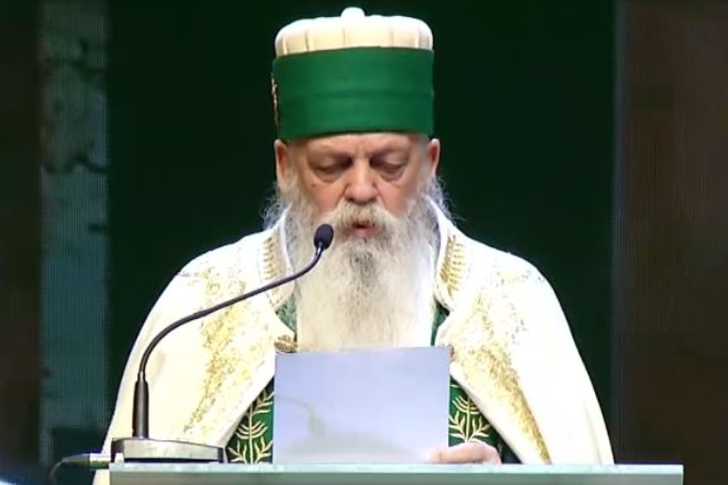
The 60th anniversary of Nostra Aetate, the historic declar...
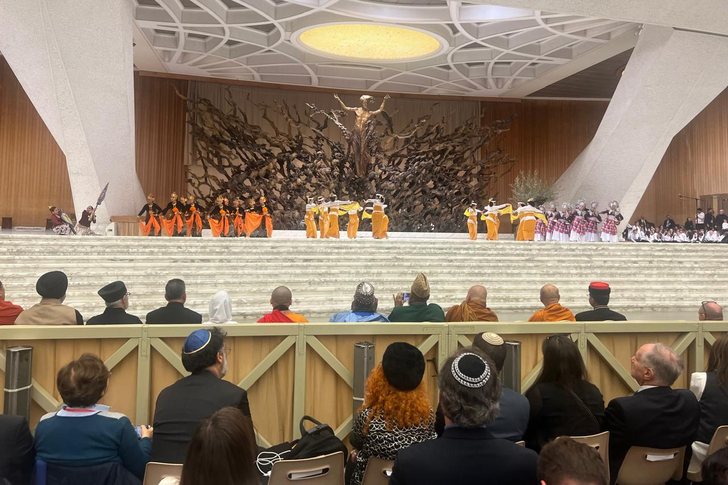
Today, October 28, marks the 60th anniversary of Nostra Ae...

Journalist and writer, Agim Xhafka, has published his newe...
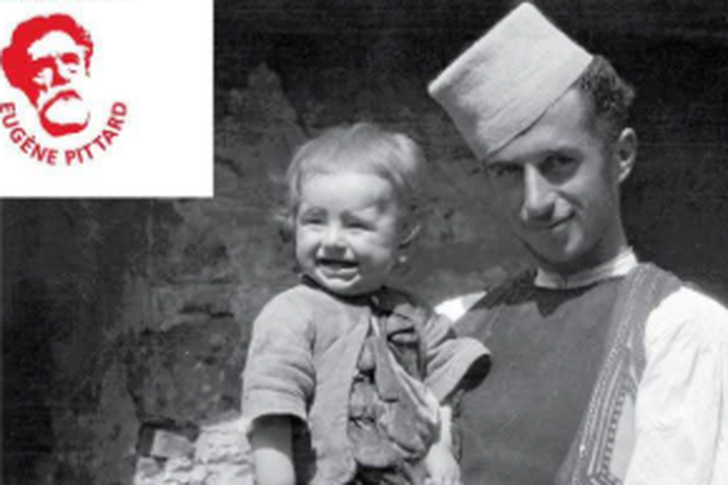
A collection of photographs dating back to 1921 are being ...

Ernest Troshani (Simon), a saint who walks among us, remin...
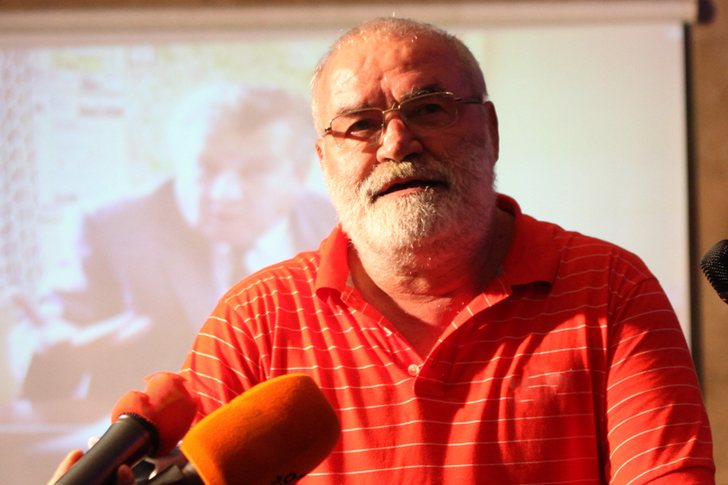
Screenwriter, comedian, satirist and author of shows, Fili...
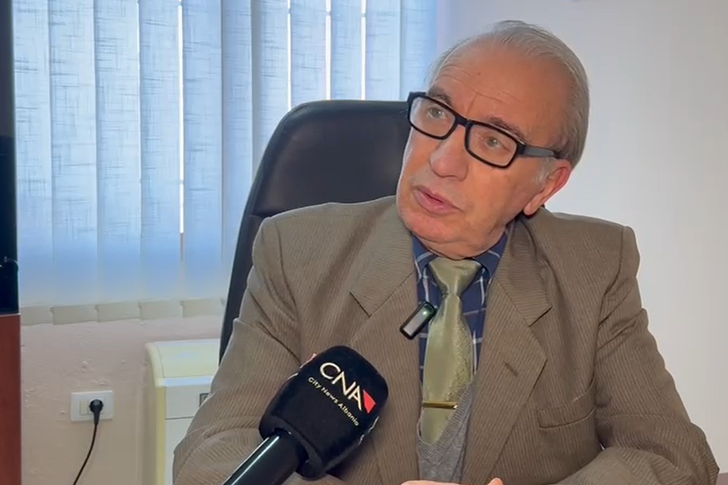
A respected figure in Korçë medicine, surgeon Dr. Ahmet Ho...
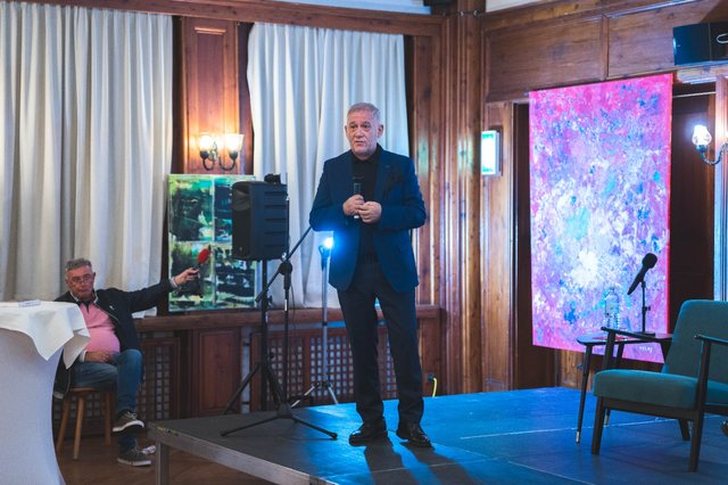
Austrian media continue to report non-stop on the success ...
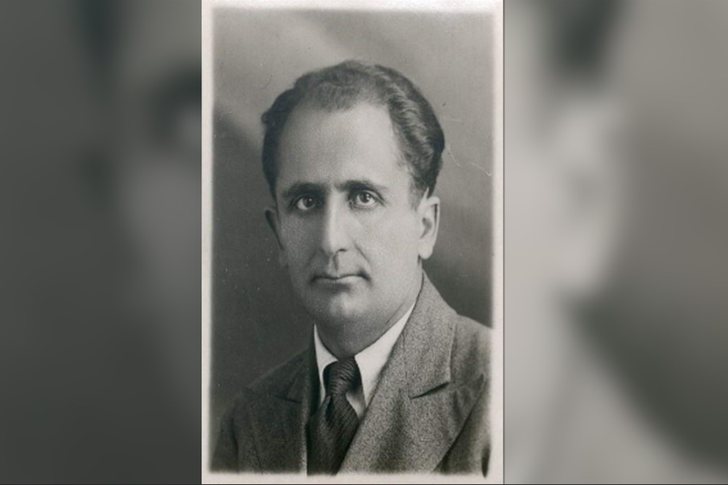
Ali Bey Këlcyra occupies an important place in Albania...

In the morning, Irdi arrived at the coffee shop, as usual,...
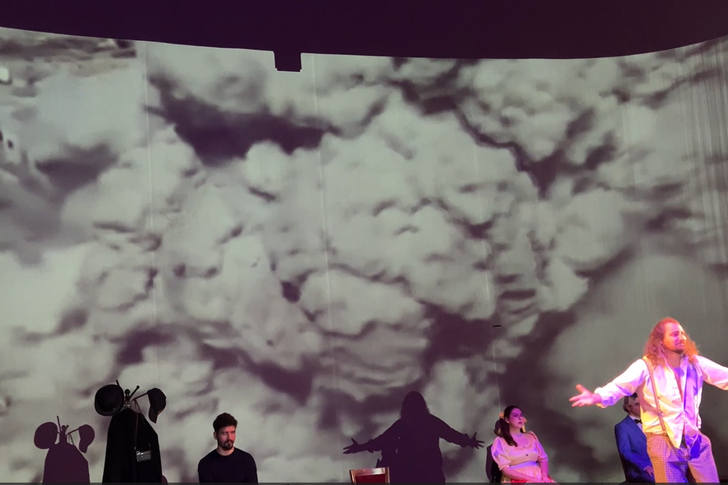
"Independent Gardens of Happiness", a tragicomedy by autho...
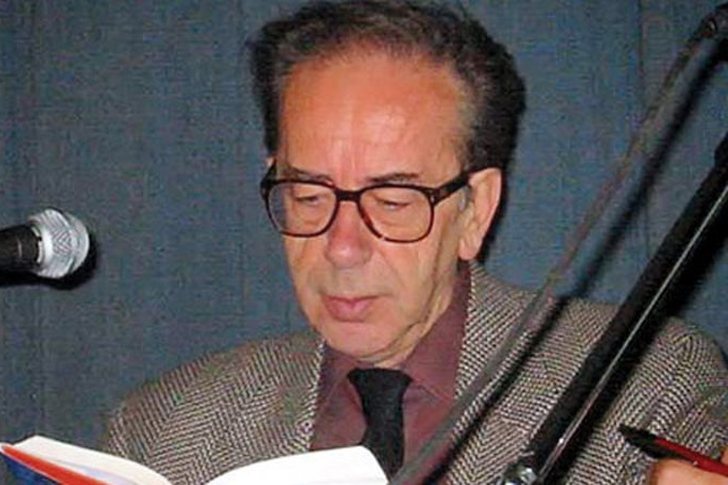
The colossus of Albanian letters, Ismail Kadare, will be h...
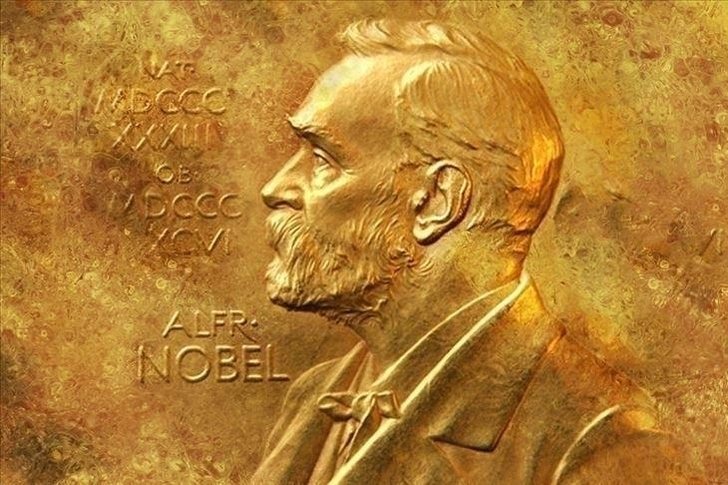
The 2025 Nobel Prize in Literature has been awarded to Hun...

The renowned singer and composer from Korça, Nonda Kajno, ...
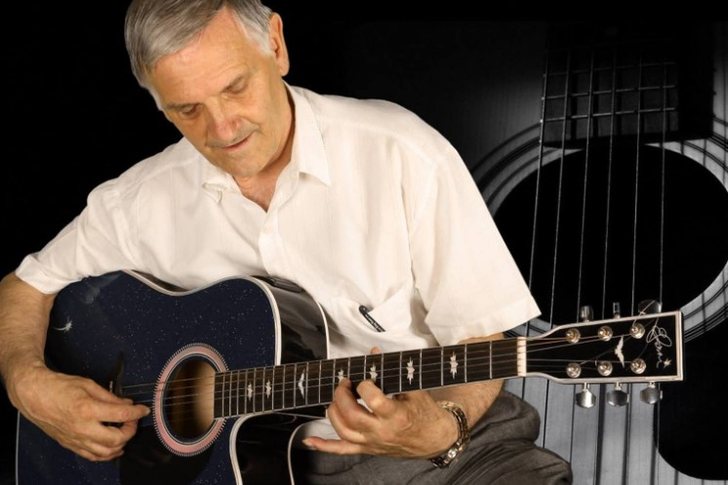
The well-known Korça seretani player, Nonda Kajno, was bor...

Singer-songwriter and one of Korça's most famous serenader...
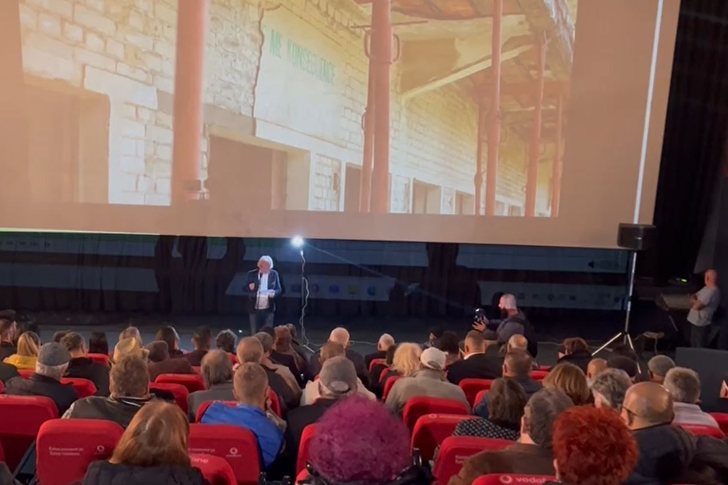
The documentary “Spaç 1973 - Martyrs of Freedom”, directed...

The winners of the third edition of the 'Gjon Mili' Intern...

CNA has launched another investigation that could lead to ...

Irfan Hysenbelliu is a businessman that we call "Irfan the...

In March 2026, CNA launched another investigation centered...
The arrested mayor of Tirana, Erion Veliaj, with 13 charge...

The Special Board of Appeal (KPA) decided this Monday ...

The KPA vetting decided this Thursday to dismiss the p...

Suela Salavaçi, a prosecutor in the Prosecutor's Offic...

The Special Board of Appeal reinstated the prosecutor ...

A road accident occurred this evening on Nikolla Zoraqi St...

Three people were shot and wounded in Elbasan last night b...
A serious incident occurred this Tuesday in the Yrshek are...

An accident occurred this Tuesday on "Dituria" street in K...

All of Southern Europe will face changing weather conditio...

Albania was hit by temperatures significantly higher than ...

For the first time, Pogradec welcomed the Inter-Lake Chess...

Albania has achieved a record for the employment of foreig...

US Secretary of State Marco Rubio arrived in Manila on Jul...
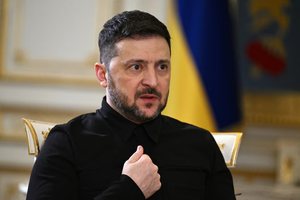
In the space of a few days, Ukrainian President Volodymyr ...

The spokesman for the Iranian Foreign Ministry warned Bulg...
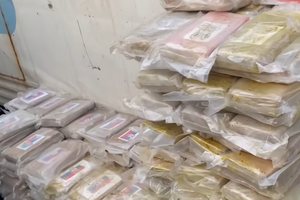
Autoritetet italiane sekuestruan pako me afër 800 kilogram...

At a time when industrial products are increasingly taking...

Trust among people is not just a three-syllable word. It c...

Master of humor Todi Llupi has passed away at the age of 7...

The ninth edition of "MIK Festival" kicked off with one of...

Construction company licenses will have a validity period ...

The Centralized Purchasing Operator recently opened a tend...
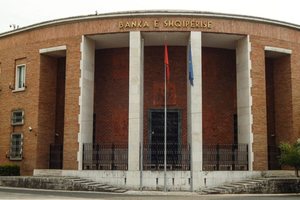
The new draft law "On the Bank of Albania" provides that t...

This Tuesday, one US dollar is bought for 81.2 lek and sol...