


The last session of the parliamentary session on Thursday / On the agenda, a series of draft laws
The last plenary session of this parliamentary session wil...

The last plenary session of this parliamentary session wil...

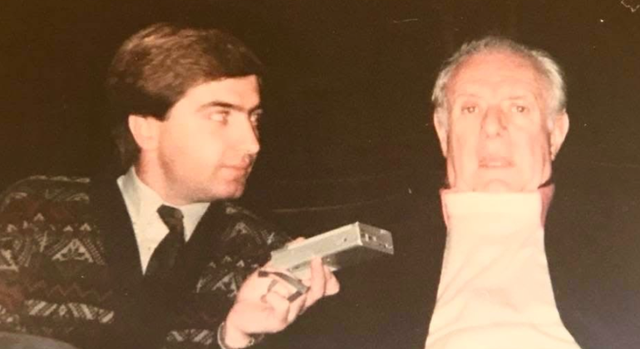
In the history of contemporary literature and theater, we rarely find a figure where art and civic engagement are so organically intertwined as in the work of Dario Fo. At the core of his creativity lies the conviction that art is not an aesthetic refuge detached from reality, but a living instrument of intervention in it.
For Dario Fo, theater is not only representation, but also act, an action that aims to reveal, shock, and ultimately transform the collective consciousness.
I still vividly remember the meeting and conversation with him here over thirty years ago (Milan, 1993), in the beautiful hall of the "Smerald" theater.
We talked at length about art, about its irreplaceable role and the power that art has to change reality.
What has remained most vivid to me from that conversation is not only the strength of his stage presence, but his insistence on an idea that he repeated with conviction: the artist, the writer, cannot be a contemplative.
For him, writing was an act of responsibility, a conscious intervention in reality.
He rejected the idea of ??the withdrawn artist, locked into pure aesthetics, seeing this as a form of evasion. In his vision, the writer must be involved, positioned, even vulnerable in what he says.
From a philosophical perspective, his work can be read as a sustained critique of power structures and official narratives.
He saw reality as a manipulated construct, where truth is often deformed by political, religious, or media institutions.
In this sense, his art takes on a demystifying function: it aims to dismantle dominant discourses and restore an alternative truth, born from popular experience and marginalized voices.
Aesthetically, this philosophy translates into a distinctive form of expression that rejects the traditional norms of elite theater.
Dario Fo builds an aesthetic based on the grotesque, parody and hyperbole; elements that not only entertain, but also destabilize the usual perception of reality.
Laughter, in this context, is not simply an emotional reaction, but an act of recognition. It appears as a moment of liberation from fear and as a way of seeing power without its solemn mask.
Dario Fo was, in the fullest sense of the word, a classic showman: he wrote his own plays, staged them himself, and often performed the lead role himself.
This multiplicity of roles was not simply a display of virtuosity, but a way to maintain the integrity of the message and directly control the relationship with the public.
His theater did not pass through filters; it came alive, direct, almost raw, as an immediate act of communication.
In this creative universe, an inseparable presence was Franca Rame, his wife and closest collaborator. Her role was not secondary; she was a powerful voice in her own right, an actress and author who shared with Dario Fo not only the stage, but also the vision for an engaged and free theater.
One of the most intriguing aspects of Dario Fo's aesthetic is his use of language as body and energy. Through experimentation with sound, rhythm, and the deformation of speech, he creates a communication that transcends the rational boundaries of language.
This form of expression shifts the emphasis from direct meaning to experience, making the viewer an active participant in the process of interpretation. Thus, his art does not provide ready-made answers, but creates new spaces for critical thought.
In a broader perspective, Dario Fo's work raises questions about the role of the artist in society. Should the artist be a silent witness or an engaged actor? His answer is clear: neutrality is an illusion.
Every creative act is, in itself, a positioning. By acknowledging this, he transforms theater into a form of resistance, where art becomes the voice of those who are usually not heard.
However, its strength lies not only in its political content, but in the way this content is embodied aesthetically.
He manages to create a rare balance between form and message, proving that engaged art need not sacrifice aesthetic complexity for the sake of ideological purpose. On the contrary, it is precisely through formal novelty and performative power that the message becomes deeper and more enduring.
Even today, Dario Fo's work reminds us that art has the potential to be more than a mirror of reality; it can be a tool to reconfigure it.
By combining humor with criticism, tradition with experiment, and aesthetics with ethics, he creates a model of art that not only reflects the world, but aims to change it. And it is in this combination that his true power lies./ CNA


Today marks the 127th anniversary of the birth of the reno...

A court decision in 1948 banned a number of works by Alban...

The German Embassy in Tirana has announced that on Friday,...

UNESCO has designated Medellin, Colombia, as the World Boo...

The Bylis-Klos archaeological site is known as one of the ...

I don't know what dessert is served for Eid lunch, but my ...

14 Marsi është një ditë e veçantë në Shqipëri, pasi sot fe...

Xhevahir Zeneli is atypical. A silhouette that never refus...

Legendary folk singer Gëzim Nika will bring "Me zanin e bj...

The “Nikolet Vasia” Visual Art Gallery in Durrës has opene...

Several archaeological excavations have led to the discove...

In a special academic and civic ceremony, the University o...

Director Arben Kumbaro's drama "Justice at Nuremberg" prem...

On March 12, the concert of the quintet of the Italian art...

"Paddington The Musical" has dominated the WhatsOnStage Aw...

The rare archive with the collection of photographs of the...

On Saturday, March 7th, the launch event of the Internatio...
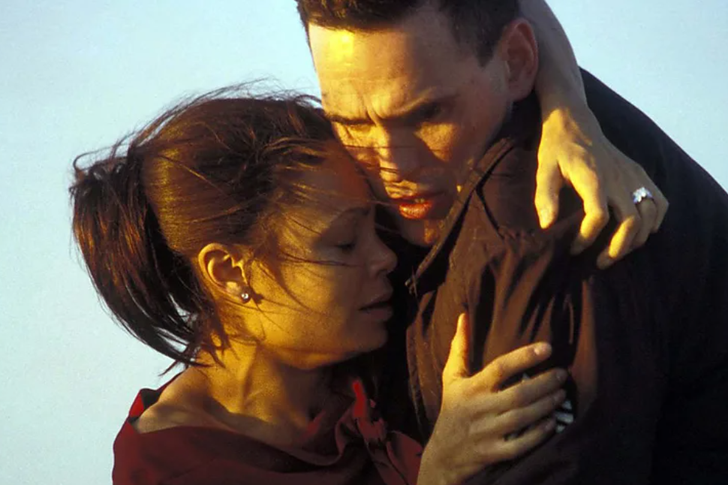
20 years ago, the interracial drama “Crash” took the Oscar...
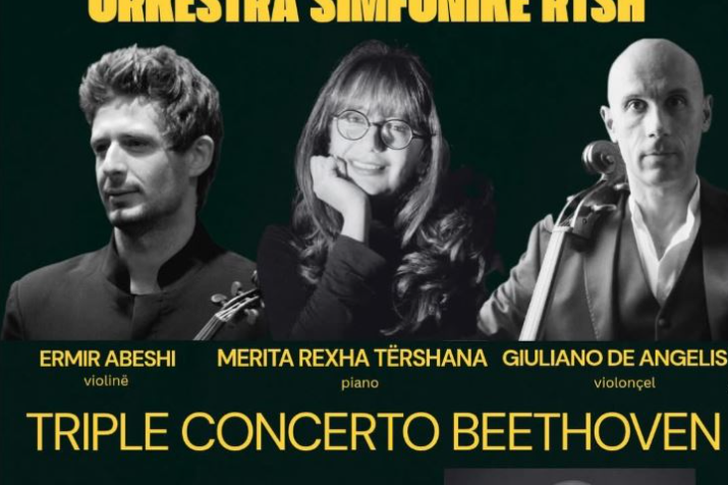
Beethoven's Triple Concerto and Symphony No. 5 will be per...
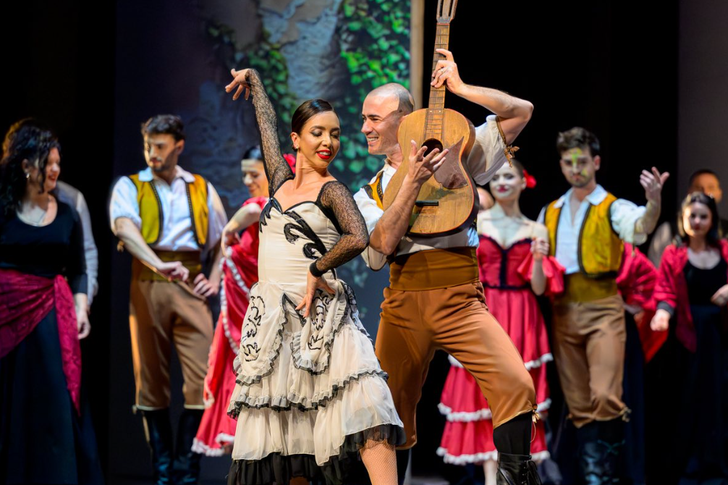
The National Opera and Ballet Theater brings the play "Lol...

CNA has launched another investigation that could lead to ...

Irfan Hysenbelliu is a businessman that we call "Irfan the...

In March 2026, CNA launched another investigation centered...
The arrested mayor of Tirana, Erion Veliaj, with 13 charge...

The Special Board of Appeal (KPA) decided this Monday ...

The KPA vetting decided this Thursday to dismiss the p...

Suela Salavaçi, a prosecutor in the Prosecutor's Offic...

The Special Board of Appeal reinstated the prosecutor ...
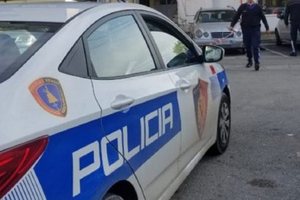
A serious incident occurred this Tuesday in the Yrshek are...

An accident occurred this Tuesday on "Dituria" street in K...
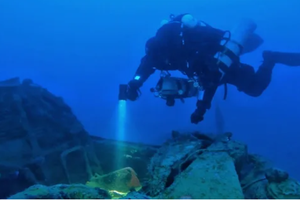
A tourist has lost her life on Orikum beach, where she was...
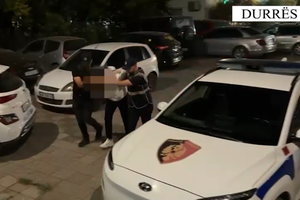
Two people were arrested and two others were prosecuted af...
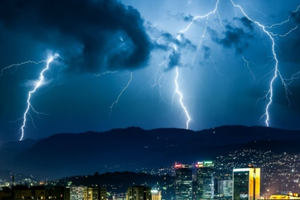
All of Southern Europe will face changing weather conditio...

Albania was hit by temperatures significantly higher than ...
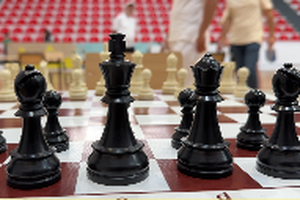
For the first time, Pogradec welcomed the Inter-Lake Chess...
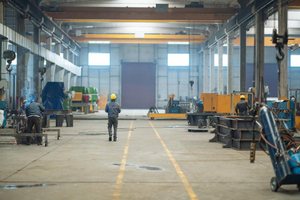
Albania has achieved a record for the employment of foreig...
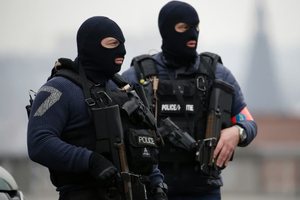
An operation led by Europol, through authorities in severa...
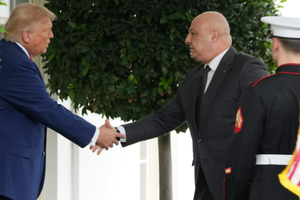
US President Donald Trump hosted the Lebanese president at...
The European Union has criticized the decision of the acti...
An earthquake measuring 5.0 on the Richter scale struck so...

At a time when industrial products are increasingly taking...

Trust among people is not just a three-syllable word. It c...

Master of humor Todi Llupi has passed away at the age of 7...

The ninth edition of "MIK Festival" kicked off with one of...

The Centralized Purchasing Operator recently opened a tend...
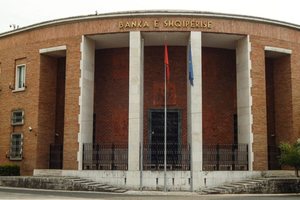
The new draft law "On the Bank of Albania" provides that t...
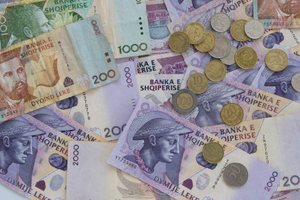
This Tuesday, one US dollar is bought for 81.2 lek and sol...
Deputy Minister of Economy and Innovation, Enkelejd Musabe...