


Second victim of bad weather/ Fisherman drowns in Ksamil
Citizen MH, 61, a fisherman, was found dead near the islan...

Citizen MH, 61, a fisherman, was found dead near the islan...

For the first time in 27 years, the United States government is changing the way it categorizes people by race and ethnicity, an effort that federal officials believe will provide a more accurate picture of residents who identify as Hispanic and those who of Middle Eastern and North African descent.
The revisions to minimum classifications on race and ethnicity, announced Thursday by the Office of Management and Budget, are the latest effort to more accurately identify the population of the United States. This process often reflects changes in society and immigration, as well as a desire for people in an increasingly diverse society to be represented in statistics published by the federal government.
"The emotional impact this has on people cannot be underestimated," Meeta Anand, senior director at Census and Data Equity, told the Human Rights Conference. "This is how we conceive of ourselves as a society. ... We see a desire for people to self-identify and be reflected in the data released by the government so that they are able to tell their stories in the future.”
The changes include creating a single question about race and ethnicity. This will give respondents the opportunity to choose from a long list of categories such as “African American,” “Indian American,” and “Hispanic.” Research has shown that a large number of Hispanics are not sure how to answer the race question when asked separately, because they understand that race and ethnicity are similar, and they often choose “any other race” or do not answer the question.A
category of East Middle and North Africa will add to the question of race and ethnicity. People from places like Lebanon, Iran, Egypt and Syria have in the past been encouraged to identify as white, but will now have the option to identify as people of Middle Eastern descent. Results from the 2020 census, which asked respondents to explain their ancestry, suggest that 3.5 million residents identify as people of Middle Eastern and North African descent.
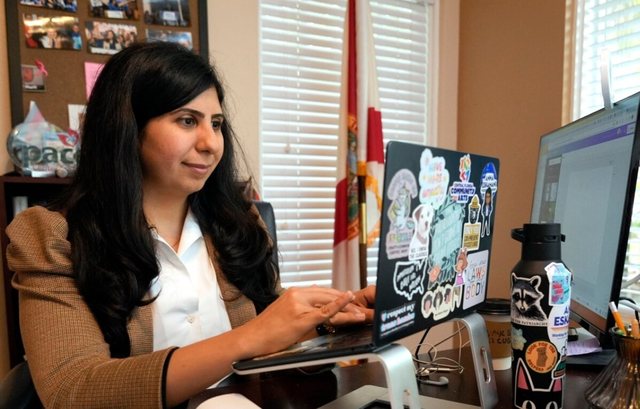
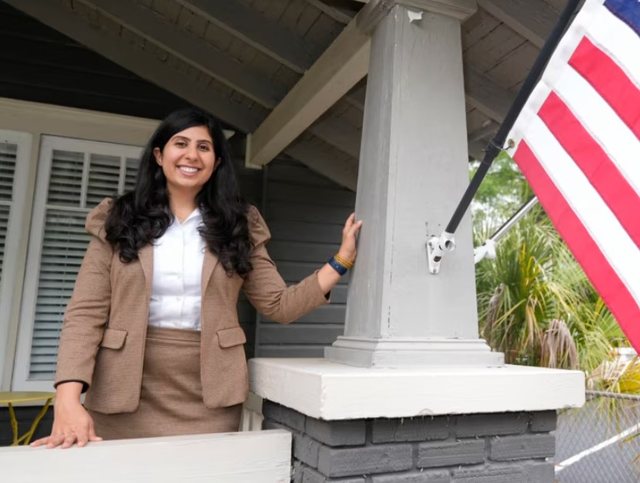
"I'm glad that now we're going to be represented," said Florida state legislator Anna Eskamani, an Orlando Democrat whose parents are from Iran. "My family used to choose the 'white' option because there was no other option."
Part of the changes were the removal of the words "Negro" and "Far Eastern," now widely considered derogatory, as well as the words "majority" and "minority" because they do not reflect the country's complex racial and ethnic diversity, some officials say. .
The changes, which were made by a group of experts who worked over a two-year period, have long-term ramifications for legislative boundaries, civil rights laws, health statistics and possibly politics as the number of people categorized as white will decrease.
Donald Trump, who is expected to be the Republican nominee for president, recently alluded to arguments made by people who claim that Democrats are promoting illegal immigration to weaken the power of the white population. During his term as president, Mr. Trump tried unsuccessfully to disqualify people who were in the United States illegally from being included in the 2020 census.
The changes will be reflected in census data collection, forms, surveys and questionnaires. , which are done once a decade by the federal government, as well as state governments and the private sector, because businesses, universities and other groups usually follow the lead of Washington institutions. Federal agencies have 18 months to submit a plan to implement these changes.
The first federal standards on race and ethnicity were published in 1977 to provide consistent data across agencies and produce statistics that could help enforce civil rights laws. They were last updated in 1997 when five basic categories were defined - American Indian or Alaska Native, Asian, African American, Native Hawaiian or other Pacific Islander, and white. Respondents had the option to make more than one choice. Minimal ethnic categories were grouped separately as non-Hispanic or Hispanic or Latino.
The interagency group that worked on the recent revisions noted that the categories are sociopolitical constructs, and race and ethnicity are not biologically or genetically determined.
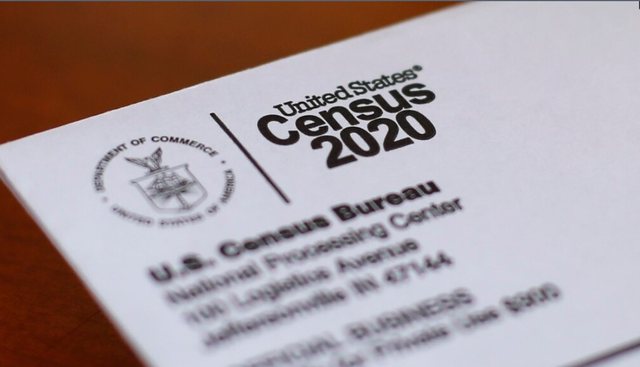
The racial and ethnic categories used by the US government reflect their times. In 1820, the category "Free people of color" was added to that decade's census to reflect the increase in the number of free people of color. American Indians were not explicitly enumerated until 1860. After years of immigration from China, "Chinese" was included in the 1870 census. There was no formal question about Hispanic origin until the 1980 census.
Not all support recent changes to the census questionnaire.
Some Afro-Latinos feel that the combination of the race and ethnicity question will reduce their numbers and representation in official data, although previous research from the US Census Bureau found no major differences between "Afro-Latino" responses. in questions with separate categories for this and those with combined questions on race and ethnicity.
Mozelle Ortiz, for example, is of mixed Afro-Puerto Rican descent. She thinks the changes could eliminate that identity, even though people may choose more than one answer after the race and ethnicity questions are combined.
"My entire lineage, that of my Afro-Puerto Rican grandmother and all other non-white people who speak Spanish, will be erased," she says.
William Chalmers, in a letter to the group, expressed concern that combining questions of race and ethnicity would confuse the two definitions.
"Like gender and sexual orientation, which are treated as separate categories, 'race' and 'culture' should be separate categories," says Mr. Chalmers./ VOA


Russia has been pushing for a United Nations Security Coun...

Poland has temporarily opened a border crossing with Ukrai...
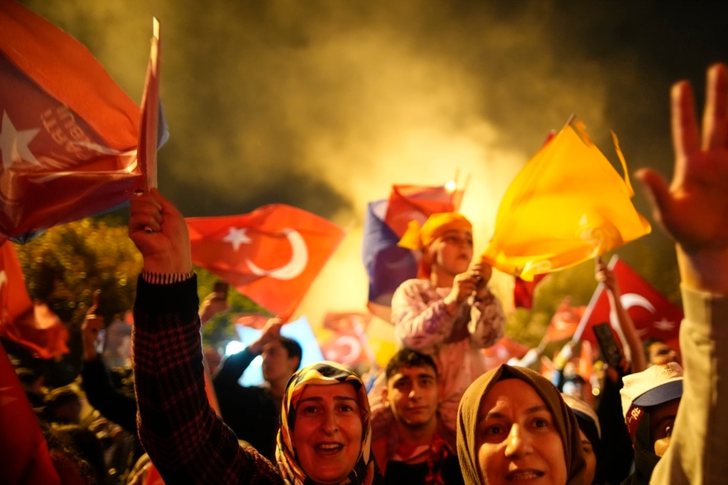
Të dielën në Turqi zhvillohen zgjedhjet lokale që shihen s...

The Minister of Foreign Affairs of Serbia, Ivica Dacic...

Federal investigators have revealed new details about what...

The war in Ukraine is in its 764th day. Ten thousand f...

The bodies of two people have been pulled from a red t...

Kërcënimi i Rusisë duke përdorur sulme kibernetike, pr...

Four people, including a teenage girl, were killed and at ...
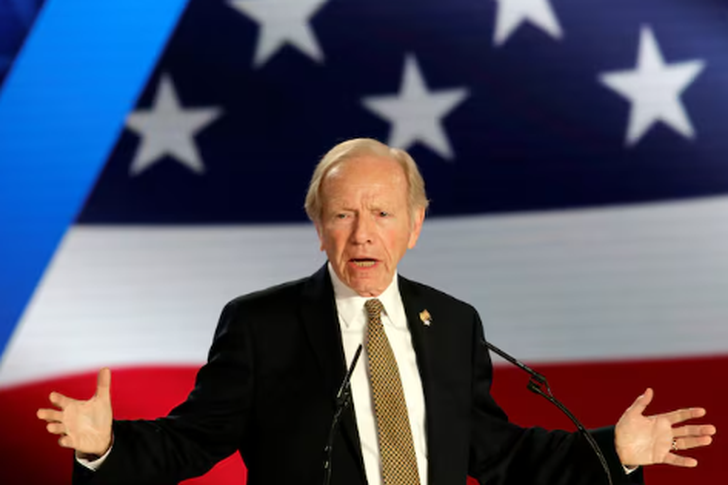
Former US senator and Democratic Party vice presidential c...

Russia may have used a new type of bomb during airstrikes ...

Russia announced on Wednesday that it had halted Ukrainian...

Latvia has declared "non grata" (person undesirable) an em...
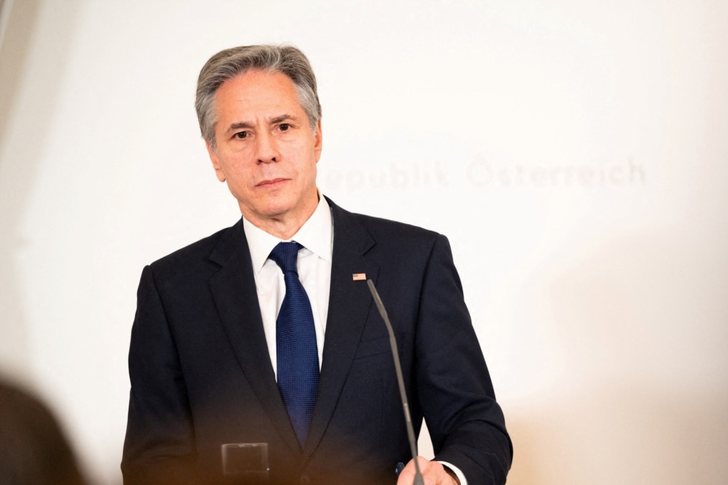
The US Secretary of State, Antony Blinken, will discuss su...
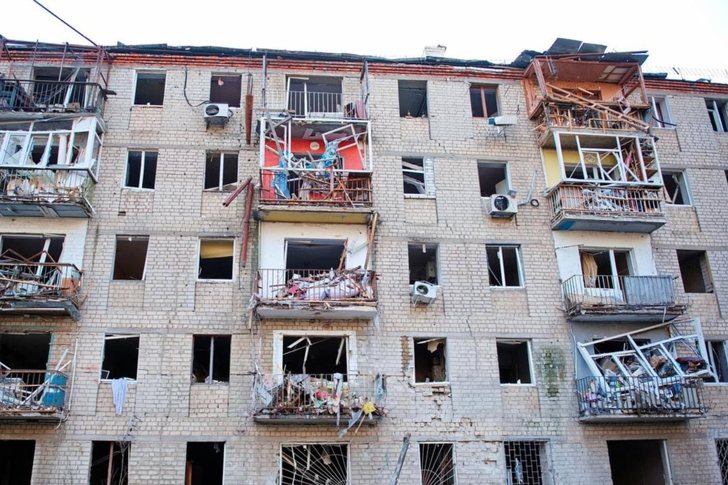
Russian forces have shelled the eastern Ukrainian city of ...

US President Joe Biden has placed women's reproductive hea...
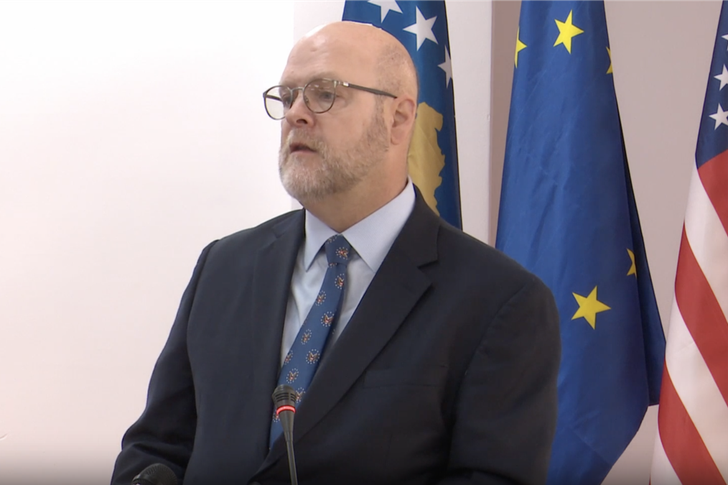
The American ambassador in Pristina, Jeff Hovenier, said o...

Turkey is preparing to launch a large-scale operation ...

Senior administration officials of President Joe Biden are...

Safety inspectors are analyzing the black box of the freig...

CNA has launched another investigation that could lead to ...

Irfan Hysenbelliu is a businessman that we call "Irfan the...

In March 2026, CNA launched another investigation centered...
The arrested mayor of Tirana, Erion Veliaj, with 13 charge...

The Special Board of Appeal (KPA) decided this Monday ...

The KPA vetting decided this Thursday to dismiss the p...

Suela Salavaçi, a prosecutor in the Prosecutor's Offic...

The Special Board of Appeal reinstated the prosecutor ...

Citizen MH, 61, a fisherman, was found dead near the islan...

Another phase of the international operation, codenamed "T...

Police have arrested a 34-year-old woman at Rinas Airport ...

A serious accident has occurred on the Lezhë-Shëngjin axis...

This Wednesday, our country will be under the influence of...

All of Southern Europe will face changing weather conditio...
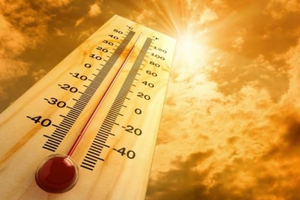
Albania was hit by temperatures significantly higher than ...

For the first time, Pogradec welcomed the Inter-Lake Chess...

Prime Minister Andy Burnham has announced that most bus fa...

France's parliament has passed a law to ban social media f...

US Secretary of State Marco Rubio arrived in Manila on Jul...

In the space of a few days, Ukrainian President Volodymyr ...

At a time when industrial products are increasingly taking...

Trust among people is not just a three-syllable word. It c...

Master of humor Todi Llupi has passed away at the age of 7...

The ninth edition of "MIK Festival" kicked off with one of...

Businesses will no longer be required to simply register t...

Despite economic growth and income in recent years, Albani...

This Wednesday, one US dollar is bought for 81.4 lek and s...

Construction company licenses will have a validity period ...