


Poll: One in three Democrats think Biden should drop out
One in three Democrats think US President Joe Biden sh...


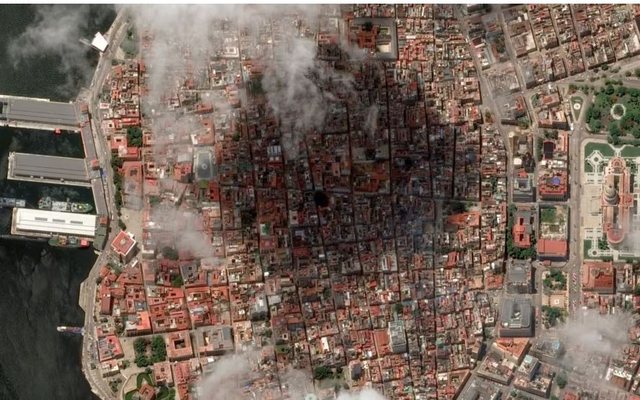
New satellite images of Cuba show signs that the country is installing enhanced surveillance capabilities at four military bases with suspected links to China, providing Beijing with a network of facilities that could be used to spy on the United States.
The images, presented in a report on Tuesday by the Washington-based Center for Strategic and International Studies (CSIS), were taken in March and April. They show new or recent construction at three locations near the capital, Havana, as well as work at a previously unreported site not far from the US naval base at Guantanamo Bay.
"Without access to classified materials, determining the specific objectives of these facilities is nearly impossible," the report states. "However, the addition of space monitoring equipment in places like Bejucali and Calabazar is notable, considering that Cuba does not have its own satellites, or its own space program."
Bejucal is home to the largest of the four sites, according to CSIS analysts, and first became known during the 1962 Cuban Missile Crisis, when the base was used to store nuclear weapons for the Soviet Union.
Recently, Bejucali has gained prominence as a major intelligence data monitoring station suspected of tracking electronic communications for China.
New satellite photos show evidence that Bejucali has had major upgrades, including a new structure for the electronic antenna.
Two other facilities near Havana - Wajay and Calabazar - have also seen expansion. CSIS analysts cite evidence of an expanding and evolving mission, including the installation of antennas, radar and other equipment that could help monitor satellites.
The last facility, El Salao, appears to still be under construction. But its location, not far from the US naval base at Guantanamo Bay near the city of Santiago de Cuba, and the structures themselves, could be cause for concern for the United States.
Images collected by CSIS show progress on what appears to be an array of antennas with a diameter of 130 to 200 meters. Similar structures, according to analysts, have shown the ability to track signals up to 15,000 kilometers away.
The US Office of the Director of National Intelligence declined to comment on the CSIS report. But this follows an announcement last year by The Wall Street Journal that China was paying Cuba several billion dollars to build a surveillance facility.
US officials later said that China had upgraded its intelligence facilities in Cuba in 2019, but that the US response had prevented Beijing from achieving its goals.
"We are confident that we can continue to meet our security commitments," Pentagon press secretary Maj. Gen. Pat Ryder said while briefing reporters on Tuesday.
"We know that the People's Republic of China will continue to try to increase its presence in Cuba, and we will continue to work to stop that," he said in response to a question from VOA. "We continue to monitor this closely, taking steps to counter it."
China on Tuesday rejected the findings of the CSIS report. A spokesman for the Chinese embassy in Washington called them "nothing but slander."
"The US side has repeatedly talked about China establishing espionage bases or conducting surveillance activities in Cuba," Liu Pengyu told VOA in an email.
"The United States must immediately stop the malicious smearing of China," Mr. Liu said, adding that, "The United States is undoubtedly the leading power in terms of wiretapping and does not spare its allies."
Cuba also disputed the CSIS report, singling out an op-ed in The Wall Street Journal.
"Without citing a verifiable source, or showing evidence, it seeks to scare the public with legends about Chinese military bases that do not exist and no one has seen," said a post by Cuban Deputy Foreign Minister Carlos Fernandez de Cossio on the social network. X.
The CSIS report says monitoring stations in Cuba could help China gain the skills and knowledge it needs as it tries to overtake the United States militarily.
"Collecting data on activities such as military exercises, missile tests, missile launches and submarine maneuvers would allow China to have a more sophisticated picture of US military practices," the report said.
"The Cuban facilities will also provide the ability to monitor radio traffic and potentially intercept data sent by US satellites as they pass over top secret military facilities in the southern United States," the report said.
Such monitoring stations could also help China gain access to what the report describes as a "treasure trove of data" from commercial communications transiting the southeastern United States./VOA

One in three Democrats think US President Joe Biden sh...

Millions of voters in Britain will head to the polls o...

The European Union (EU) has again called on Serbia to ...
The European Commission (EC) announced on Monday the s...
2 earthquakes were registered this Tuesday evening in Gree...

Rudolph Giuliani, the former mayor of the city of New York...

In Tirana, the authorities published today the new social ...
Hungarian Prime Minister Viktor Orbán visited Kiev on ...

At least eight Palestinians were killed during Israeli air...
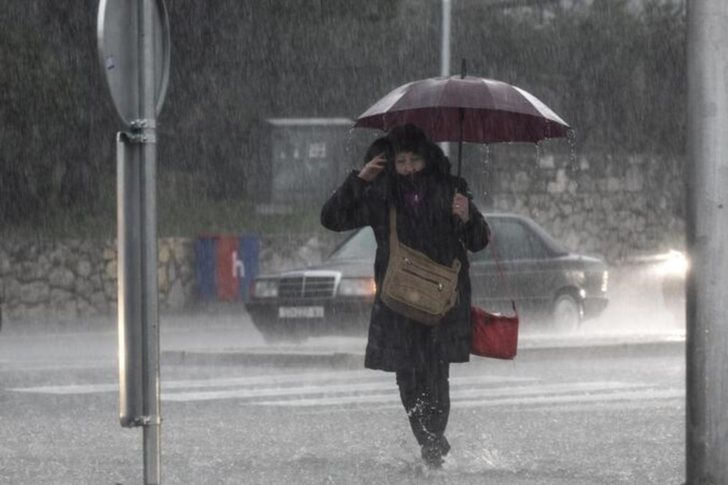
Two people lost their lives in the powerful storm that hit...
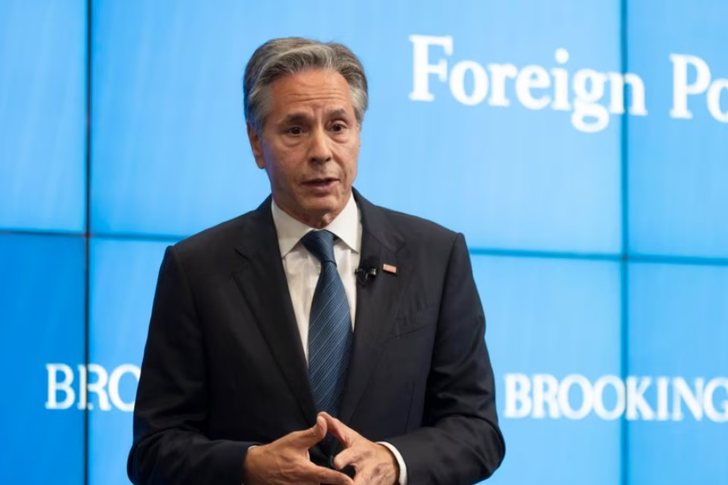
US Secretary of State Antony Blinken says President Jo...

Former South Carolina governor and former US ambassado...

Kosovo has declared Wednesday a day of mourning for th...

Between June 7 and June 28, 2024, the German Federal P...

Israeli Prime Minister Benjamin Netanyahu said Monday ...
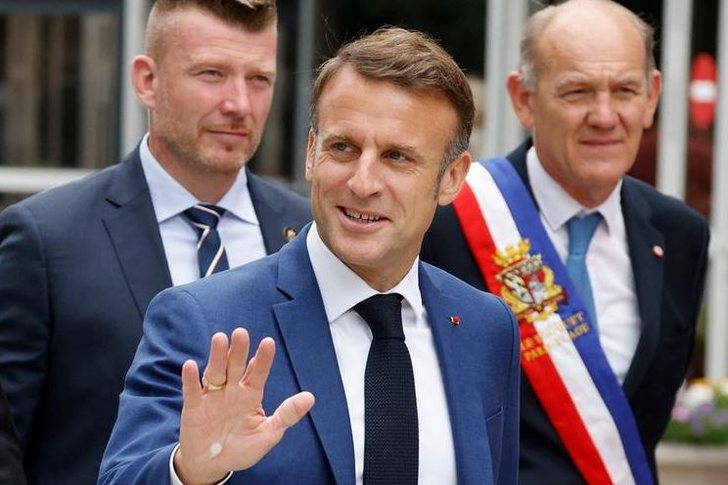
The result is catastrophic for President Emmanuel Macr...
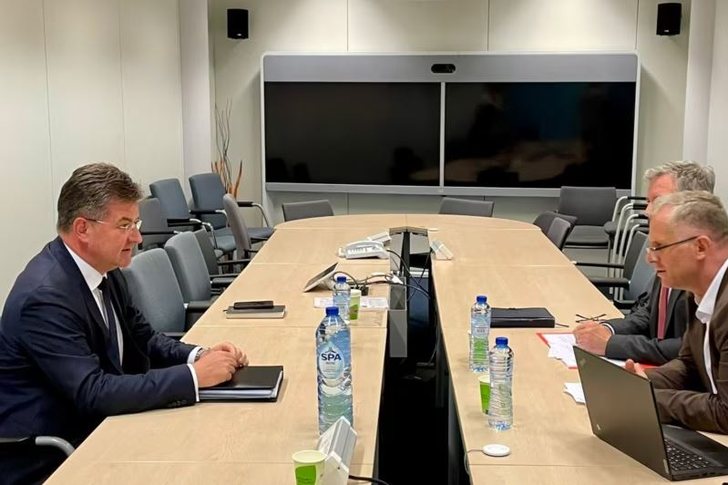
The chief negotiators of Kosovo and Serbia, Besnik Bis...

More than 300 people have been hospitalized due to nor...
Ukraine is easing mobilization conditions to deal with a s...
US military bases and personnel across Europe are on h...
SPAK's standards, the way it investigates, how it secures ...

Irfan Hysenbelliu claims to be a big businessman, an hones...

The murder of officer Enea Mekolli in the line of duty has...

The next case broadcast on the show "Stop", this Thursday,...

The Special Board of Appeal (KPA) decided this Monday ...

The KPA vetting decided this Thursday to dismiss the p...

Suela Salavaçi, a prosecutor in the Prosecutor's Offic...

The Special Board of Appeal reinstated the prosecutor ...
Another gunshot wound occurred at the scene. According to...

A gunshot wound occurred this afternoon in Shijak. Accordi...

The Border Police blocked the vessel and fined the driver ...
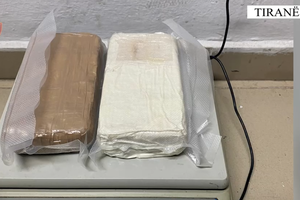
A police operation codenamed "Zonet" has ended with the se...

More than 860 million people fall ill and 1.5 million die ...
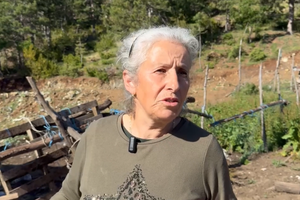
The mother of Violand Braçellari, the perpetrator of the s...

The modern European traveler seeks a meaningful connection...

This Sunday, weather conditions are forecast to be clear a...
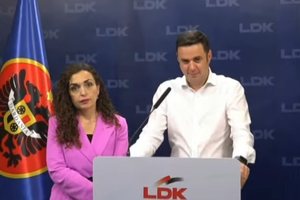
LDK leader Lumir Abdixhiku and former president Vjosa Osma...

The Vetëvendosje movement has declared victory in the snap...
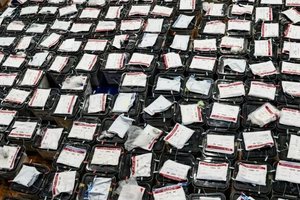
The counting of votes for political entities in Kosovo is ...
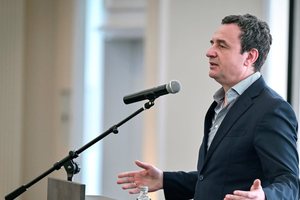
Kosovo's acting Prime Minister, Albin Kurti, has reacted a...

Korça has transformed this weekend into the capital of cel...

Korça is ready to open the summer season with one of the c...

Two years after his passing, the renowned Korçë poet Skënd...

The Ethnographic Museum of Berat has opened its doors to v...

The automotive industry in Albania is currently at a turni...

If you were to follow the industrial map of the Western Ba...

The Transparency Board, in today's meeting, decided to red...

This Saturday, one US dollar is bought for 81.4 lek and so...