


EU tariffs on Chinese electric cars take effect this week
European Union tariffs of up to 35.3 percent on China's el...


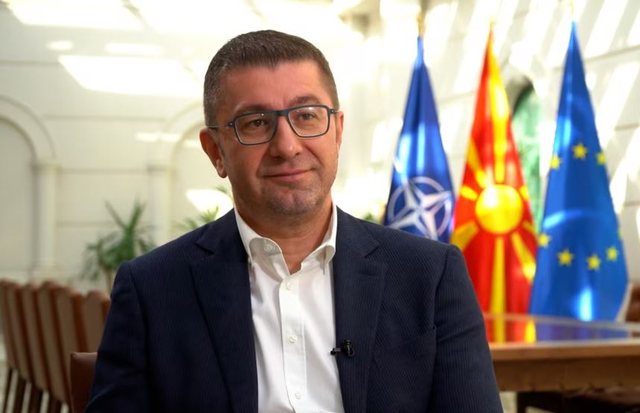
The Prime Minister of North Macedonia, Hristijan Mickoski, declared on Tuesday that he has received the letter sent the day before by the leader of the Democratic Union for Integration (BDI) in the opposition, Ali Ahmeti, in which the latter expressed concerns about the impact of the decisions of the Constitutional Court in the inter-ethnic cohesion and stability of the country.
According to Mickoski, in the first part of the letter, Ahmeti addresses issues of the geopolitical situation and in the second part he expresses dissatisfaction with the judges' decisions, which, according to him, "were chosen with the support of the previous government, DUI and the Social Democratic League (LSDM) ".
"I did not know that these judges, I repeat, elected by the majority of SDSM and DUI, implement a program of VMRO-DPMNE. That he was concerned about the issue related to the Law on languages, and that the constitutional judges elected by SDSM and DUI had to be intervened, to be careful what they are doing, because in this way they can destabilize the state. This is roughly the letter. Let the public evaluate whether this deserves comment", answered Mickoski on Tuesday, before the conference of the Bloomberg Adria platform.
He emphasized that he does not agree with DUI's position on how the state should function, and added that "the time when politicians can influence the decisions of judges and prosecutors is over."
Ahmeti, in addition to Mickoski, on Sunday also sent the letter to the leaders of Albania and Kosovo, as well as international ones, including the president of the European Commission, Ursula von der Leyen and the US Secretary of State, Antony Blinken, to address the recent decisions: the repeal of the Law on the use of languages, the prohibition of ethnic identification in state institutions (the Balancer) and the formation of a Government without fair ethnic representation.
Former American diplomat Daniel Server, at the same time a professor at "Johns Hopkins" University in Washington, also gave an answer to Ahmet's letter.
He said that the problems that Ahmeti points out in the letter should be decided by the citizens of North Macedonia, not someone from abroad.
Regarding the Law on the use of languages, Server said that there is no dilemma as it is clearly regulated by the Ohrid Agreement, and this should not be questioned.
"I don't understand how you can question this obligation without creating more problems than North Macedonia already has. This was an important part of the 2001 peace agreement. It is important to preserve it," said former diplomat Server.
Regarding the prohibition of ethnic identification in state institutions (Balancuesin), which, according to Ahmet, violates the principle of collective rights of ethnic communities, and affects the essence of the Ohrid Agreement, Server said this is aimed at the current dominance of Macedonians in high positions governmental.
"I doubt that the purpose of this proposal is to continue the current dominance of Macedonians in high government positions. [North] Macedonia needs to diversify its public sector workforce to more fully reflect the diversity of the population. I'm not a fan of quotes. But affirmative action with prior qualifications is a process that can produce reasonable results. Many Albanians have a qualification that most Macedonians lack, they speak both languages. The government should take this into account when hiring."
As for Ahmeti's third complaint, "the formation of a Government without fair ethnic representation", the former diplomat Server described it more as a political complaint, rather than a legal or constitutional remark.
The Constitutional Court of North Macedonia is expected to rule in December on the fate of the Law on the Use of Languages, which was adopted seven years ago.
According to the Law on the use of languages, those languages ??spoken by at least 20 percent of the country's citizens are used as official languages ??in state institutions in North Macedonia.
This includes the Albanian language, which is mentioned as the language of a significant part of the population and is defined in the first article of this law. Also, the law ensures the use of other languages ??of communities with less than 20 percent representation.
On October 9, the Constitutional Court in North Macedonia abolished Balancer, a software mechanism that regulated the "fair and adequate" representation of ethnic communities in public administration.
This mechanism was created to implement the 2001 Ohrid Agreement and ensured that the employment rate matched the ethnic composition of the population.
In response to the abolition of the Balancer, the Albanian coalition VLEN, which is part of the Macedonian Government, has announced that it is drafting "the law for fair and adequate representation".
But, despite this assertion of the VLEN coalition, the Minister of Public Administration, Goran Minçev, has stated that he has not yet seen the draft version of the "VLEN" coalition.
Prime Minister Mickoski had assessed that the decisions of the Constitutional Court should not be commented on.
But, Mickoski, the abolition of "Balanceuesi" was part of the election program of his party, VMRO DPMNE, in the last parliamentary elections, held on May 8./REL

European Union tariffs of up to 35.3 percent on China's el...

Japan remains divided over how to deal with its violent pa...

Russia's Foreign Ministry has sanctioned 131 Australian ci...

Steve Bannon, the adviser to the former American president...
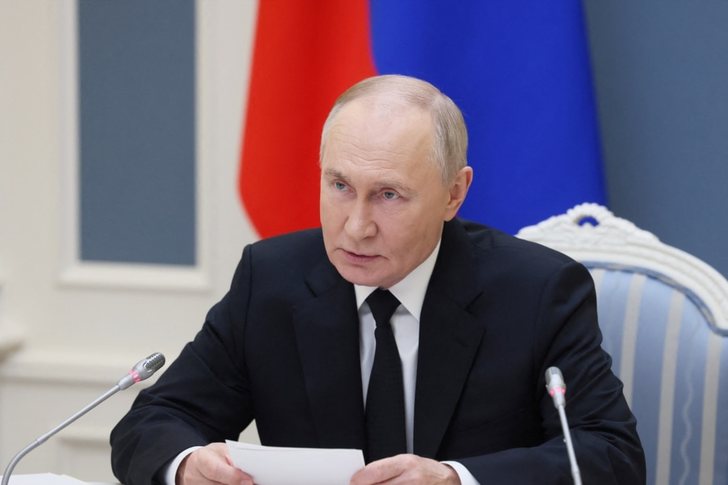
Russian President Vladimir Putin on Tuesday ordered massiv...
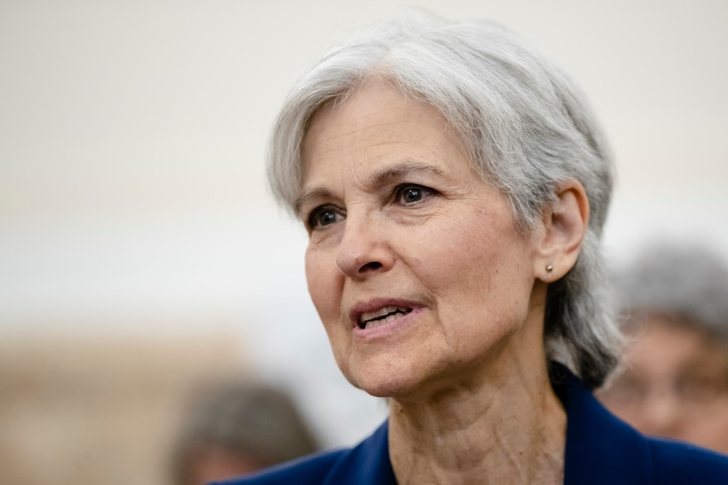
In the November 5 election, according to polls, Green Part...

On November 5, the elections in the USA take place. Since ...

Democrats stepped up their attacks on Donald Trump on Mond...
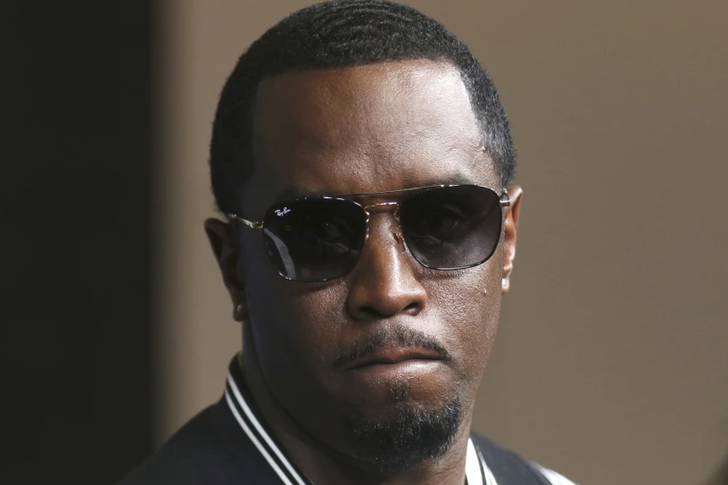
Sean "Diddy" Combs has two new lawsuits accusing him of dr...

The Pentagon says North Korea has sent about 10,000 troops...

A series of attacks on ballot boxes in several states is i...
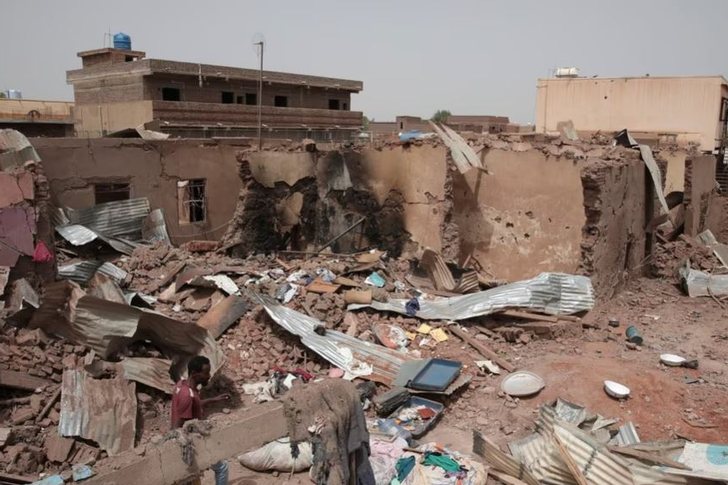
United Nations Secretary-General Antonio Guterres called f...

Israel's wars in the Gaza Strip and Lebanon have strained ...
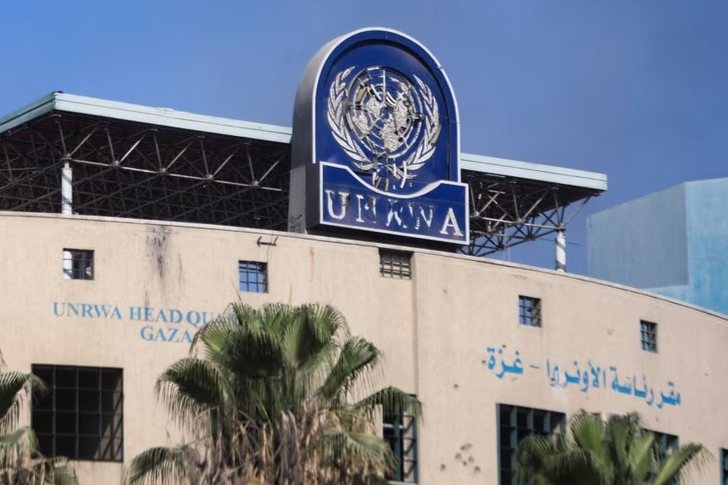
Israel passed a law on Monday banning the United Nations a...
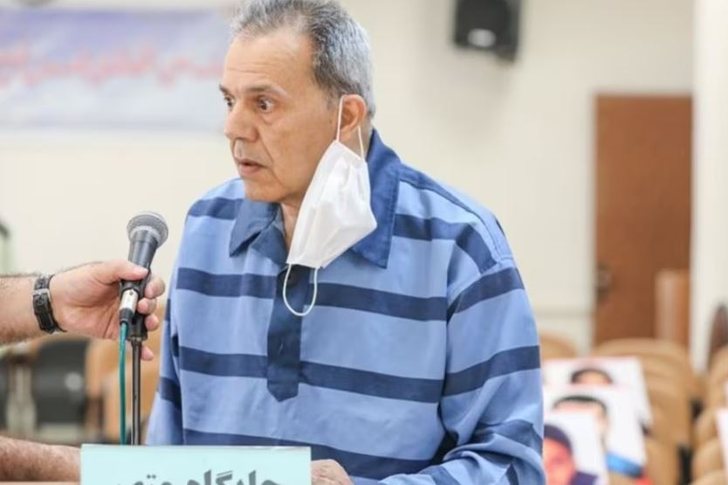
Iran executed Iranian-German citizen Jamshid Sharmahd who ...
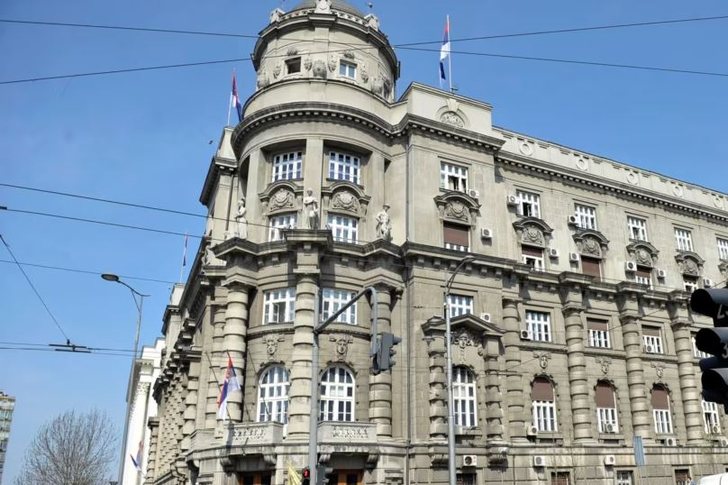
The Government of Serbia announced on Monday that it has a...
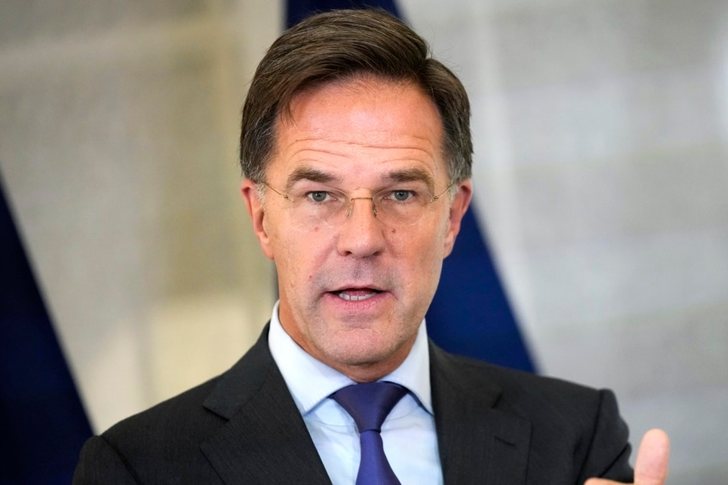
NATO confirmed on Monday that North Korean troops have bee...

Republican Donald Trump gave the closing speech of his cam...
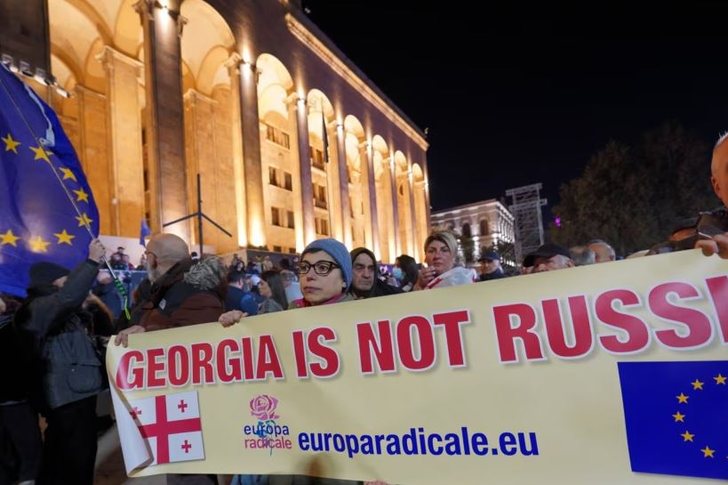
Thousands of Georgians took to the streets of Tbilisi on M...

The President of Ukraine, Volodymyr Zelensky, has arri...

CNA has launched another investigation that could lead to ...

Irfan Hysenbelliu is a businessman that we call "Irfan the...

In March 2026, CNA launched another investigation centered...
The arrested mayor of Tirana, Erion Veliaj, with 13 charge...

The Special Board of Appeal (KPA) decided this Monday ...

The KPA vetting decided this Thursday to dismiss the p...

Suela Salavaçi, a prosecutor in the Prosecutor's Offic...

The Special Board of Appeal reinstated the prosecutor ...

Footage emerges from the serious accident that occurred th...

A Shkodra traffic police officer was hit with hard objects...

This Wednesday, around 4:00 PM, a serious accident occurre...

Tirana Police have shared details regarding the accident t...
A serious accident that occurred this Wednesday with the c...

The Institute of Geosciences has shared a forecast for wea...

Rising energy and fertilizer prices are expected to contin...

Over 18,000 foreign citizens from 140 countries have appli...
The trial of ousted Venezuelan President Nicolas Maduro on...
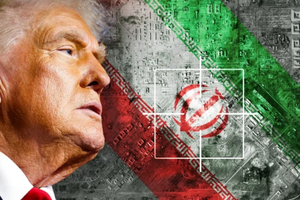
US President Donald Trump has issued another warning to Ir...

Prime Minister Andy Burnham has announced that most bus fa...

France's parliament has passed a law to ban social media f...

At a time when industrial products are increasingly taking...

Trust among people is not just a three-syllable word. It c...

Master of humor Todi Llupi has passed away at the age of 7...

The ninth edition of "MIK Festival" kicked off with one of...

The price of diesel reached 206 lek per liter from 198 lek...

Businesses will no longer be required to simply register t...

Despite economic growth and income in recent years, Albani...

This Wednesday, one US dollar is bought for 81.4 lek and s...