


State Department declares 13 individuals and one entity "non grata" in Bosnia
The United States on Friday declared eight individuals per...


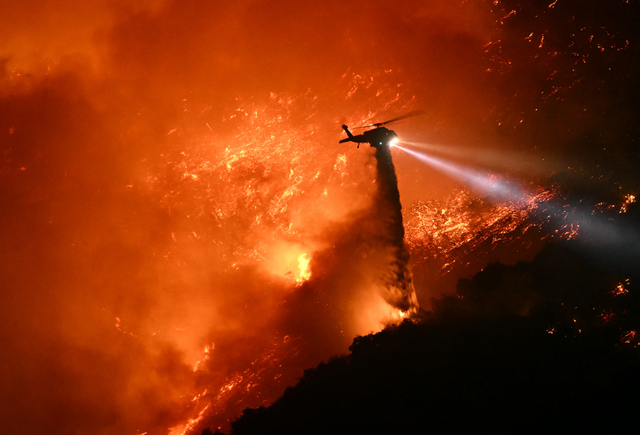
For more than a week, the skies above Los Angeles have been buzzing with helicopters, planes and drones battling the most destructive wildfires in Southern California history.
Helicopters in particular, capable of dropping large volumes of water with precision, have helped turn the tide against the wind-stirred wildfires that have killed at least 27 people and engulfed thousands of buildings.
The two largest fires, Eaton and Palisades, are still active and have burned a total of about 40,000 acres.
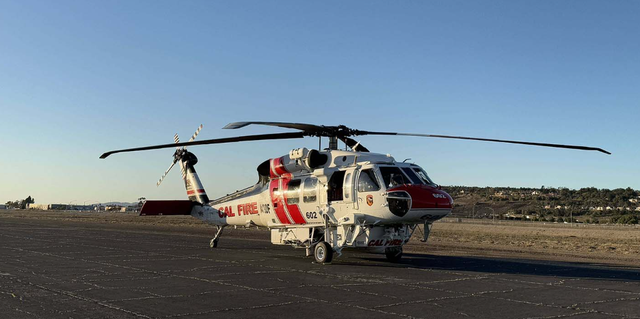
Many of the helicopters zipping back and forth over LA belong to Cal Fire, the government agency tasked with protecting California from these disasters.
For the pilots and helicopter crews - dumping water, refueling and working tirelessly to avoid crashes and burns - the past 11 days have been career-defining and physically exhausting.
By participating in one of the most ambitious airstrikes on a wildfire ever, the Cal Fire team has created new tactics and learned lessons that they hope will help others combat the growing number of wildfires around the world.
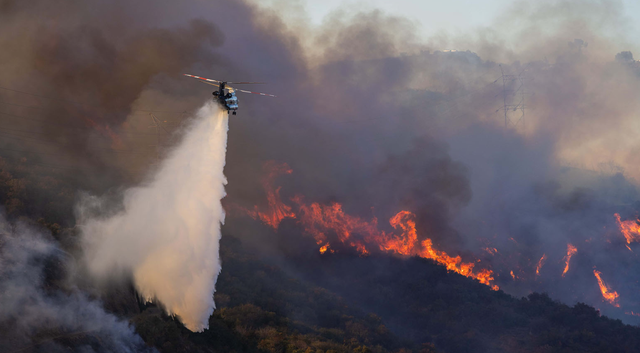
This is their story. When a fire driven by hurricane-force winds broke out in the Palisades on January 7, Cal Fire joined an unprecedented operation to extinguish it, consisting of the National Guard, the city of Los Angeles and other private fire companies.
Strong winds made the work of helicopters quite difficult as it was dangerous to fly.
Once the winds slowed enough, aerial firefighters joined the fray and never gave up.
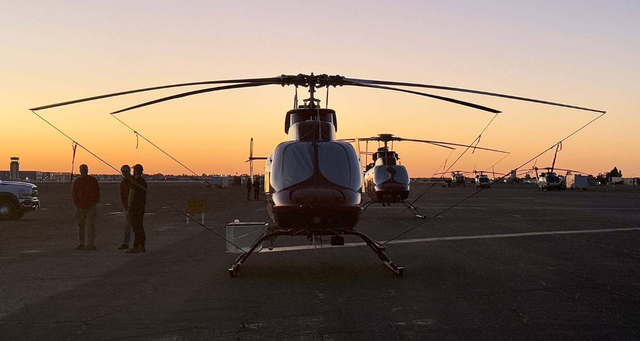
From a hastily assembled helicopter base at the Camarillo airport about 40 miles to the west, Cal Fire began flying missions 24 hours a day, hitting the Palisades Fire with hundreds of thousands of gallons of water dropped from specially equipped helicopters known as Firehawks.
The Cal Fire helicopter crew had one job: slow down the fire so their fellow firefighters on the ground could successfully contain the blaze. It's a task their helicopters are perfectly designed to perform.
In the mountains and canyons of the Palisades region, helicopters can wade through the fray and get as close to the flames as possible. By Wednesday, January 8, the Pacific Palisades fire had grown from 10 acres to more than 2,900 acres.
Matt Lane fought the fires for hours.
"It was a very heavy firefight, one of the busiest airspaces I've ever been in. Many structures are being threatened," he said.
It's a 10-minute flight from Camarillo Airport, the main helicopter landing area, to Los Angeles. Crews raced back and forth, taking water from the Encino Reservoir and releasing it repeatedly in an attempt to stem the fire's advance.
By the end of the day, two people had died in a new fire that started near Altadena, almost 70,000 people were under evacuation orders and emergency services were stretched to the limit.
Los Angeles Mayor Karen Bass declared a state of emergency.
Several agencies, municipalities, and private companies flew in to fight the Palisades fire. All those helicopters and planes landing in a relatively small area create a very, very busy airspace.
That's where Cal Fire captains like Williamson come in.
They hover a thousand feet above the area in helicopters like the Bell 429. Cal Fire is using versions equipped with multiple AM ??and FM radios and night vision capabilities.
Digital displays in the cockpit allow the crew to see all the other helicopters participating in the fire. Bright lights illuminate their path at night.
From above, they can coordinate multiple aircraft to drop their water on the same target, extinguishing the flames for the ground team./ CNA

The United States on Friday declared eight individuals per...
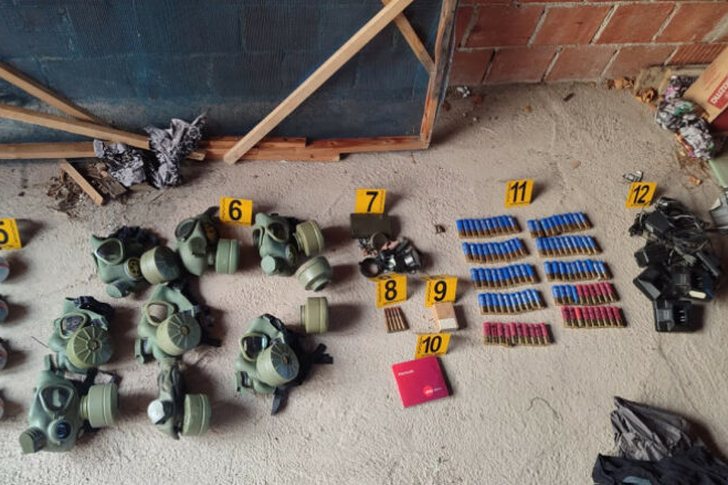
Kosovo Police, in cooperation with Customs, undertook an a...

The Kosovo Special Prosecution Office has discontinued inv...

The United States on Friday imposed sanctions against ...

A 40-year-old passenger in Germany seriously endangered hi...

The Senate is heading for a final round of voting on a...

Russia and Iran have agreed to closer military coopera...

Donald Trump is preparing to return to the "White House" a...

The Israeli security cabinet recommended today that the go...

Prime Minister and LVV leader Albin Kurti held a meeti...

Prime Minister and LVV leader Albin Kurti held a meeti...

Israeli Prime Minister Benjamin Netanyahu said an agre...

Britain and Ukraine signed a 100-year agreement on Thu...

As Russia's war in Ukraine approaches its third annive...

China launched a new round of diplomatic contacts with Jap...

Israeli Prime Minister Benjamin Netanyahu accused Hamas on...

The accusation was as direct as it was serious: Russia is ...
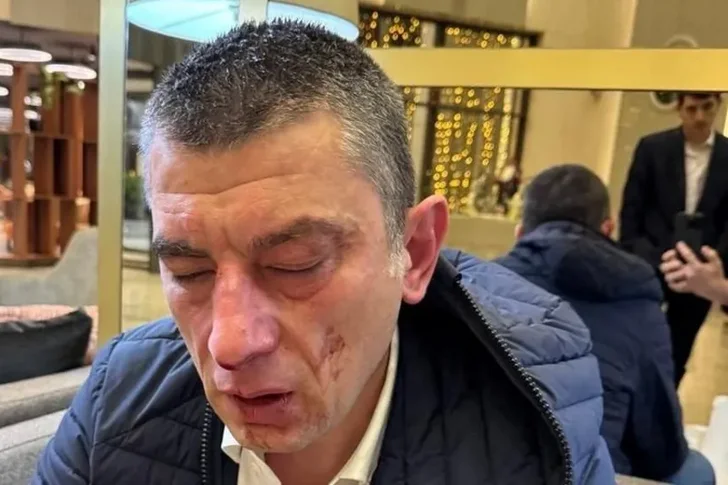
The leader of the opposition party in Georgia, Giorgi ...

At least 20 people were killed by Israeli airstrikes in Ga...

At a time of epochal challenges, when the European Uni...

CNA has launched another investigation that could lead to ...

Irfan Hysenbelliu is a businessman that we call "Irfan the...

In March 2026, CNA launched another investigation centered...
The arrested mayor of Tirana, Erion Veliaj, with 13 charge...

The Special Board of Appeal (KPA) decided this Monday ...

The KPA vetting decided this Thursday to dismiss the p...

Suela Salavaçi, a prosecutor in the Prosecutor's Offic...

The Special Board of Appeal reinstated the prosecutor ...

A road accident occurred this evening on Nikolla Zoraqi St...

Three people were shot and wounded in Elbasan last night b...

A serious incident occurred this Tuesday in the Yrshek are...

An accident occurred this Tuesday on "Dituria" street in K...

This Wednesday, our country will be under the influence of...

All of Southern Europe will face changing weather conditio...

Albania was hit by temperatures significantly higher than ...

For the first time, Pogradec welcomed the Inter-Lake Chess...

US Secretary of State Marco Rubio arrived in Manila on Jul...

In the space of a few days, Ukrainian President Volodymyr ...
The spokesman for the Iranian Foreign Ministry warned Bulg...

Autoritetet italiane sekuestruan pako me afër 800 kilogram...

At a time when industrial products are increasingly taking...

Trust among people is not just a three-syllable word. It c...

Master of humor Todi Llupi has passed away at the age of 7...

The ninth edition of "MIK Festival" kicked off with one of...

Businesses will no longer be required to simply register t...

Despite economic growth and income in recent years, Albani...

This Wednesday, one US dollar is bought for 81.4 lek and s...

Construction company licenses will have a validity period ...