

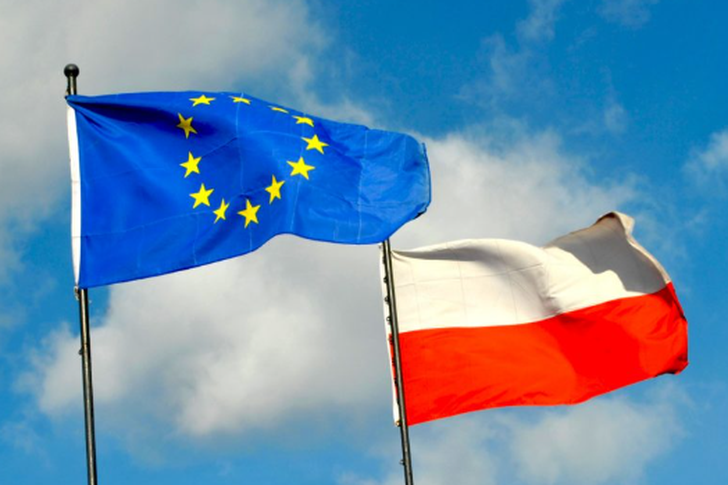
EU leaders assess achievements of Polish Presidency of the Council of the EU
The Polish Presidency of the Council of the European Union...


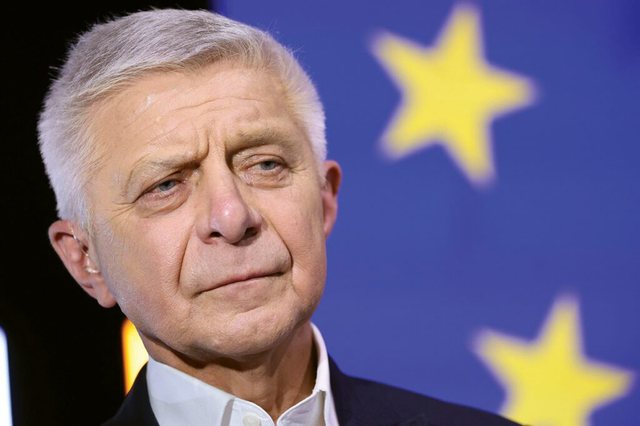
Interview with Marek Belka, former Prime Minister of Poland
Poland is widely regarded as one of the most successful examples of integration into the European Union for a combination of factors related to institutional reforms, sustainable economic growth, effective use of EU funds, and long-term political commitment.
Dr. Marek Belka, who has played a key role in fiscal consolidation and Poland's preparation for EU membership, was recently in Tirana, taking part in a roundtable discussion organized by the Embassy of Poland in Albania, on the topic "Albania's journey to the EU: lessons from the Polish experience - Managing economic transition through the effective use of EU funds."
In an interview he gave to "Monitor" during his stay in Tirana, Mr. Belka talks about the advantages, benefits, but also the costs and challenges that Albania will face on its path towards EU integration.
Dr. Marek Belka is a Polish economist and politician who led the country through a key period immediately following its accession to the European Union, serving as the country's Prime Minister in 2004–2005. He served as Governor of the Central Bank of Poland (2010–2016) and Minister of Finance in 1997 and 2001–2002.
Mr. Belka was a member of the European Parliament (2019–2024) and is today active in Eurozone, economic and EU enlargement issues.
Looking back on Poland's journey towards EU membership, what aspects of the reform process in your country do you consider most remarkable or unexpected?
In Poland, integration with the EU was closely linked to the transition from a command economy — as was the case in Albania — to a market economy.
What is often overlooked by observers is the fact that we began this transition by building institutions — solid market economy institutions, such as the banking system, the tax system, tax collection, and a good budget law.
Privatization was of course important. Opening the economy to foreign competition was as essential as setting market prices.
But what we added — and what was perhaps most important — was building strong institutions.
This, for example, was missing in Albania in the early 90s. There was no one to check whether, for example, pyramid schemes were safe or whether they were destabilizing the whole society. So this is probably the most important aspect where we succeeded. Without this, we would have ended up in chaos, like in Russia or Ukraine at that time.
In your opinion, is Albania taking these steps today? Is it building these institutions?
You are not starting from scratch. I think the seven or eight years of your transition from communism taught you a harsh but valuable lesson. You have started building the banking system, the tax system, the central bank, the monetary policy.
And now the situation has changed significantly and in the right direction. When you became an EU candidate country, European standards immediately began to be implemented in Albania.
When you started the negotiations, the first phase was “screening” — an examination of the existing situation. After that came the opening of “clusters,” which are groups of thematic chapters. In this process, you are forced to do the right things.
Based on Poland's experience, what are the concrete lessons that Albania should prioritize in its EU accession process?
I will highlight the most important ones.
First, treat the European Commission's demands seriously. Do not count on the understanding or goodwill of the member states. On the contrary — if you do not fulfill the reforms, there will always be a country that can block your process. Decisions on enlargement are taken unanimously.
Secondly, political will is needed. The government must be persistent and determined. The role of the prime minister is essential.
Meeting the criteria can be painful for certain groups in society, and ministries may protect their interests. The prime minister — and perhaps even the chief negotiator — must overcome this resistance. This has happened in every country that has applied for membership.
How should investments be oriented and what role should the financial system play?
People are often hesitant to invest because they don't know exactly where to invest. Right now, most of the investment goes into tourism infrastructure, which is fine, but you've probably already reached the capacity limit.
So, you should either limit this or orient yourself towards a higher quality market.
As membership approaches, foreign capital will start flowing not only into tourism and real estate, but also into manufacturing. But the production does not have to be for the domestic market, it is too small.
It should be oriented towards the region, perhaps the entire Western Balkans, or even Italy and other parts of Europe.
In this process, banks, especially Albanian ones, will have to provide financing or co-financing.
Also, when EU funds come in, local institutions must contribute financially. In many cases, they will not be able to cover this with their own resources and will have to seek loans from banks.
People need guidance and incentives to invest in sectors beyond the mainstream. Infrastructure and modernized agriculture can benefit greatly. Banks should be part of this strategy.
How do you assess the current trajectory of the Albanian economy, especially in relation to structural reforms, foreign investment and fiscal stability?
Political stability is very important and Albania seems to have it. As for fiscal stability, I don't see any serious problems so far.
Regarding foreign investments, I think investors are waiting for more progress in the negotiations.
Among the structural problems is the lack of labor. Many people are still in the countryside, in small family farms. Albania needs some of its young people to move to other sectors — to cities, where labor productivity is higher. This could be an engine of growth for the next 10–15 years.
As long as there is no complete certainty about Albania's EU membership, foreign investors will hesitate. You may strongly believe in this membership, but they are probably still waiting.
Without this security, they will not invest in production, because the local market is too small. You need to be able to export across borders, not only to the Western Balkans, but also to Italy, Greece and beyond.
In your opinion, what have been the greatest economic and political benefits that EU integration has brought to Poland and that it could also bring to Albania?
There are several.
First, the EU forced us to change our rules. You could call it a civilizational investment. We had to implement common European rules, and that was essential.
Secondly, access to the common market. This is very important.
Third, the most visible, but less economically important, are EU funds, especially cohesion funds.
People see these funds and they help, but access to the common market is the biggest benefit.
Every accession process has unexpected obstacles. Did Poland have problems like these that were not seen before and that Albania should take into account?
In Poland, we knew the problems we had. There were no unpleasant surprises. For example, farmers were afraid that the market would be flooded with Western European food. But the opposite happened, Poland became a major food exporter.
Today our agricultural exports are around 40 billion euros per year. So, it was a positive surprise. For Albania, unexpected problems may arise, but I can't say which ones specifically right now.
You mentioned that the EU forced you to change the rules. Was there any resistance?
We knew that implementing EU rules would cause discontent. Not everyone would be happy. But often the EU knew this and provided funding to mitigate the consequences.
After deciding to expand, the EU is quite honest and fair. This could also help Albania a lot.
How did Poland cope with the short-term costs of membership, such as co-financing projects or adapting to regulations?
They need to be planned in the budget. We knew that membership would be costly for the budget, but not for the economy.
For example, if the EU finances 70% of an infrastructure project, the rest should be covered by the Albanian government or local government. This should be foreseen in the budget, through taxes or loans.
But, when the project is completed, it generates growth, economic activity, and the net effect on the budget becomes positive.
After visiting Albania, what aspects of society or the business climate have impressed you?
Albanians are very ambitious and learn quickly, this is a driving force for economic development.
The problem is that many people have left and we have a shortage of labor. One option is to shift people from agriculture to other sectors.
Structural reform is needed, changing the structure of the workforce. Also, incentives should be created for the Albanian diaspora to return, ideally with capital.
I've heard that remittances are increasing and that's positive. It shows that many Albanians in Western Europe or the US are investing in the country, perhaps building houses. Maybe they're planning to return.
Albania should make it easier and more attractive for them to return and invest in the economy, beyond the construction sector.
benefit
First, the EU forced us to change our rules. You could call it a civilizational investment. We had to implement common European rules, and that was essential.
Secondly, access to the common market. This is very important.
Third, the most visible, but less economically important, are EU funds, especially cohesion funds./ Monitor Magazine

The Polish Presidency of the Council of the European Union...
Tens of thousands of opponents of Serbia's populist Presid...
Hundreds of thousands of people attended a massive state f...
A source told Newsweek that US President Donald Trump has ...
Iran has reopened airspace in the central and western part...
Presidenti ukrainas Volodymyr Zelensky tha të shtunën se i...
Acting Prime Minister and leader of the Vetëvendosje Movem...
US President Donald Trump has dismissed reports that his a...
Greece's center-right New Democracy government announced c...
Meeting with a delegation from the Ecumenical Patriarchate...
From July 1, France will ban smoking in schools, parks and...
This Saturday's meeting with Kosovo's political parties, c...
The United States and China have reached an agreement to r...
Belgrade is preparing today for another student-led protes...
Kosovo Prime Minister Albin Kurti has started a meeting wi...
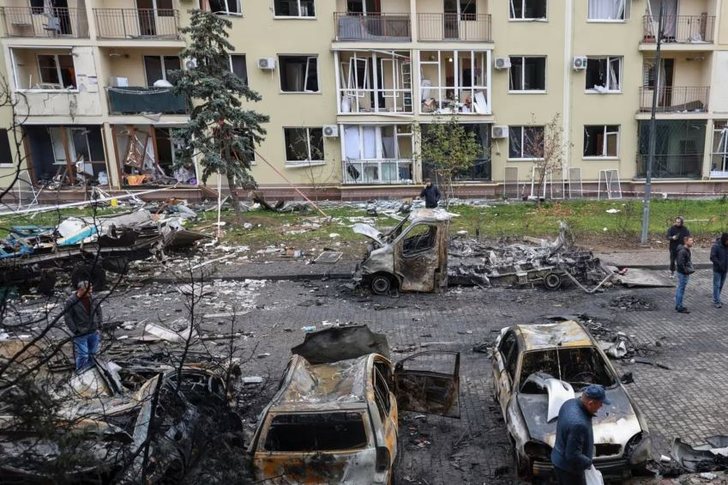
Russia targeted Ukraine with another wave of deadly missil...
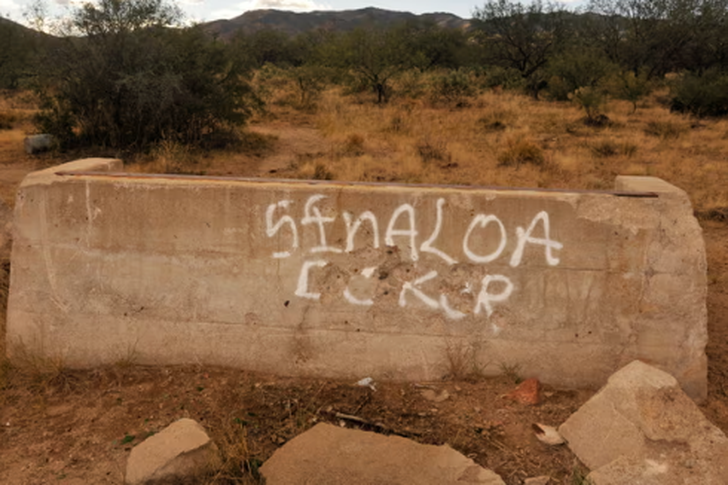
A hacker working for the Sinaloa drug cartel managed to ob...
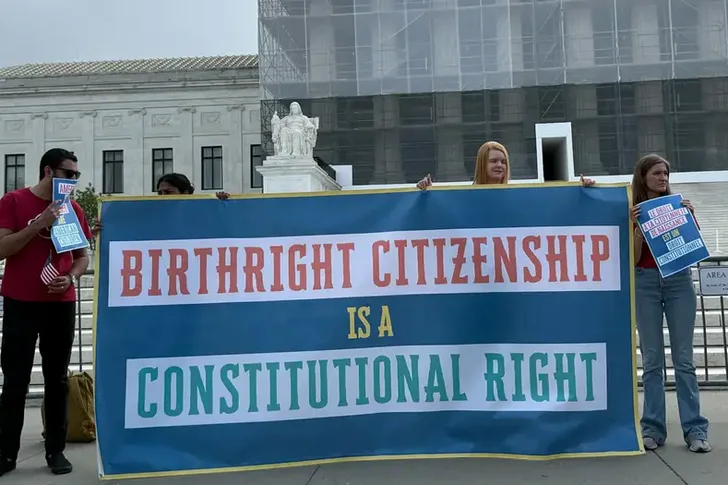
US President Donald Trump has won a victory in the US Supr...
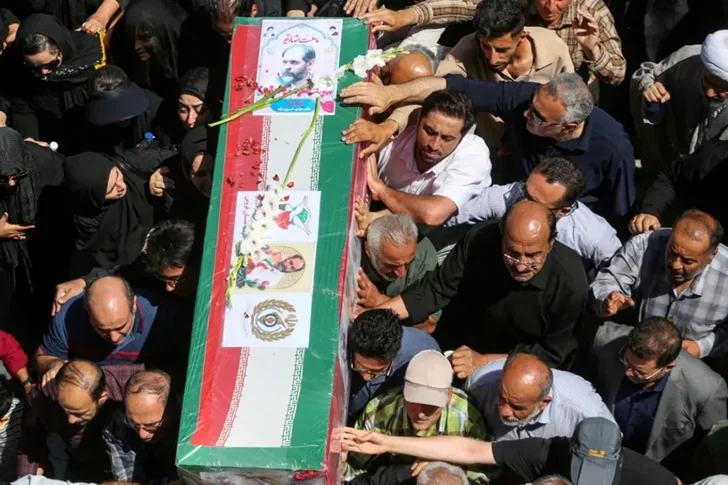
A state funeral is being held in Iran for about 60 people,...
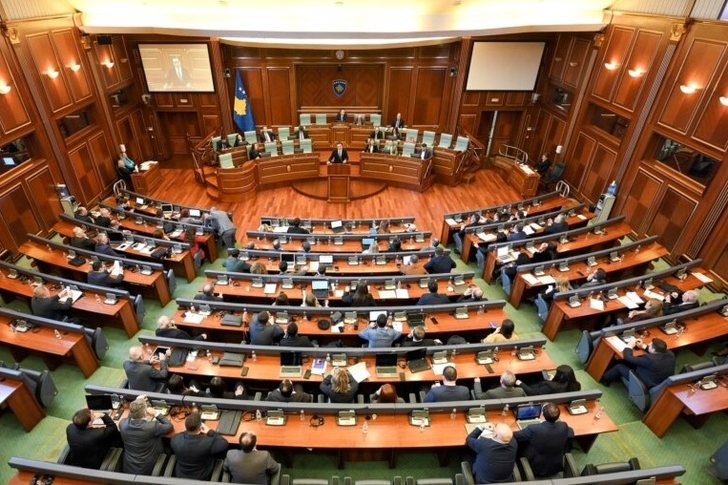
Kosovo is suffering both politically and financially from ...

CNA has launched another investigation that could lead to ...

Irfan Hysenbelliu is a businessman that we call "Irfan the...

In March 2026, CNA launched another investigation centered...
The arrested mayor of Tirana, Erion Veliaj, with 13 charge...

The Special Board of Appeal (KPA) decided this Monday ...

The KPA vetting decided this Thursday to dismiss the p...

Suela Salavaçi, a prosecutor in the Prosecutor's Offic...

The Special Board of Appeal reinstated the prosecutor ...
Footage emerges from the serious accident that occurred th...
A Shkodra traffic police officer was hit with hard objects...
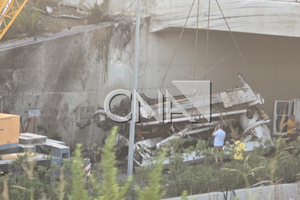
This Wednesday, around 4:00 PM, a serious accident occurre...
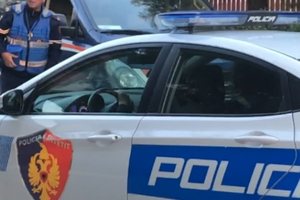
Tirana Police have shared details regarding the accident t...
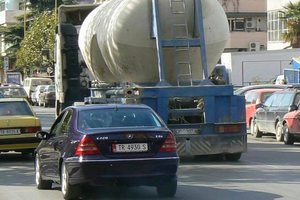
A serious accident that occurred this Wednesday with the c...

The Institute of Geosciences has shared a forecast for wea...
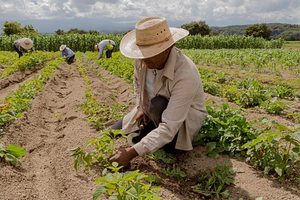
Rising energy and fertilizer prices are expected to contin...
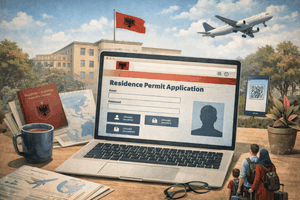
Over 18,000 foreign citizens from 140 countries have appli...
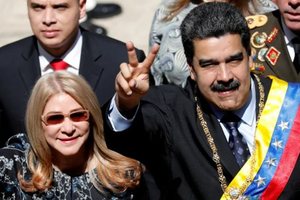
The trial of ousted Venezuelan President Nicolas Maduro on...
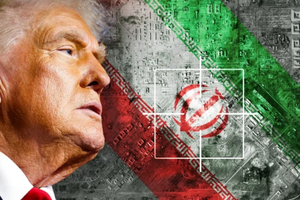
US President Donald Trump has issued another warning to Ir...
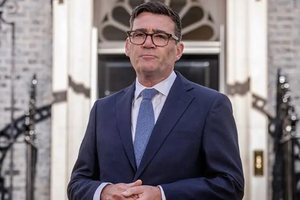
Prime Minister Andy Burnham has announced that most bus fa...
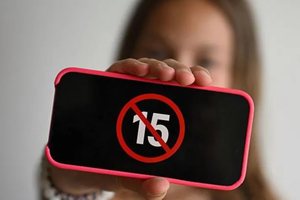
France's parliament has passed a law to ban social media f...

At a time when industrial products are increasingly taking...

Trust among people is not just a three-syllable word. It c...

Master of humor Todi Llupi has passed away at the age of 7...

The ninth edition of "MIK Festival" kicked off with one of...
The price of diesel reached 206 lek per liter from 198 lek...
Businesses will no longer be required to simply register t...
Despite economic growth and income in recent years, Albani...
This Wednesday, one US dollar is bought for 81.4 lek and s...