


Analysts: Use of advanced missiles by Russia, signal to the West
Ukrainian President Volodymyr Zelenskyy condemned Russia's...


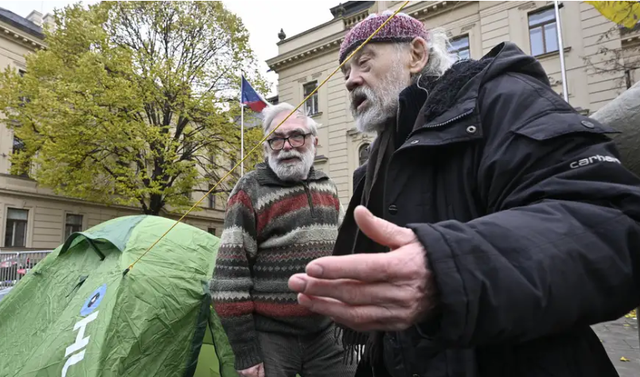
35 years after the end of the communist regime in the former Czechoslovakia, today's government in Prague has increased the pensions of the dissidents of the time and reduced those of the former officials of the regime.
Petruska Sustrova was a well-known Czech journalist, translator and expert on Southeast Europe. But even after reaching retirement age, she still had to work.
"I have to work until the end of my life" - she used to say, "because I can't make it with the pension alone". During the 21 years between the Russian invasion of the former Czechoslovakia in August 1968 - which ended the era of reforms known as the "Prague Spring" - and the fall of communism in November 1989, Sustrova was part of a group of high-profile dissidents who criticized the communist regime.
She was also one of the first signatories and then spokeswoman of "Statute 77", a human rights document and initiative that criticized the Czechoslovak government and its failure to protect human rights, as stipulated in the Final Act of the Security Conference. and Cooperation in Europe (CSCE) in 1975. This charter was published in Europe on January 1, 1977 and ended in a campaign of persecution to those who had signed it. Low pensions for dissidents
Sustrova spent several years in prison for her involvement in this initiative and was barred from employment for 7 years in a row in the 1980s. The rest of the time she did low-paid and menial jobs. She was not alone in this story: hundreds of other dissidents had the same fate and consequently received very low pensions in return.
Until recently, the Czech authorities responsible for pensions calculated them on the basis of the number of years of work and wages they had received.
However, for critics of the regime like Sustrova, whose income was little or irregular for long periods of time, the pensions turned out to be too low. Many lived in poverty or had to work even after retirement.
Prolonged consequences of communist persecution
"The persecution exercised by the communist regime had major impacts on the pensions of Czech dissidents, because they were not allowed to practice their professions. After all, the time spent in prison was not taken into account when calculating their pensions," Kamil Nedvedicky, deputy director of the Institute for the Study of Totalitarian Regimes (USTR), told Deutsche Welle.
One of the main tasks of this institute is to manage and provide access to state security archives and publish academic research documents on the era of the totalitarian regime of Czechoslovakia, which ended with the "Velvet Revolution" in November 1989. This led in the election of the dissident and playwright Vaclav Havel as president of Czechoslovakia on December 29, 1989. A year later, elections were held cheap
In 1993, Czechoslovakia was dissolved and two independent and democratic states were created: the Czech Republic and Slovakia.
High pensions for loyal communists
In stark contrast to the dissidents' circumstances, supporters of the former communist regime and former party officials enjoyed high pensions.
In addition, some former regime leaders amassed considerable wealth during the 40 years of communist rule. These assets included villas, which they were allowed to own even after the fall of the regime. Today they are worth millions of euros.
This injustice resulted from a deliberately soft treatment of former communist officials by the democratic governments that followed the collapse of the system.
It was part of the strategy of the anti-communist "Velvet Revolution" of 1989 which ended in a peaceful transition of power and a rapid transition to democracy.
There were also a number of young Communists holding high positions who benefited from the wave of privatization that followed the fall of Communism, which turned them into successful and wealthy entrepreneurs. One of them is the oligarch and former Czech prime minister, Andrej Babis.
Justice after 35 years
Last year, the signatories of "Statute 77", Jiri Gruntorad and John Bok, decided that something should be done in order to turn attention to former dissidents who were living in miserable conditions.
They went on hunger strike outside the government building in Prague, demanding higher pensions for themselves and their friends. "Many of these people were imprisoned or deported. It is absurd that they now have to beg for more income" - said Gruntorad at the time.
The change in the Czech Republic came only as a result of this dramatic protest by two former dissidents. Prime Minister Petr Fiala's government amended relevant laws and increased pensions for hundreds of former regime opponents to 800 euros ($840) a month. This was a significant improvement.
For Petruska Sustrova, however, this change came late. She died in 2023, aged 76.
Increased pensions for former dissidents
Speaking on the 35th anniversary of the "Velvet Revolution" last week, the Minister of Labor and Social Affairs, Marian Jurecka, said that 430 former dissidents who were arrested or expelled by the communist regime benefited from the increase in pensions, and as a result, they received very low pensions for several years.
New pensions increased by an average of about 175 euros ($185) more per month. "After 35 years," said Jurecka, "this symbolic action is being taken on the past and many injustices that have been committed". Pension reduction for former communist officials
The legal changes approved last year also led to the reduction of the very high pensions that former officials of the communist regime received.
The USTR Institute played an important role in balancing increasing pensions for dissidents and reducing them for former officials.
The Czech Ministry of Labor confirmed that pensions were reduced for 177 people, with the most significant reduction amounting to about 307 euros or $325 less.
Until this reduction made by law, the average figure that affected the former leaders of the time was about 59 euros ($62). Despite the decrease in pensions, the average for this category is around 1,000 euros, again higher than the pension for former dissidents.
The Communists opposed the changes
According to USTR's Nedvedicky, the reason why the pensions of former high-ranking communist officials were reduced is also understandable: "Their pensions were above average because they were valued for their role in persecuting dissidents and their salaries were higher higher than those of an employee with an average income".
The Communist Party of Bohemia and Moravia (KSCM) and their leader, Katerina Konecna, opposed the change in the pension law.
"After 35 years, I consider this as a clear indication of the exercise of power and also an unfair treatment by the current government," Konecna, who is also a member of the European Parliament, told DW.

Ukrainian President Volodymyr Zelenskyy condemned Russia's...
US President-elect Donald Trump has nominated Pam Bondi as...

Russia is alleged to have supplied North Korea with more t...

Queen Elizabeth II continues to fascinate the world even a...
The Kosovo Police has dismissed as untrue the claims of th...
In Albania, at the end of talks with the authorities over ...

Matt Gaetz has withdrawn from the nomination for the post ...
The European Parliament has placed on the agenda for t...
The Assistant Administrator of the United States Agency fo...

Ukrainian billionaire Dmytro Firtash is among eight people...

In an increasingly harsh international environment, the ri...

Iseltwald – once a quiet alpine village of 400 inhabitants...
During the campaign for the White House, President-ele...

The International Criminal Court on Thursday issued arrest...

The High Public Prosecutor's Office in Novi Sad, Serbia, a...
Hungary will deploy an air defense system in the north...
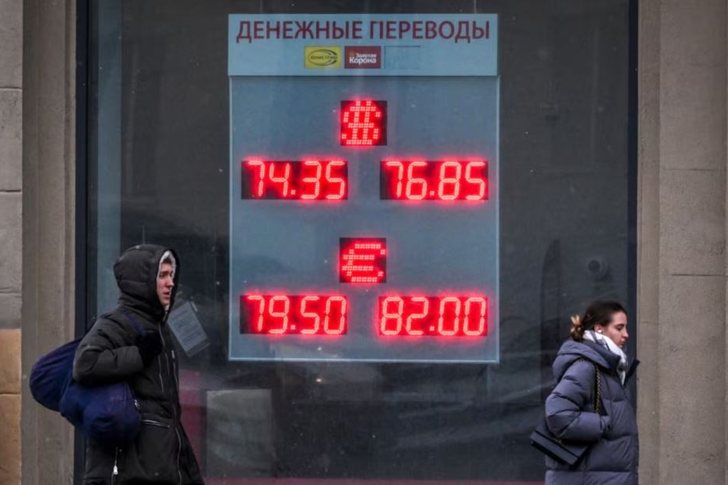
The prices of milk, potatoes, butter are increasing in Rus...

North Korea and Russia have reached a new agreement to exp...

Secret documents revealed yesterday that Berlin has be...

The State of Children 2024 and the Future of Childhood...

CNA has launched another investigation that could lead to ...

Irfan Hysenbelliu is a businessman that we call "Irfan the...

In March 2026, CNA launched another investigation centered...
The arrested mayor of Tirana, Erion Veliaj, with 13 charge...

The Special Board of Appeal (KPA) decided this Monday ...

The KPA vetting decided this Thursday to dismiss the p...

Suela Salavaçi, a prosecutor in the Prosecutor's Offic...

The Special Board of Appeal reinstated the prosecutor ...

A road accident occurred this evening on Nikolla Zoraqi St...

Three people were shot and wounded in Elbasan last night b...
A serious incident occurred this Tuesday in the Yrshek are...

An accident occurred this Tuesday on "Dituria" street in K...

All of Southern Europe will face changing weather conditio...

Albania was hit by temperatures significantly higher than ...

For the first time, Pogradec welcomed the Inter-Lake Chess...

Albania has achieved a record for the employment of foreig...

US Secretary of State Marco Rubio arrived in Manila on Jul...
In the space of a few days, Ukrainian President Volodymyr ...

The spokesman for the Iranian Foreign Ministry warned Bulg...

Autoritetet italiane sekuestruan pako me afër 800 kilogram...

At a time when industrial products are increasingly taking...

Trust among people is not just a three-syllable word. It c...

Master of humor Todi Llupi has passed away at the age of 7...

The ninth edition of "MIK Festival" kicked off with one of...

Construction company licenses will have a validity period ...

The Centralized Purchasing Operator recently opened a tend...
The new draft law "On the Bank of Albania" provides that t...

This Tuesday, one US dollar is bought for 81.2 lek and sol...